
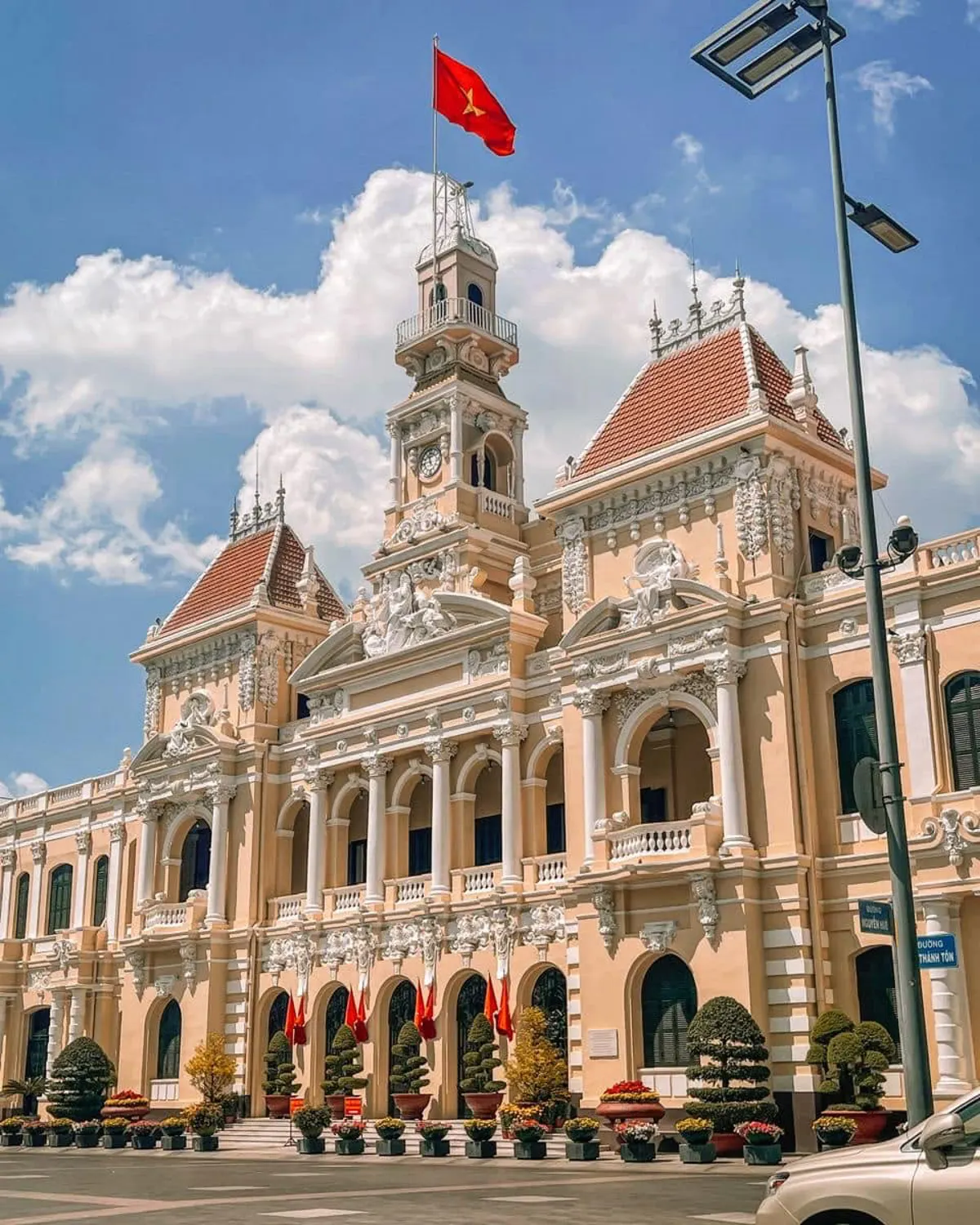
Visitors planning a brief trip to Ho Chi Minh City can experience its distinctive character and historical sites within a two-day timeframe. This itinerary focuses on key urban attractions and offers an optional day trip to explore surrounding cultural and historical landmarks. The city, historically known as the "Pearl of the Far East," showcases a unique blend of regional Vietnamese influences and an energetic urban character.
Exploring Ho Chi Minh City's Central District
Begin your first day by exploring the heart of Ho Chi Minh City, where many significant landmarks are concentrated and accessible by foot or a short taxi ride. A guided tour is an option for those who prefer detailed explanations of each location. Start at Ben Thanh Market, a prominent city symbol. This market offers a wide array of everyday items alongside local handicrafts and souvenirs, making it a suitable place to find gifts or mementos of your visit. It also provides insight into local commerce and shopping practices in Vietnam.
From Ben Thanh Market, proceed to the Notre Dame Cathedral, an architectural highlight. Nearby, the Saigon Central Post Office stands as one of the city's oldest and largest postal facilities. A short walk of approximately ten minutes from the post office leads to the Reunification Palace, situated at the intersection of Nguyen Thi Minh Khai and Nam Ky Khoi Nghia streets. This structure was constructed in 1966 to serve as the residence for the President of South Vietnam. Conclude your morning with a visit to the War Remnants Museum, located on Vo Van Tan Street, which offers a historical perspective on past conflicts.
For lunch, consider returning to Ben Thanh Market. Its food section hosts numerous vendors and stalls providing a selection of freshly prepared local dishes. Options often include banh xeo (savory pancake), banh cuon (steamed rice rolls), banh beo (steamed rice cakes), cha gio (fried spring rolls), and hu tiu (noodle soup).
Afternoon Discoveries in Chinatown
In the afternoon, direct your attention to the Cho Lon area, also known as Saigon's Chinatown, located in District 5. This district holds considerable historical and cultural importance, with its origins tracing back to 1778. Here, you can observe traditional Chinese architectural styles, reflecting centuries of heritage, and find numerous Chinese restaurants.
The central attraction within Cho Lon is Binh Tay Market, which serves as a focal point for experiencing the authentic Chinese atmosphere that has persisted for hundreds of years. While in Cho Lon, visitors are encouraged to visit the Quan Am Pagoda and Thien Hau Pagoda, both significant religious sites in the area.
Evening Activities and Local Cuisine
After dinner, Ho Chi Minh City offers various evening experiences. A stroll around the shopping areas near the City Post Office and Notre Dame Cathedral, or back to Ben Thanh Market, reveals a different side of the city. Many street vendors and food stalls remain open, contributing to an active evening environment. This provides an opportunity to observe local life after dark and perhaps sample more street food.
Visitors might also consider exploring the city's financial services if needed during their stay. Understanding banking options in Ho Chi Minh City can be helpful for managing travel funds.
Day Trip to Cao Dai Temple and Cu Chi Tunnels
For your second day, a trip outside the city to the Mekong Delta region offers a contrast to the urban environment and a chance to explore additional aspects of Vietnam. A morning excursion to the Cao Dai Divine Temple in Tay Ninh is a popular choice. The journey typically takes approximately two and a half hours to reach this spiritual headquarters.
At the Cao Dai Divine Temple, you can learn about Caodaism, a unique Vietnamese religion that incorporates elements from Buddhism, Taoism, Confucianism, and Catholicism. To observe the midday mass, which occurs at 12:00 PM, it is advisable to arrive no later than 11:00 AM to secure a good viewing spot inside the temple. Please note that vendors are not permitted within the sacred area, so bringing water and sun protection is recommended. Due to its proximity to Ho Chi Minh City, this visit is often combined with a trip to the Cu Chi Tunnels.
Following lunch, travel to the Cu Chi District to explore the Cu Chi Tunnels. This extensive underground network comprises about 250 kilometers of tunnels and chambers. An expert guide is essential to fully grasp the history and ingenious engineering behind these tunnels. Guides can share stories of the underground schools, restaurants, and homes that provided shelter for thousands of Vietnamese for years, as well as the methods that enabled soldiers and families to survive during wartime. After returning to Ho Chi Minh City in the late afternoon, the remaining time can be spent relaxing or engaging in further shopping.
Practical Advice for Your Ho Chi Minh City Visit
When planning your two-day visit to Ho Chi Minh City, consider the best modes of transport for navigating the city center. Walking is feasible for many central attractions, while taxis or ride-sharing services are convenient for longer distances or when traveling to areas like Cho Lon. For day trips, organized tours often include transportation, which simplifies logistics.
Local markets like Ben Thanh are excellent places to find unique purchases and souvenirs. When shopping, it is common practice to negotiate prices, especially in markets. Always verify opening hours for specific attractions, as these can change. Staying hydrated and protecting yourself from the sun are important, particularly during outdoor excursions. Ho Chi Minh City offers a diverse experience, blending historical insights with contemporary urban life.
Frequently Asked Questions
What are the primary attractions to see in Ho Chi Minh City in two days?
In two days, key attractions include Ben Thanh Market, Notre Dame Cathedral, Saigon Central Post Office, Reunification Palace, War Remnants Museum, and the Cho Lon (Chinatown) area with Binh Tay Market and its pagodas. A day trip to the Cao Dai Divine Temple and Cu Chi Tunnels is also a popular option.
Is it possible to visit both the Cao Dai Temple and Cu Chi Tunnels in one day?
Yes, it is common for visitors to combine a trip to the Cao Dai Divine Temple in Tay Ninh with a visit to the Cu Chi Tunnels on the same day. The locations are geographically close enough to be visited as a single excursion from Ho Chi Minh City, typically requiring a full day.
What kind of local food can I expect to try in Ho Chi Minh City?
Ho Chi Minh City offers a wide array of Vietnamese cuisine. At Ben Thanh Market, you can find dishes such as banh xeo, banh cuon, banh beo, cha gio, and hu tiu. The Cho Lon area also features numerous Chinese restaurants offering traditional fare.
What are the best ways to get around Ho Chi Minh City?
For central city attractions, walking is often the most convenient method. For longer distances or specific areas like Cho Lon, taxis or ride-sharing applications are readily available. For day trips outside the city, organized tours typically provide transportation.








