Siem Reap
Siem Reap is Cambodia most visited city, famous as the base for exploring the vast Angkor Archaeological Park and its magnificent Khmer temple complexes.
Siem Reap is often described as the gateway to Angkor Wat, but that description only tells part of the story.
Located in northwestern Cambodia, the city is the main base for exploring the extraordinary temples of Angkor, one of Southeast Asia's most important archaeological landscapes. Yet travelers who spend a little more time here discover another side of Siem Reap: traditional Khmer villages, lively markets, excellent Cambodian food, countryside surrounded by rice fields, museums, artisan workshops and communities connected to nearby Tonlé Sap Lake.
For first-time visitors to Cambodia, Siem Reap is also one of the easiest places to begin exploring the country. Tourism is well established, accommodation ranges from inexpensive guesthouses to luxury resorts, tuk-tuks are widely available, and the city has developed a relaxed traveler-friendly atmosphere without completely losing its Khmer identity.
Most visitors should allow at least three days in Siem Reap, while four or five days provides a much better balance between exploring Angkor and experiencing the city and surrounding countryside.
Why Is Siem Reap Famous?
Siem Reap is internationally famous because of Angkor Archaeological Park, the former heartland of the Khmer Empire.
Angkor was inscribed on the UNESCO World Heritage List in 1992 and covers approximately 400 square kilometers. Rather than being a single temple complex, the archaeological landscape contains numerous temples, ancient urban areas, reservoirs, canals, roads and other structures associated with successive capitals of the Khmer Empire.
The monuments were constructed principally between the 9th and 15th centuries, when the Khmer Empire was one of the most influential civilizations in Southeast Asia.
Angkor Wat is its best-known monument, but it represents only one part of an enormous cultural landscape.
Among the most important sites are:
- Angkor Wat
- Angkor Thom
- Bayon
- Ta Prohm
- Preah Khan
- Banteay Srei
- Pre Rup
- Banteay Kdei
- Srah Srang
Trying to see everything in one day is one of the most common mistakes first-time visitors make.
The scale of Angkor deserves time.
Angkor Wat: The Essential Siem Reap Experience
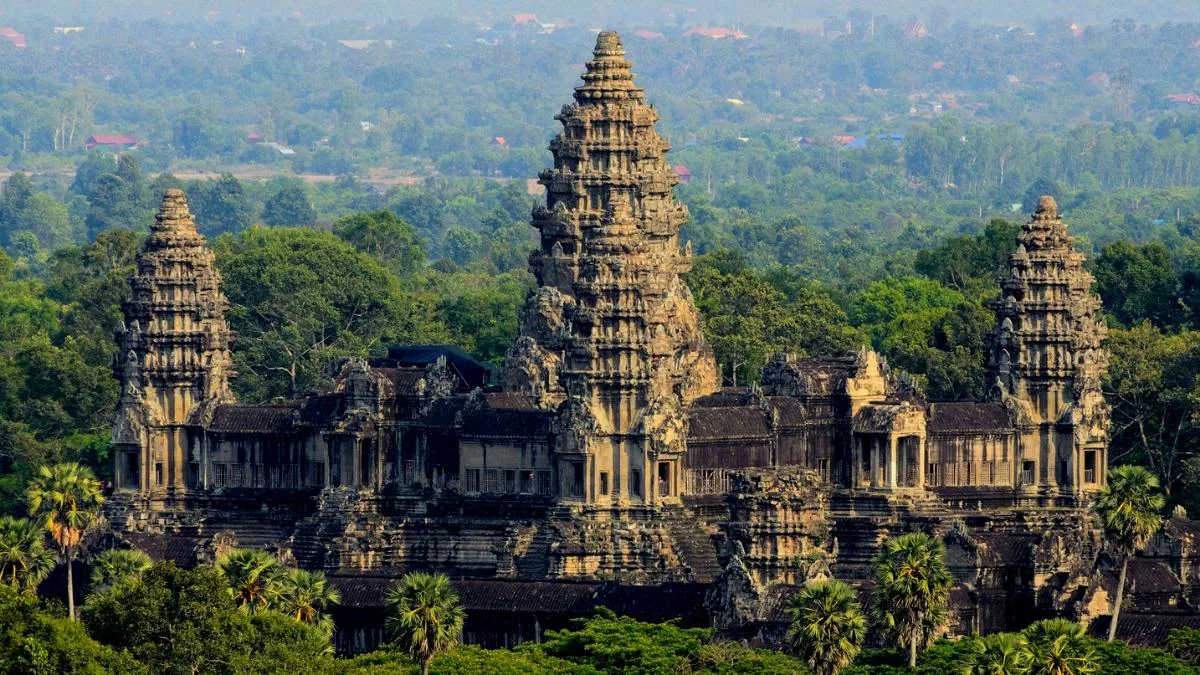
For most international travelers, Angkor Wat is the reason the journey to Siem Reap begins.
The enormous temple was constructed during the reign of King Suryavarman II in the 12th century and remains one of the greatest surviving achievements of Khmer architecture.
Its distinctive towers have become so closely associated with Cambodia that Angkor Wat appears on the Cambodian national flag.
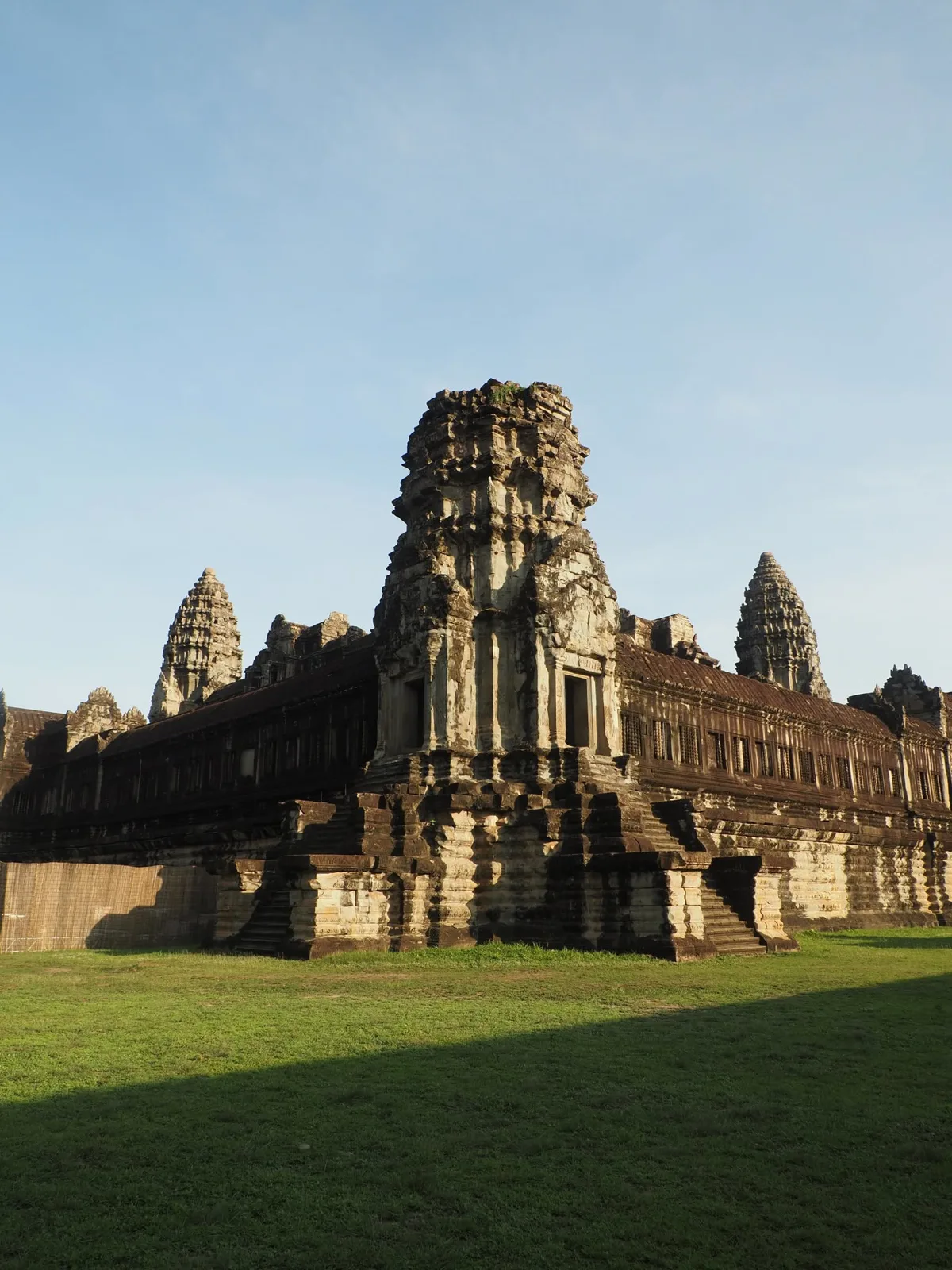
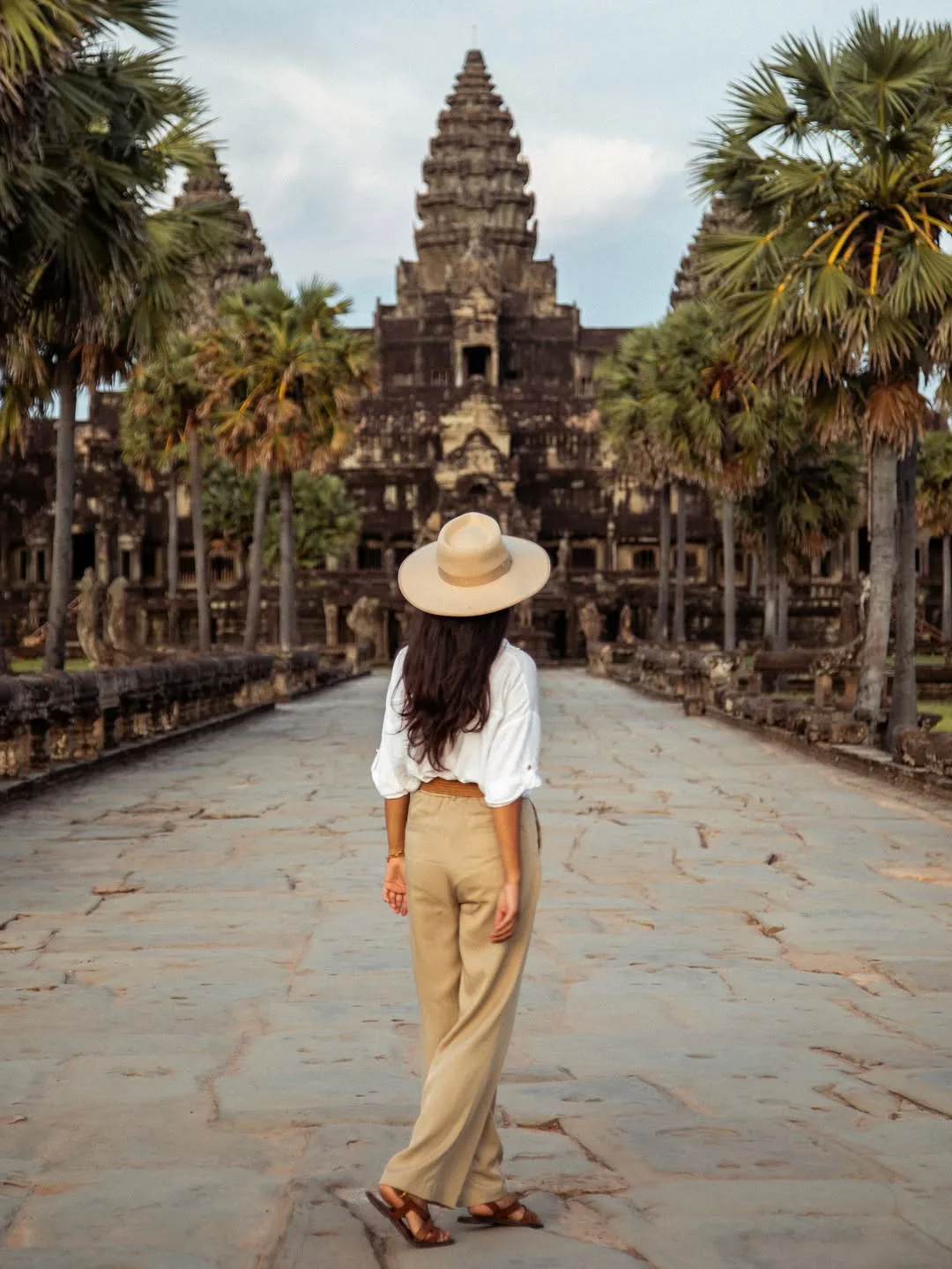
Walking toward the temple for the first time gives visitors a better understanding of its scale. The famous towers visible in photographs form only part of a much larger architectural composition incorporating galleries, courtyards, towers, causeways and extensive stone bas-reliefs.
Sunrise is the most famous time to visit.
However, sunrise is not automatically the best experience for everyone. It requires a very early departure from Siem Reap and popular viewing areas can become crowded.
Travelers primarily interested in architecture or photography may prefer returning later when the initial sunrise crowds begin dispersing.
Angkor Thom and the Faces of Bayon
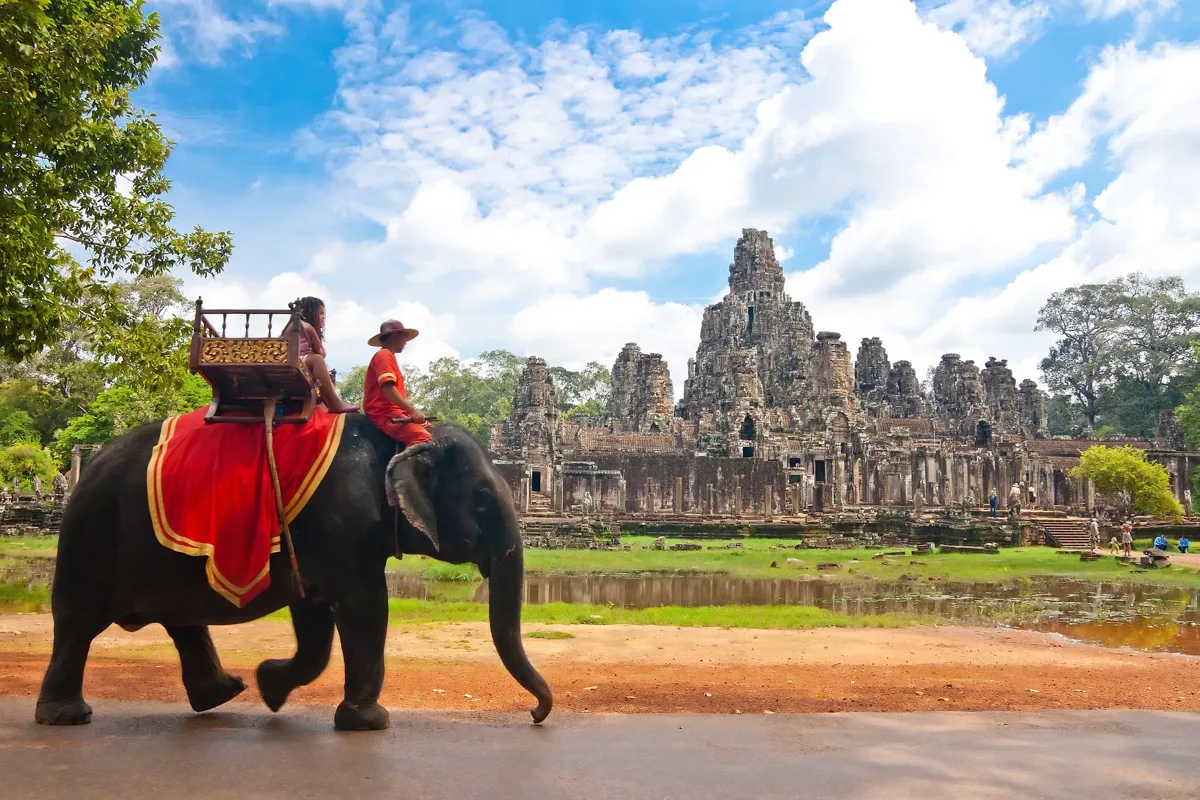
A short distance from Angkor Wat lies Angkor Thom, the enormous walled royal city established under King Jayavarman VII.
Entering through one of its monumental gates immediately feels different from visiting an individual temple.
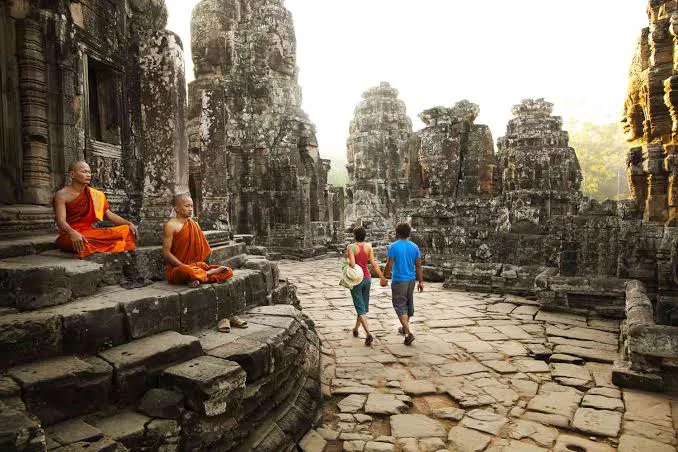
At its center stands Bayon.
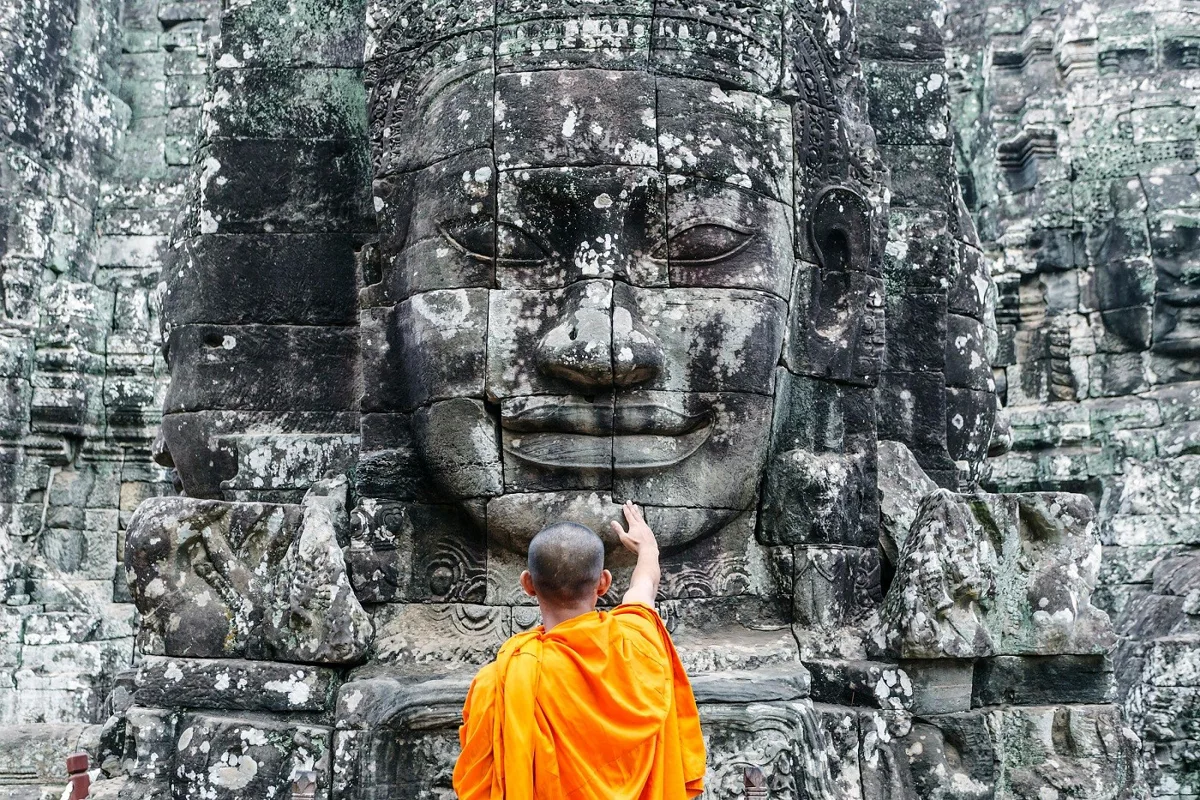
Bayon is famous for its stone towers decorated with enormous serene faces looking outward in different directions. The temple's narrow corridors, changing light and densely arranged towers create an atmosphere completely different from the symmetrical grandeur of Angkor Wat.
Nearby archaeological sites include the Terrace of the Elephants and Terrace of the Leper King.
Visitors interested in Khmer history should give this area enough time rather than treating Bayon as a quick photography stop.
Ta Prohm: Where Ancient Architecture Meets the Jungle
Ta Prohm offers another completely different Angkor experience.
Large tree roots appear to grow directly over and through sections of the temple, creating one of the archaeological park's most recognizable landscapes.
Unlike temples where vegetation was extensively removed during restoration, parts of Ta Prohm were intentionally conserved in a way that preserves the relationship between ruins and forest.
The result is dramatic.
Stone doorways, collapsed galleries and enormous roots intertwine throughout the complex.
Because Ta Prohm is extremely popular, visiting earlier in the morning can provide a quieter experience.
Banteay Srei: Worth Traveling Beyond the Main Angkor Circuit
Travelers with additional time should consider visiting Banteay Srei.
Located farther from central Siem Reap than Angkor Wat or Bayon, Banteay Srei is considerably smaller than the major Angkor monuments.
What makes it exceptional is detail rather than scale.
The temple is famous for elaborate carvings created in reddish sandstone. Decorative elements remain remarkably intricate, allowing visitors to observe Khmer stone craftsmanship much more closely than at many larger temples.
The journey also provides an opportunity to travel beyond the busiest parts of Angkor and see more of the Cambodian countryside.
Siem Reap Is More Than Its Temples
Temple fatigue is real.
After several hours of walking through archaeological sites in tropical heat, even enthusiastic history lovers may find that another temple becomes difficult to appreciate.
That is why a good Siem Reap itinerary should include time away from Angkor.
The city and surrounding region offer markets, museums, food experiences, rural landscapes, traditional crafts and opportunities to understand contemporary Cambodian life.
Instead of spending every daylight hour moving between ruins, alternate intensive temple visits with slower cultural experiences.
Explore Siem Reap's Old Market Area
The central part of Siem Reap is compact and relatively easy to explore.
Around the Old Market area, travelers will find restaurants, cafés, shops, massage businesses, small hotels and markets selling everything from clothing and souvenirs to fruit, vegetables and household goods.
The atmosphere changes considerably after sunset.
Restaurants become busier, night markets open and central streets fill with visitors.
The famous Pub Street area is Siem Reap's nightlife center.
It is tourist-oriented rather than representative of everyday Cambodian life, but it can still be enjoyable for travelers looking for restaurants, bars and an energetic evening atmosphere.
For a more local experience, explore beyond the busiest streets and visit markets during the morning.
Discover Khmer Food
Cambodian cuisine deserves more attention than it often receives.
Siem Reap is an excellent place to begin exploring Khmer food because travelers can find everything from inexpensive local restaurants to contemporary restaurants interpreting traditional Cambodian recipes.
Foods worth trying include:
Fish Amok
One of Cambodia's best-known dishes, commonly prepared with fish, coconut milk and aromatic herbs and spices.
Khmer Curry
Generally milder than many neighboring Southeast Asian curries and often prepared with coconut milk, vegetables and meat.
Lok Lak
Stir-fried beef typically served with vegetables and a pepper-and-lime dipping sauce.
Num Banh Chok
Rice noodles traditionally served with a fish-based curry sauce and fresh herbs and vegetables.
Fresh Tropical Fruit
Markets provide an easy introduction to Cambodia's mangoes, bananas, dragon fruit, rambutan and other tropical produce depending on the season.
Travelers interested in food should consider eating beyond Pub Street. Small Khmer restaurants away from the most tourist-heavy blocks can provide a very different experience.
Visit the Cambodian Countryside
Drive only a short distance beyond Siem Reap and the urban environment quickly gives way to countryside.
Rice fields, palm trees, small villages and traditional houses appear along the roads.
For many travelers, these landscapes become an unexpected highlight of Siem Reap.
Cycling tours, tuk-tuk excursions and guided countryside experiences can provide an introduction to rural Cambodia, although responsible tourism matters.
Villages are communities rather than attractions created for photography.
Ask permission before photographing people closely, avoid entering private property without invitation and choose tours that demonstrate clear benefits for local communities.
Tonlé Sap Lake and Floating Communities
Tonlé Sap is one of Cambodia's most important natural features and plays an enormous role in the country's ecology and livelihoods.
Several communities around the lake can be reached from Siem Reap.
Floating or stilted villages are frequently marketed as excursions, but travelers should choose operators carefully. Experiences vary significantly, and tourism around vulnerable communities raises legitimate questions about where visitor money goes.
A responsible excursion should prioritize understanding the lake, its ecosystem and local livelihoods rather than treating residents as objects of sightseeing.
Travelers should research individual tours before booking instead of automatically purchasing the cheapest excursion offered around town.
Visit a Museum Before—or After—Angkor
Understanding even a small amount of Khmer history can dramatically improve a visit to Angkor.
Without context, visitors may see an extraordinary collection of ancient buildings.
With context, architectural details begin revealing stories about kings, religion, warfare, trade, mythology and the development of one of Southeast Asia's great civilizations.
Visiting a museum or taking a knowledgeable licensed guide can therefore be worthwhile, particularly for travelers interested in history.
One useful strategy is to learn the basics before your first full temple day and then return to more detailed historical material afterward.
How Many Days Do You Need in Siem Reap?
2 Days
Possible, but rushed.
Use one day for the main Angkor temples and the remaining time for central Siem Reap.
3 Days
A good minimum for most first-time visitors.
You can explore Angkor Wat, Angkor Thom, Bayon and Ta Prohm without compressing everything into one exhausting day, while still having some time for Siem Reap itself.
4 Days
An excellent balance.
Add Banteay Srei, countryside exploration, museums or a food experience.
5 Days
Best for slower travelers, photographers and visitors particularly interested in Khmer history.
The extra time allows early mornings at Angkor followed by relaxed afternoons rather than full-day sightseeing every day.
A Recommended 3-Day Siem Reap Itinerary
Day 1 – Angkor Wat and Angkor Thom
Start early and make Angkor Wat your first major introduction to Khmer architecture.
Continue toward Angkor Thom and spend time exploring Bayon and nearby monuments.
Avoid scheduling too many temples.
Return to Siem Reap during the afternoon and spend the evening exploring the central city.
Day 2 – Ta Prohm and the Angkor Landscape
Visit Ta Prohm before exploring additional temples along the Angkor circuit.
Instead of rushing between sites, spend more time observing carvings, architecture and the surrounding forest.
Return to Siem Reap for Khmer food and a relaxed evening.
Day 3 – Banteay Srei and Rural Siem Reap
Travel farther from the city toward Banteay Srei.
Combine the excursion with countryside stops where appropriate.
Spend your final evening enjoying Siem Reap rather than squeezing another major attraction into the schedule.
Best Time to Visit Siem Reap
Cambodia has a tropical climate with broadly defined dry and rainy periods.
November to February
Generally the most comfortable period for sightseeing.
Humidity and temperatures tend to feel more manageable, making long days exploring outdoor archaeological sites easier.
It is also a popular travel period, so major temples can be busy.
March to May
Temperatures can become extremely hot.
Temple exploration during the middle of the day may be exhausting.
Start sightseeing early, carry water and plan breaks during the hottest hours.
June to October
This is broadly Cambodia's wetter period.
Rain can interrupt sightseeing, but the landscape becomes noticeably greener and the countryside can be particularly beautiful.
Rainfall does not necessarily mean continuous rain throughout every day.
Photographers may appreciate the dramatic skies, vegetation and reflective pools that appear during this period.
What Time Should You Visit Angkor?
Early morning is usually the most comfortable time.
Temperatures are lower and some temples are quieter.
The classic Angkor Wat sunrise experience requires departing Siem Reap well before dawn.
If sunrise is not important to you, don't feel obligated to follow the standard tourist routine.
A good guide or driver can adjust the temple sequence depending on crowds, weather and your interests.
This can make a significant difference to the experience.
Getting to Siem Reap
International travelers generally arrive through Siem Reap–Angkor International Airport or travel overland from other Cambodian destinations.
When planning flights, pay attention to the airport rather than relying on older travel guides, because airport infrastructure serving Siem Reap has changed in recent years.
Travelers continuing around Cambodia commonly connect Siem Reap with destinations such as Phnom Penh and Battambang.
Overland journeys are also possible between Cambodia and neighboring Thailand, Laos and Vietnam, but border requirements should always be checked before departure.
Cambodia Visa and Entry Requirements
Visa rules depend on nationality and can change.
Cambodia operates an official electronic visa system for eligible travelers.
Travelers using the e-Visa system should apply through the official Cambodian government e-Visa website rather than assuming every website appearing in search results is an official government service.
Cambodia also requires travelers to complete the Cambodia e-Arrival process. The Cambodian government's e-Visa portal currently recommends submitting the e-Arrival form online within seven days before arrival.
Always verify the requirements that apply to your passport immediately before traveling.
Getting Around Siem Reap
Tuk-Tuk
Tuk-tuks remain one of the most convenient ways to travel around Siem Reap and explore Angkor.
For a full temple day, hiring a driver for an agreed itinerary is often easier than arranging individual rides repeatedly.
Confirm the route and price before departure.
Bicycle
Cycling can be enjoyable for travelers comfortable riding in tropical weather.
Distances around Angkor can become substantial, however, especially once temple walking is included.
Car
Air-conditioned cars are useful for families, older travelers and visitors traveling to temples farther from Siem Reap.
They become particularly valuable during the hottest months.
Walking
Central Siem Reap is reasonably walkable, but Angkor is far too extensive to explore entirely on foot from the city.
Where to Stay in Siem Reap
Where you stay depends more on atmosphere than distance to Angkor.
Old Market and Pub Street Area
Best for travelers wanting restaurants, nightlife and convenient evening entertainment.
Wat Bo Area
A good choice for travelers who prefer a slightly calmer environment while remaining close to the center.
Luxury Resort Areas
Siem Reap has an extensive selection of upscale hotels and resorts, many offering pools and gardens.
A swimming pool can be surprisingly valuable after spending several hours exploring temples in Cambodia's heat.
What to Wear at Angkor
Angkor is not simply an archaeological attraction.
Many temples have continuing religious and cultural significance.
Dress respectfully.
Lightweight clothing is useful in Cambodia's tropical climate, but visitors should carry clothing appropriate for entering religious sites.
Comfortable walking shoes are particularly important.
Temple surfaces include uneven stones, steep stairs and long walking routes.
A hat, sunscreen and drinking water are also useful during daytime exploration.
Responsible Travel at Angkor
Angkor is an irreplaceable cultural landscape, not a theme park.
Do not climb onto structures where access is prohibited.
Do not touch carvings unnecessarily.
Follow marked routes and instructions from site authorities.
Avoid removing stones or any material from archaeological areas.
Respect monks and worshippers.
Travelers should also remember that communities continue to live within the wider Angkor landscape. UNESCO notes that villages remain within the archaeological park and that local communities continue traditional activities including agriculture.
Responsible tourism therefore means respecting both ancient monuments and living communities.
Practical Tips for First-Time Visitors
Start early.
Cambodian heat can make archaeological exploration considerably more tiring later in the day.
Don't overload your itinerary.
Four carefully explored temples can be more rewarding than ten rushed stops.
Carry water.
Dehydration can quickly ruin a temple day.
Learn some history first.
Understanding the Khmer Empire makes Angkor dramatically more meaningful.
Hire a knowledgeable guide if history interests you.
The carvings and architectural features become much easier to understand with context.
Keep small amounts of cash available.
Digital payments are increasingly common, but cash remains useful for small purchases and local services.
Protect yourself from the sun.
Much of Angkor exploration takes place outdoors.
Be careful with unofficial ticket sellers.
Use official channels when purchasing required admission products.
Is Siem Reap Safe for Tourists?
Siem Reap is an established international tourism destination, but visitors should use the same common-sense precautions they would elsewhere in Southeast Asia.
Keep valuables secure, particularly in crowded areas.
Use reputable transportation.
Avoid carrying unnecessary amounts of cash.
Take extra care when walking or riding near traffic.
Travel insurance is sensible for international trips, particularly if your itinerary includes cycling or other outdoor activities.
For current security, health or entry information, check official government travel guidance shortly before departure because conditions can change.
Siem Reap Travel Costs
Siem Reap can accommodate very different travel budgets.
Backpackers can find inexpensive accommodation and local meals, while the city also has luxury resorts, private guides, premium restaurants and private transportation.
Your biggest sightseeing-related expenses are likely to include Angkor admission, transportation and possibly a licensed guide.
Rather than choosing accommodation solely by price, consider location, air conditioning and access to a swimming pool.
After a hot day at Angkor, these practical comforts can have more impact on your trip than an elaborate hotel room.
Siem Reap for Families
Siem Reap can work very well for families, but parents should avoid planning excessively long temple days.
Children may enjoy the enormous gateways, jungle-covered Ta Prohm and tuk-tuk journeys more than detailed archaeological explanations.
Break temple exploration into manageable sections.
Return to the hotel during the hottest part of the afternoon when necessary.
An air-conditioned vehicle can
Popular Tours
Top Attractions
Travel Guides & Articles
All Articles
Tours from Siem Reap
 New
New
 New
New
New
New
New
New
 New
New
 New
New
 New
New
 New
New
 New
New
 New
New
 New
New
Hotels in Siem Reap
No hotels listed yet
Contact us for recommendationsThings to Do in Siem Reap

Angkor Wat stands as the world's largest religious monument and Cambodia's most iconic landmark. This magnificent 12th-century Khmer masterpiece, surrounded by a vast moat, offers a profound journey into ancient history and architectural grandeur. It's an unmissable highlight of any visit to Siem Reap.
Angkor Thom is a 9 km-square walled city and the last capital of the Khmer Empire. At its heart lies the spectacular Bayon Temple, famous for 216 serene stone faces gazing in all directions, offering an unforgettable glimpse into ancient Khmer artistry.
Ta Prohm is Angkor's most atmospheric temple, renowned for its dramatic fusion of ancient stone architecture and colossal tree roots. Enormous silk-cotton and strangler fig trees intertwine with its crumbling corridors and towers, creating a stunning display of nature reclaiming history. This captivating UNESCO site offers a truly unique and photogenic experience within the Angkor Archaeological Park.
Banteay Srei, known as the "Citadel of Women," stands out among Angkor's temples for its remarkably preserved and exquisitely detailed pink sandstone carvings. This 10th-century masterpiece showcases the pinnacle of Khmer artistic mastery, offering a mesmerizing glimpse into ancient Cambodian craftsmanship.
Tonle Sap is Southeast Asia's largest freshwater lake and a UNESCO Biosphere Reserve, renowned for its unique floating villages and extraordinary aquatic ecosystem. Located just 15 km south of Siem Reap, it offers a fascinating glimpse into a vibrant way of life adapted to the changing water levels. This natural wonder is a must-visit for those exploring Cambodia's rich natural and cultural heritage.
Preah Khan is one of Angkor's largest and most captivating temples, a sprawling 12th-century complex built by King Jayavarman VII. Visitors can explore its atmospheric corridors, marvel at enormous trees intertwined with stone, and discover intricate bas-reliefs that tell ancient stories.
Angkor Night Market stands as Siem Reap's premier shopping destination, offering a vibrant array of Cambodian crafts, exquisite silk scarves, delectable street food, and captivating artwork. Immerse yourself in the festive atmosphere and discover unique treasures, making it an essential stop for any visitor to the city.