
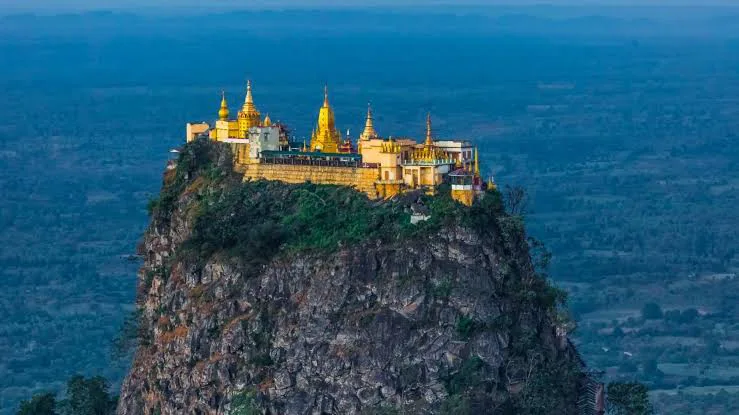
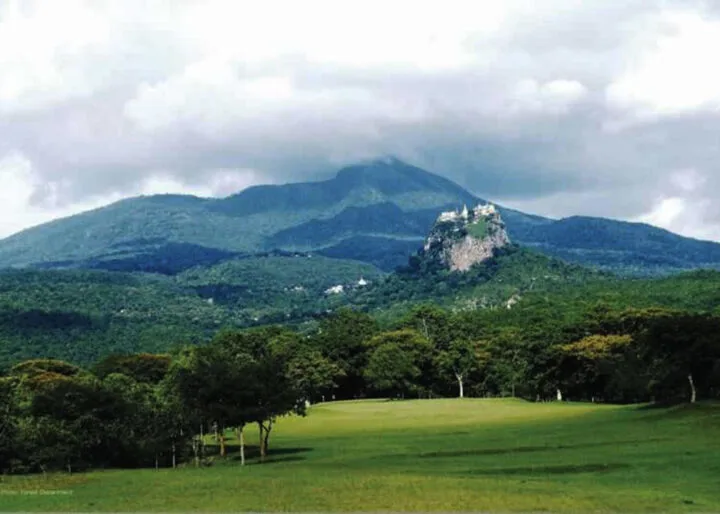
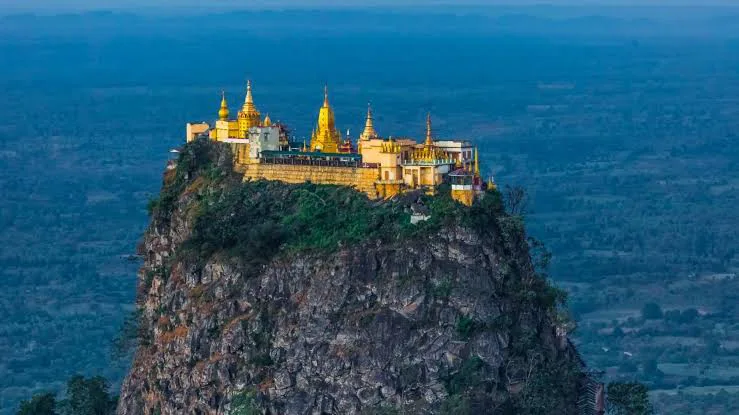
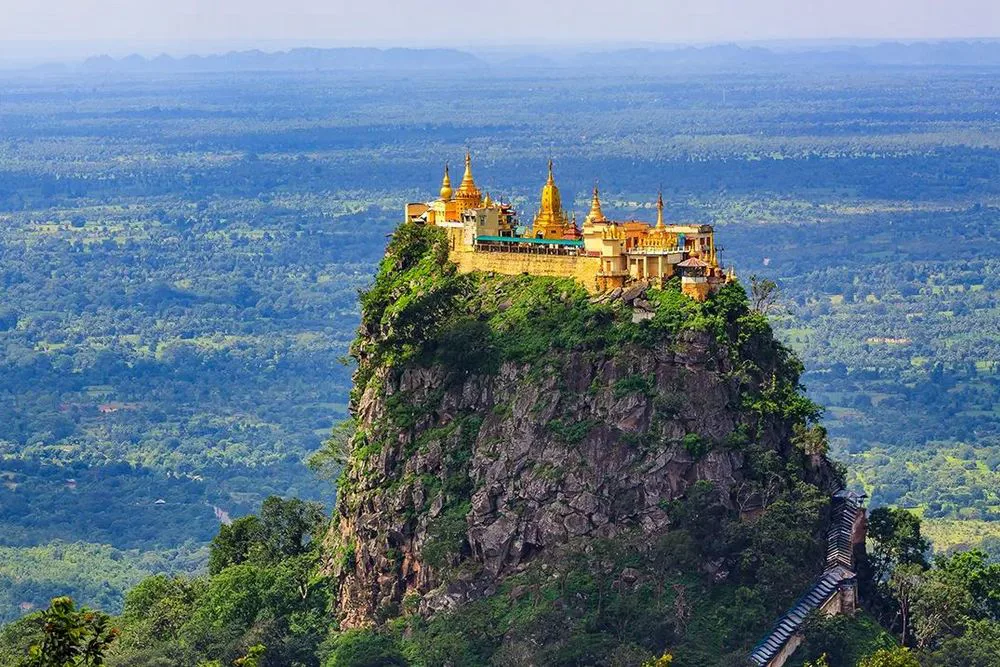
Mount Popa, a prominent volcanic peak in central Myanmar, rises approximately 1518 meters above sea level. Situated southeast of Bagan, this natural landmark is a significant spiritual site, widely recognized for its pilgrimage attractions and numerous Nat relics and temples located on its slopes. On clear days, the mountain is visible from the Irrawaddy River, making it a popular destination for visitors exploring the region.
Mount Popa's Geographical and Spiritual Significance
This imposing geological formation stands as a notable feature in the Burmese landscape, offering panoramic views from its upper reaches. Its elevation makes it a distinctive landmark, particularly when observed from a distance across the plains. The mountain's name itself, derived from the word “puppa,” translates to “flower,” hinting at its natural allure. For centuries, Mount Popa has drawn devotees and travelers alike, primarily due to its deep connection with Myanmar's traditional spiritual beliefs.
The mountain is considered a primary center for the worship of Nats, which are revered spirits in Burmese folk religion. Numerous shrines and sacred sites dedicated to these Nats are found across the mountain, making it a focal point for religious practices. The journey to these temples often involves ascending many steps, a physical act of devotion that many pilgrims undertake. For those interested in broader Southeast Asian travel, considering a comprehensive travel plan can help integrate such unique cultural experiences.
Ancient Narratives and Local Beliefs
Mount Popa's history is interwoven with ancient tales and spiritual lore. Geological evidence suggests the mountain formed from a volcanic eruption around 442 B.C. Beyond its physical origins, local tradition identifies it as the dwelling place for some of Burma's most powerful Nats, establishing it as a potent spiritual hub. This association has led to its informal designation as the 'Mount Olympus of Burma,' highlighting its perceived divine importance within the cultural context.
Among the many stories, one recounts the Mahagiri Nats, a brother and sister from the Tagaung kingdom of the Irrawaddy region. Seeking sanctuary, they were granted refuge by King Thinligyaung, who reigned between 344 and 387 B.C., and subsequently became enshrined on the mountain. Another widely known legend involves Me Wunna, a flower-eating ogress, and Byatta, a royal flower gatherer for the king of Popa. Their forbidden love and Byatta's subsequent execution for disobeying the monarch led to Me Wunna's profound sorrow and eventual transformation into a Nat upon her death. Their children also met a similar fate and became Nats, a narrative commemorated through an annual festival.
Mount Popa as a Protected Natural Area
In contemporary times, Mount Popa has been officially recognized as a national park and designated a nature reserve. This status helps protect its unique ecosystem and biodiversity. The area benefits from nearby reservoirs, which provide a consistent water supply, supporting extensive orchards and gardens. These agricultural spaces are known for yielding a variety of tropical fruits, including mangoes, jackfruits, papayas, and bananas, contributing to the local economy and natural landscape.
Beyond its ecological value, the mountain retains its profound cultural significance. A prevailing local belief suggests that visiting Mount Popa brings good fortune and guarantees victory in endeavors. This enduring tradition underscores the deep reliance on ancient cultural practices and beliefs that continue to influence daily life in the region. Many individuals travel from various distances, hoping to experience the positive effects associated with these long-held customs. For those exploring other historical sites, considering active exploration of ancient capitals can provide a similar sense of discovery.
Cultural Observances and Annual Celebrations
The spiritual life surrounding Mount Popa is rich with ceremonies and festivals. Nat worship involves specific rituals, which historically included animal sacrifices, reflecting the seriousness of these spiritual practices. These traditions are deeply ingrained in the local community's way of life.
A significant annual event takes place at the mountain's summit, drawing numerous participants. This festival features a transgender individual who is believed to become possessed by a Nat spirit, acting as an intermediary between the human and spiritual realms. This interaction is a central part of the celebration, allowing devotees to connect with the spirits. Such cultural events contribute significantly to the appeal of day trips in the region, attracting those interested in unique cultural expressions. For a broader experience of Southeast Asian heritage, consider a cultural journey through Vietnam and Myanmar.
Planning a Visit to Mount Popa from Bagan
Mount Popa is a popular destination for day excursions, particularly for those based in Bagan. The journey typically involves a drive through rural landscapes, offering glimpses into local life. Upon arrival, visitors can explore the temple complex, ascend the numerous steps to the main shrines, and enjoy the views from the top.
While the primary attraction is the spiritual site on the volcanic plug, the surrounding national park offers opportunities for appreciating the natural environment. Visitors should be prepared for a climb and respectful of the religious customs observed at the site. It is advisable to wear appropriate attire that covers shoulders and knees, and to remove shoes before entering temple areas.
Practical Tips for Your Visit
- Transportation: Taxis or shared vans are commonly available from Bagan for a day trip.
- Footwear: Be prepared to remove shoes and socks for the ascent to the main temple complex.
- Attire: Dress modestly to show respect for the sacred site.
- Local Guides: Engaging a local guide can enhance understanding of the legends and spiritual practices.
- Hydration: Carry water, especially during warmer months, as the climb can be strenuous.
Frequently Asked Questions
What is Mount Popa primarily known for?
Mount Popa is primarily known as a significant pilgrimage site in Myanmar, revered as the abode of the country's most powerful Nat spirits. It features numerous temples and shrines dedicated to these spirits, attracting devotees and visitors interested in Burmese spiritual traditions.
How high is Mount Popa?
Mount Popa is a volcano that measures approximately 1518 meters (about 4,980 feet) above sea level. The main temple complex is situated on a volcanic plug, often referred to as Taung Kalat, which is a smaller, distinct peak adjacent to the main volcano.
Can Mount Popa be visited as a day trip?
Yes, Mount Popa is a popular destination for day trips, especially for travelers staying in Bagan. The drive from Bagan is manageable, and visitors can explore the temple complex and surrounding areas within a single day.
What is the significance of Nats at Mount Popa?
Nats are revered spirits in Burmese folk religion, and Mount Popa is considered their most important center of worship. Various legends and cultural practices revolve around these spirits, with many shrines dedicated to them on the mountain. Pilgrims visit to pay respects and seek blessings from the Nats.
Are there any specific cultural customs to observe when visiting?
Visitors should dress respectfully, covering shoulders and knees, as Mount Popa is a sacred religious site. It is customary to remove shoes and socks before ascending the steps to the main temple complex. Visitors should also be mindful of ongoing religious ceremonies and local customs.








