
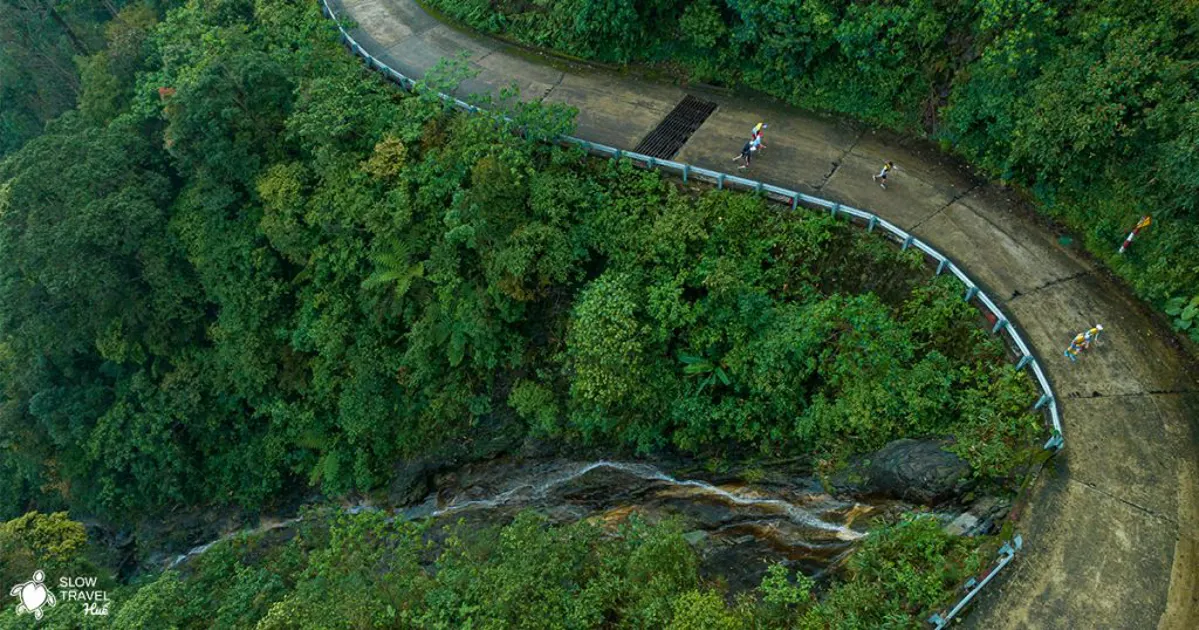
Bach Ma National Park, situated between Hue and Da Nang in central Vietnam, offers visitors a refreshing escape into a diverse natural landscape. This protected area is celebrated for its extensive biodiversity and varied terrain, making it a noteworthy destination for those interested in outdoor pursuits and ecological exploration. A trip here provides opportunities to experience a cooler climate and observe a rich array of plant and animal life.
Geographic Setting and Historical Context
Bach Ma National Park spans approximately 37,487 hectares, characterized by an average elevation of 1,450 meters and its proximity to the coastline, just 10 kilometers away. This unique positioning contributes to its consistently mild weather, even when surrounding lowland areas experience higher temperatures. The park is structured into three distinct zones: a core area designated for strict protection, an administrative zone, and a surrounding buffer zone. Its ecological significance is underscored by a vast collection of flora, numbering 2,147 species, and over 1,500 species of fauna, with 93 of these listed on both the Vietnamese and global Red Lists. The park's location along the former boundary between North and South Vietnam also contributes to a landscape that blends features from both regions, offering a more varied environment compared to some other Vietnamese national parks. The area features numerous waterfalls, cool forest sections, and seasonal rhododendron blooms.
The history of Bach Ma dates back to 1932 when French engineer Girard identified its summit as an ideal location for a colonial hill station serving the administration in Hue. To support the influx of vacationers and reduce the need for travel to larger towns, essential services such as a post office, a market, and a hospital were established. By 1937, the community had expanded to include 139 holiday residences, earning it the moniker "Dalat of Central Vietnam." The region experienced significant conflict during the early 1950s amidst the Vietnam War. Following Vietnam's independence from French rule, Bach Ma's colonial structures were largely abandoned. Development has been minimal since the early 20th century, and a small number of these French colonial villas still stand, some having been repurposed into lodging options amidst the dense forests.
The name "Bach Ma" translates to "White Horse," a designation inspired by the white clouds that frequently encircle the mountain peak. Local folklore recounts that ancient deities once visited this mountain to play chess. Their horses, left to graze, became so engrossed in the abundant grass that they delayed their return. The deities, after a long wait, eventually ascended to heaven without them. The horses, left behind, are said to have transformed into the white, horse-shaped clouds that perpetually drift around the mountains, patiently awaiting their owners' return.
Reaching Bach Ma National Park
Bach Ma National Park is conveniently located for travelers coming from several major central Vietnamese cities. It lies approximately 40 kilometers from Hue City, about 60 kilometers from Da Nang, and around 90 kilometers from Hoi An. Travel time from these urban centers is typically under two hours by road. Visitors have the option of driving a car or riding a motorbike from either Hue or Da Nang directly to the park entrance. Given its position roughly midway between Hue and Da Nang, access is straightforward from both. For those preferring a more private travel arrangement, various private car services are available for booking from these cities. When planning travel from Hue, it can be helpful to consider local services. Understanding financial services in Hue City can also be beneficial for travelers. Similarly, those departing from Da Nang might find it useful to review information on banking services in Da Nang.
Activities and Points of Interest
Bach Ma National Park offers a range of activities centered on its natural and historical attractions.
Vong Hai Dai (Sea Observation Post)
Situated at an elevation of 1,430 meters on Bach Ma's highest point, Vong Hai Dai provides expansive panoramic views. The path leading to this summit is considered one of the more accessible routes within the park, often serving as the initial stop for visitors beginning their exploration. From this vantage point, observers can survey the surrounding terrain, extending to the distant ocean, including the coastal areas of Canh Duong in Hue and Lang Co near Da Nang.
Ngu Ho (Five Lakes)
A walk of approximately 30 minutes leads to Ngu Ho, a sequence of five interconnected lakes accompanied by waterfalls. These lakes are positioned at varying elevations, with the third lake frequently cited by visitors as particularly appealing due to its circular form, resembling a full moon. Water cascades into this lake from a height of six meters, creating a striking, silvery-white curtain under sunlight.
Do Quyen Waterfall (Rhododendron Waterfall)
Located at an altitude of about 300 meters, Do Quyen Waterfall presents a beautiful sight throughout the year with its white, frothy waters. The waterfall derives its name from the numerous rhododendron flowers that grow in its vicinity, typically blooming in March. The visual spectacle of these flowers in bloom is often described as captivating.
Truot Falls (Slide Waterfall)
Truot Falls is situated within the park's buffer zone, at the base of a 1,500-meter mountain range, surrounded by dense, untouched jungle. Its name, "Slide Waterfall," comes from a large rock formation at its core, naturally smoothed by water flow, creating a natural slide. A thin, persistent layer of moss on these rocks is said to enhance the sliding effect.
Truc Lam Zen Monastery
At the foot of Bach Ma mountain, adjacent to a lake, lies the Truc Lam Zen Monastery. This complex comprises several buildings and various Buddha statues. Access involves a 15-minute boat journey across the lake, followed by an ascent via stairs to the monastery grounds.
Wildlife Observation
Bach Ma National Park serves as a habitat for over 1,400 plant species and a significant population of rare wildlife, including numerous bird species and hundreds of monkeys. A visit to the park offers a valuable chance to observe these diverse flora and fauna in their natural setting.
Dining and Accommodation Options
For those spending time within Bach Ma National Park, several options exist for meals and overnight stays.
Bach Ma Village Cuisine
At Bach Ma Village, visitors can sample a variety of local dishes, often available at reasonable prices. Culinary offerings include "Ca Tre Nuong" (grilled catfish), "Ga Nuong La Mac Mat" (grilled chicken prepared with Vietnamese curry leaves), "Banh Bot Loc" (pork and shrimp dumplings), "Banh It Tran" (Vietnamese sticky rice dumplings), "Bun Bo Hue" (Hue-style beef noodle soup), "Com Hen" (baby basket clams with rice), and "Bun Thit Nuong" (grilled pork with noodles). The village also features a Café & Bar, providing evening entertainment options.
Accommodation at Do Quyen Villas
The Do Quyen Villa I and Do Quyen Villa II provide lodging facilities within Bach Ma National Park, offering services comparable to a 3-star hotel. Rooms are equipped with air conditioning and comfortable beds, and room service is available. These villas are frequently fully booked, especially on weekends, so prospective guests should make reservations well in advance. It is advisable to contact the accommodation directly or through a reputable travel agency to secure desired dates.
| Venue | Type | Offerings | Notes |
|---|---|---|---|
| Bach Ma Village | Dining & Entertainment | Local Vietnamese dishes (e.g., grilled catfish, Hue beef noodles), Café & Bar | Reported reasonable prices. |
| Do Quyen Villa I & II | Accommodation | 3-star hotel services, air-conditioned rooms, comfortable beds, room service | Often fully booked on weekends; advance booking recommended. |
Planning Your Visit: Optimal Seasons and Nearby Destinations
The most favorable period to visit Bach Ma National Park extends from March through September. During these months, the mountain's elevation ensures cooler, more pleasant temperatures, providing a welcome contrast to the heat often experienced in the surrounding lowlands. For travelers seeking a quieter experience with fewer crowds, the months from October to January may be preferable, offering a more serene atmosphere.
Beyond the park's boundaries, several other attractions are accessible for further exploration. These include the scenic Lang Co Beach and the Hai Van Pass, known for its coastal views. Additionally, the cultural city of Hue and the dynamic city of Da Nang are within reasonable driving distance, offering diverse urban experiences. For those interested in coastal relaxation, exploring Halong Bay's beaches can offer similar appeal, though it is a different region.
Frequently Asked Questions
What is the best way to get to Bach Ma National Park?
Travelers can reach Bach Ma National Park by car or motorbike from nearby cities such as Hue, Da Nang, or Hoi An. The journey typically takes less than two hours. Private car services are also an option for those seeking convenience.
Are there places to stay inside Bach Ma National Park?
Yes, accommodation is available within the park at facilities like Do Quyen Villa I and Do Quyen Villa II. These offer hotel-like amenities, but it is recommended to book in advance, especially for weekend stays, as they can be fully occupied.
What kind of wildlife can be seen in Bach Ma National Park?
The park is home to a diverse range of wildlife, including over 1,500 animal species and more than 1,400 plant species. Visitors might observe various bird species and different types of monkeys, among other rare flora and fauna.
What is the significance of the name "Bach Ma"?
The name "Bach Ma" translates to "White Horse." It originates from a local legend about white, horse-shaped clouds that are said to perpetually hover around the mountain peak, representing the horses of ancient deities who once visited the area.
Can visitors engage with water features at Bach Ma National Park?
The park features several water attractions, including Ngu Ho (Five Lakes) and Truot Falls, where natural rock formations create areas for water interaction. However, specific guidelines for swimming or sliding should be verified upon arrival.








