
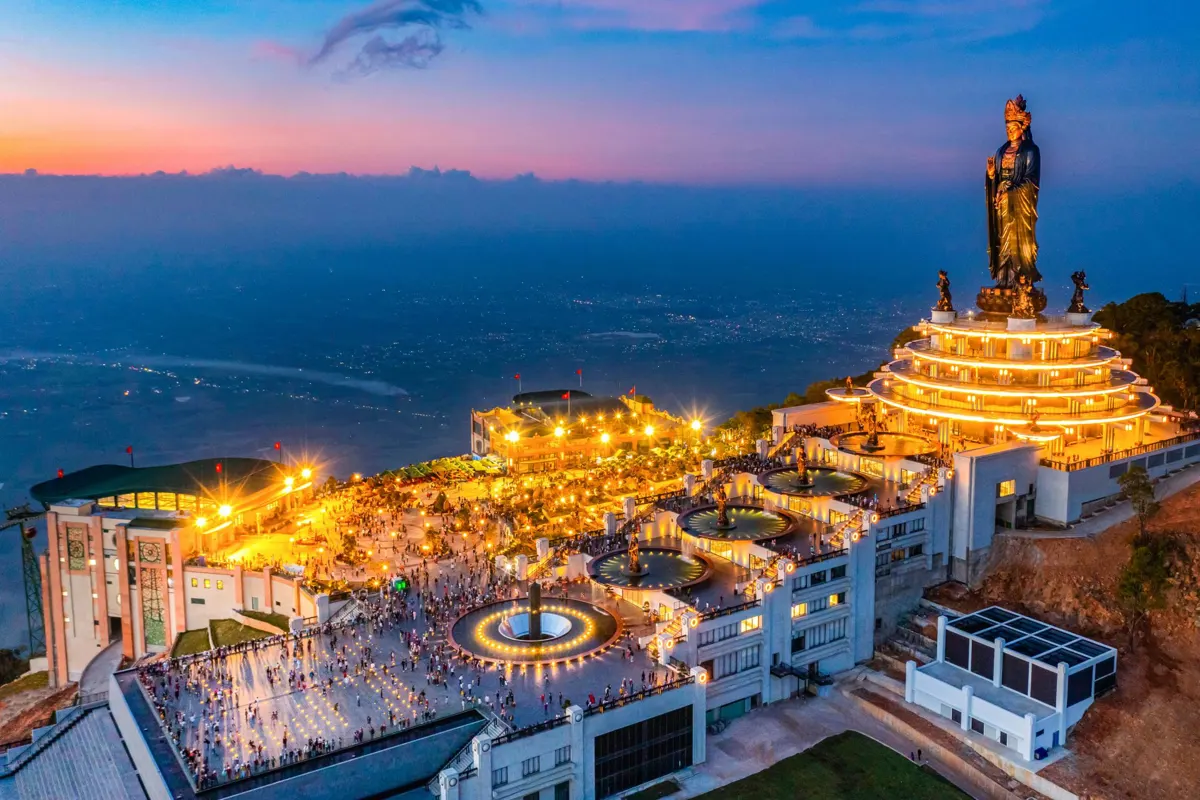
The Cao Dai Temple in Tay Ninh stands as the principal spiritual center for Caodaism in Southern Vietnam. This distinctive religious site draws many visitors with its unique architectural style, which reflects the syncretic nature of its traditions. Situated approximately 100 kilometers from Ho Chi Minh City, it offers an excellent destination for a day excursion, often combined with a visit to the Cu Chi Tunnels.
Understanding Caodaism and Its Origins
Caodaism, formally known as Đại Đạo Tam Kỳ Phổ Độ, emerged in Southern Vietnam during the early 1920s, though its official codification occurred in 1926. It represents Vietnam's third-largest religion, incorporating elements from various major global faiths, including Buddhism, Christianity, Taoism, Confucianism, and Islam. Current estimates suggest nearly three million adherents across 38 provinces and cities nationwide, primarily concentrated in the southern regions of the country.
The central emblem of Caodaism is a triangular eye, symbolizing the divine presence of God. This sacred eye appears prominently throughout the temple grounds, most notably above the primary entrance. Beyond this singular deity, the religion also venerates significant figures from other traditions, such as Shakyamuni Buddha, Jesus Christ, Confucius, Lao Tzu, and Lady Guanyin, illustrating its inclusive theological framework.
The Distinctive Architecture of Cao Dai Temple
The architectural design of the Cao Dai Temple, also referred to as the Tay Ninh Holy See, is a major draw for visitors. Construction began in 1933 and the temple was formally opened in 1955. The structure itself is an eclectic fusion of Neo-Gothic, Baroque, and traditional Asian styles, adorned with elaborate decorations. These include pillars encircled by dragons, representations of seven-headed cobras, and ceilings painted to resemble a clear blue sky.
The complex features twelve entry points, each embellished with carvings of four revered animals from Asian folklore and lotus motifs. The main entrance, inscribed with "Dai Dao Tam Ky Pho Do" in both Vietnamese and Chinese characters, is reserved for ceremonial occasions involving heads of state or religious leaders. The expansive grounds host numerous architectural elements linked by broad pathways. Within a generous courtyard, statues of Buddha and well-maintained gardens lead to the Great Temple, a particularly striking edifice measuring 97 meters in length and 22 meters in width. It is characterized by three towers, each 36 meters high, and two pavilions, 25 meters tall, housing steeples and drums. The Great Temple's interior floor is arranged into nine distinct levels, known as the "Nine Fairy Levels," beneath a tall, domed ceiling painted with clouds against a sky-blue background. At the far end, a large sphere represents the cosmos, featuring 3,027 stars and the Divine Eye.
Experiencing the Daily Prayer Ceremonies
Beyond its architectural splendor, observing a Caodaism prayer session offers a profound cultural insight. Most worshippers wear plain white robes. However, men holding the rank of priest or higher don robes in bright colors—yellow for Buddhist allegiance, blue for Taoist, or red for Confucianist. Bishops and cardinals also display the Divine Eye on their head coverings. During services, men occupy the right side of the hall, while women are seated on the left, with all participants arranged in orderly rows.
Formal prayer rituals occur four times daily: at 6:00 AM, noon, 6:00 PM, and midnight. For those visiting on a day trip from Ho Chi Minh City, the noon ceremony is typically the most accessible and recommended to witness. Female visitors enter the temple through a door on the left side at the base and proceed around the colonnaded hall in a clockwise direction. Male visitors enter from the right side and move counter-clockwise. Photography of the prayer sessions is generally permitted from the upper balcony, provided visitors adhere to instructions from the priests. Certain areas within the temple, however, prohibit photography.
Planning Your Journey to Tay Ninh
The Cao Dai Temple is situated in Hoa Thanh District, Tay Ninh Province, approximately 90 kilometers northwest of Ho Chi Minh City. It lies about 55 kilometers from the Cu Chi Tunnels, making a combined day trip to both locations a popular itinerary. Several transportation options are available from Ho Chi Minh City, allowing travelers to select based on their preferences for independence and budget.
For those comfortable navigating Vietnamese roads independently, renting a motorbike from a shop in Ho Chi Minh City provides flexibility. The journey typically takes between 2 to 2.5 hours. Alternatively, budget-conscious travelers who prefer not to drive can utilize public buses. This involves taking bus #703 from Ben Thanh Market bus stop to Moc Bai, then transferring to bus #05 bound for Tay Ninh Bus Station. From the Tay Ninh Bus Station, a taxi or motorbike taxi is required to cover the remaining approximately 6 kilometers to the temple. This multi-stage bus journey usually requires at least three hours. The most convenient approach for many is to arrange a private car or an organized tour through a local travel agency. Such tours typically include transportation, a local guide, and entrance fees, offering the option to visit only the Cao Dai Temple or combine it with the Cu Chi Tunnels. When planning your trip from Ho Chi Minh City, consider local banking services for currency exchange or cash withdrawals. Understanding banking options in Ho Chi Minh City can assist with financial preparations before departure.
| Transportation Method | Estimated Travel Time from HCMC | Cost Implication | Flexibility |
|---|---|---|---|
| Motorbike Rental | 2 - 2.5 hours | Budget-friendly (rental + fuel) | High (independent schedule) |
| Public Bus (multi-stage) | At least 3 hours | Very low (bus fares) | Low (fixed routes/schedules) |
| Private Car / Organized Tour | Variable (often includes stops) | Higher (includes transfer, guide, fees) | Medium (pre-arranged itinerary) |
Important Visitor Guidelines
To ensure a respectful and pleasant visit to the Cao Dai Temple, guests should observe several guidelines:
- As a sacred site, appropriate attire is required. Visitors should dress modestly, avoiding sleeveless tops, short shorts, or skirts that sit above the knee.
- Before entering the main temple structure, all visitors must remove their shoes and hats.
- While photography of the architectural elements and prayer sessions is generally allowed, it is essential to seek permission, especially during ceremonies, and to follow any instructions from temple staff.
- Access to the central area of the main building is restricted to worshippers; visitors are not permitted to enter this section.
- For those wishing to observe the noon religious ceremony, it is advisable to arrive before 12:00 PM, as entry to the temple's interior is prohibited ten minutes prior to the start of the service. During the ceremony, maintaining silence and refraining from walking around are expected.
Frequently Asked Questions
What is Caodaism?
Caodaism is an indigenous Vietnamese religion established in Southern Vietnam in the early 20th century. It synthesizes doctrines from Buddhism, Christianity, Taoism, Confucianism, and Islam, promoting a universalist message and the worship of a single, divine eye representing God.
When are the prayer ceremonies held at Cao Dai Temple?
Prayer ceremonies at the Cao Dai Temple occur four times daily: at 6:00 AM, noon, 6:00 PM, and midnight. The noon ceremony is often recommended for visitors due to its convenient timing for day trips.
What should visitors wear when visiting the temple?
Visitors should wear modest clothing that covers shoulders and knees, such as long trousers or skirts and shirts with sleeves. Sleeveless tops, shorts, or short skirts are considered inappropriate for this sacred location.
Can I take photographs inside the Cao Dai Temple?
Photography is generally permitted, particularly from the upstairs balcony during prayer sessions, but always with the explicit permission of temple priests or staff. Certain areas may have restrictions, and visitors should always be respectful and discreet.
How far is Cao Dai Temple from Ho Chi Minh City?
The Cao Dai Temple is situated approximately 90 kilometers northwest of Ho Chi Minh City. The journey typically takes between 2 to 3 hours, depending on the chosen mode of transportation.








