
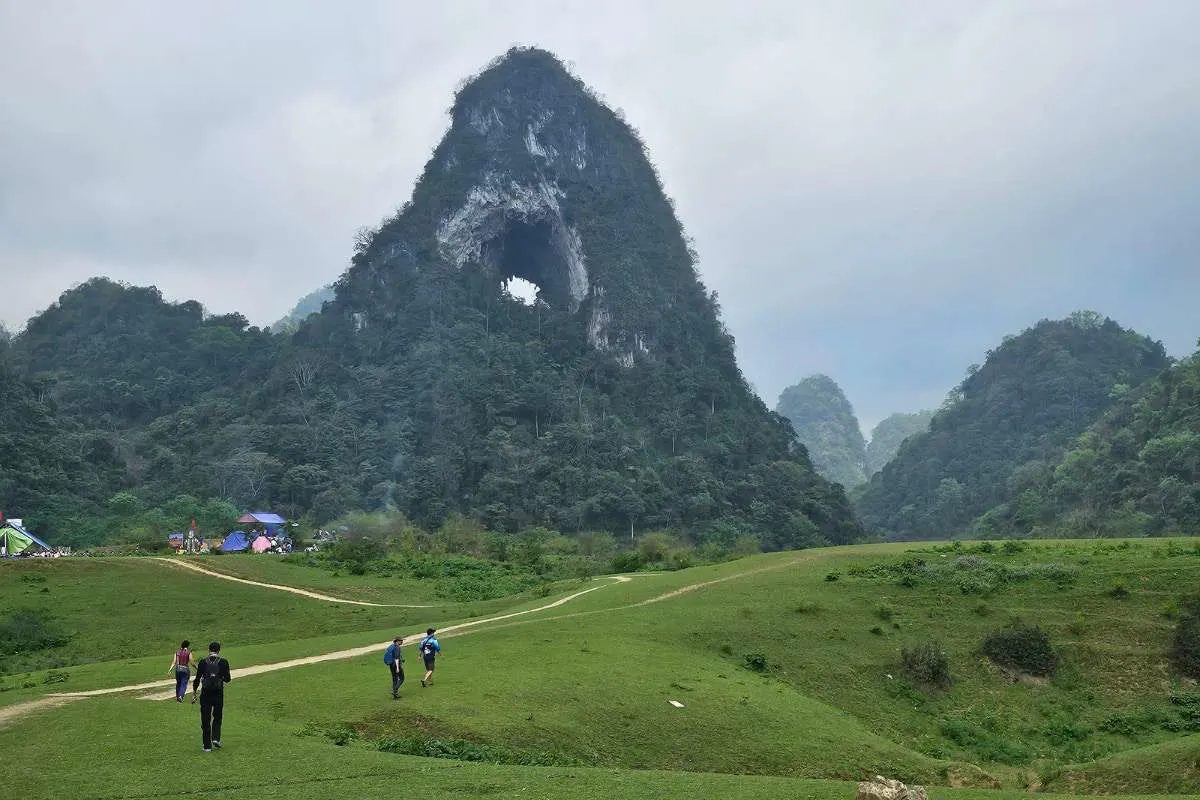
Cao Bang Province, situated in Vietnam's northern reaches, presents a landscape defined by significant geo-cultural features. This region is distinguished by its five major river systems and 47 lakes, where water plays a crucial role in shaping both the terrain and the daily lives of its inhabitants. Much of Cao Bang is recognized as a UNESCO Global Geopark, offering a diverse environment particularly appealing to those interested in natural exploration and cultural interaction.
Exploring Cao Bang's Natural Wonders
The province is home to several remarkable natural formations, including the renowned Ban Gioc Waterfall. Positioned on the border between China and Vietnam, this cascade ranks as the fourth largest waterfall globally. It spans approximately 300 meters in width, presenting an impressive scale. The area encompasses a variety of falls and pools within its boundaries, set within a striking valley surrounded by dense jungle. For those interested in Vietnam's national parks and UNESCO World Heritage Sites, Cao Bang offers a compelling destination.
Another geological marvel is the Ngườm Ngao Cave system, featuring some of Southeast Asia's distinctive stalactite formations. Upon entering, visitors observe how these formations vary across different caverns. The entire cave system extends 2,144 meters, though local authorities have opened 948 meters to the public to ensure its preservation. Additionally, the Thang Hen Lake System consists of 36 smaller lakes connected by subterranean passages and caves. During the rainy season, water levels rise, merging these into a single, expansive lake that winds through a valley of karst peaks for over 300 kilometers. Beyond the lake itself, the surrounding rock formations and glimpses of local daily life contribute to the appeal of Thang Hen.
Historical and Spiritual Destinations
Cao Bang also holds sites of historical and spiritual importance. The Pác Bó Historical Complex serves as a memorial and museum, established at the location where Hồ Chí Minh initiated his revolutionary movement. Visitors can view the cave where Hồ Chí Minh sought refuge and the river where he engaged in fishing and composed poetry. This respectful tribute to Hồ Chí Minh's life and contributions is a significant pilgrimage site for many Vietnamese.
Nearby, the Trúc Lâm Phật Tích Pagoda offers a spiritual retreat. This traditional Vietnamese-style temple is designed to harmonize with the hillside terrain. As one ascends to the main temple area, a valley filled with karst formations unfolds below. Given its proximity to Ban Gioc Waterfall, Trúc Lâm Pagoda can be conveniently included in a single day's itinerary.
Engaging with Local Ethnic Traditions
Cao Bằng Province is characterized by its rich cultural diversity, home to over nine distinct ethnic groups who have inhabited these valleys for centuries. Among the most recognized are the Tày, Nùng, Dao, and H'mong communities, each maintaining unique crafts and ways of life. To experience these traditions, visitors might consider exploring a minority craft village with a local guide or arranging an ethnic homestay during their visit. Learning about diverse ethnic cultures can significantly enrich a trip to Vietnam.
Cao Bằng City: Your Base for Exploration
Cao Bằng City, situated along the Sông Bằng River, functions as the province's primary urban center. It provides a selection of contemporary hotels, shops, and restaurants, making it an appropriate base for exploring the surrounding areas of the province. The city offers opportunities to sample northern Vietnamese specialties, such as Phở Chua (sour noodle soup) and Bánh Cuốn (steamed rice rolls). Cao Bằng City also hosts several festivals unique to the region, providing insight into local customs.
Key Attractions and Practical Details in Cao Bang Province
For visitors planning their itinerary, here is a summary of the main attractions mentioned, along with any specific details provided regarding their features or visiting considerations. Please note that specific addresses, phone numbers, exact operating hours, or ticket prices were not supplied in the source material.
| Attraction | Type | Key Features | Specific Details and Tips |
|---|---|---|---|
| Ban Gioc Waterfall | Natural Landmark | One of the world's largest border waterfalls, 300 meters wide, multiple tiers. | Best visited during the dry season (October to April). Water flow is regulated daily between 10:30 AM and 1:00 PM in the late dry season by the Quây Sơn River dam. |
| Trúc Lâm Phật Tích Pagoda | Spiritual Site | Traditional Vietnamese temple architecture, situated on a hillside with valley views. | Located near Ban Gioc Waterfall, making it convenient to visit both on the same day. |
| Ngườm Ngao Cave | Natural Landmark | Extensive cave system known for unique stalactite and stalagmite formations. | System is 2,144 meters long; 948 meters are accessible to the public. Visitors should carry drinking water as the approximately one-kilometer walk inside can take over an hour. |
| Thang Hen Lake System | Natural Landmark | Comprises 36 interconnected small lakes, forming a single large lake during the rainy season. | The surrounding karst peaks and local daily life scenes are notable. A local guide can lead visitors to Tuyệt Tình Cốc, also known as "The Mountains Eye," a karst peak with a natural cave opening. |
| Pác Bó Historical Complex | Historical Site | Memorial and museum marking the location where Hồ Chí Minh initiated his revolutionary activities. | Features the cave where Hồ Chí Minh resided and the river where he engaged in fishing and writing. It is considered a significant site for Vietnamese visitors. |
| Cao Bằng City | Urban Center | Main provincial hub with accommodation, dining, and shopping options. | Serves as a convenient base for exploring the wider province. Offers local specialties like Phở Chua (sour noodle soup) and Bánh Cuốn (steamed rice rolls). Hosts regional festivals. |
Planning Your Visit to Cao Bang
Reaching Cao Bang from Hanoi involves a journey of approximately 280 kilometers, typically taking around eight hours, depending on the chosen mode of transportation. Both day and overnight bus services are available from Hanoi's My Dinh Bus Station. For those preferring alternative arrangements, private charter services and group tours to Cao Bang can also be booked through local and online travel agencies. For more comprehensive travel advice, consider consulting a guide to North Vietnam.
The optimal period for visiting Cao Bang is during the dry season, which extends from October to April. It is advisable to be aware that northern Vietnam can experience cooler temperatures during the winter months, specifically from November to February, so appropriate clothing should be packed. While the rainy season, from May to September, can offer lush landscapes, visitors should prepare for hot and humid conditions.
Frequently Asked Questions
What is the best time of year to visit Cao Bang?
The dry season, from October to April, is generally considered the most favorable time to visit Cao Bang. During this period, the weather is typically more agreeable for exploring outdoor attractions. However, be prepared for potentially cold temperatures between November and February.
How do I travel to Cao Bang from Hanoi?
Travelers can reach Cao Bang from Hanoi by bus, with both day and overnight services departing from My Dinh Bus Station. The journey covers approximately 280 kilometers and usually takes about eight hours. Private charters and organized group tours are also available options.
What are some unique natural attractions in Cao Bang?
Cao Bang is known for its distinctive natural sites, including the impressive Ban Gioc Waterfall on the border with China, the Ngườm Ngao Cave system with its unique stalactite formations, and the Thang Hen Lake System, which consists of 36 interconnected lakes.
Can I experience local culture in Cao Bang?
Yes, Cao Bang Province is home to over nine ethnic minority groups, such as the Tày, Nùng, Dao, and H'mong. Visitors can engage with local culture by visiting craft villages with a guide or arranging a homestay experience.
What local dishes should I try in Cao Bang City?
In Cao Bang City, visitors have the opportunity to try several northern Vietnamese specialties. Popular options include Phở Chua, a sour noodle soup, and Bánh Cuốn, which are steamed rice rolls. The city also hosts various regional festivals.








