
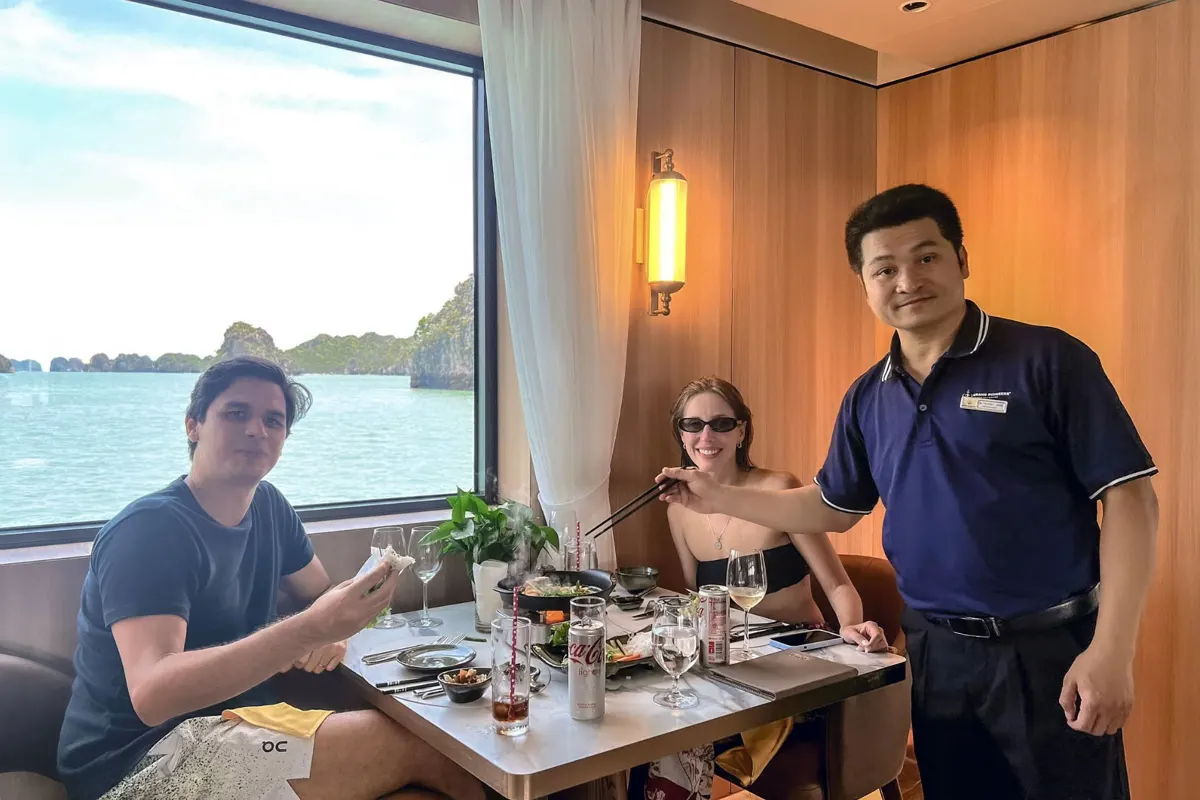
Halong Bay, recognized as a UNESCO World Heritage site and one of the New Seven Natural Wonders of the World, presents an iconic seascape in Vietnam. This extensive complex, covering 1,553 square kilometers and featuring 1,969 islands, comprises three distinct areas: the central Halong Bay, the quieter Bai Tu Long Bay, and the serene Lan Ha Bay. For those considering an overnight cruise, understanding the unique characteristics of each section is key to planning an ideal experience.
Understanding the Halong Bay Complex
The Halong Bay complex is a geological marvel, each section offering a unique aspect of this famous Vietnamese destination.
Halong Bay (Central Area)
This primary section spans 434 square kilometers and is characterized by approximately 775 towering limestone islands and islets emerging from the emerald waters. It serves as a remarkable illustration of Earth's geological history. The bay was first designated a UNESCO World Heritage Site in 1994 for its exceptional natural beauty and aesthetic significance, receiving a second recognition in 2000 for its important geomorphic features, reflecting a billion years of planetary formation. The area is bordered by Bai Tu Long Bay, Lan Ha Bay, Cat Ba Island, Tuan Chau Island, and Halong City. Many islands feature karst caves, caverns, and grottoes, some still unexplored, while others are entirely hollow. The islands are often framed by soft, white sand beaches and calm, clear waters. This unique concentration of biodiversity, culture, and history is what makes Halong Bay a truly distinctive destination.
Bai Tu Long Bay
Situated in Quang Ninh Province, Bai Tu Long Bay occupies 157.83 square kilometers and forms a trough within the Gulf of Tonkin. It encompasses parts of Halong City, Cam Pha Town, and Van Don Island District, sharing its southwest border with Halong Bay, its eastern side with the open sea, its western edge with the mainland near Cam Pha Town, and its northeast with Co To Island. This area is increasingly sought after by international visitors who prefer a less crowded environment. It shares geological similarities with the main Halong Bay but is noted for its clearer water and fewer tourist-heavy locations. A local legend suggests that while the Mother Dragon descended in Halong Bay, her offspring landed in Bai Tu Long Bay. Due to its position further east, a three-day cruise is generally recommended for a thorough exploration of this tranquil area, allowing visitors to appreciate its primitive charm.
Lan Ha Bay
Located south of Halong Bay and adjacent to Cat Ba Island, Lan Ha Bay covers 70 square kilometers. Geologically, it is an extension of Halong Bay but falls within Hai Phong province. This bay hosts around 400 karst islands, with Cat Ba being the largest. It offers a peaceful alternative to the more frequented areas of Halong Bay, with fewer visitors. Lan Ha Bay provides comparable scenery and activities, including some of the region's best snorkeling and rock climbing opportunities amidst its quiet waters and rugged cliffs. With over a hundred small beaches, often found at the base of dramatic limestone formations, it is easy to find suitable spots for swimming or private beach activities. It is frequently referred to as a 'Kayaking Paradise' due to its calm waters and numerous small passages.
Comparing the Halong Bay Complex Areas
To help travelers choose the ideal cruise experience, here is a comparison of the three primary areas within the Halong Bay complex:
| Feature | Halong Bay (Central) | Bai Tu Long Bay | Lan Ha Bay |
|---|---|---|---|
| Size | 434 km² | 157.83 km² | 70 km² |
| Tourist Traffic | Most crowded, especially during peak season | Less visited, quieter, less touristy | Tranquil, less touristy than central Halong Bay |
| Key Characteristics | Iconic limestone karsts, numerous caves (e.g., Sung Sot Cave), floating villages (e.g., Cua Van), Ti Top Island viewpoint. | Similar karst landscape but with clearer waters, unspoiled areas, Cong Do Area for swimming, Vung Vieng Fishing Village. | Extension of Halong Bay geology, 400 karst islands, many small beaches, excellent for kayaking and rock climbing, Viet Hai Village. |
| Recommended Cruise Duration | Typically 2 days/1 night, or 3 days/2 nights for more depth. | Generally recommended for 3 days/2 nights due to eastern location. | Typically 2 days/1 night, or 3 days/2 nights. |
| Proximity to Cat Ba Island | Borders Cat Ba Island to the west. | Further east from Cat Ba Island. | Borders Cat Ba Island to the east. |
Planning Your Overnight Cruise in Halong Bay
Spending time on an overnight cruise is widely considered the optimal method for experiencing the full scope of Halong Bay, Bai Tu Long Bay, or Lan Ha Bay. This allows for relaxation and appreciation of the marine landscape, as well as access to more secluded areas. Whether aboard a traditional wooden junk or a contemporary cruise vessel, guests can enjoy the captivating natural scenery from balconies, terraces, or sundecks. Observing the sunrise and sunset, which cast impressive red and orange hues over the bay, and breathing the fresh air contribute to a sense of calm. Overnight cruise durations typically include two days and one night, or three days and two nights.
When booking a cruise, all excursions are generally included in the overall price. Each vessel operates on a predetermined schedule, though guests usually have the flexibility to opt out of activities if they prefer to relax on board. It is often advised to prioritize safety and comfort by choosing a reputable cruise rather than the least expensive option available. The quality of dining and overall experience often correlates with the cruise tier. Meals are typically included, featuring fresh, high-quality ingredients prepared by professional chefs. A two-day, one-night itinerary usually includes a set menu lunch and buffet dinner on the first day, followed by a light breakfast and buffet brunch on the second. Menus vary between cruises.
Getting to Halong Bay from Hanoi
The most direct route from Hanoi to Halong Bay is by car, a journey that typically lasts about 2.5 hours, including a 15-minute rest stop. It is not advisable to rely on public buses for last-minute cruise connections. Travelers can secure a seat on a cruise operator's shuttle bus or arrange a private car. Pick-up and drop-off services are frequently provided at hotels within Hanoi's Old Quarter. For enhanced comfort, a private transfer is suggested, accommodating up to two passengers in a four-seater car, three in a seven-seater, or eight in a minivan.
Seaplane Travel
An alternative transportation method offering a unique perspective is a seaplane flight from Hanoi to Halong Bay, which takes approximately 45 minutes. Passengers must arrive at Noi Bai International Airport 35 minutes before departure. Flights may experience delays due to weather conditions. During the journey, passengers can enjoy aerial views over the Red River Delta and experience a water landing or takeoff at Tuan Chau Island Marina. An optional 15-minute scenic tour over the bay can be added, providing a bird's-eye view of the thousands of limestone karsts and remote fishing communities before returning to Tuan Chau Island Marina. This option primarily serves cruises departing from the main Halong Bay and some from Lan Ha Bay. For Bai Tu Long Bay cruises, an additional 20-minute car transfer from Tuan Chau Marina to Hon Gai Port or Halong International Tourist Cruise Port is necessary.
Activities and Sights on an Overnight Cruise
Each of the three bays offers distinct attractions and experiences, with excursions typically included in the cruise package.
Halong Bay Excursions
- Sung Sot Cave (Surprised Cave): One of the most renowned caves in Halong Bay, featuring three chambers filled with stalactites and stalagmites. Access requires ascending approximately 700 steps, so suitable footwear is recommended. The cave can become very busy, prompting visitors to keep an eye on personal belongings.
- Cua Van Floating Fishing Village: This is one of four such communities in Halong Bay, where residents live in floating homes and earn a living through fishing and trade. A small museum provides insights into the village's history and way of life. Visitors interested in local products can also explore options for unique purchases and souvenirs.
- Tung Sau Beach: An area popular for kayaking, allowing participants to navigate around the karst mountains. Guides may also lead groups into a cave for exploration.
- Ti Top Island: This island features a prominent viewpoint offering extensive vistas of the bay and its islands. Reaching the summit involves climbing 423 steps, an effort many find rewarding. For those interested in relaxing by the sea, you can discover Halong Bay's best beaches for relaxation.
- Luon Cave: A smaller cave where visitors can experience a traditional bamboo boat ride. Monkeys are sometimes observed in this area.
Bai Tu Long Bay Excursions
- Cong Do Area: Considered an excellent location for swimming, with several appealing beaches like Tra Gioi Beach, Cay Bang Beach, and Cat Oan Beach, known for their clear waters and soft sand.
- Co To Island: A less-explored destination featuring untouched beaches, white sand, and clear blue water.
- Vung Vieng Fishing Village: Exploring this floating village offers a quiet and calm atmosphere, surrounded by rocky mountains. Visitors can learn about local culture by interacting with fishermen who may demonstrate traditional fishing techniques.
- Thay Cave: Within this cave, numerous stone blocks are stacked, resembling giant books.
- Thien Canh Son Cave: A natural cave situated on Cong Do Island within Bai Tu Long Bay. Its ceiling is adorned with thousands of sparkling stalactites, forming shapes reminiscent of stone statues, dragons, and flowers. Outside the cave, visitors can enjoy the expansive scenery of Bai Tu Long Bay and Halong Bay. At its base, a beach with calm blue water and soft white sand is present, with diverse plant life covering the rock islands.
Lan Ha Bay Excursions
- Dark and Bright Cave: Noted for its impressive limestone formations and diverse natural ecosystem. Fossil traces of freshwater snails on the cliffs suggest ancient habitation. The area is home to groups of monkeys, shaded by Benjamin fig trees, and features many fragrant orchids.
- Tra Bau Area: This fishing village offers activities like fishing, swimming, and kayaking, providing an opportunity to experience local life.
- Ba Trai Dao Islets: A cluster of three small mountains, each 23 meters high, which from a distance appear like three peaches. The associated Ba Trai Dao Beach is considered one of the most appealing beaches in the Halong Bay area, though swimming is limited to approximately two to three hours daily due to tidal changes.
- Trung Trang Cave: Located in the Trung Trang Valley, the largest valley on Cat Ba Island (about 300 hectares). It lies between 10 to 30 meters below sea level and is 15 kilometers northwest of Cat Ba Town.
- Monkey Island: Situated about one kilometer from Cat Ba Town, this mountainous, sandy island is home to over a thousand semi-wild monkeys.
- Viet Hai Village: Found in Cat Hai District, Haiphong City, this village is secluded by the sea, mountains, and the dense jungle of Cat Ba National Park. A visit to Viet Hai offers a peaceful setting and a glimpse into traditional Vietnamese village life, including opportunities for cycling through rainforests and tunnels, admiring the impressive scenery of rice fields, and observing ancient straw, mud, and bamboo houses.
Recommended Cruise Options by Bay
Halong Bay Cruises
- Top Luxury: Paradise Peak Cruise, Violet Cruise.
- 5-Star: Ambassador Cruises, Essence Grand Cruise, Paradise Elegance Cruise, Hera Cruise.
- 4-Star: Paradise Sails, Pelican Cruise, Aphrodite Cruise.
- 3-Star: Oriental Sails, Glory Legend Cruise.
Bai Tu Long Bay Cruises
- 5-Star: Signature Royal Cruise.
- 4-Star: Dragon Legend Cruise.
- 3-Star: Garden Bay Legend Cruise, Swan Cruises.
Lan Ha Bay Cruises
- Top Luxury: Ylang Cruise, Ginger Cruise.
- 5-Star: Indochine Cruise, Ambassador Signature Cruise, Heritage Cruise, Era Cruise, Mon Cheri Cruises, Orchid Cruise.
- 4-Star: V’Spirit Premier Cruise, Calypso Cruise, Peony Cruise.
Popular Activities During Your Cruise
Beyond sightseeing, cruises offer a range of activities to enhance the experience.
- Cave and Islet Exploration: The islands, caverns, and grottoes of Halong, Lan Ha, and Bai Tu Long bays provide opportunities for discovery. Visitors can explore geological formations shaped over millions of years. For first-time visitors to the main Halong Bay, Sung Sot Cave is a notable, albeit frequently visited, site.
- Kayaking: A popular activity, kayaking allows participants to paddle through the clear waters, enter smaller caves, and get close to the limestone formations.
- Swimming: Enjoying the waters of Halong Bay amidst the numerous islets offers a refreshing experience.
- Cooking Demonstrations: These sessions allow guests to learn about Vietnamese culinary traditions and prepare dishes such as fresh or dried spring rolls, or practice vegetable and fruit carving. Some demonstrations may include friendly competitions.
- Tai Chi Sessions: Morning Tai Chi sessions on the sundeck combine deep breathing, relaxation, slow movements, and meditation.
- Cycling in Viet Hai Village: Exclusive to Lan Ha Bay itineraries, cycling through Viet Hai Village on Cat Ba Island offers a sensory experience, passing through rainforests, tunnels, and rice fields, and providing opportunities to see traditional houses and interact with local residents.
- Night Squid Fishing: This activity is considered a unique and engaging experience, often simpler than traditional fishing.
- Photo Opportunities: Capturing images of the bay at dawn and sunset is a favored pastime.
Special Experiences and Considerations
Aerial Views of the Bay
For a different perspective, travelers can take a scenic flight over the bay with operators like Hai Au Aviation or Northern Vietnam Helicopter. These smaller aircraft can fly closer to the limestone islands, offering views distinct from those experienced at sea level.
Honeymoon Packages
Cruises can arrange special experiences for honeymooners, such as a private lunch on a beach, a cocktail evening on the sundeck for stargazing, or a full cruise charter for complete privacy. Additional services may include a water puppet show by local artists, a visit to Vung Vieng fishing village by rowboat, room decorations with roses and candles, a honeymoon cake, and a gift. Custom requests can often be accommodated for an extra charge.
Connectivity
While many ships offer Wi-Fi, its reliability decreases the further the cruise travels into the bay or when surrounded by islands. Guests should be prepared for limited or no internet access.
Best Times to Visit and Packing Advice
Cruise Seasons
- Off-Peak Season (May – September): This period often provides cost savings and fewer crowds, potentially leading to more personalized service. It is recommended for those prioritizing swimming and kayaking, particularly at the beginning or end of summer. While humid and rainy days can occur, rainfall is typically not continuous.
- Peak Season (October – April): Characterized by dry weather and an absence of monsoons. Due to high demand, especially during holidays like Christmas, New Year, and Easter, early booking is strongly advised.
Optimal Visit Time
Halong Bay is accessible year-round, offering diverse experiences regardless of the season. However, to avoid the largest crowds while still enjoying favorable weather, scheduling a trip towards the start or end of the peak season is often suggested.
What to Pack
- A light jacket is advisable, especially for cooler evenings during the winter months (late November to March).
- Walking shoes are essential for shore excursions.
- A bathing suit is recommended for warmer periods (April to October), even if not planning to swim, for sunbathing or kayaking where one might get wet.
- Motion sickness medication should be carried by those prone to seasickness.
- A camera is highly recommended to capture the scenery.
Travel Insurance
Arranging health insurance before traveling to Vietnam is important to address unforeseen circumstances.
Frequently Asked Questions
What is the difference between Halong Bay, Bai Tu Long Bay, and Lan Ha Bay?
Halong Bay is the central, most famous, and most visited area. Bai Tu Long Bay, located to the east, is less crowded and known for clearer waters. Lan Ha Bay, south of Halong Bay and near Cat Ba Island, offers similar geology but is also less touristy and popular for kayaking and rock climbing.
How long should an overnight cruise be?
Most overnight cruises offer two-day, one-night or three-day, two-night itineraries. A two-day trip provides a good overview, while a three-day trip allows for deeper exploration, especially recommended for Bai Tu Long Bay.
Is Wi-Fi available on Halong Bay cruises?
Many cruise ships provide Wi-Fi, but connectivity can be unreliable, especially when the vessel travels deeper into the bay or is surrounded by islands. It is best to anticipate limited or no internet access.
What activities are typically included on a Halong Bay cruise?
Common activities include exploring caves and grottoes, kayaking, swimming, cooking demonstrations, Tai Chi sessions on the sundeck, and night squid fishing. Some itineraries, particularly in Lan Ha Bay, may also offer cycling in Viet Hai Village.
When is the best time of year to take a Halong Bay cruise?
Halong Bay can be visited year-round. The peak season (October to April) offers dry weather, while the off-peak season (May to September) has fewer crowds and potential savings, though it may include humid and rainy days. For good weather and fewer crowds, consider visiting at the beginning or end of the peak season.








