
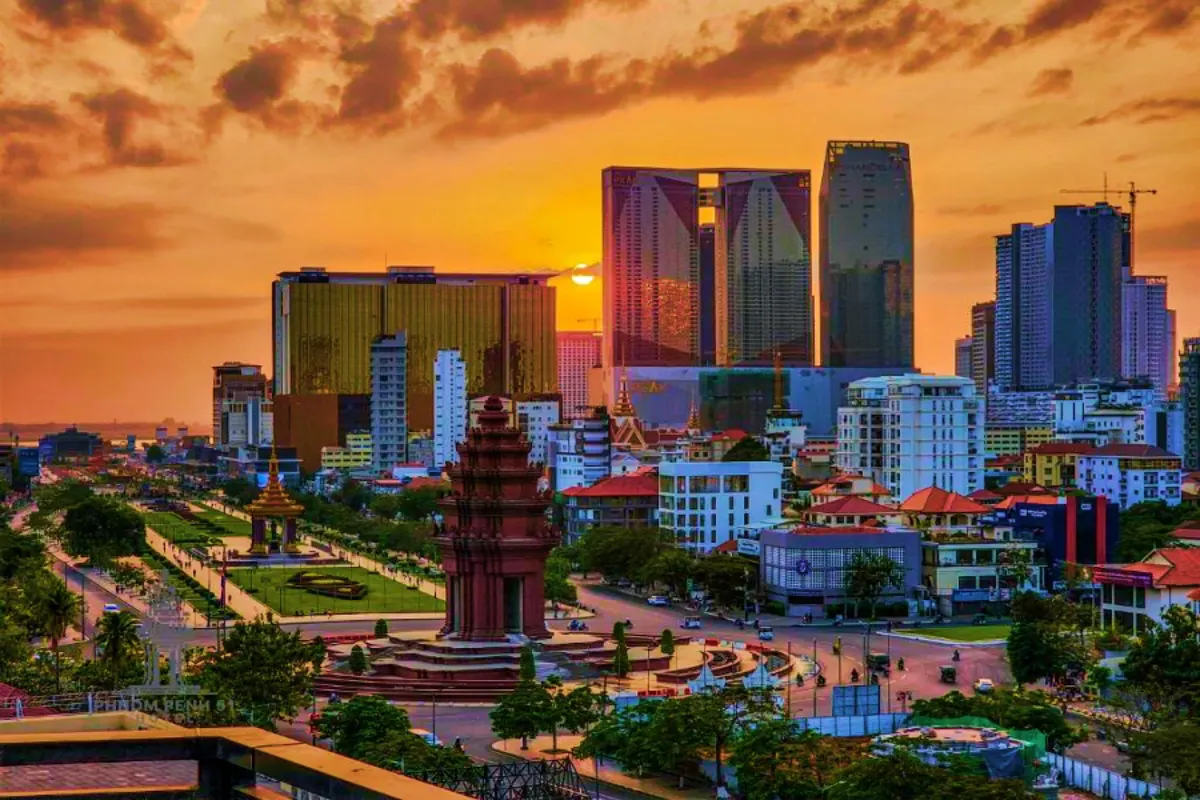
Connecting Ho Chi Minh City, Vietnam, with Phnom Penh, Cambodia, is a straightforward process, given the relatively short distance of approximately 230 kilometers between the two capital cities. Travelers have several options, ranging from quick flights to more leisurely river cruises, catering to different preferences and budgets. The most common methods include air travel and coach buses, while those seeking a unique experience can consider speed boats or even a motorbike journey through the Mekong Delta region.
Air Travel: The Fastest Connection
For those prioritizing speed and convenience, flying directly from Ho Chi Minh City to Phnom Penh is the quickest method. The flight duration is typically around one hour, making it an efficient choice for travelers with limited time. Flights depart from Tan Son Nhat International Airport (SGN) in Ho Chi Minh City and arrive at Phnom Penh International Airport (PNH). Both airports are situated within their respective city limits, simplifying transfers.
Airlines such as Cambodia Angkor Air, Vietnam Airlines, and Qatar Airways operate multiple daily services on this route. Fares for a one-way trip generally start from approximately USD 59, though prices can fluctuate based on booking time, airline, and availability. This option is particularly suitable for individuals looking to minimize travel time and maximize their exploration of both destinations.
Overland by Bus: A Popular and Economical Choice
Traveling by bus offers a more economical and culturally immersive experience, popular among both local residents and budget-conscious visitors. The journey by coach bus or limousine van from Ho Chi Minh City to Phnom Penh typically takes between six to seven hours, depending on traffic conditions and border processing times. The primary land border crossing for this route is Moc Bai on the Vietnamese side and Bavet on the Cambodian side, which operates daily from 08:00 to 20:00. Due to these operating hours, overnight bus services are not available.
Several bus companies provide services on this route, offering various comfort levels, including standard seating buses, sleeper buses, and smaller, more comfortable minivan-style limousine services. Fares generally range from USD 12 to USD 19 per person for a one-way trip, varying by company and departure schedule. Limousine vans, such as those offered by Sapaco bus, typically feature 9-seater configurations, providing a more spacious experience for a slightly higher cost, usually between 340,000 VND (approximately $15 USD) and 420,000 VND (approximately $18 USD). Morning departures for limousine buses are common, with services at 6:00, 6:30, and 7:00, alongside an afternoon option at 14:30.
Major Bus Operators and Estimated Fares (as of May 2020):
- Giant Ibis: 445,000 VND (~$19 USD)
- Mekong Express: 350,000 VND (~$15 USD)
- The Sinh Tourist: 325,000 VND (~$14 USD)
- Kumho Samco: 315,000 VND (~$13.5 USD)
- Khai Nam Transport: 250,000 VND (~$11 USD)
Upon arrival in Phnom Penh, travelers can easily arrange onward journeys to other Cambodian destinations such as Siem Reap, Sihanoukville, Kampot, or Battambang. For those interested in managing their finances while traveling, understanding banking services in Ho Chi Minh City can be helpful before departure.
Essential Border Crossing Information and Visa Requirements
Regardless of the chosen mode of transport, understanding the immigration procedures and visa requirements is crucial for a smooth cross-border journey. Most nationalities from outside Southeast Asia require a tourist visa for both Cambodia and Vietnam. It is advisable to secure your visa in advance or prepare all necessary documents for a visa on arrival.
For entry into Cambodia via land borders like Moc Bai/Bavet, a visa on arrival is typically available for USD 30, payable in USD cash only. Travelers should carry an original passport valid for at least six more months and a color passport-sized photograph. Some bus companies may offer assistance with the visa process at the border, often charging an additional service fee of approximately USD 5 for batch processing. While Cambodian e-visas are generally accepted at land borders, passengers using them might incur an extra US$2 fee for batch processing to ensure a quicker passage. If you prefer to handle the transaction personally, you can accompany the bus personnel to the immigration counter.
During the land border crossing, it is common for bus staff to guide passengers through the entry process, which may appear less organized than airport procedures. Travelers should remain with their group and keep an eye on the bus personnel. Be aware that local individuals might offer to assist with luggage for a small fee, typically US$1 per bag; it is recommended to manage your own luggage if you wish to avoid this. Most buses do not make bathroom stops before reaching the border; the first opportunity for restrooms and refreshments usually occurs just after crossing into Cambodia, where you can also spend any remaining Vietnamese Dong.
Journeying via the Mekong Delta: Boats and Cruises
For travelers interested in exploring the scenic countryside and river life of the Mekong Delta before reaching Phnom Penh, alternative routes via speed boat or cruise ship are available. These options offer a distinct perspective on the region, allowing for a deeper appreciation of its natural beauty and local culture.
Speed Boat Services
Speed boat journeys along the Mekong River typically take about five hours, including immigration procedures at the Vinh Xuong (Vietnam) and Kha Orm Sam Nor (Cambodia) border points. Services usually depart around 07:30 AM and arrive by 12:30 PM. Costs range from USD 27 to USD 70 per person for a one-way trip, depending on the operator and service level. Companies like Hang Chau, Mandarin Cruise, and Blue Cruiser offer small boats, usually accommodating 15 to 30 passengers, equipped with toilets, life jackets, and designated areas for viewing and photography. Hang Chau is often recommended for its value, while Mandarin Cruise and Blue Cruiser provide higher-standard services at a greater expense.
Luxury River Cruises
For a more indulgent and comprehensive experience, luxury river cruises offer a multi-day journey from Ho Chi Minh City through the Mekong Delta to Phnom Penh, or even extending to Siem Reap. These cruises provide an opportunity to understand the region's complex history and observe daily life along the waterway from the comfort of a traditional riverboat or ship with a professional crew. Notable luxury Mekong cruises include Aqua Mekong Cruise, The Jayavarman Cruise, The Jahan Cruise, RV Tonle Pandaw Cruise, RV Amalotus Cruise, Avalon Siem Reap, and Song Xanh Sampan. These voyages are considered an immersive way to experience the delta's majesty.
Visa Requirements for River Borders
When traveling via river borders, the entry process for Cambodia is similar to land crossings, but with one key difference: Cambodian E-visas are generally not accepted at these river checkpoints. Travelers must present their original passport, a passport-sized photograph, and complete an application form provided by Government Immigration upon arrival. The visa fee is US$34 per person for a one-month visa, which includes a processing fee, and must be paid in USD cash only. After arriving in Phnom Penh, visitors might want to explore the local culinary scene, which is detailed in a dining guide to Phnom Penh.
Independent Travel by Motorbike
For adventurous travelers seeking complete autonomy, crossing the land border by motorbike is an option, provided all necessary documentation is in order. This method requires careful preparation and adherence to regulations for both countries. Essential documents include an original passport valid for at least six months, a valid Cambodian visa, an international driver’s license, and proof of motorbike ownership. This proof typically includes the carte verte (blue card), a purchase receipt, and motorbike insurance. This option is best suited for experienced riders comfortable with international border procedures and long-distance travel.
Comparison of Travel Methods
| Method | Estimated Duration | Estimated Cost (One Way) | Experience |
|---|---|---|---|
| Flight | 1 hour | From USD 59 | Fastest, most convenient, minimal border interaction. |
| Bus/Limousine | 6-7 hours | USD 12 - USD 19 | Economical, direct, cross-border land experience. |
| Speed Boat | 5 hours | USD 27 - USD 70 | Scenic river journey, unique perspective of Mekong Delta. |
| Luxury Cruise | Multiple days | Higher (varies by package) | Leisurely, immersive, cultural insights, premium comfort. |
| Motorbike | 6-8+ hours | Fuel + Visa + Fees | Adventurous, independent, requires extensive documentation. |
Frequently Asked Questions
How long does it take to travel from Ho Chi Minh City to Phnom Penh?
The travel time varies significantly by method. Flights take approximately one hour. Bus journeys typically last between six to seven hours, including border crossing procedures. Speed boat trips along the Mekong River usually take about five hours. Luxury cruises can extend over several days, offering a more comprehensive regional exploration.
What are the visa requirements for crossing the border into Cambodia?
Most non-ASEAN nationals require a Cambodian tourist visa. For land crossings, a visa on arrival is available for USD 30 (cash only), requiring a passport valid for six months and a passport-sized photo. E-visas are generally accepted at land borders but may incur a small processing fee. For river crossings, e-visas are typically not accepted; a visa on arrival for USD 34 (cash only) with a photo and passport is required.
Is it possible to travel overnight by bus between these cities?
No, overnight bus travel between Ho Chi Minh City and Phnom Penh is not available. The land border crossings at Moc Bai (Vietnam) and Bavet (Cambodia) operate from 08:00 to 20:00, meaning all cross-border bus services must complete their journey within these hours.
What are the main border crossings for land and river travel?
For land travel by bus or motorbike, the primary border crossing is Moc Bai on the Vietnamese side and Bavet on the Cambodian side. For river travel by speed boat or cruise, the main border points are Vinh Xuong in Vietnam and Kha Orm Sam Nor in Cambodia.
Can I use an e-visa at all border points?
Cambodian e-visas are generally accepted at major international airports and land border crossings like Bavet. However, they are typically not accepted at river border crossings, such as Kha Orm Sam Nor. Travelers planning to enter Cambodia via a river route should be prepared to obtain a visa on arrival.








