
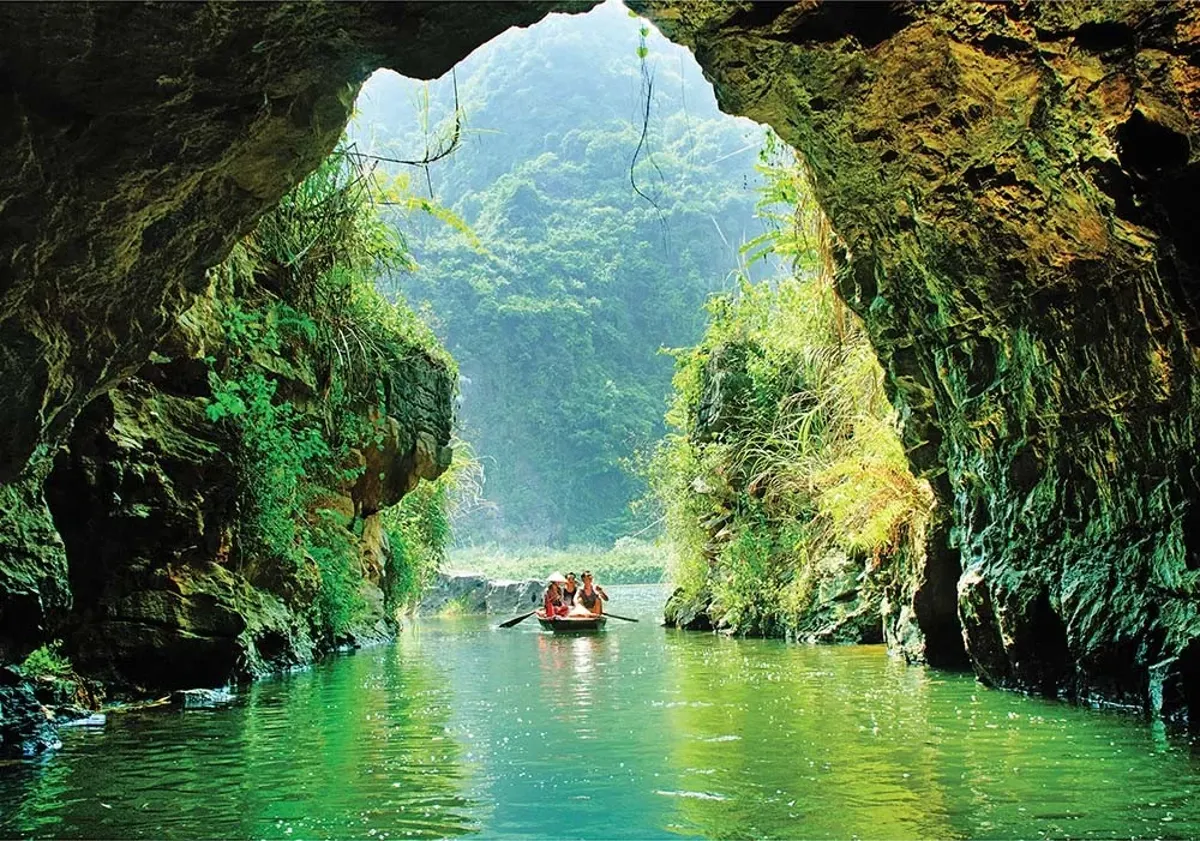
Ninh Binh, situated approximately 100 kilometers south of Hanoi, offers travelers a compelling array of historical landmarks, natural landscapes, and cultural experiences. This northern Vietnamese province, reachable within a two-hour drive via a modern highway, presents an ideal destination for either a focused day trip or a more leisurely two-day exploration, allowing ample time to appreciate its distinctive limestone formations, hidden caverns, and local way of life. Visitors can engage with significant historical sites, explore protected natural areas, and participate in various local activities.
Exploring Ancient History and Natural Reserves
Ninh Binh holds a significant place in Vietnam's past, once serving as the nation's capital, and is also home to its oldest nature preserve. These sites provide insights into both human heritage and ecological diversity.
The Hoa Lu Ancient Capital served as the political center of Vietnam during the Dinh and early Le dynasties in the 10th and 11th centuries. After King Ly Thai To relocated the capital to Thang Long (present-day Hanoi), Hoa Lu transitioned into an ancient site, preserving numerous temples and historical relics. It is recognized as one of the four principal components of the Trang An Complex, a UNESCO World Heritage Site. Today, Hoa Lu functions as a cultural hub, featuring ancient pagodas, temples, and remnants of its citadel. The area exudes a sense of history, framed by towering, arc-shaped rocky mountains, impressive scenery, and calm lakes. Following the Tet holiday, various festivals take place, with the most prominent being the Truong Yen Festival, observed on the tenth day of the third lunar month. This event commemorates Kings Dinh Tien Hoang and Le Dai Hanh of the Dinh and Le dynasties, and the site can become crowded during this period.
Cuc Phuong National Park stands as Vietnam's oldest nature reserve, offering a haven for those interested in the natural world. It encompasses a rich ecosystem, supporting a wide array of birds, mammals, reptiles, and diverse butterflies, alongside various plant species and ancient trees. Historically, Cuc Phuong was inhabited by the Muong minority people, and some villages around the park's perimeter continue to host these communities, preserving their distinct culture. The most favorable period to visit Cuc Phuong National Park is during the dry season, from December to May, when the climate is generally mild. Travelers should avoid the rainy season, as paths can become slippery, and mosquitoes and leeches are more prevalent. A notable spectacle occurs in April and May, when millions of butterflies are often observed, transforming parts of the park. While a paved road allows access by bicycle, motorbike, or car, exploring the jungle by biking or hiking is often recommended for a more immersive experience. Key stops within the park include the Endangered Primate Rescue Center, the Turtle Conservation Program, and the Botanical Garden.
Navigating Waterways and Karst Formations
Ninh Binh is renowned for its unique geological features, particularly its limestone karsts and the serene rivers that wind through them. Boat tours offer a primary means of experiencing these natural wonders.
Tam Coc, meaning “Three Caves” (Hang Ca, Hang Giua, Hang Cuoi), is frequently referred to as “Halong Bay on land” due to its striking resemblance to the famous bay’s seascape. A boat trip on a sampan, often rowed by locals using their feet, along the Ngo Dong River, provides an opportunity to glide through caves, past rice paddies, and among distinctive limestone formations. This experience offers a sense of detachment from the everyday world, allowing visitors to appreciate the tranquil surroundings. On the return journey, a stop at Ben Thanh is suggested, from where one can walk to Thai Vi Temple. This temple, dating back to the 13th century, is dedicated to the founder of the Tran Dynasty and offers a peaceful setting. While Tam Coc can be visited year-round, the period from mid-April to early June is particularly appealing for photography, as the rice fields often display a golden hue under clear skies and pleasant weather. For those interested in coastal landscapes and relaxation, comparing the serene river experiences of Ninh Binh with the beaches of Halong Bay might be of interest.
The Trang An Scenic Landscape Complex is another significant eco-tourism destination, featuring twelve historical relics and numerous grottoes and caves. This complex includes a system of 48 aquatic caves and caverns, along with springs, streams, and rivers that serve as passages into the limestone mountain ranges. The area’s rich diversity of plant and animal life further enhances its appeal. The most effective way to appreciate Trang An’s beauty is by taking a rowing boat along its rivers. Boat tours typically last around two hours, providing sufficient time to admire the limestone mountains, explore a network of hidden caves, and make stops at ancient temples or pagodas. Trang An offers three distinct boat tour routes, each highlighting different aspects of the complex:
- Route 1 (approximately 3.5 hours): Designed for those interested in geological exploration, this route passes through the most caves, including Trinh temple, Bright cave, Dark cave, Nau Ruou cave, Tran temple, Ba Giot cave, Seo cave, Son Duong cave, Khong temple, Bao Hieu temple, Khong cave, Tran cave, and Quy Hau cave.
- Route 2 (approximately 2 hours): A shorter option suitable for visitors with limited time, this route includes Lam cave, Cao Son temple, Vang cave, Thanh Truot cave, Dia Linh mountain, Suoi Tien temple, Kim Quy mountain, Dai cave, and Vu Lam palace.
- Route 3 (approximately 2.5 hours): This route focuses on the limestone mountains, visiting Trinh temple, May cave, Suoi Tien, Dia Linh cave, Dai cave, and Vu Lam palace.
Panoramic Vistas and Sacred Sites
For those seeking elevated perspectives and spiritual contemplation, Ninh Binh offers several locations that combine physical challenge with cultural significance and rewarding views.
Mua Cave (Hang Mua) has gained recognition as a prominent site in Ninh Binh, sometimes likened to a miniature version of China’s Great Wall. Ascending its approximately 500 stone steps leads to the summit, where visitors are greeted with expansive views of Tam Coc and the rice fields bordering the Ngo Dong River. If energy permits, an additional climb can lead to a lookout point near Bich Dong Pagoda, featuring a Lying Dragon statue. While mist can occasionally obscure the vista, waiting for it to clear often reveals the full scope of the landscape. The panoramic outlook is particularly impressive at sunset, as the sun descends behind the jungle-covered limestone peaks. Appropriate footwear is advisable, especially during the rainy season, when the steps may become slick.
The Bich Dong Pagoda, whose name translates to “Green Pearl Grotto,” is accessible by following the road southwest from the Tam Coc boat dock for about two kilometers. Located at the base of a substantial mountain, the pagoda’s ornate entrance gate is a recognizable landmark in Ninh Binh. Visitors cross a stone bridge over a lotus pond before passing through the gate to explore the chambers of Bich Dong, which some consider the “second most beautiful grotto in Vietnam.” Unlike a single structure, Bich Dong comprises three distinct pagodas situated at different elevations: Lower (Ha), Middle (Trung), and Upper (Thuong) Pagoda. Reaching each requires climbing the hillside. Inside these cave pagodas, imposing statues and the scent of burning incense create a distinctive atmosphere. The ascent to the highest point, offering a broad view of the Tam Coc region, typically takes about two hours but is considered worthwhile for the scenery.
Bai Dinh Pagoda represents a significant Buddhist pilgrimage destination and stands as the largest complex of Buddhist temples in Vietnam. This extensive site combines both older, original temples used for Buddhist ceremonies and a more recently constructed, larger temple complex catering to visitors. Exploring the entire area typically requires three to four hours. Within the complex, one can find a substantial bronze Buddha statue weighing 100 tons, along with intricately carved bells and a thirteen-story watchtower. On the sixth day of the first lunar month, the Bai Dinh Temple Festival attracts numerous Buddhists, resulting in a crowded environment. As a spiritual location, visitors are advised to wear clothing that covers their shoulders and knees, avoiding items like tank tops, shorts, or mini-skirts. An electric car service is available for those who prefer not to walk the entire distance.
Wildlife Observation and Local Flavors
Beyond its grand historical and geological sites, Ninh Binh offers opportunities for wildlife viewing and a taste of authentic regional cuisine, adding depth to any travel itinerary.
The Thung Nham Bird Garden is situated near the well-known Tam Coc – Bich Dong tourist area, approximately four kilometers from Bich Dong Pagoda. This area is characterized by tropical forest strips on limestone mountains, along with numerous valleys and caves. It serves as a habitat for approximately 40 bird species, totaling around 50,000 individual birds, including storks, cauldrons, bitterns, egrets, and teals. Two rare species listed in the Red Book, the Phoenix and the flamingo, are also reported to reside here. The most opportune time to observe the birds at Thung Nham is at sunset, when thousands return to their nests after foraging. This period often presents a serene and natural spectacle. While the valley maintains its appeal throughout the year, its beauty is particularly enhanced in autumn, when cooler temperatures and a light layer of fog contribute to a romantic ambiance.
Ninh Binh is not only recognized for its landscapes but also for its distinctive and flavorful local cuisine. A visit to the region would be incomplete without sampling some of its traditional dishes. “Com Chay” (Rice crust) is a recommended item; these slices of steamed rice are lightly fried until golden and crisp, often enjoyed as a snack or dipped in a warm sauce. Goat meat is considered a regional specialty, known for its distinct flavor and prepared in various ways, including fermented, steamed, grilled, and rare preparations. Other culinary options include mountain snails, sticky rice with ants’ eggs, shrimp paste, eel vermicelli, and Yen Mac fermented pork rolls. Exploring these local tastes offers a genuine insight into the region’s culture. For those looking to bring home a piece of Vietnam, consider exploring essential souvenirs and unique purchases available across the country, which often include local food products.
Unique Perspectives and Practical Advice
For a truly different view of Ninh Binh’s celebrated landscapes, a unique aerial experience is available. Additionally, understanding practical aspects of your visit can enhance your overall enjoyment.
One distinctive way to experience the Trang An and Tam Coc areas is from an aerial perspective, specifically through a helicopter tour. This provides an opportunity to observe the UNESCO-recognized site from above, offering a comprehensive panoramic view. Tours typically depart from Trang An pier and fly over the Tam Coc-Bich Dong tourism area, lasting approximately ten minutes with four passengers and a pilot. Experienced pilots conduct flights at varying altitudes, allowing for diverse viewing opportunities, reminiscent of scenes from certain films. Tickets are priced around 82 USD per passenger (current as of source publication, verify before booking) and require booking approximately five days in advance. For current information and reservations, travelers should contact local tour operators or travel consultants.
When planning your visit to Ninh Binh, consider the duration. While a single day trip is feasible, a two-day itinerary often allows for a more relaxed pace and a deeper appreciation of the region’s diverse attractions. The dry season (December to May) is generally preferred for outdoor activities, particularly for visiting Cuc Phuong National Park, though specific attractions like Tam Coc’s golden rice fields have their own optimal viewing periods (mid-April to early June). Always check current opening hours and entrance fees, as these details can change. Dress respectfully when visiting religious sites, ensuring shoulders and knees are covered.
Key Attractions and Visitor Information
Below is a summary of major attractions in Ninh Binh, including their locations, current (as of source publication) entrance fees, operating hours, and estimated visit durations. Visitors should verify all time-sensitive information prior to their trip.
| Attraction | Location | Entrance Fee (VND) | Boat Fee (VND) | Operating Hours | Estimated Visit Time |
|---|---|---|---|---|---|
| Hoa Lu Ancient Capital | Truong Yen commune, Hoa Lu district, Ninh Binh | Free | N/A | 7:00 – 17:00 daily | 1 hour |
| Cuc Phuong National Park | Nho Quan district, 45km NW of Ninh Binh city | 60,000/person | N/A | 8:00 – 18:00 daily | 4-6 hours |
| Tam Coc (Ngo Dong River) | Ninh Hai commune, Hoa Lu District, Ninh Binh | 120,000/visitor | 150,000/boat | N/A | 2 hours |
| Bich Dong Pagoda | Ninh Hai commune, Hoa Lu District, Ninh Binh | Free | N/A | 7:00 – 21:00 daily | 2 hours (to top) |
| Trang An Scenic Landscape Complex | Trang An, Truong Yen commune, Hoa Lu district, Ninh Binh | N/A | 250,000/passenger | 8:00 – 18:00 daily | 2-3.5 hours (depending on route) |
| Mua Cave (Hang Mua) | Khe Dau Ha, Hoa Lu district, Ninh Binh | 100,000/visitor | N/A | 6:00 – 19:00 daily | N/A |
| Bai Dinh Pagoda | Gia Sinh commune, Gia Vien district, Ninh Binh | Free (Electric Car: 60,000/passenger) | N/A | 6:00 – 20:00 daily | 3-4 hours |
| Thung Nham Bird Garden | Hải Nham commune, Hoa Lu district, Ninh Binh | 100,000/visitor | 20,000/passenger | 6:00 – 22:00 daily | N/A |
Note: All prices and operating hours are subject to change. It is advisable to confirm details with local providers before your visit. Phone numbers for specific venues were not supplied in the source material.
Frequently Asked Questions
What is the ideal length of stay in Ninh Binh?
While a day trip from Hanoi is possible, many visitors find that a two-day itinerary allows for a more comprehensive and relaxed exploration of Ninh Binh’s diverse attractions, from ancient capitals to extensive natural parks and boat tours.
When is the most favorable time to visit Ninh Binh?
The dry season, spanning from December to May, is generally considered the best time to visit Ninh Binh, offering pleasant weather for outdoor activities. Specific periods, such as mid-April to early June, are ideal for viewing the golden rice fields in areas like Tam Coc, and April to May is excellent for butterfly sightings in Cuc Phuong National Park.
Are there any dress code requirements for religious sites in Ninh Binh?
Yes, when visiting pagodas and temples like Bai Dinh Pagoda, it is respectful to wear clothing that covers both your shoulders and knees. Garments such as tank tops, shorts, or mini-skirts are generally not appropriate for these spiritual locations.
How can I get around Ninh Binh to visit the attractions?
Ninh Binh’s attractions are spread out, making motorbikes, bicycles, or private cars popular modes of transport. For specific sites like Tam Coc and Trang An, boat tours are the primary way to explore. Electric car services are available at larger complexes like Bai Dinh Pagoda.
What local dishes should I try in Ninh Binh?
Ninh Binh is known for its unique cuisine. Recommended dishes include “Com Chay” (crispy rice crust), various preparations of goat meat (a local specialty), mountain snails, sticky rice with ants’ eggs, shrimp paste, eel vermicelli, and Yen Mac fermented pork rolls.








