
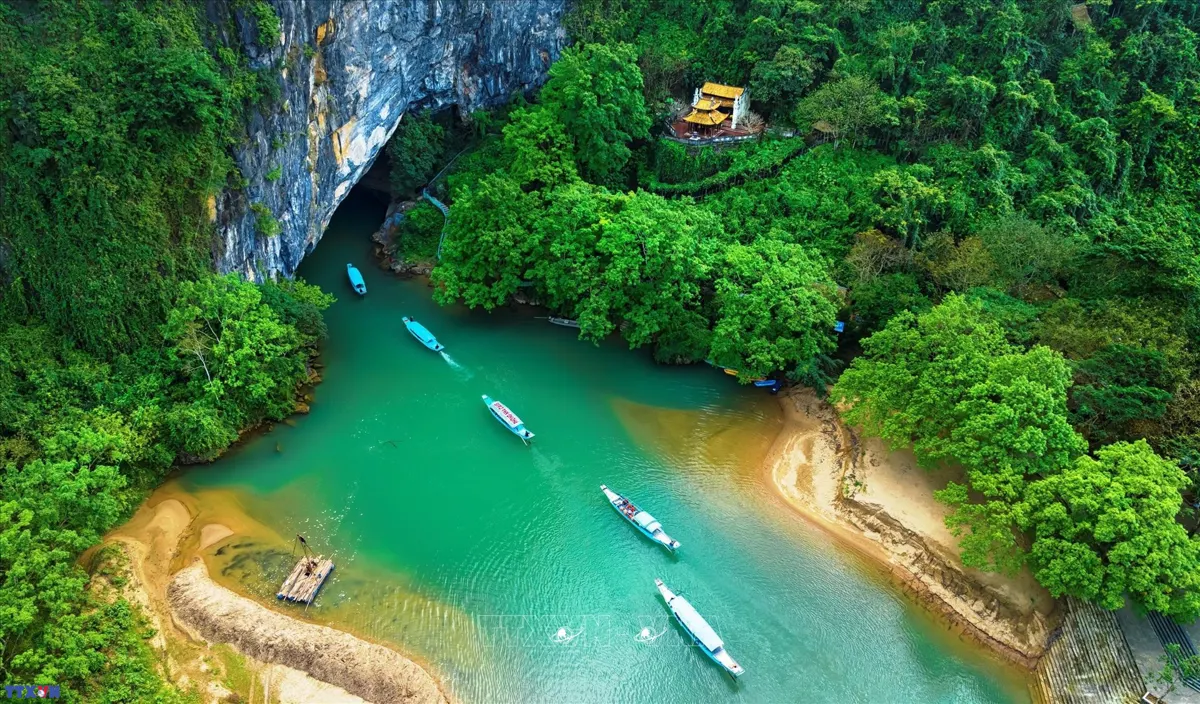
Phong Nha-Ke Bang National Park, located in Central Vietnam, offers a premier destination for outdoor enthusiasts. This region is renowned for its vast cave systems, winding rivers, and dramatic limestone formations covered in dense jungle. While its monumental caves are a primary draw, the national park also provides opportunities for river activities, walking trails, and exploring rural landscapes. The area is still developing its tourism infrastructure, meaning visitors can often experience its natural beauty with a sense of quiet discovery.
The park's unique geological features have been shaped over millions of years by water erosion, creating some of the world's largest and most intricate caverns. Beyond the subterranean wonders, the landscape above ground invites exploration through various outdoor pursuits, making it a well-rounded destination for those seeking both adventure and natural serenity.
Exploring the Caves of Phong Nha-Ke Bang National Park
The caves within Phong Nha-Ke Bang National Park vary significantly in their accessibility and the level of challenge they present. Due to conservation efforts, access to some of the larger cave systems is regulated by local authorities. Certain tour operators hold exclusive permissions to guide visitors through specific caves, while others are open for more general access. It is important to note that many caves become inaccessible during the rainy season, which typically runs from October through December. Planning your visit outside these months is advisable for optimal cave exploration.
While Son Doong holds global recognition as the world's largest cave, the park features numerous other remarkable subterranean environments. These range from easily accessible show caves to multi-day expeditions requiring significant physical exertion. Understanding the options available can help travelers select an experience that matches their interests and fitness levels.
Major Cave Expeditions
Son Doong: Recognized as the world's largest cave, Son Doong features immense chambers and stalagmites comparable in height to prominent city landmarks. An expedition into Son Doong typically spans four days, incorporating overnight camping at designated scenic spots along the route. This is considered the most demanding and expensive tour in the area, often requiring bookings several months in advance due to its popularity and limited availability.
Tu Lan Cave System: This network of caves offers an interactive experience involving wading through water, swimming in underground rivers, climbing, and navigating narrow passages. Tours of the Tu Lan system vary from moderate single-day excursions to extensive four-day expeditions. Visitors who enjoy aquatic cave exploration and tight spaces often find this system particularly appealing. The Tu Lan cave system and its surroundings also served as a filming location for parts of the 2017 film, Kong: Skull Island, offering a cinematic preview of its scenery. For a deeper dive into this specific system, consider an expedition guide for Central Vietnam.
Hang Va and Nuoc Nut: These caves are known for their distinctive stalagmite formations and clear rock pools. A typical visit involves a two-day tour that, while shorter, is considered challenging. Participants must traverse sharp rock surfaces and climb over karst formations to reach the cave entrances. Hang Va is frequently highlighted as the main attraction, especially between January and March when its rock pools are at their fullest.
Pygmy Cave: As the world's fourth largest cave, exploring Pygmy Cave requires a challenging three-day expedition. This journey includes abseiling and climbing, along with swimming through underground rivers in Tiger Cave and wading through emerald-colored ponds in Over Cave. For those with less time or a smaller budget than what a Son Doong trip demands, Pygmy Cave offers a substantial alternative. Tours for Pygmy Cave can be arranged through the Jungle Boss website.
Hang En: Reaching Hang En, the world's third largest cave, involves a moderate full-day trek through the national park. Expeditions to Hang En typically include an overnight stay, either within the jungle or at the cave's entrance, where thousands of swallows are often observed. For expeditions to Son Doong, Hang En, Tu Lan, Hang Va, and Nuoc Nut, it is necessary to book directly with Oxalis, and contacting them well in advance is recommended to secure a spot.
Accessible Caves for General Visitors
Phong Nha Cave and Paradise Cave: These two caves are among the most frequently visited attractions within the national park. Both offer enjoyable, straightforward half-day tours that can be easily booked through local accommodations. Access to Phong Nha Cave includes a boat trip along the river, while Paradise Cave features a system of wooden walkways, ensuring safe and easy exploration. Both caves are suitable for visitors with children, making them good options for family outings.
| Cave Name | Duration | Difficulty | Key Features | Primary Operator |
|---|---|---|---|---|
| Son Doong | 4 days | Very Challenging | World's largest cave, massive stalagmites, camping | Oxalis |
| Tu Lan System | 1-4 days | Moderate to Challenging | Wading, swimming, climbing, underground rivers | Oxalis |
| Hang Va & Nuoc Nut | 2 days | Challenging | Striking stalagmites, rock pools (best Jan-Mar) | Oxalis |
| Pygmy Cave | 3 days | Challenging | World's 4th largest, abseiling, climbing, river swims | Jungle Boss |
| Hang En | 1 day (overnight) | Moderate | World's 3rd largest, swallows, jungle/cave camping | Oxalis |
| Phong Nha Cave | Half-day | Easy | River entry by boat, accessible | Local hotels/agents |
| Paradise Cave | Half-day | Easy | Wooden walkways, accessible | Local hotels/agents |
Beyond the Caves: Outdoor Activities in Phong Nha
Phong Nha-Ke Bang National Park offers a diverse array of outdoor pursuits for those looking to experience its unique environment above ground. The park's distinctive landscapes, characterized by towering karsts, dense forests, and meandering waterways, provide a scenic backdrop for various activities.
Kayaking and Water Sports
Kayaking offers an alternative perspective of Phong Nha Cave, allowing visitors to explore sections of the river away from larger tour groups. A few kilometers away, Hang Toi (Dark Cave) provides a range of activities, including kayaking, swimming, and zip-lining. For independent kayaking adventures along Phong Nha's river, equipment rentals are available from operators such as Oxalis and Victory Road Villas.
Walking and Hiking Trails
The natural scenery within Phong Nha-Ke Bang National Park is distinct from other regions in Vietnam. For individuals less inclined towards caving, hiking presents a rewarding method to engage with the park's verdant terrain. Guided hiking tours are often recommended, as local experts can lead groups along less-traveled paths. Wildlife enthusiasts might consider night tours or visits to animal rescue centers as part of a two-day hiking eco-tour. Jungle Boss is recognized as a leading provider of hiking tours in the area. When planning to explore the park's trails, be prepared for wet conditions, as many routes cross rivers and streams; appropriate footwear is essential. This region truly highlights Vietnam's diverse natural landscapes.
Cycling and Motorbike Exploration
To delve deeper into the rural areas, visitors can navigate narrow country lanes, cross rice paddies, and traverse small streams. Many local hotels offer complimentary bicycle rentals for exploring the immediate vicinity of Phong Nha town. For a more extensive journey into the countryside, heading towards the Ho Chi Minh Highway and the Bong Lai Valley is suggested. This area features farms, viewpoints, and natural swimming spots, forming a peaceful 15-kilometer loop through pastoral scenery. Experienced cyclists might tackle the paved roads within the national park, ensuring they have a suitable mountain bike, a map, and ample water. For a more structured experience, guided cycling tours can introduce travelers to unmapped routes and local villagers. Alternatively, a motorbike tour provides a relaxed way to enjoy the scenery without physical exertion. Phong Nha Adventure Cycling specializes in quality bicycle tours with appropriate equipment and knowledgeable guides, while Hai’s Eco Tour offers motorbike trips with licensed local drivers.
Planning Your Visit to Phong Nha
Effective planning can enhance your experience in Phong Nha, from choosing the right place to stay to understanding local dining options.
Accommodation Options
Phong Nha provides an excellent opportunity to experience the rural beauty of Vietnam. For those who appreciate nature, booking a boutique homestay, farmstay, or villa situated amidst the rice fields just outside of the main town is often the preferred choice. These options offer an immersive experience in rural life, with guests typically waking to scenic views. Within Phong Nha town itself, a selection of accommodation includes relaxed hostels and modest riverside guesthouses, catering to various budget and comfort preferences.
Dining in Phong Nha
Many homestays and guesthouses offer meals for their guests, which can be convenient after a day of outdoor activities. In Phong Nha town, visitors will find small, family-operated restaurants serving both Vietnamese and Western dishes. Specific recommendations include Coffee Station for tropical smoothie bowls or locally sourced coffee, Momma D’s Rooftop for evening drinks, and Chao Restaurant for barbecue selections. For a unique culinary experience that emphasizes fresh, local ingredients, consider a journey by boat or a slightly bumpy ride to The Pub with Cold Beer, which is an attraction in its own right. If you appreciate Vietnam's modern coffee shop scene, Coffee Station is a good example of local offerings.
Getting to Phong Nha: Transport Options
Reaching Phong Nha involves several transport choices, with varying levels of comfort, speed, and cost.
Air Travel
Flying is generally the most comfortable method to reach the region. Daily domestic flights connect Dong Hoi Airport (VDH) with Hanoi and Ho Chi Minh City. Additionally, several weekly flights operate between Dong Hoi and Chiang Mai, Thailand.
Train Services
Dong Hoi is a stop on Vietnam’s primary Hanoi – Ho Chi Minh City railway line. This makes it accessible by train from various points, including Hue and Da Nang (for Hoi An) to the south, and Ninh Binh to the north. Train schedules can be checked on the Vietnam Railway website, and booking tickets in advance is advisable.
Bus Services
Overnight sleeper buses depart daily from Hanoi to Phong Nha, with a travel time of approximately nine hours. The cost for these services is around VND 300,000. Several open buses also run daily to Phong Nha from nearby cities such as Hue (approximately VND 150,000) and Da Nang (approximately VND 200,000). Bus tickets can typically be purchased at your accommodation or from local travel agents on the day before departure.
Local Transport from Dong Hoi
- Local Bus: Buses operate from Dong Hoi to Phong Nha for approximately VND 35,000 per seat. The journey duration ranges from 45 to 90 minutes, with buses running hourly (except at noon) from 5:00 AM to 5:00 PM. It is important to note that the bus terminals are a few kilometers from both the train station and the airport, requiring a taxi or motorbike taxi to reach them.
- Taxi: For a faster transfer, a taxi from Dong Hoi Airport or train station directly to Phong Nha costs approximately VND 400,000. Travelers on a budget may consider sharing a taxi with others upon arrival to reduce costs.
Frequently Asked Questions
What is the ideal time to visit Phong Nha?
The best time to visit Phong Nha is generally outside the rainy season, which occurs from October to December. During these months, many caves may be inaccessible due to high water levels. The period from January to September typically offers more favorable conditions for outdoor activities and cave exploration.
What types of cave tours are available for different fitness levels?
Phong Nha offers a range of cave tours. For those seeking extreme adventure, multi-day expeditions to Son Doong, Pygmy Cave, or the Tu Lan system require significant physical fitness, including swimming, climbing, and abseiling. Moderate options like Hang En involve a full-day trek and an overnight stay. For easier access, Phong Nha Cave and Paradise Cave offer half-day tours with minimal physical demands, suitable for families and general visitors.
Are there family-friendly activities in Phong Nha?
Yes, Phong Nha offers activities suitable for families. Phong Nha Cave and Paradise Cave are both easily accessible with wooden walkways and boat tours, making them enjoyable for all ages, including children. Beyond the caves, gentle cycling routes around the countryside and leisurely kayaking on the river provide relaxed outdoor options for families.
How can I travel to Phong Nha?
Phong Nha can be reached by flying to Dong Hoi Airport, which has daily flights from Hanoi and Ho Chi Minh City, and weekly flights from Chiang Mai. Alternatively, Dong Hoi is a stop on the main north-south train line. Buses are also a popular option, with overnight sleeper services from Hanoi and shorter routes from nearby cities like Hue and Da Nang. From Dong Hoi, local buses or taxis provide onward transport to Phong Nha.
What are the local dining experiences like?
Dining in Phong Nha ranges from meals offered at homestays and guesthouses to small, family-run restaurants in town serving Vietnamese and some Western dishes. Specific venues like Coffee Station offer beverages and light meals, while Momma D’s Rooftop provides a spot for evening drinks, and Chao Restaurant is known for its barbecue. For a distinctive local experience, The Pub with Cold Beer offers a farm-to-table concept in a rural setting.








