
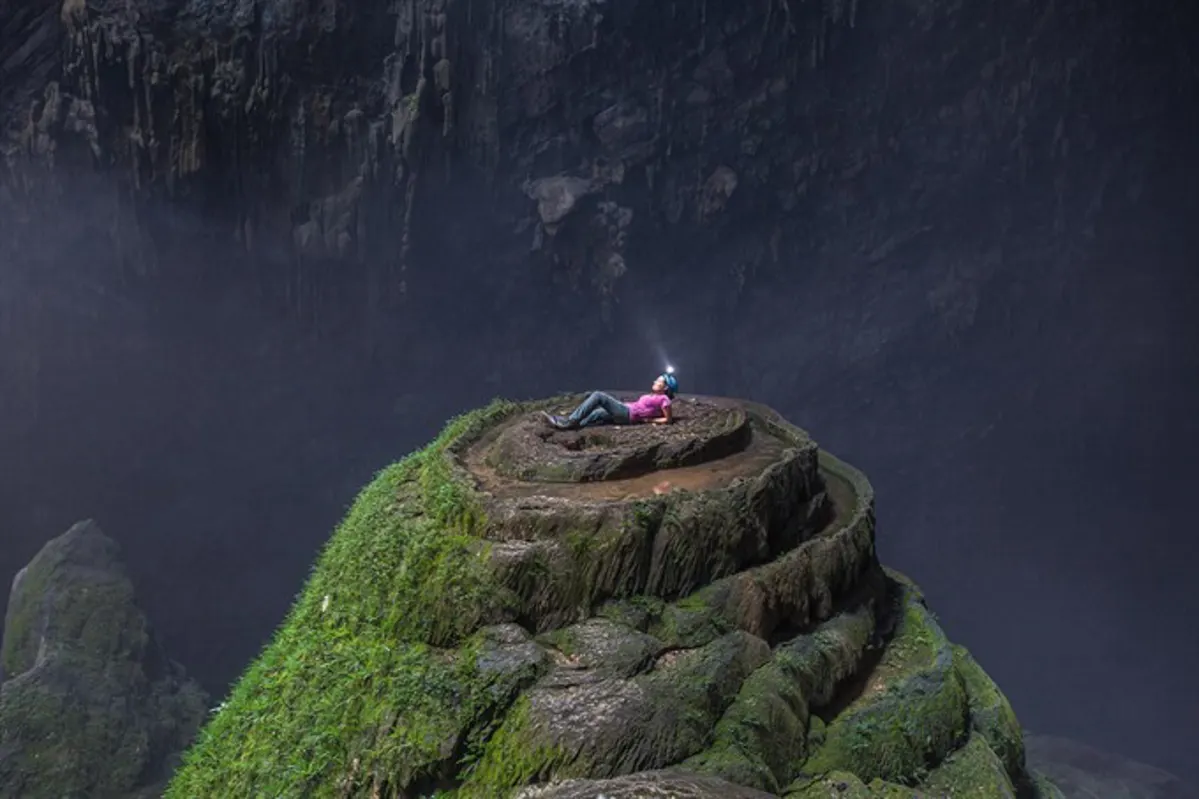
Son Doong Cave, located in Vietnam's central Quang Binh province, is recognized as the planet's largest natural cave. This immense subterranean system, part of the Phong Nha-Ke Bang National Park, offers a unique environment with its own climate and ecosystem. Its recent recognition on Google's homepage in numerous countries highlights its global significance as a natural marvel.
The Discovery and Scale of Son Doong Cave
The existence of Son Doong Cave was first noted by local resident Ho Khanh in 1991. However, it was an expedition by the British Cave Research Association (BCRA) in 2009 that officially surveyed and documented its colossal dimensions, bringing it to international attention. Howard Limbert, a prominent member of the BCRA who has explored hundreds of caves across Vietnam, including 350 in Quang Binh alone, described the discovery of Son Doong in the 21st century as akin to finding a mountain taller than Everest, emphasizing its unparalleled nature and the ongoing scientific potential it holds.
Son Doong holds the official title of the world's most extensive cave, as certified by Guinness World Records and the World Records Association. Its impressive measurements include a width of approximately 150 meters, a height reaching 200 meters, and a total length extending up to 9 kilometers. This colossal cave is situated within the Phong Nha-Ke Bang National Park, a protected area spanning around 1,233 square kilometers (approximately 304,000 acres). The park is often referred to as a 'cave kingdom' due to its more than 350 discovered caves, including not only Son Doong but also En Cave, which ranks as the world's third largest. It is possible for visitors to experience both Son Doong and En Cave as part of a single multi-day expedition, with En Cave often serving as the initial stop on the first day of the four-day Son Doong trek.
A Unique Ecosystem Within the Earth
One of the most extraordinary features of Son Doong Cave is its internal primary forest, sustained by giant sinkholes, known as dolines, that have collapsed through the cave's roof. These openings allow sunlight and rainfall to penetrate deep into the cavern, fostering a thriving ecosystem unlike any other found underground. The light filtering through these natural skylights illuminates ancient limestone formations and a range of green foliage, creating a truly remarkable visual experience.
This internal forest provides a habitat for various species, including bats and monkeys, whose sounds echo through the vast chambers. Even for seasoned explorers, the presence of a fully developed, first-growth forest within such a massive cave system remains a source of wonder. Scientists believe that portions of Son Doong remain unexplored and hold the potential for discovering new species, particularly in its aquatic sections. Ongoing research aims to bring experts in botany and zoology to further study this distinctive environment.
Experiencing Son Doong: Expedition Details
Accessing and exploring Son Doong Cave is an adventure that combines multiple outdoor activities, demanding a reasonable level of physical fitness and prior trekking experience. Participants typically engage in forest trekking, stream wading, and hiking through varied terrain. During the rainy season, parts of the expedition may also involve kayaking. These activities are designed to allow visitors to fully appreciate the cave's grandeur and its surrounding natural landscape.
To ensure the preservation of its delicate environment and manage visitor impact, expeditions into Son Doong Cave are strictly controlled. Oxalis Adventure is the exclusive tour operator authorized to conduct these journeys. Over a five-year period leading up to April 2022, approximately 3,500 individuals had the opportunity to explore the cave through these organized expeditions. Those interested in undertaking such a journey should prepare for a challenging yet rewarding experience, requiring preparation for planning a visit to Vietnam and its unique natural attractions.
Son Doong's Global Recognition and Tourism Impact
On April 14, 2022, Son Doong Cave received significant international exposure when it was featured as a Google Doodle on the search engine's homepage in seventeen countries and territories. This included Vietnam, the United Kingdom, Sweden, Greece, Singapore, Argentina, Chile, Costa Rica, the Dominican Republic, El Salvador, Guatemala, Honduras Republic, Mexico, Moldova Republic, Romania, Thailand, and the Virgin Islands (US territory). This event commemorated the cave's official discovery and served as a major promotional initiative for Vietnamese tourism.
The Vietnam National Administration of Tourism, in collaboration with Google, the Quang Binh Department of Tourism, and Oxalis Adventure, utilized this occasion to promote Son Doong and the broader Phong Nha-Ke Bang National Park. This effort was part of a broader strategy to revitalize tourism in Vietnam following the global pandemic. Furthermore, an online exhibition titled 'Wonders of Vietnam' was launched on Google Arts & Culture (GAC) in early 2021, offering a 360-degree view of the cave and featuring 35 exhibitions with thousands of photos and videos showcasing Vietnam's culture, history, art, and cuisine.
Mr. Nguyen Le Phuc, Vice Chairman of the Vietnam National Administration of Tourism, noted the pride associated with Son Doong's recognition and highlighted Vietnam's readiness to welcome international travelers. He confirmed that Vietnam had officially reopened for international tourism with simplified entry procedures and visa policies. Mr. Ho An Phong, Vice Chairman of the Quang Binh Provincial People's Committee, expressed local pride and acknowledged the positive impact of tourism and conservation efforts on the region, including job creation, economic diversification, and an improved quality of life for residents, positioning this UNESCO site on the global travel map.
Mr. Chau A Nguyen, Director of Oxalis Adventure Tour, reflected on the journey since the Son Doong expedition proposal was approved by the Quang Binh provincial authorities in 2013. He emphasized the cave's substantial contribution to Quang Binh's tourism and economic development, including stable employment for local communities. He also mentioned Son Doong's promotion to nearly 100 film producers and directors in Hollywood in 2019, showcasing its potential as a cinematic location. This international recognition aligns with Google's ongoing support for Vietnamese culture and attractions, previously featuring Doodles for Banh Mi, Pho, and Hoi An Ancient Town, among others. Visitors interested in Vietnam's phased reopening can find updated entry requirements.
Planning Your Visit to Quang Binh and Beyond
For those considering a journey to witness Son Doong Cave, understanding the broader context of Quang Binh province and Vietnam's tourism landscape is helpful. The region offers a wealth of natural beauty and opportunities for adventure beyond just Son Doong, with Phong Nha-Ke Bang National Park itself being a major draw for cave exploration and ecological tourism. Travelers should plan their trips well in advance, especially for highly sought-after expeditions like Son Doong, which have limited availability.
Vietnam has made significant strides in welcoming international visitors, streamlining entry processes and reinstating standard visa issuance. This commitment ensures that travelers from around the world can experience the country's diverse attractions, from its ancient historical sites to its modern urban centers and, of course, its extraordinary natural wonders like Son Doong Cave. Prospective visitors are encouraged to consult official tourism channels for the most current travel advisories and requirements.
Frequently Asked Questions
How large is Son Doong Cave?
It measures approximately 150 meters wide, 200 meters high, and extends up to 9 kilometers in length, making it the world's largest known cave.
Where is Son Doong Cave located?
The cave is situated within the Phong Nha-Ke Bang National Park in Quang Binh province, central Vietnam.
What activities are involved in a Son Doong expedition?
Expeditions typically involve forest trekking, stream wading, hiking, and potentially kayaking during the rainy season, requiring a good level of physical fitness.
Who discovered Son Doong Cave?
It was initially discovered by local farmer Ho Khanh in 1991 and later explored and officially recognized by members of the British Cave Research Association in 2009.
Can I visit Son Doong Cave independently?
No, access to Son Doong Cave is strictly controlled to preserve its environment. Expeditions are exclusively managed by Oxalis Adventure, the sole licensed tour operator.








