
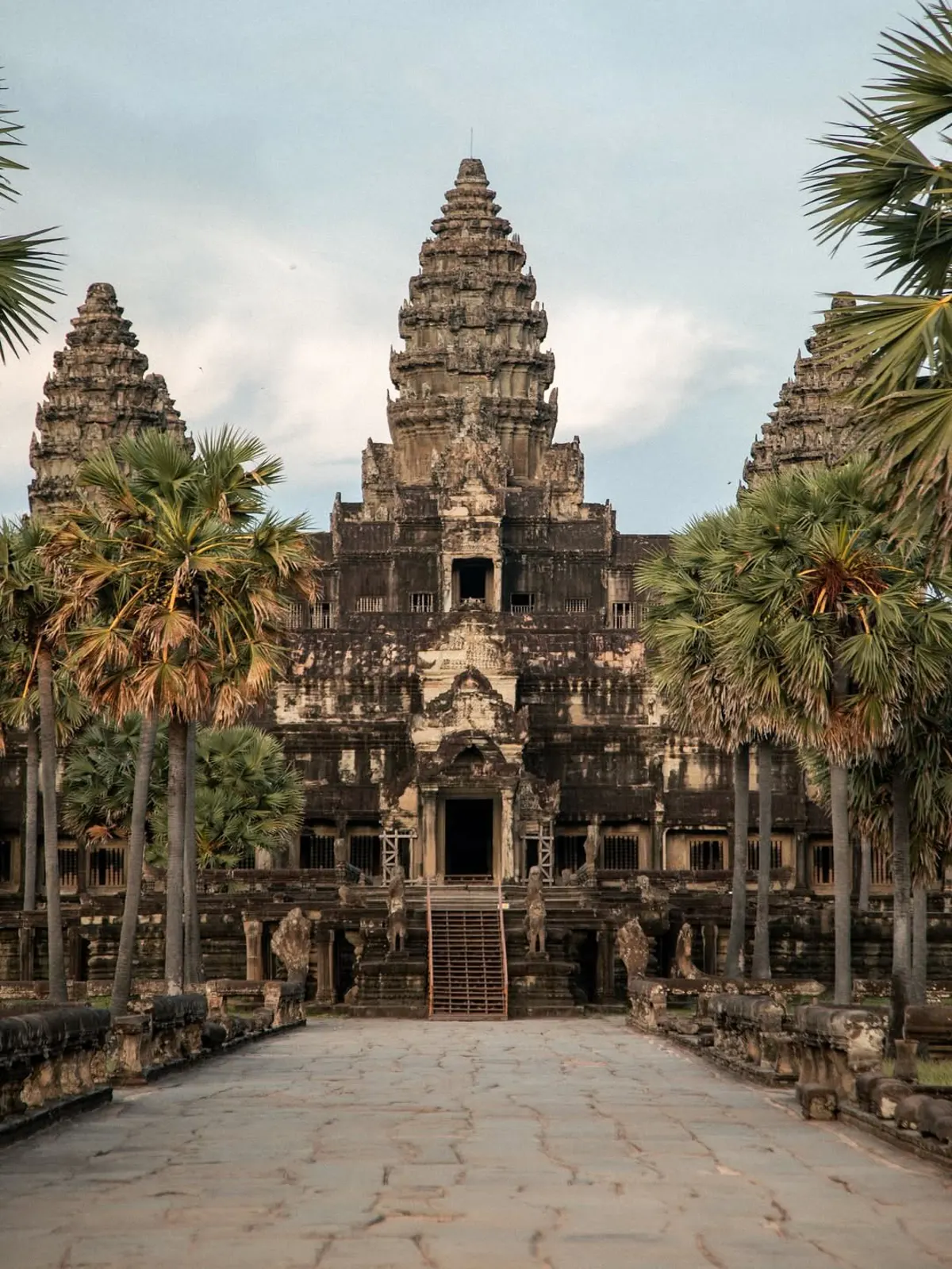
Siem Reap, Cambodia, serves as a gateway to some of Southeast Asia's most significant historical and architectural wonders. The region's ancient temple complexes stand as enduring testaments to the Khmer Empire's spiritual devotion and engineering prowess. This guide presents ten prominent temples within the Siem Reap area, offering insights into their unique characteristics and historical significance for visitors planning their exploration.
The Grandeur of Angkor Wat and its Immediate Surroundings
Angkor Wat Temple
This complex holds the distinction of being the largest religious monument globally and a primary symbol of Cambodia. Its cultural and architectural importance is recognized worldwide, making it a source of national pride. For centuries, the site remained largely obscured by dense jungle until a French explorer brought it to wider attention in the 18th century. The intricate design of Angkor Wat can be complex for first-time visitors. It features four distinct levels and over 400 chambers, adorned with detailed stone carvings across ceilings and passageways. These artistic elements showcase the remarkable strength and skill of ancient Khmer artisans. A particularly notable aspect of its construction, contributing to its status as a world wonder, is the use of sandstone and honeycomb blocks. These massive stones were meticulously stacked without any binding agents, allowing Angkor Wat to stand firm through the ages—a testament to ancient Khmer engineering. To fully appreciate its scale and hidden details, visitors often allocate two to three days for exploring this vast complex.
Ta Prohm Temple
Situated to the east of Angkor Thom, Ta Prohm is a temple largely consumed by the surrounding forest. Its fame stems from the immense tree roots that intertwine with the stone structures, resembling colossal serpents. King Jayavarman VII commissioned this site in 1186, intending it to function as a monastery and a center for Mahayana Buddhist learning. The ancient kapok trees (often referred to as 'rice trees' in local lore) growing through the stonework and enveloping the exterior walls create an atmosphere often likened to a scene from a storybook. Many visitors find that the passage of time and subsequent decay only enhance the temple's captivating aura. Ta Prohm comprises three distinct enclosures, 39 towers, and various window designs, forming a substantial structure with functional rooms and courtyards. The early morning hours, before larger crowds arrive, are frequently suggested as the optimal time to experience its full beauty. Spending several hours here allows for proper appreciation of the elaborate carvings that adorn its surfaces.
Bayon Temple
Positioned at the heart of Angkor Thom, Bayon Temple was constructed by King Jayavarman VII during the late 12th and early 13th centuries. It is considered a significant architectural achievement among Siem Reap's temples. While many of its original features have succumbed to the effects of time, the temple covers an area of approximately nine square kilometers and lacks surrounding walls. Its construction features three levels: the lower two are square-shaped and extensively decorated with bas-reliefs depicting historical battles, royal processions, and daily life. The uppermost level is circular, adorned with numerous towers. The site also includes a gallery, library, and terraces, exhibiting a baroque architectural style that distinguishes it from the more classical designs found elsewhere in the Angkor complex. The enigmatic faces carved into the temple's statues continue to fascinate both tourists and researchers. Bayon remains an active place of worship and a key attraction for those visiting Siem Reap, recognized alongside Angkor Wat as a UNESCO World Heritage Site since 1992.
Exploring Distinctive Angkorian Sites
Preah Khan Temple
This temple complex stands in isolation amidst ancient woodlands, near the provincial borders of Preah Vihear and Kompong Thom. Preah Khan, along with Bayon and Angkor Thom, showcases a strong Buddhist architectural influence, also built in the 12th century by King Jayavarman VII, reflecting his devotion to Buddhism. It served as his temporary residence during the construction of Angkor Thom. For many years, Preah Khan was less frequented by general tourists, having been largely reclaimed by the jungle and historically associated with areas containing unexploded ordnance (a historical note, not a current warning for marked tourist paths). Upon deeper exploration, visitors observe chiseled sculptures and collapsed walls, lending Preah Khan a unique, weathered character. Despite the ruins, images of Shiva and Buddha are still discernible throughout the temple grounds.
Banteay Srei – The Citadel of Women
Often referred to as a "citadel of beauty," Banteay Srei is a smaller, intricately carved temple. While sometimes associated with the broader Angkor Thom complex, it stands as a distinct site. It was constructed in the 10th century under King Jayavarman V, making it nearly a millennium old. Originally dedicated to the Hindu deity Shiva, its somewhat remote location led to its being forgotten within the forest for centuries. A French explorer rediscovered Banteay Srei in 1914, after which it gained recognition as a premier attraction in Siem Reap. The temple is celebrated as an outstanding example of Angkorian artistry, particularly noted for its exquisite laterite and red sandstone sculptures and decorative wall carvings. The entire temple exemplifies rock art at its finest, with delicate and expertly executed reliefs. Visitors are encouraged to spend between four hours and a full day to fully appreciate its monuments, artistic details, and cultural significance.
Pre Rup Temple
Situated within the Angkor ruins in Siem Reap province, Pre Rup was established as the national shrine for King Rajendravarman between 961 and 962. It also served as a cremation site for the royal family. This temple-mountain structure combines brick, laterite, and sandstone as building materials. Its doorways feature intricate and ascending carvings, and the site offers expansive views of the surrounding countryside. The detailed carvings are well-preserved. Although commonly perceived as a funerary temple, its primary function related to King Rajendravarman's recognition. Historically, it was the second temple constructed after the capital relocated back to Angkor from Koh Ker. Its convenient location on the route to Banteay Srei contributes to its popularity. A visit of approximately one hour is often sufficient to experience the atmosphere of Pre Rup.
Lesser-Known Temples and Unique Perspectives
Ta Som Temple
Located in the northeast section of Angkor Archaeological Park, on the eastern side of an artificial reservoir, Ta Som's original entrance was from the east, though visitors often approach via the west tower. King Jayavarman VII also built this temple in the late 12th century. Its exact dedication remains somewhat unclear, possibly honoring the king's father or a mentor. Encircled by a moat and laterite walls, Ta Som features a central tower and two gate towers, with the primary gate facing east and a secondary one to the west. Similar to Ta Prohm, this site is frequently included in Cambodian itineraries. A notable feature at the eastern gate tower is an ancient tree growing directly atop the structure, contributing to the temple's mysterious and sacred ambiance, and providing a popular backdrop for photographs.
Phnom Bakheng
Positioned between Angkor Wat and Angkor Thom, Phnom Bakheng symbolizes Mount Meru, the sacred mountain in Hindu cosmology, and was the central shrine of the first city in Angkor. Despite the deterioration of many of its towers, Phnom Bakheng holds considerable importance. The entire temple complex sits atop a high hill, making the ascent a notable challenge. The path features a steep incline, almost 70 degrees in some sections, covered by wild trees and forest, which can be demanding for those with a fear of heights or limited mobility. Certain areas require careful navigation due to potentially hazardous terrain. For visitors seeking an easier ascent, elephant riding services up the hill were historically available (check current availability). Despite the challenging climb, the temple is highly recommended for its views, particularly as it offers a unique vantage point over Angkor Wat. It is especially popular for sunset viewing.
Banteay Samre Temple
Situated within the Angkor area, Banteay Samre is a Hindu temple constructed in the early 12th century under the reigns of King Suryavarman II and Yasovarman II, exhibiting an architectural style similar to Angkor Wat. Notably, the temple lacks sculptures at its corners. The precision of the stone carvings is so refined that some initially believed they were applied to pre-existing templates. However, the construction method involved carving the rocks after they were put in place, evidenced by unfinished sculptural details on the first-floor pillars. Banteay Samre is recognized as a significant architectural achievement, showcasing remarkable depth in its use of volume, space, and historical complexity.
Prasat Kravan Temple
A smaller 10th-century temple within the Angkor complex, Prasat Kravan comprises five red brick towers arranged on a shared terrace. Though modest in size, it offers a worthwhile visit. It is a Shiva-style temple, built in 921, with its five east-facing spires aligned in a row. The interior walls of the central tower are beautifully engraved with themes related to Vishnu. Its construction differs from many royal temples, as it was not commissioned by royalty, and its location is somewhat removed from the central Angkor area.
Planning Your Temple Exploration in Siem Reap
Visiting the ancient temples of Siem Reap offers a profound glimpse into Cambodia's rich past and spiritual heritage. To make the most of your experience, consider the scale of the Angkor Archaeological Park. Covering a vast area, efficient planning is key to navigating between sites. Many visitors opt for multi-day passes to allow ample time for exploration without rushing.
Transportation within the park typically involves tuk-tuks, taxis, or bicycles. Hiring a driver for the day can provide flexibility and comfort, especially during warmer months. Early morning starts are often recommended, not only to avoid larger crowds but also to witness the temples in the soft light of dawn, which can be particularly atmospheric. Remember to dress respectfully, covering shoulders and knees, as these are active religious sites. Staying hydrated is also crucial, particularly when exploring during the middle of the day. For those interested in Cambodian cuisine, Siem Reap offers a diverse culinary landscape to complement your cultural journey.
| Temple Name | Primary Deity/Purpose | Approx. Construction Era | Key Architectural Feature | Suggested Visit Time |
|---|---|---|---|---|
| Angkor Wat | Vishnu (Hindu) / Buddhist | Early 12th Century | Largest religious monument, intricate bas-reliefs, sandstone construction | 2-3 days (for full exploration of complex) |
| Ta Prohm | Mahayana Buddhist monastery/school | Late 12th Century | Trees growing through stone structures | Few hours |
| Bayon | Buddhist (state temple) | Late 12th - Early 13th Century | Many smiling stone faces, bas-reliefs of daily life/battles | Few hours |
| Preah Khan | Buddhist (monastery) | Late 12th Century | Jungle-enveloped, chiseled sculptures | Few hours |
| Banteay Srei | Shiva (Hindu) | 10th Century | Red sandstone, intricate carvings, "Citadel of Women" | 4 hours - 1 day |
| Pre Rup | Hindu (state temple, royal cremation) | Mid-10th Century | Temple-mountain, brick/laterite/sandstone, countryside views | 1 hour |
| Ta Som | Buddhist (possibly King's father/teacher) | Late 12th Century | Ancient tree on East gate tower | 1-2 hours |
| Phnom Bakheng | Hindu (Mount Meru symbol) | Late 9th - Early 10th Century | Hilltop location, views of Angkor Wat, sunset spot | 1-2 hours (plus ascent time) |
| Banteay Samre | Hindu | Early 12th Century | Angkor Wat style, meticulous stone carvings | 1-2 hours |
| Prasat Kravan | Shiva (Hindu) | 10th Century | Five red brick towers, Vishnu-themed interior carvings | 1 hour |
Frequently Asked Questions
What is the best way to get around the Angkor Archaeological Park?
The most common ways to navigate the vast Angkor Archaeological Park include hiring a tuk-tuk driver for the day, arranging a private car with a driver, or renting a bicycle for more independent exploration. Tuk-tuks offer a balance of cost and convenience, while cars provide air-conditioned comfort.
Are there any dress code requirements for visiting the temples?
Yes, visitors are expected to dress respectfully, as these are active religious sites. This typically means covering shoulders and knees. Lightweight, breathable clothing is recommended due to the tropical climate.
How much time should I allocate for visiting the Siem Reap temples?
The time required depends on your interest and the number of temples you wish to see. A minimum of two to three days is often suggested to cover the main sites like Angkor Wat, Bayon, and Ta Prohm without feeling rushed. Some visitors choose a one-day pass for a quick overview, while others opt for longer passes to explore more thoroughly.
Can I purchase tickets at the temple sites?
Tickets for the Angkor Archaeological Park are purchased at the official Angkor Enterprise ticket office, located a few kilometers from Siem Reap town. They are not sold at individual temple entrances. Various pass options are available, including one-day, three-day, and seven-day passes (verify current pricing and availability upon arrival).
Is it safe to visit Preah Khan Temple given the mention of minefields?
The mention of minefields in historical contexts refers to the past. All designated tourist paths and areas within Preah Khan Temple, and indeed throughout the Angkor Archaeological Park, have been cleared and are safe for visitors. Always stick to marked trails and follow local guidance.








