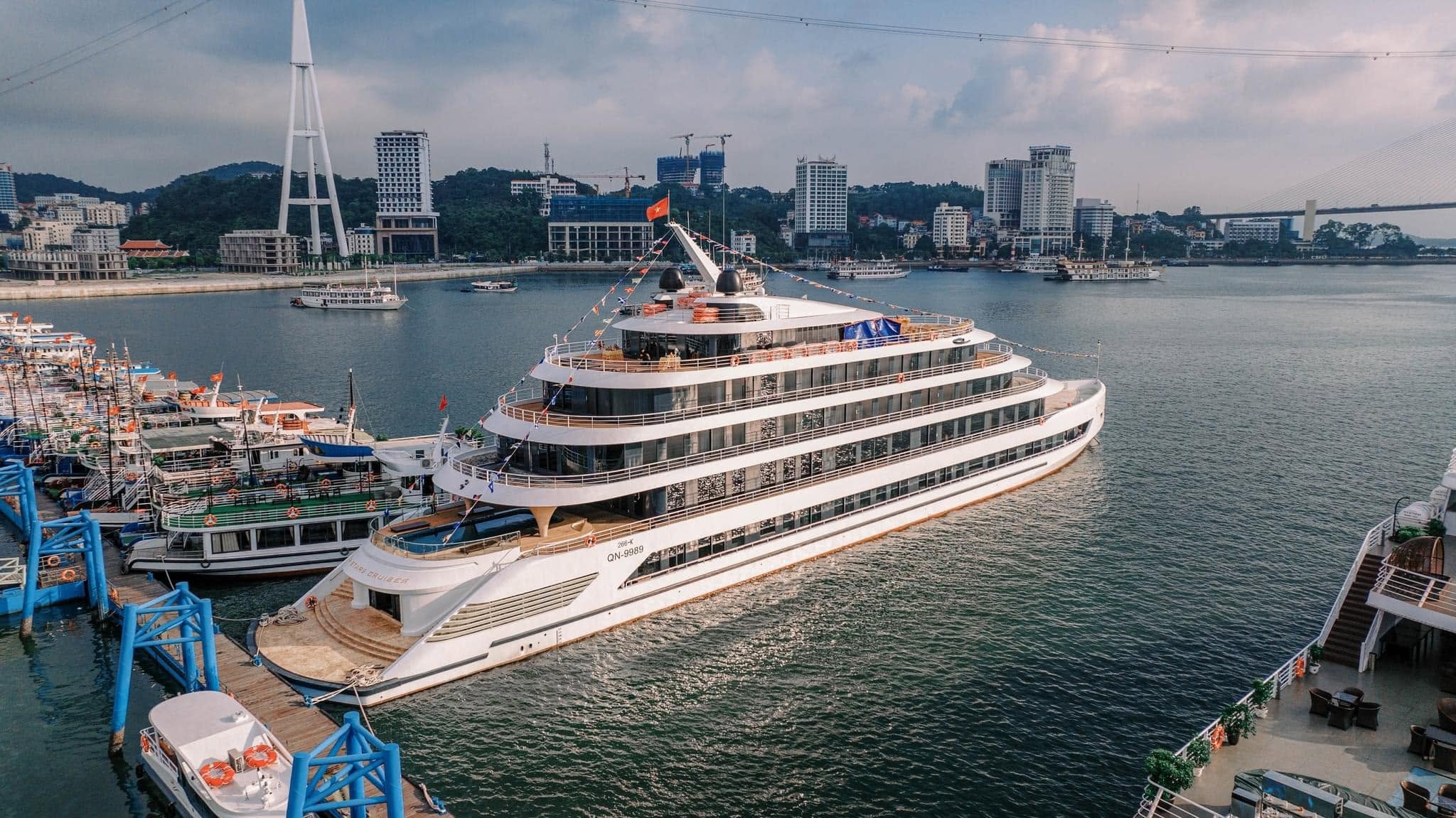

A mid-range Halong Bay cruise is worth paying for when it buys a specific improvement you will use. That might be a private balcony on Lan Ha Bay, a larger family cabin or a smaller boat on Bai Tu Long Bay. Start by comparing 2D1N trips with the same room occupancy and the actual inclusions for your dates.
In the four examples below, published prices ranged from US$128 to US$159 per person when checked on 28 November 2026. Some of these ships also appear under other style labels. Use this shortlist alongside the Ha Long Bay budget comparison to decide where a mid-range departure fits.
On this page
Four value cruises compared by cabin and route
| Program | Published from price | Cabin comparison | Route decision |
|---|---|---|---|
| Swan 2D1N | US$128 | The ship’s 18 m² Deluxe has an ocean-view window. The 28 m² Suite Balcony adds a private balcony and a Jacuzzi tub. | Choose it to compare Thien Canh Son Cave and the Bai Tu Long route at a lower starting price. |
| Signature 2D1N | US$141 | The Signature profile lists 12 cabins. Ask which room and outdoor space the quote includes. | Compare a smaller boat on Bai Tu Long Bay and the listed Cong Do area stop. |
| La Casta 2D1N | US$142 | The 30 m² Junior Suite lists a private balcony and bathtub. The 40 m² Family Triple is a separate category. | Compare Lan Ha Bay when outdoor cabin space and family bedding affect your decision. |
| Doris 2D1N | US$159 | The 35 m² Junior Suite lists a private balcony and bathtub. | Choose it for comparison when Tra Bau kayaking and a larger quoted cabin matter. |
Use the room measurements as listed, then ask whether outdoor space counts toward the number. Smaller ships can offer fewer guests on board, but a cabin count alone gives no crew ratio. Ask how many passengers share each guided excursion if the group size is important to you.

When is the upgrade worth paying for?
For couples. An outdoor seat may matter more than an extra five square metres of indoor space. Ask for the usable balcony dimensions, seating and deck location. If you expect to spend most of the afternoon on an excursion, compare a large window with a private balcony before committing to the upgrade.
For families. Compare a triple or connecting setup against the full cost of two rooms. Ask for the number and size of beds, the child policy on excursions and whether the quoted transfer has seats for everyone. On the day of boarding, moving luggage between a tender and the main ship can matter more than an additional facility on the deck.
For route-first travellers. Pick between Lan Ha and Bai Tu Long before comparing the cabins. A Lan Ha programme may list Tra Bau or a cave by water. Bai Tu Long programs can offer Thien Canh Son Cave or the Cong Do area. Verify the specific schedule and weather alternatives. See the one-night itinerary guide for departure and return windows.
What to ask when a listing says 4-star
Request the name of the cabin, deck plan, private bathroom setup and itinerary inclusions. Ask whether lunch and dinner are served as a buffet, set menu or à la carte. If you have dietary requirements, check what the operator can accommodate on your departure. Those details give you a better comparison than the star label alone.
Compare actual quotes in the mid-range cruise listings. Stay with a budget programme if the cabin and route already work. Check the luxury suite comparison if dining or private space is a main reason for the trip.
Compare two mid-range quotes line by line
Put only trips of the same duration in the first comparison. Record route, embarkation point and times before looking at the cabin. A one-night itinerary in Bai Tu Long Bay and a one-night itinerary in Lan Ha Bay can cost a similar amount without visiting the same places. If you already have a fixed transfer, confirm where that route embarks and when you must arrive. A cabin upgrade may be less important than reaching the places you have in mind.
Next, ask for the same level of accommodation on both quotes. Record the deck, the actual bed type, the room occupancy, indoor area and any private balcony or terrace. Ask for measurements if the ship quotes outdoor space as part of the overall area. A private balcony with room to sit can be useful even when a cabin is smaller inside. For a late arrival or an itinerary full of excursions, the time you would use that space may be limited.
Compare the bathroom as a separate feature. A bathtub on the ship profile may be part of one specific category. Ask if the room you would actually book has a bathtub, a walk-in shower or both. If mobility matters, give the operator the exact detail you need to know, such as a step at the shower entrance or the distance from the cabin to the dining room. Planning those details can prevent choosing an upgrade that is difficult for one member of your party to use.
When you have the actual features, compare the supplements alongside the fare. One quote may have more space but exclude transport. Another may be better for a family because one cabin fits three guests. Write down the complete party total, the meal format, the excursion you expect to use and the transfer arrangement. Ask which of those prices are fixed for the date and what would change if you moved to another sailing.
Decide where the upgrade will change your experience
For a weekend trip, choose one or two improvements that you expect to notice. For example, a couple who likes time outdoors might choose a private balcony rather than a larger indoor room. A parent travelling with a child might prioritise an appropriate bed and a shorter distance to dining. A traveller who values quiet can ask how close the suggested room is to the stairs, lounge or machinery instead of relying on the deck number alone.
Shared spaces are part of the value. Ask where guests can sit during scenic stretches and whether the restaurant has different meal seatings. On a small boat, a limited number of rooms may be appealing, but it does not describe staffing or excursion group sizes. If you want a smaller guided group, confirm the actual arrangement in writing. For dietary requirements, describe the kinds of meals you need before comparing the menus or paying a supplement.

Think through the first morning and the end of the trip. A mid-range price can be appealing if the route fits your transport schedule without another hotel night or a rushed return. Ask whether transfers are included, what time shuttle seats are available and where you would be dropped off. On a longer trip, a cabin and route that suit your plans are more valuable than a nominal upgrade that leaves you with difficult timing.
The geographical names in the comparison matter when choosing a route, while the room and activity details come from individual operators. Use published bay and island information to understand where the boat goes, then verify the stops and access arrangements on your exact itinerary. See the UNESCO site description for Ha Long Bay and Cat Ba.
What to record on a mid-range shortlist
For every boat on the shortlist, write down the name of the property or terminal where passengers check in, the exact cabin, the total for the party and one reason you would choose this itinerary. Record the sources in the quote so you can follow up with the right person. This helps when the listed ship and the operating vessel can differ or the catalogue offers multiple departures under a similar name.
Look back at the reasons before choosing. An upgrade might be easy to justify if it gives you a private balcony you will use, an appropriate bed or a route your group prefers. If the difference is an amenity that you are unlikely to use, compare the simpler room on the same sailing first.