
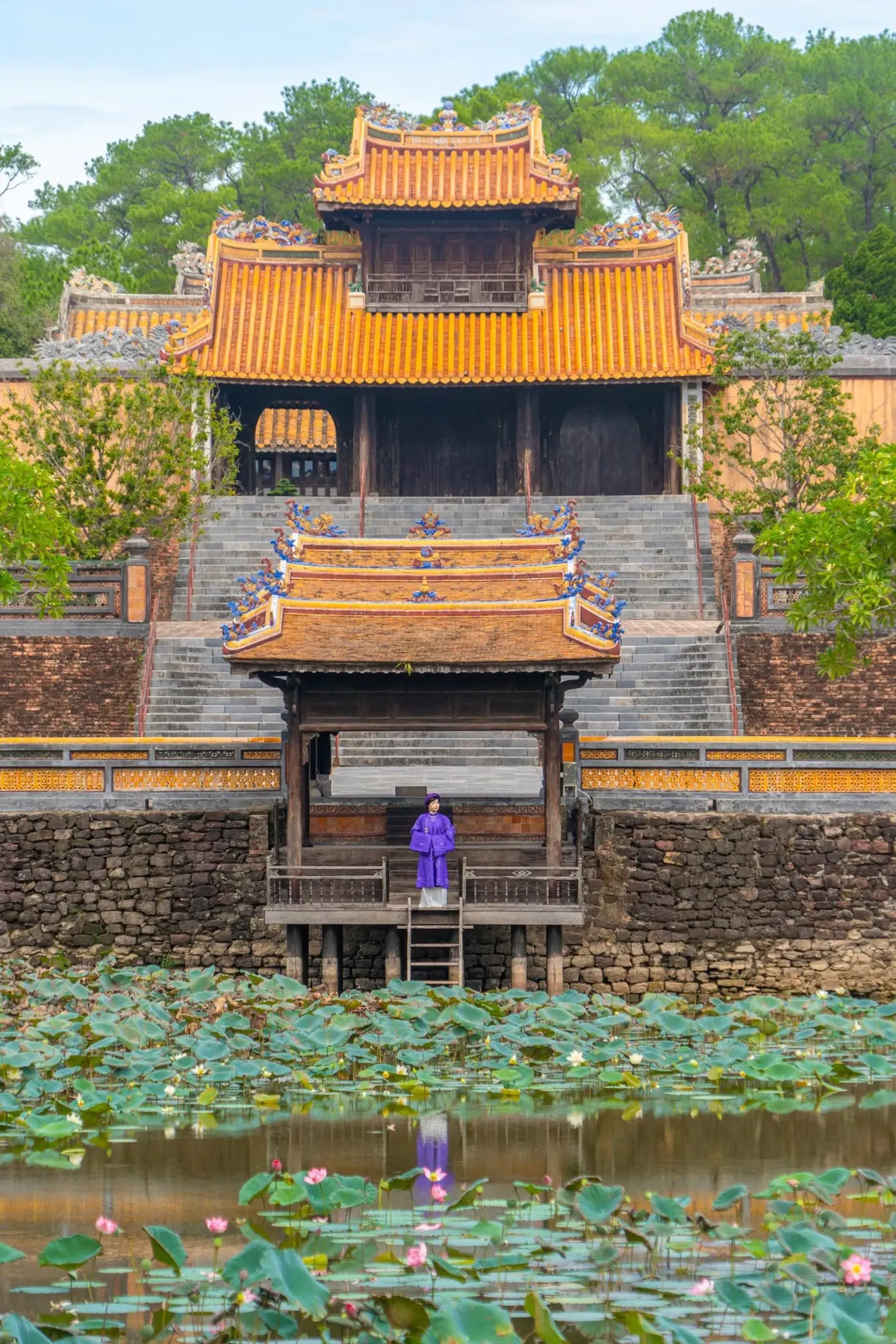
For visitors planning a short trip to central Vietnam, a three-day visit to Hue provides an opportunity to explore its imperial past, understand its wartime history, and enjoy its natural surroundings. This former imperial capital offers a blend of cultural landmarks and serene landscapes, suitable for various interests, from historical exploration to relaxation.
Exploring Hue's Imperial Grandeur
Begin your Hue experience with a leisurely morning dedicated to the city's historical heart. The Hue Citadel, a sprawling complex, and the Imperial City, situated on the north bank of the Perfume River, are central to understanding Vietnam's royal heritage. Entry through the Ngo Mon Gate, once reserved for royalty, leads to an elevated vantage point offering expansive views of the entire citadel grounds. Within the Imperial Citadel lies the Forbidden Purple City, which provides a glimpse into the lives of ancient rulers. While some structures sustained damage during past conflicts, visitors can still traverse numerous pathways through verdant gardens and appreciate the remaining iconic architecture. Consider a moment of repose on the grass or a quiet picnic in the shade. Afterwards, a short walk leads to the Hue Monuments Conservation Center, where a collection of historical ornaments is displayed.
In the afternoon, consider a bicycle ride or a cyclo journey along the Perfume River to reach Thien Mu Pagoda. This seven-story pagoda is an important symbol of Hue. Following this, cross to the south bank of the Perfume River to visit some of the royal tombs of the Nguyen Kings. Among these are four notable mausoleums: the majestic Gia Long Tomb, the imposing Minh Mang Tomb, the Tu Duc Tomb, and the magnificent Khai Dinh Tomb. Each tomb's design and layout are said to reflect the individual perspectives, personalities, and preferences of the respective monarchs. Additionally, visitors can explore local craft traditions by visiting villages specializing in incense and conical hat making. For managing finances during your stay, visitors can find various banking services in Hue City.
A Glimpse into Wartime History: The Demilitarized Zone
Dedicate your second day to understanding a pivotal period in Vietnamese history with a tour to the Demilitarized Zone (DMZ), located approximately 100 kilometers outside Hue. Start your morning with a cup of local coffee before embarking on this significant excursion. The DMZ was established as a dividing line between North and South Vietnam, playing a crucial role in the country's past.
During the tour, you will travel through green hillsides and dense bush, hearing narratives about the impact of Agent Orange, American military involvement, and the realities of post-war life. The journey typically includes sites along the Ben Hai River, where you can observe the bridge that endured extensive bombing yet still stands today. A key stop is the Vinh Moc tunnel system, a network of narrow underground passages where sixty families sought refuge from the intense crossfires of war. This experience offers a profound perspective on the resilience and strategies employed during the conflict.
Relaxation and Nature Escapes
After two days of historical exploration and solemn reflections on wartime history, your final day in Hue offers an opportunity for relaxation and engagement with nature. One excellent option for escaping the city's pace is a day trip to the Thanh Tan Hot Springs, situated about 13 kilometers north of Hue. These natural springs are known for their mineral content, including calcium and sulfur, which are believed to offer therapeutic benefits.
Alternatively, consider a visit to Thuan An Beach, located approximately 15 kilometers from Hue. Here, you can spend the day unwinding by the sea, taking leisurely walks along the shore, and enjoying the sunset before returning to the city. These natural retreats provide a peaceful contrast to the historical sites, allowing for a balanced and refreshing conclusion to your Hue itinerary. Should medical assistance be required, information on healthcare facilities in Hue is readily available.
Culinary Delights of Hue
Beyond its historical landmarks, Hue is celebrated for its distinctive culinary traditions. The local cuisine is renowned for its complex flavors, often featuring a notable spiciness that appeals to many palates. Visitors frequently report that the food alone is a compelling reason to extend their stay or plan a return trip.
Among the many dishes to sample, several stand out. Com Hen is a flavorful clam rice, while Bun Bo Hue is a spicy beef noodle soup that has gained international recognition. Banh Bot Loc are translucent tapioca dumplings, and Com Am Phu, or 'hell rice,' is a colorful mixed rice dish. For a sweet conclusion, try Che Troi Nuoc, a dessert of glutinous rice balls in ginger syrup. Many local eateries near Dong Ba market offer these specialties for lunch and dinner. While exploring the city, consider looking for unique purchases and souvenirs to remember your visit.
Royal Tombs of the Nguyen Dynasty
The Nguyen Dynasty tombs near Hue are significant architectural and historical sites, each reflecting the distinct character of the emperor it honors. Visiting these mausoleums provides insight into imperial beliefs and artistic styles.
| Tomb Name | Characteristic / Style |
|---|---|
| Gia Long Tomb | Majestic and grand, set amidst natural landscapes |
| Minh Mang Tomb | Imposing and harmonious, known for its symmetrical design |
| Tu Duc Tomb | Reflects the emperor's poetic and melancholic personality, with a serene lake and pavilions |
| Khai Dinh Tomb | Magnificent and elaborate, blending Vietnamese and European architectural elements |
Practical Advice for Your Hue Visit
Navigating Hue is relatively straightforward. For short distances within the city, cyclos (pedicabs) offer a traditional and relaxed way to see the sights, while bicycles provide more independence for exploration. Taxis and ride-sharing services are also available for longer distances or when convenience is preferred. When planning your daily activities, remember to account for travel time between sites, especially for destinations like the DMZ, Thanh Tan Hot Springs, or Thuan An Beach, which are outside the city center.
While the source material does not provide specific opening hours or ticket prices for individual venues, it is advisable to verify these details closer to your travel dates, as they can change. Most historical sites operate during standard daytime hours. For longer journeys within Vietnam, options like overnight rail travel connect major cities, offering a different perspective on the country's landscapes.
Frequently Asked Questions
What are the main historical sites to see in Hue?
The primary historical attractions in Hue include the Hue Citadel and its Imperial City, the Thien Mu Pagoda, and the various royal tombs of the Nguyen Kings, such as Gia Long, Minh Mang, Tu Duc, and Khai Dinh.
Can I visit the Demilitarized Zone from Hue?
Yes, day tours are available from Hue to the Demilitarized Zone (DMZ), which is situated approximately 100 kilometers away. These tours typically cover significant historical points like the Ben Hai River and the Vinh Moc tunnels.
What kind of food should I try in Hue?
Hue is renowned for its unique cuisine, often characterized by its spicy flavors. Must-try dishes include Com Hen (clam rice), Bun Bo Hue (spicy beef noodle soup), Banh Bot Loc (tapioca dumplings), Com Am Phu (mixed rice), and Che Troi Nuoc (sweet glutinous rice balls).
Are there natural attractions near Hue for relaxation?
Yes, for those seeking natural relaxation, Thanh Tan Hot Springs, located north of the city, offers mineral baths. Alternatively, Thuan An Beach, a short drive from Hue, provides a coastal setting for unwinding and enjoying sunsets.
How can I get around Hue?
Within Hue, popular local transport options include cyclos for a traditional experience and bicycles for independent exploration. Taxis and ride-sharing services are also readily available for convenience and longer distances.








