
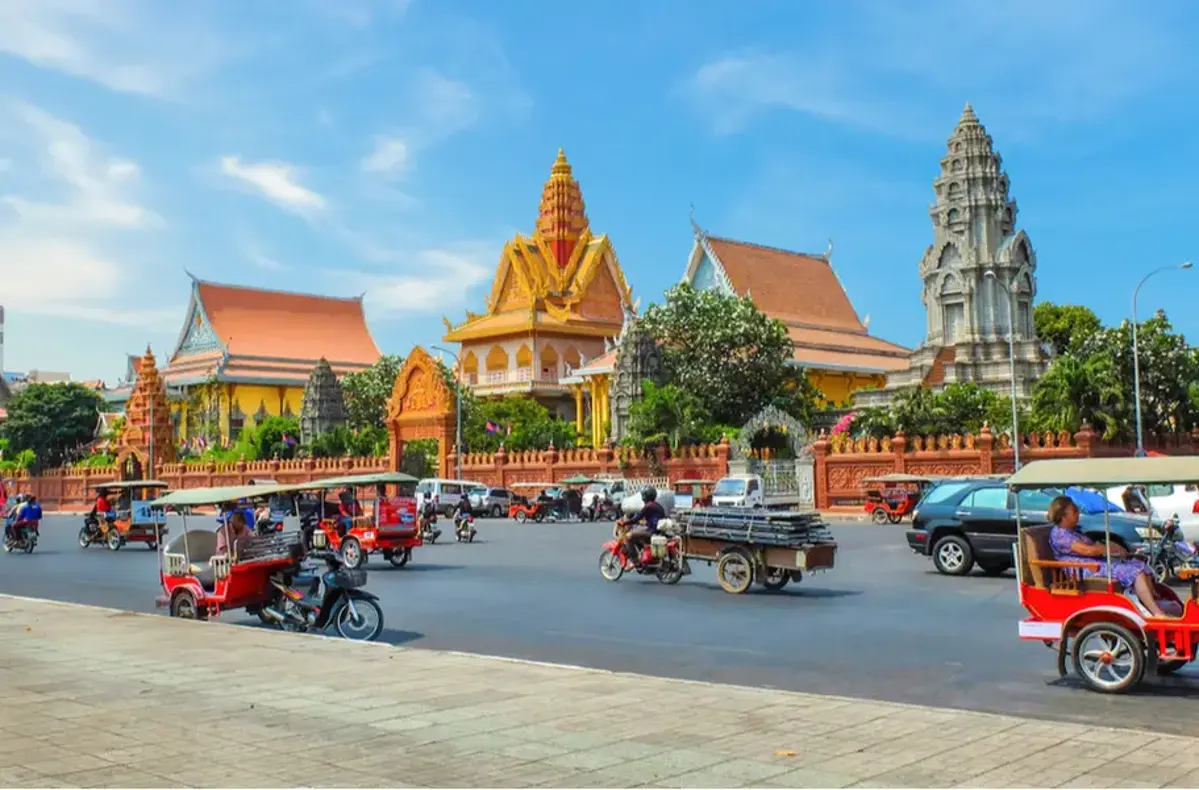
Cambodia, known as the "Land of Khmers," is a nation in Southeast Asia that presents a compelling mix of ancient heritage and contemporary life. It shares borders with Vietnam to the east, Laos to the north, Thailand to the northwest, and features a coastline along the Gulf of Thailand to its southwest. The country's capital is Phnom Penh, while Siem Reap is a highly frequented destination for those interested in its nearby historical temple sites.
Understanding Cambodia: Geography and Demographics
Situated in the heart of Southeast Asia, Cambodia's geographical position has shaped its history and culture. Its land boundaries connect it to several neighboring countries, while its southwestern coast provides access to the sea. Phnom Penh serves as the country's primary administrative and economic center. However, Siem Reap, located in the northwest, draws significant international attention, primarily due to its proximity to the ancient temple complexes.
The nation is home to approximately 15 million inhabitants. The majority, about 95%, are ethnic Khmers, with smaller populations of Vietnamese, Chinese, and Laotian people also residing within its borders. The official language is Khmer, and many locals in tourist-heavy areas possess a good command of English, which often aids communication for international visitors. Buddhism is the predominant religion practiced throughout the country.
Cambodian Currency and Historical Context
The official currency of Cambodia is the Riel (KHR). While the Riel is used for everyday transactions, the US Dollar is also widely accepted, particularly in urban centers and for larger purchases. For reference, approximately 10,000 Riel is equivalent to 3 US Dollars, though exchange rates can fluctuate.
Cambodia's history includes periods of both prosperity and profound challenges. It was a French colony during the 19th century, gaining independence in the mid-20th century. In the 1970s, the country experienced significant external conflict, including bombing campaigns. A particularly dark chapter in its history was the Khmer Rouge regime, led by Pol Pot, from 1975 to 1979. During this period, over 1.5 million Khmers were killed through execution, torture, or starvation, with intellectuals often targeted as part of a radical agrarian policy. Sites like the Killing Fields serve as solemn memorials to these events. In recent years, the Cambodian government, with international support, has pursued legal action against surviving leaders of the Khmer Rouge. Today, Cambodia continues to face economic challenges, relying on international assistance and working to rebuild its skilled workforce, which was severely impacted by past conflicts.
The Ancient Wonders of Angkor Wat
The Angkor Wat complex stands as one of Southeast Asia's most significant archaeological discoveries. Recognized for its outstanding universal value, it was designated a UNESCO World Heritage site in 1992. This expansive site, covering over 400 square kilometers, was the administrative and religious heart of the Khmer Empire from the 9th to the 15th centuries. It is conveniently located just 6 kilometers from Siem Reap, where visitors typically find accommodation.
Within the vast complex, several temples are particularly notable. Angkor Wat itself is considered a paramount Khmer monument, celebrated for its architectural grandeur and intricate bas-reliefs. Bayon, another prominent temple, is distinguished by its numerous stone faces, with 54 towers each featuring four carved faces, totaling 216 visages. Ta Prohm, often referred to as the "temple of trees," is renowned for the giant roots of ancient trees that have grown into and around its structures, a sight famously featured in the movie "Tomb Raider."
Angkor Temple Pass Information
| Pass Type | Price (USD) | Notes |
|---|---|---|
| One-day | $20 | |
| Three-day | $40 | |
| Week | $60 | |
| Children under 12 | Free |
Note: Prices are subject to change. Visitors should verify current rates upon arrival.
Visa Requirements for Cambodia
Travelers planning a trip to Cambodia typically require a visa for entry. Options generally include obtaining a visa upon arrival at certain border checkpoints or applying for an e-visa online. The e-visa application process usually takes approximately three working days to complete.
A standard tourist visa costs $20, while an e-visa is priced at $25; both are valid for up to 30 days. To apply, visitors generally need two passport-sized photographs and a passport that remains valid for at least six months from their intended date of entry. It is important to note that e-visas are typically accepted for entry by air or at specific designated land borders, not all of them. For instance, travelers entering Cambodia via the Poi Pet border crossing from Thailand may find the visa cost to be around $35, which is higher than the standard rates. For more detailed information, you can refer to resources on understanding the necessary visa procedures.
Optimal Times to Visit Cambodia
Understanding Cambodia's climate is key to planning a comfortable trip. The country experiences two main seasons: the dry season, which spans from December to April, and the monsoon season, lasting from May to October. The dry season is generally preferred by many visitors due to its more temperate weather and lower humidity.
Travel during the New Year period often sees higher prices for accommodation and services due to increased demand. March is typically the warmest month, with temperatures capable of reaching up to 40°C. For those planning a trip to Southeast Asia, considering these seasonal variations can help optimize the travel experience.
Planning Your Cambodian Journey
Cambodia offers a diverse range of experiences, from ancient architectural marvels to insights into its complex past. Visitors often encounter numerous historical buildings that stand as testaments to the nation's artistic heritage. The local population is generally welcoming, and many visitors report a sense of optimism despite the country's historical challenges.
The climate is generally pleasant during the dry season, and the atmosphere in many areas is often described as friendly. The country's cultural traditions are rich with creativity, rooted in respect for ancestors and a strong sense of collective spirit. For those considering a comprehensive visit, a Cambodia Discovery tour can offer a structured way to explore the country's highlights. Alternatively, for a focused experience around the ancient sites, an Angkor Wat and Siem Reap cultural discovery provides a shorter option. Further insights can be found when planning your trip to Cambodia or exploring a general overview of this Southeast Asian nation.
Frequently Asked Questions
What is the official currency of Cambodia?
The official currency is the Cambodian Riel (KHR). While the US Dollar is also widely accepted, particularly in tourist areas, local transactions often use Riel. As of the information provided, approximately 10,000 Riel equals 3 US Dollars, though exchange rates fluctuate.
What are the main entry requirements for tourists visiting Cambodia?
Most visitors require a visa, which can be obtained upon arrival at certain border crossings or as an e-visa applied for online. A tourist visa typically costs $20 and an e-visa costs $25, both valid for up to 30 days. Travelers need a passport valid for at least six months beyond their entry date and two passport-sized photographs.
Which historical sites are most important to see in Cambodia?
The Angkor Wat complex near Siem Reap is considered the most significant archaeological site, featuring temples like Angkor Wat, Bayon with its stone faces, and Ta Prohm, known for its integration with ancient tree roots. Additionally, the Killing Fields near Phnom Penh serve as a somber but important historical memorial to the Khmer Rouge era.
What is the best time of year to travel to Cambodia?
The dry season, from December to April, is generally considered the most favorable time to visit, offering pleasant weather. The monsoon season runs from May to October. March can be particularly warm, with temperatures potentially reaching 40°C. Travel costs may be higher around the New Year period.








