
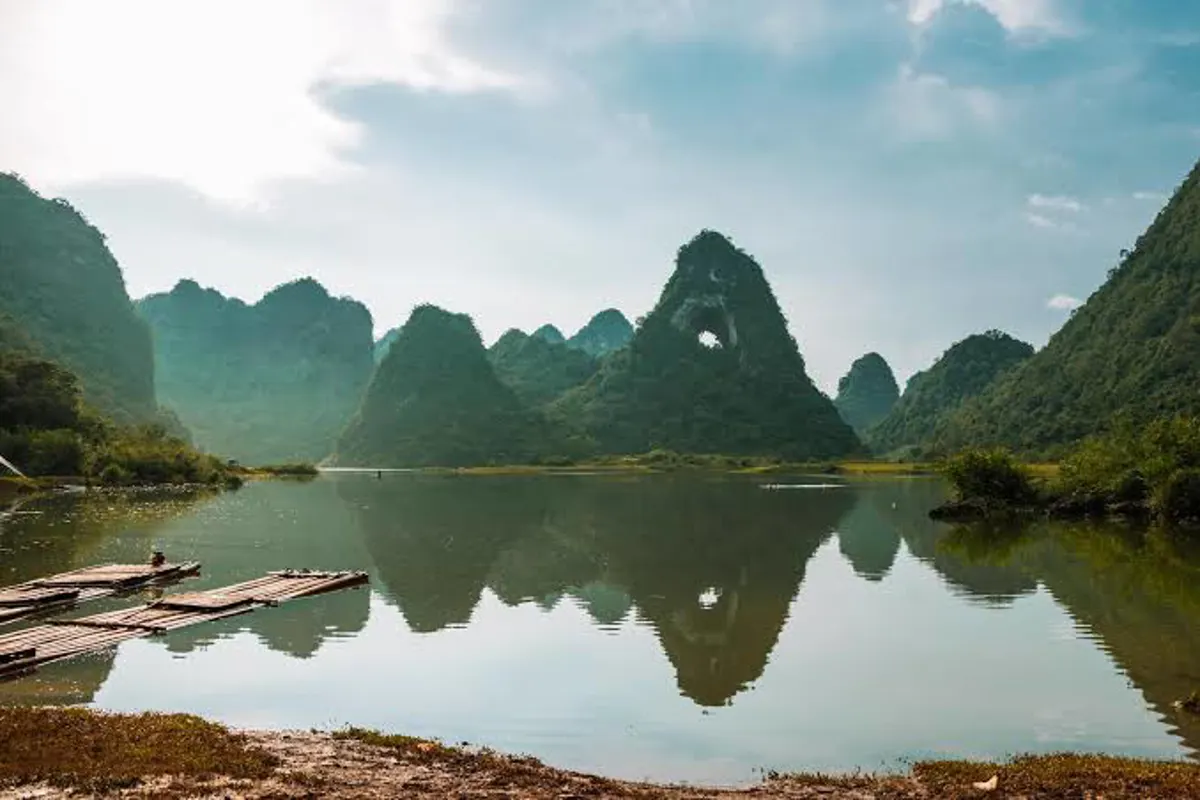
Cao Bang province, situated in the northeastern region of Vietnam, is widely recognized for its impressive Ban Gioc Waterfall. However, this frontier area presents a broader array of attractions, including significant historical locations, unique natural formations, and opportunities to engage with local ethnic cultures. This guide outlines the various activities and sights available, ensuring visitors can plan a comprehensive itinerary.
Major Natural Attractions in Cao Bang
Cao Bang's landscape is defined by its dramatic waterfalls, intricate cave systems, and serene lakes, offering visitors a chance to connect with the region's natural grandeur. These sites are often close to each other, allowing for efficient exploration.
The most celebrated natural landmark is Ban Gioc Waterfall, located on the border between Vietnam and China in Trung Khanh District, approximately 90 kilometers from Cao Bang City. This waterfall spans 300 meters in width, making it one of the largest waterfalls globally. Water cascades over multiple limestone tiers, creating a powerful display that flows into a river, all set against a backdrop of lush grasslands, rice paddies, and dense forests. Visitors can experience the waterfall up close by taking a bamboo raft ride. The period from August to September is often suggested for visits, as the weather is agreeable and the water flow is abundant and jade-green. From October to December, the area is known for blooming buckwheat flowers and wild sunflowers. The entrance fee for the waterfall is 45,000 VND per person, with bamboo raft rides costing around 50,000 VND per person (prices subject to change, verify locally).
Just three kilometers from Ban Gioc Waterfall lies Nguom Ngao Cave, recognized as one of Northern Vietnam's most remarkable limestone caves. Its formation is attributed to the prolonged weathering of limestone by wind and water. Inside, the air is consistently cool and fresh, with temperatures typically ranging between 18 and 25°C. The cave features numerous multi-colored stalactites and stalagmites, appearing in diverse shapes and sizes that invite imaginative interpretation, often resembling mythical creatures, human figures, or various plant forms. While the entire cave system extends for 2,144 meters, a section of over 900 meters is accessible to tourists for safety and preservation. Exploring Nguom Ngao Cave is often recommended after a visit to Ban Gioc Waterfall, with most visitors spending about an hour inside. The entry cost is 30,000 VND per person (prices subject to change, verify locally).
The Thang Hen Lake System presents a tranquil natural setting in Quoc Toan Commune, Tra Linh District, about 25 kilometers from Cao Bang City. This system comprises 36 individual freshwater lakes situated at an elevation of 1,000 meters above sea level, all interconnected by underground waterways and caves. During the rainy season, the water levels rise, merging the smaller lakes into a single expansive body of water, measuring approximately three kilometers in length and one kilometer in width. Notably, unlike many other lakes that may change color during heavy rains, Thang Hen Lake maintains its sapphire-green hue throughout the year, making it a distinctive sight.
Historical and Cultural Exploration
Cao Bang holds significant historical importance and offers opportunities to engage with the diverse cultures of its resident ethnic minority groups. These sites provide insight into Vietnam's past and present traditions.
Phat Tich Truc Lam Ban Gioc Pagoda is notable as the first pagoda constructed in Northern Vietnam, designed in a traditional architectural style. It is conveniently located just 500 meters from Ban Gioc Waterfall, making it easy to visit both sites on the same day. The pagoda features a three-door gate, a bell tower, a drum tower, a stone stele, and a Guan Yin statue. From its elevated position, visitors can enjoy expansive views of Ban Gioc Waterfall, surrounded by rice fields and mountain ranges.
The Pac Bo Historical Relic Site, situated in Truong Ha Commune, Ha Quang District, over 50 kilometers from Cao Bang City, is a place of profound historical significance. This area served as an early base for President Ho Chi Minh during the initial stages of Vietnam's revolution against French colonial rule. Key historical elements within the site include Pac Bo Cave, Coc Bo Cave, Bo Bam Cave, Lenin Stream, Karl Marx Mountain, Co Rac Ground, and Khuoi Nam Stream. The site offers a consistently cool climate and scenic natural surroundings, appealing to those interested in both history and nature. The entrance fee is 25,000 VND per person (prices subject to change, verify locally).
Cao Bang is home to several ethnic minority groups, including the Tay, Nung, Dao, and H'Mong, who have resided in these valleys for centuries. Each group maintains distinct traditions, customs, traditional brocade attire, and ways of life, contributing to Cao Bang's rich cultural diversity. To learn more about these cultures, visitors can explore local markets where various ethnic groups gather to trade goods, visit a minority craft village with local guides, or consider an overnight stay at an ethnic homestay during their travels. Such interactions offer a deeper understanding of regional customs and daily life. For those interested in acquiring unique items, exploring these local markets and villages can also be a good opportunity to find unique purchases and souvenirs.
Adventure and Local Flavors
For those seeking more adventurous experiences or wishing to sample the regional cuisine, Cao Bang offers challenging mountain passes and a distinctive culinary landscape.
Conquering Me Pia Pass is an activity primarily recommended for experienced riders due to its challenging nature. This pass is part of Highway 4A, connecting Xuan Truong Commune to the center of Bao Lac, a border district near China, located over 90 kilometers from Cao Bang City. The pass stretches 2.5 kilometers and features 14 sharp, winding turns and steep inclines, flanked by high mountains. It is widely considered one of the most demanding passes in Northeast Vietnam.
Exploring local cuisine is an integral part of travel, and Cao Bang offers a range of distinctive dishes. Given the presence of many ethnic minority groups, some culinary offerings may seem unusual but are worth trying. Notable local specialties include Trung Khanh chestnuts, roasted pork, roasted duck, sour noodle soup, Carnarium sticky rice, ant eggs cake, "coong phu" cake, and Chinese sausage. These dishes reflect the region's agricultural bounty and cultural influences.
Planning Your Visit: Essential Details
When planning a trip to Cao Bang, understanding the practical aspects of visiting the main attractions can enhance the experience. Below is a summary of key sites with their respective entry fees and approximate distances from Cao Bang City.
| Attraction | Location | Distance from Cao Bang City | Entrance Fee (Approximate) | Additional Costs |
|---|---|---|---|---|
| Ban Gioc Waterfall | Trung Khanh District | 90 km | 45,000 VND | Bamboo raft: ~50,000 VND/person |
| Nguom Ngao Cave | Trung Khanh District (3 km from Ban Gioc) | 93 km | 30,000 VND | None |
| Phat Tich Truc Lam Ban Gioc Pagoda | Trung Khanh District (0.5 km from Ban Gioc) | 90.5 km | Free | None |
| Thang Hen Lake System | Quoc Toan Commune, Tra Linh District | 25 km | Not specified in source | Not specified in source |
| Pac Bo Historical Relic Site | Truong Ha Commune, Ha Quang District | >50 km | 25,000 VND | None |
| Me Pia Pass | Highway 4A (connecting Xuan Truong to Bao Lac) | >90 km | Free (for viewing) | None (for riding, only experienced riders recommended) |
Note: All fees are subject to change and should be verified upon arrival. Distances are approximate.
Frequently Asked Questions
What is the best time of year to visit Cao Bang?
The ideal time to visit Cao Bang generally spans from August to September, when the weather is pleasant and the Ban Gioc Waterfall is full with jade-green water. Visiting between October and December also offers the chance to see buckwheat flowers and wild sunflowers in bloom.
Are there options for accommodation in Cao Bang?
While the source material does not specify accommodation options, visitors typically find guesthouses and hotels in Cao Bang City. For a more cultural experience, some ethnic minority villages may offer homestays.
How can I travel to Cao Bang?
Cao Bang is accessible by road, typically via bus from major cities like Hanoi. While the source does not detail specific transport routes, travelers often use long-distance buses. For broader travel within the country, overnight rail journeys in Vietnam are a popular option for covering longer distances between provinces.
Is it safe to explore the mountain passes like Me Pia Pass?
Me Pia Pass is described as one of the most challenging and dangerous passes in Northeast Vietnam. It is explicitly recommended only for experienced riders due to its sharp bends, high slopes, and winding floors. General caution and appropriate gear are advised for any mountain pass exploration.
What should I expect when visiting ethnic minority villages?
When visiting ethnic minority groups, expect to observe distinct traditions, customs, and ways of life. Opportunities may include visiting local markets for trade, exploring craft villages with local guides, or experiencing an overnight homestay. Respectful interaction and cultural sensitivity are always encouraged.








