
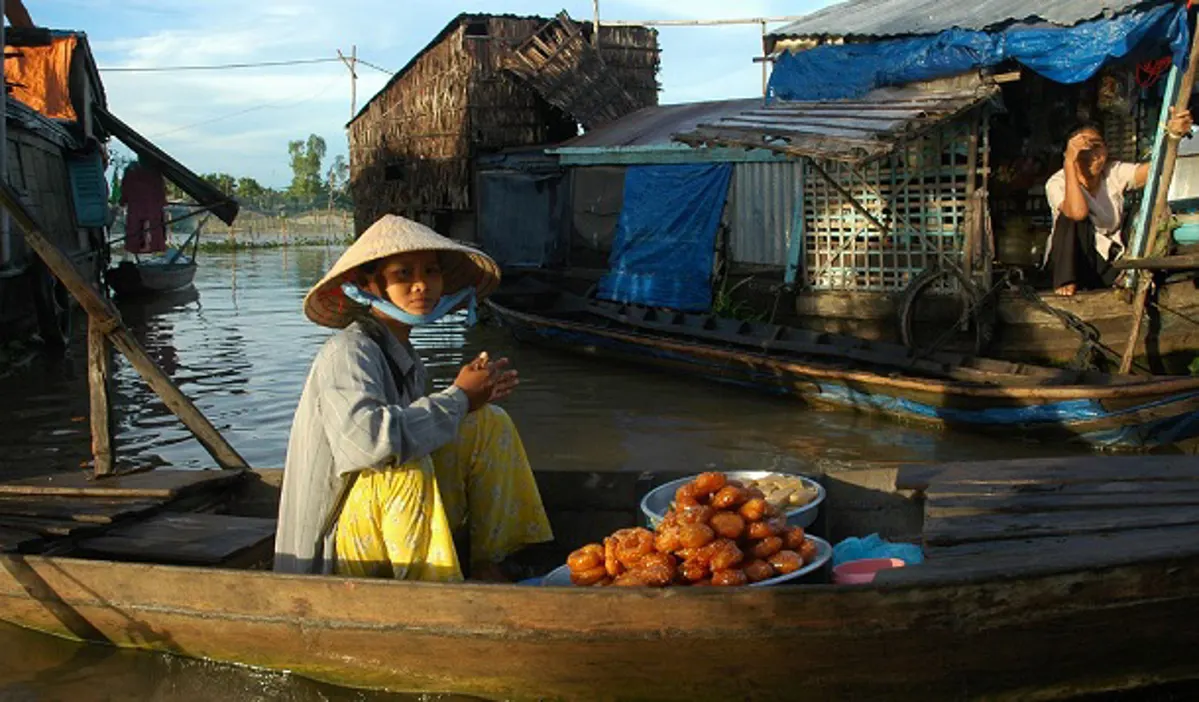
The Chau Doc Floating Village, situated approximately 4 kilometers west of Chau Doc city center in Vietnam's An Giang Province, offers a unique glimpse into riverine life in the upper Mekong Delta. This distinctive community is renowned for its traditional method of raising freshwater fish directly beneath residential structures built on the water. Visitors here can observe local customs and the specialized aquaculture practices that have shaped the region's economy and identity for decades.
The Evolution of Chau Doc's Floating Economy
The origins of Chau Doc Floating Village are traced back to the 1960s. Initially, only a few small fish farms existed, where fish were raised naturally without specific feeding, relying instead on the river's ecosystem for sustenance. Over time, residents recognized the significant income potential from fish farming, leading to an expansion of these operations starting in the 1970s. This growth transformed Chau Doc into a key economic hub within An Giang Province.
The period between 1990 and 2005 marked a significant era for fish farming in Chau Doc, often referred to as its peak. During these years, the number of floating houses dedicated to aquaculture grew substantially, from around 100 to approximately 2,000. Annual fish yields frequently exceeded 20,000 tons. Basa and shark catfish were the primary species cultivated, with a considerable portion exported to markets in North America and Western Europe. Basa fish subsequently became an important symbol for Chau Doc City. By 2005, local farmers began incorporating modern techniques, diversifying their production to include species such as marble goby, cyprinid fish, and giant snakehead. However, around 2010, environmental changes, including droughts and increasing pollution in the Mekong River, negatively impacted fish farming. This led to many households experiencing poor harvests and some larger farms facing financial difficulties. Consequently, fewer floating houses are now dedicated solely to fish cultivation, indicating that the intensive farming period is largely in the past. Despite these changes, evidence of the former prosperity of fish farming remains visible to those exploring Chau Doc. Locals continue to honor Bà Cậu, deities believed to bestow peace, prosperity, and good fortune in life and aquaculture. Information about historical fish farming methods is often shared with travelers, providing context to the area's rich past.
Life on the Water: Observations and Activities
Upon arriving at Chau Doc Floating Village, travelers often wonder why residents choose to live on the water rather than on solid ground. The primary reason stems from the high cost of land and housing in the central areas of Chau Doc Town. This economic reality prompted many to establish homes on boats near the pier. As these communities grew, a range of services emerged directly on the water, including fuel stations, grocery stores, repair shops, clothing outlets, and markets, collectively forming the distinctive floating village seen today.
While fish farming remains a traditional livelihood for many families in Chau Doc Floating Village, it also serves as a notable draw for visitors on tours of the Mekong Delta. The unique cultural aspects are evident in the design and function of each floating house, attracting both domestic and international guests. During a stop here, individuals have the chance to observe activities such as feeding fish and witnessing their feeding behavior. Local guides typically share insights into the daily routines of residents and the specific methods used for fish care. Additionally, travelers may purchase handcrafted items like brocaded bags or miniature bamboo fish traps as keepsakes from the floating shops. For a broader understanding of the region's aquatic life and cultural practices, consider exploring various Mekong Delta experiences.
Planning Your Visit: How to Get There
Accessing Chau Doc Floating Village is exclusively by motorboat, as the floating houses are situated directly on the Mekong River. To begin your journey, you will need to reach a departure point in Chau Doc. Common starting locations include the intersection in Chau Doc, which is approximately 500 meters from the Victoria Hotel, or the pier at Chau Giang. From these points, local boats transport visitors to the village.
The cost of renting a motorboat can vary based on the season and the number of passengers. However, prices are generally considered reasonable, and bargaining is typically not required. A practical suggestion for arranging transportation is to ask the reception staff at your accommodation to book a boat in advance. This approach often proves more convenient and helps save time for your excursion. For those interested in a comprehensive journey through the region, a Mekong Delta Discovery tour often includes stops in Chau Doc.
Accommodation Options Near Chau Doc Floating Village
Since boat departures for Chau Doc Floating Village originate from piers within the city, finding lodging close to the center of Chau Doc is advisable. The area offers a range of accommodation choices, from upscale establishments to more budget-friendly options. Below is a selection of hotels and their approximate starting prices (current as of the last update, please verify for real-time rates):
| Hotel Name | Address | Approximate Price (per night) |
|---|---|---|
| Victoria Châu Đốc | Lê Lợi Street, Châu Đốc City, An Giang Province | from VND 2,002,268 |
| Dong Xanh Hotel | Nguyễn Tri Phương Street, Châu Đốc City, An Giang Province | from VND 349,579 |
| Victoria Nui Sam Lodge | Vĩnh Đông 1 Street, Châu Đốc City, An Giang Province | from VND 2,949,646 |
| Hung Cuong Hotel | Đống Đa Street, Châu Đốc City, An Giang Province | from VND 581,907 |
| Châu Phố Hotel | Trưng Nữ Vương Street, Châu Đốc City, An Giang Province | from VND 997,125 |
| Hải Châu Hotel | Sương Nguyệt Anh Street, Châu Đốc City, An Giang Province | from VND 440,590 |
| Song Hào Hotel | Trưng Vương Residential Area, Châu Đốc City, An Giang Province | from VND 150,000 – VND 1,000,000 |
| Hoàng Đức Hotel | Tân Lộ Kiều Lương Street, Châu Đốc City, An Giang Province | from VND 649,411 |
| Murray Hostel | Trương Định Street, Châu Đốc City, An Giang Province | from VND 745,769 |
| Minh Trang Motel | Núi Sam Ward, Châu Đốc City, An Giang Province | from VND 345,000 |
Culinary Experiences in Chau Doc
A visit to Chau Doc would be incomplete without sampling the distinctive local cuisine, which reflects the area's culinary traditions, culture, and way of life. Historically, residents skillfully utilized indigenous ingredients provided by nature to craft a unique array of dishes. It is widely recommended that travelers explore Chau Doc Market, where numerous stalls and eateries offer these regional specialties. For more detailed information on local food, refer to a Chau Doc culinary guide.
Among the many local food items to consider trying are fermented fish and sesbania sesban flower hotpot, fermented fish rice noodle soup, various fermented fish and fish sauces, sticky rice preparations, sweet neem young leaves salad, palmyra palm cakes, and palmyra sweet soup. Other notable dishes include specialty beef items, fried sticky rice, young green rice pies, beef sausages (tung lo mo), beef porridge, burned snakehead, and elaeocarpus hygrophilus fruit. These offerings provide a genuine taste of An Giang's gastronomic heritage.
Practical Advice for Travelers
When planning an excursion to Chau Doc Floating Village, it is often suggested to combine it with visits to other nearby attractions. These might include the Champa Villages in areas such as Đa Phước, Châu Giang, Châu Phong, An Khánh, and An Bình, as well as the main Chau Doc Market. Exploring these additional sites can provide a more comprehensive understanding of the local culture and environment. For those considering a cross-border adventure, a Dragon Eyes Mekong Delta and Phnom Penh journey could be an option.
Travelers should also keep several practical tips in mind. Given the amount of movement involved and the reliance on boat transport, wearing comfortable footwear is advisable; high heels are generally not suitable. For safety, it is recommended to wear life jackets while on boats. Individuals prone to motion sickness might find it beneficial to secure a comfortable seat on the vessel. When visiting Champa Villages, be aware that some bridges are constructed from wood. The optimal time for a trip to An Giang, and specifically Chau Doc Floating Village, is during the floating season, which typically occurs between August and November. As Chau Doc, An Giang, is situated close to the border with Cambodia, visitors may observe distinct cultural influences from this proximity. To gain the most from a trip to this remote area, further investigation into specific attractions, markets, and historical sites, such as those in Chau Doc Floating Village, is recommended. For insights into seasonal travel in the region, consider reading about exploring Đồng Tháp during the Mekong Delta's floating season.
Frequently Asked Questions
What is the primary purpose of Chau Doc Floating Village?
The Chau Doc Floating Village primarily serves as a residential area where families engage in freshwater fish farming. Residents live in houses constructed on pontoons, with fish cages suspended directly beneath their homes, forming a unique aquaculture system.
When is the best time to visit Chau Doc Floating Village?
The most favorable period to visit Chau Doc Floating Village and the broader An Giang Province is during the floating season, which typically spans from August to November. During these months, the river levels are higher, and the landscape is particularly verdant.
Are there any specific cultural practices associated with the floating village?
Yes, residents of Chau Doc Floating Village traditionally worship Bà Cậu, a set of deities believed to bring peace, prosperity, and good fortune, especially in their daily lives and fish farming endeavors. This cultural practice reflects the deep connection between the community and its aquatic environment.
What types of souvenirs can be purchased at the floating village?
Visitors to Chau Doc Floating Village can find various local handicrafts available at floating shops. Common souvenirs include brocaded bags and miniature bamboo fish traps, offering a tangible memory of the region's unique culture.
Is it possible to combine a visit to Chau Doc Floating Village with other attractions?
Absolutely. It is common for travelers to combine their visit to the floating village with explorations of nearby Champa Villages, known for their distinct cultural heritage, and the bustling Chau Doc Market, which offers a wide array of local goods and foods.








