
Da Nang, situated centrally along Vietnam's coastline, serves as a significant hub for travelers due to its extensive beaches and varied points of interest. As the country's fifth-largest city and third most populated, it provides a convenient base for exploring Central Vietnam, including its international airport and proximity to Hoi An. This guide outlines the primary destinations for visitors to this lively urban center.
Coastal Retreats and Expansive Shorelines
Da Nang is renowned for its long, wide beachfront that stretches for many kilometers, extending from the Son Tra Peninsula down towards Hoi An. These white-sand areas often remain quiet for much of the day, offering peaceful spots for relaxation.
Towards the southern end, several notable beaches include Non Nuoc, Pham Van Dong, My Khe, and My Anh. Among these, My Khe beach draws the largest crowds, particularly as evening approaches, when locals gather on its soft sands and clear waters for swimming or sports. The vicinity offers numerous seafood establishments and rooftop bars, allowing for a delightful meal or sunset beverage after a day by the sea. For those seeking a sumptuous dinner, options are readily available.
Discovering the Son Tra Peninsula
From the Da Nang beaches, a prominent white statue of Lady Buddha is visible on a nearby hill. This 67-meter-tall Goddess of Mercy figure stands as the nation's tallest Buddha statue. To view it closely, travelers can proceed to Linh Ung Pagoda, located on the Son Tra Peninsula.
This nature reserve, positioned approximately 10 kilometers north-east of the city, is also home to Son Tra (Monkey) Mountain. This mountain acts as a natural shield for the city against sea storms. Ascending to its summit, whether by hiking or vehicle, provides expansive vistas. Along the ascent, there is a possibility of observing the endangered red-shanked douc langur (Pythathrix nemaeus). The surrounding verdant rainforest spans 4,000 hectares, offering a cool, lush alternative to the coast on warmer days.
The Historic Hai Van Pass
Motorcycle enthusiasts often seek out the Hai Van Pass, a mountain route that gained international recognition after being featured on a popular British automotive television program in 2008. One presenter described it as “a deserted ribbon of perfection—one of the best coast roads in the world.”
This 21-kilometer “Ocean Cloud” pass is celebrated for multiple reasons: it ranks among the longest and highest passes in Vietnam, historically served as a strategic boundary during conflicts, and marks a climatic division between the tropical southern and subtropical northern regions. Its accessibility from Da Nang, Hue, and Hoi An contributes to its appeal. For an extensive road trip, travelers can traverse the 165-kilometer route connecting these three cities. Starting early allows for a full day's exploration, or the journey can be extended with an overnight stop. For those planning a motorbike trip from Hue to Hoi An, this pass is a highlight. Alternatively, a private car offers a comfortable journey between Da Nang and Hue.
Da Nang's Iconic Dragon Bridge
While several Vietnamese cities feature impressive suspension bridges, Da Nang is home to the country's longest: the Dragon Bridge. This modern, six-lane structure showcases a significant dragon design, a source of local pride. Dragons hold deep cultural importance in Vietnam, symbolizing national strength and prosperity.
In the evenings, the bridge's dragon motif is illuminated with LED lights. On Saturday and Sunday nights at 9 PM, the dragon performs a display of fire and water from its mouth, drawing many observers. Prime locations for viewing this spectacle include being directly on the bridge, patronizing a cafe along Tran Hung Dao Street, or finding a spot and refreshments at the Son Tra night market situated below.
Highland Adventures at Ba Na Hills
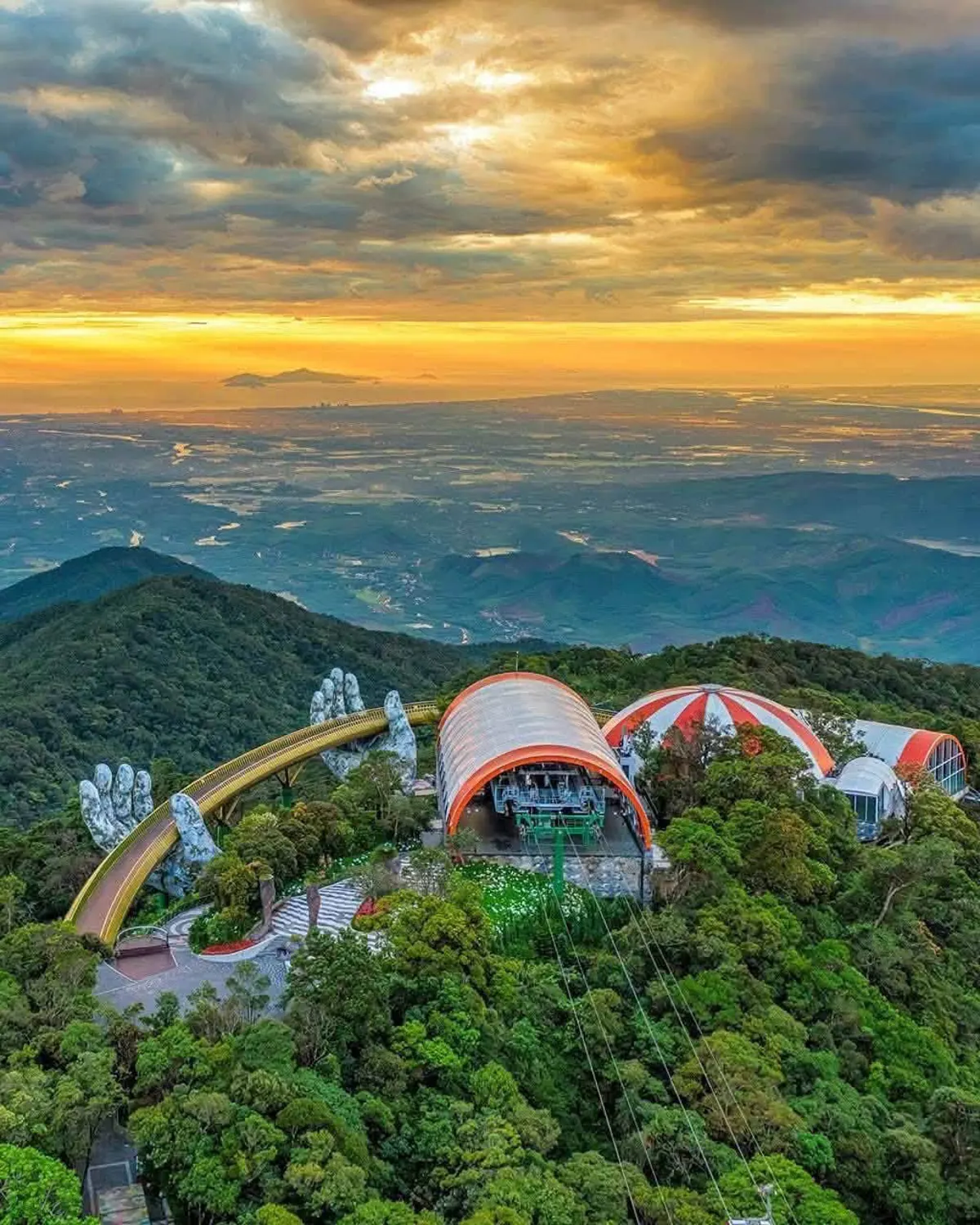
For a family-oriented day trip, Ba Na Hills offers a compelling option. This elevated resort, located in the Truong Son Mountains, is approximately a 40-minute drive west of Da Nang. Its origins trace back to 1919 when it was established as a resort by the French. Although most of the original villas were destroyed during wartime, the Debay Wine Cellar remains.
It is advisable to acquire tickets for entry to Ba Na Hills in advance to avoid waiting in lines. The admission fee typically covers a round-trip journey on the extensive cable car system ascending and descending the mountain. Once at the summit, visitors can explore Sun World Amusement Park, a themed complex resembling a castle. Activities include strolling through flower gardens or a French-inspired village, visiting the Linh Ung temple, or enjoying games within the amusement park. A major draw for many is the opportunity to photograph the celebrated Golden Bridge, a 150-meter architectural achievement featuring two colossal concrete hands supporting a gleaming gold walkway.
The Enigmatic Marble Mountains
A shorter drive from Da Nang, heading towards Hoi An, leads to the Marble Mountains. This collection comprises five limestone and marble peaks, each named after one of the five elements: Thuy (water), Moc (wood), Kim (metal), Hoa (fire), and Tho (earth).
Visitors can ascend numerous steps to reach a series of sacred sites, including atmospheric grottoes housing intricate shrines and statues. The coastal vistas from these elevations are also notable. Upon returning to ground level, various souvenir shops at the base offer mementos.
Comparing Da Nang's Key Attractions
| Attraction | Type | Primary Activity | Best For | Location |
|---|---|---|---|---|
| My Khe Beach | Coastal Area | Swimming, relaxation, watersports | Beach lovers, sunset views | City adjacent (southern end) |
| Son Tra Peninsula | Nature Reserve, Cultural Site | Sightseeing, hiking, wildlife spotting, pagoda visit | Nature enthusiasts, cultural exploration | ~10km NE of city |
| Hai Van Pass | Scenic Mountain Road | Motorbike journey, panoramic views | Adventure seekers, photographers | North of Da Nang, towards Hue |
| Dragon Bridge | Architectural Landmark | Evening spectacle (fire/water show), photography | Families, evening entertainment | City center (Han River) |
| Ba Na Hills | Mountain Resort, Theme Park | Cable car ride, theme park, Golden Bridge, French Village | Families, entertainment, cooler climate | ~40-min drive W of city |
| Marble Mountains | Limestone Hills, Cultural Site | Cave exploration, pagoda visits, views | Culture seekers, moderate hikers | Short drive S of city, towards Hoi An |
Frequently Asked Questions
What is the best way to get around Da Nang to see these attractions?
Travelers can utilize taxis, ride-hailing services, or rent motorbikes for independent exploration. For longer distances, such as to Ba Na Hills or the Marble Mountains, private car services are also available. Public buses connect some areas, but direct routes to all tourist sites might be limited.
Are there any entrance fees for these sites?
Entry to beaches and the Hai Van Pass is generally free. However, attractions like Ba Na Hills require a ticket purchase, which includes the cable car ride. The Marble Mountains may have a small entrance fee for certain caves or pagodas. It is recommended to check current prices before visiting.
How much time should I allocate for each attraction?
Visiting the beaches or Dragon Bridge show might take a few hours. The Son Tra Peninsula or Marble Mountains could occupy half a day. Ba Na Hills is typically a full-day excursion due to travel time and the extensive activities available. The Hai Van Pass can be a half-day or full-day trip depending on whether you complete the full 165km route.
Is Da Nang suitable for family travel?
Yes, Da Nang offers many family-friendly options. The beaches are suitable for children, and Ba Na Hills, with its amusement park and themed areas, is particularly popular with families. The Marble Mountains offer an educational and adventurous experience, though some steps can be challenging for very young children.
What is the best time of year to visit Da Nang?
The dry season, from March to September, generally offers the most favorable weather with sunny skies and calm seas, ideal for beach activities and outdoor exploration. However, it can be quite hot during the peak summer months of June to August. The rainy season runs from October to February, with occasional typhoons possible.








