
Da Nang, a significant urban center in Vietnam, is often highlighted for its exceptional quality of life. Despite its population of around one million, the city maintains a more tranquil character than Vietnam's largest cities, Ho Chi Minh City and Hanoi. This central Vietnamese destination combines the conveniences of a modern city with the relaxed ambiance of a seaside community, contributing to its reputation as a highly desirable place to reside.
Urban Design and Atmosphere
The city's layout is notably well-structured, contributing to a sense of order and ease. Streets are generally broad and well-maintained, and the urban environment exhibits minimal air pollution and litter. The Han River acts as a natural division, separating the central business district from the coastal areas, with its banks featuring various establishments, green spaces, and walkways. The tropical climate ensures warmth during the wet season and dry conditions in cooler months, with temperatures typically ranging between 19°C and 24°C (67°F and 76°F) even in the coldest period.
The city center, situated west of the Han River, functions as the primary commercial zone. It presents a lively yet manageable mix of eateries, coffee shops, markets, residential buildings, and family homes, all conveniently located within a ten-minute drive of the international airport. The effective urban planning helps mitigate traffic congestion, even during peak hours. While the nightlife is more oriented towards trendy cocktail establishments and craft beer venues, with some louder party spots found parallel to the river, it generally avoids the intensity of larger metropolitan areas. For those interested in local beverages, exploring Vietnamese coffee culture can be a rewarding experience.
Coastal Allure: Beaches and Recreation
Da Nang's extensive coastline is a major draw, featuring renowned locations such as My Khe Beach. To reach the beach district from the city center, one typically crosses one of four main bridges spanning the Han River. My Khe Beach is recognized for its pristine condition and vast expanse of white sand. Despite its international acclaim, it often remains relatively uncrowded until the late afternoon.
As evening approaches, the beach attracts more visitors, but its considerable length, stretching for many miles north and south, allows individuals to easily find quieter areas. Further north, towards the national park, even more secluded beaches can be found, some accessible only by descending from the mountains through hiking trails.
Natural Landscapes and Cultural Sites
The city is framed by a backdrop of mountains, offering views from nearly every vantage point. The Son Tra Peninsula to the northeast, Marble Mountain to the south, and the Ba Na Hills to the west collectively form a natural boundary that dwarfs the urban footprint. These areas provide significant opportunities for nature exploration, similar to experiences found in Vietnam's national parks.
The Son Tra Nature Reserve, located on the Son Tra Peninsula, serves as a sanctuary for over 200 animal species, including 29 that are rare or endangered. A significant portion of the world's remaining red-shanked douc langurs inhabit this peninsula. Visitors can ascend the mountain by motorbike to reach the "Lady Buddha" statue, a prominent white figure visible from the distant coastline. From the summit, expansive vistas encompass the distant city skyline, lush jungle foliage, and the shimmering ocean extending far into the horizon.
South of the city, Marble Mountain emerges as a cluster of limestone formations rather than a single peak. In contrast to Son Tra's focus on wildlife, Marble Mountain is a spiritual complex adorned with pagodas and temples, some dating back centuries. Carved stone steps lead to various shrines, statues of deities, ancient carvings, caves draped with prehistoric vines, and ornate pagoda rooftops that appear to cling to the mountainsides.
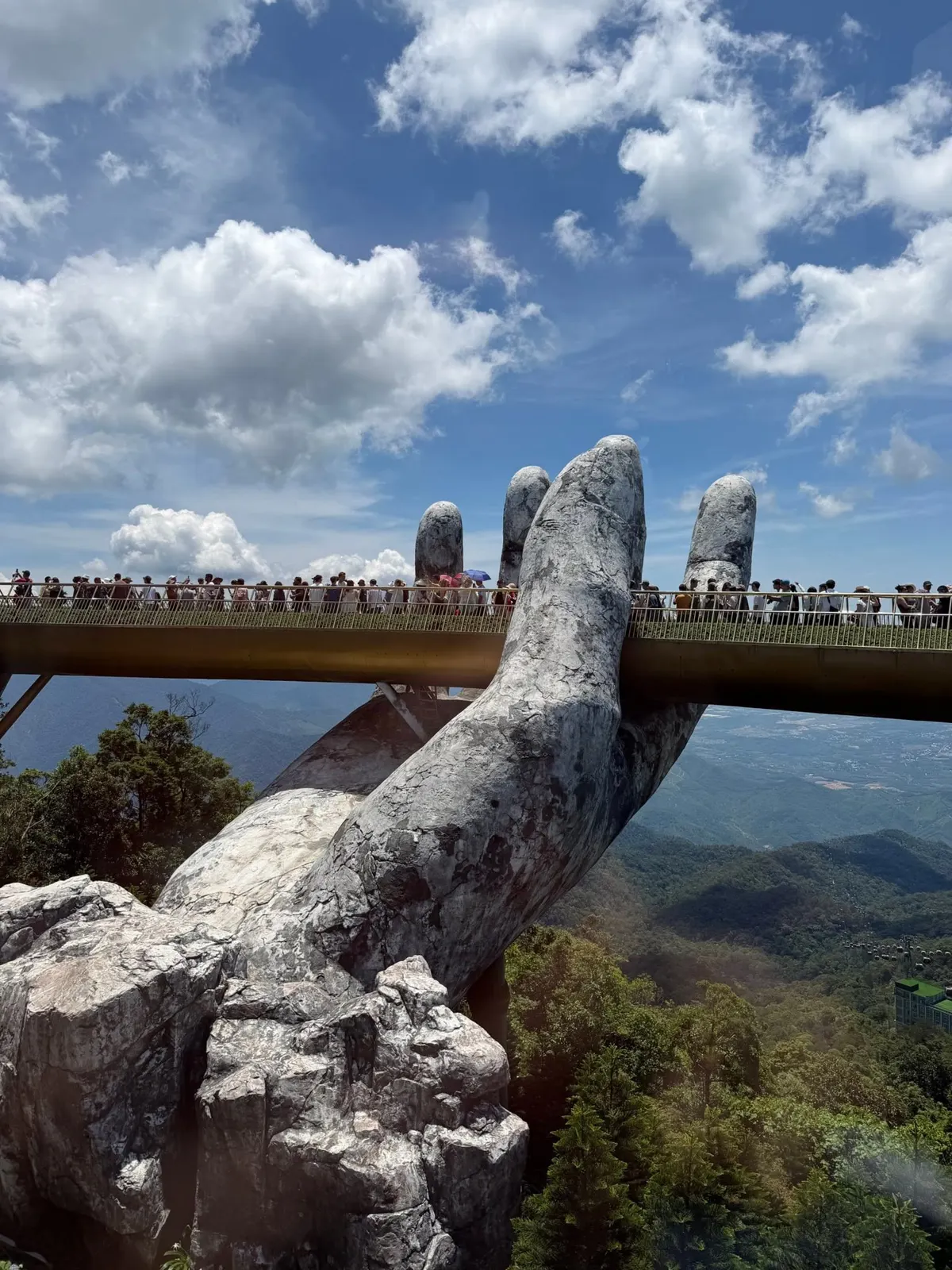
Further west, on Nui Chua Mountain within the Ba Na Hills, stands the Golden Bridge, also known as the Giant Hand Bridge. This structure has been recognized among the world's top ten bridges for its distinctive architecture. Despite its name, the Golden Bridge does not span a river or lake; instead, it arcs across the middle of the mountain, connecting Marseille Station and Bordeaux Station within the Thien Thai Garden. Situated at an elevation of 1,414 meters, its curved form resembles a rainbow suspended in the air. Access to this elevated walkway is exclusively via cable car, and from its vantage point, guests can enjoy sweeping views of clouds, mountains, and the distant cityscape of Da Nang.
Everyday Conveniences and Local Flavors
One of Da Nang's notable advantages is the proximity of its key areas. With the exception of more distant waterfalls and mountain trails, most destinations within the city are typically no more than a fifteen-minute drive from each other. This compact layout means that traveling from the city center to the beach, or across different parts of the coastal peninsula, is relatively quick. Bicycles are a practical mode of transport for many, and ride-hailing services like Grab offer fast and economical options.
The culinary scene is both affordable and focused on fresh ingredients. Street vendors on nearly every corner provide dishes rich in Central Vietnamese flavors. For those seeking international fare, the An Thuong area, a district popular with expatriates on the beachside peninsula, offers various Western dining choices. Given its coastal location, seafood is exceptionally fresh. Local specialties to sample include mì quảng, a noodle dish, and bún chả cá, a fish cake noodle soup. Understanding the role of ingredients like Vietnamese fish sauce can enhance the appreciation of these regional flavors. Exploring Vietnamese street food offers a direct way to experience the local culinary traditions.
Frequently Asked Questions
What contributes to Da Nang's reputation as a desirable place to live?
Da Nang is often considered highly livable due to its clean environment, well-planned urban layout, and a relaxed atmosphere that balances city amenities with a coastal town feel. It offers good infrastructure, manageable traffic, and access to natural landscapes, alongside an affordable cost of living for food and transportation.
What natural attractions are prominent around Da Nang?
The city is surrounded by significant natural features, including the Son Tra Peninsula, home to a nature reserve and the Lady Buddha statue; Marble Mountain, a collection of limestone karsts with ancient pagodas and caves; and the Ba Na Hills, where the unique Golden Bridge is located, accessible by cable car.
How efficient is transportation within Da Nang?
Transportation within Da Nang is generally efficient. Most city attractions are within a 15-minute drive, making it convenient to get around. Bicycles are a viable option for shorter distances, and ride-hailing services like Grab are readily available and economical for longer trips.
Which local dishes are recommended for visitors in Da Nang?
Visitors to Da Nang should try local specialties such as mì quảng, a flavorful noodle dish, and bún chả cá, a fish cake noodle soup. The city is also known for its fresh seafood, which is widely available from street vendors and restaurants.
Is Da Nang considered a suitable destination for families?
Yes, Da Nang is often regarded as family-friendly. Its clean beaches, numerous parks, relatively calm urban environment, and access to natural attractions like mountains and reserves provide various activities for all ages. The relaxed pace and ease of getting around also contribute to its appeal for families.








