
Da Nang, Vietnam's third-largest urban center, presents visitors with extensive sandy coastlines, oceanfront accommodations, and abundant sunny weather. This city provides a pleasant setting for several days of coastal relaxation, alongside opportunities to explore nearby cultural landmarks and enjoy local food, dining establishments, and evening entertainment. Positioned on both sides of the Han River, Da Nang recorded a population of 1.064 million residents in 2017. The New York Times recognized Da Nang as one of 52 recommended global destinations in 2015, and it has also been highlighted as a top Vietnamese attraction by Trip Advisor.
Coastal Relaxation: Da Nang's Expansive Beaches
The Da Nang coastline extends for over 60 kilometers, stretching from Hai Van Pass down to Non Nuoc. These beaches, particularly noted for their fine, white sand, were once recognized by Forbes Magazine as among the six most luxurious beaches globally. The city boasts numerous immaculate shores featuring light-colored sand and exceptionally clear blue waters. Notable examples include Pham Van Dong, My Khe, Nam O, Xuan Thieu, Thanh Binh, Tien Sa, Son Tra, Bac My An, and Non Nuoc beaches. Among these, My Khe beach and Pham Van Dong beach are particularly favored by both local residents and international visitors. These locations offer serene environments with smooth sand and gently sloping access to the water.
The popularity of Da Nang's beaches has attracted considerable investment in hospitality. The area is home to more than 785 hotels and resorts, including properties from major international brands such as Accor, Novotel, Marriott, InterContinental, Hilton, Sheraton, Pullman, Mercure, Melia, Hyatt, Sofitel, and Wyndham. These establishments cater to a wide range of preferences, providing diverse options for accommodation near the city's celebrated waterfronts.
Exploring Da Nang's Culinary Landscape
The local cuisine in Da Nang makes extensive use of fresh seafood, various cuts of meat, and a selection of regional herbs and greens. This combination results in a diverse array of dishes characterized by distinct colors and flavors. Despite its growing recognition, Da Nang remains a destination where visitors can find a broad spectrum of affordable yet unique dining choices. After spending time visiting the city's sights, sampling the local specialties is a key part of the experience. For those unfamiliar with the regional dishes, the following selections are highly recommended.
- Banh Beo: This traditional dish holds significant cultural importance in central Vietnam, particularly in Quang Nam, Da Nang, and Hue. The Da Nang style, known as Banh Beo Nhan Uot, is typically served in small bowls and eaten directly with a spoon. It is often enhanced with a drizzle of fish sauce or a spicy chili sauce.
- Banh Xeo: A crispy rice flour crepe, Banh Xeo is commonly filled with ingredients such as bean sprouts, shrimp, spring onions, and mung beans. Each bite delivers a complex profile of savory and sweet notes, complemented by a distinctive accompanying sauce.
- Bun Bo: Similar to Pho, Bun Bo is a heartier beef noodle soup prevalent in Vietnam's central and southern regions. Rice noodles are served in a rich beef broth, accompanied by various cuts of beef, which may include rare steak, flank, tendon, and meatballs. Ordering a “thập cẩm” allows diners to experience a bowl containing a selection of these ingredients.
- My Quang: A signature dish of Da Nang, My Quang is neither a conventional noodle soup nor a simple salad. It combines chewy rice noodles with a modest amount of broth, and a choice of protein such as pork, shrimp, or chicken. The pork is typically tender and well-seasoned. The dish is often finished with raw peanut oil and cu nen, a type of garlic oil, and can be paired with rice crackers, chili, and lemon.
- Banh Trang Thit Heo: This dish, featuring common ingredients like pork, has achieved widespread recognition in Da Nang and across the country. For an authentic preparation, the pork selected must have a balanced ratio of lean meat to fat. Boiled pork is thinly sliced and arranged on a platter alongside an assortment of fresh raw vegetables, including cucumbers, perillas, lettuce, and green bananas. When preparing individual rolls, it is customary to consume them with a unique dipping sauce, specific to the Quang Nam and Da Nang regions. While the sauce's ingredients, such as chilis, garlic, and pineapple, are identifiable, the precise local method for its preparation remains a closely guarded secret.
Key Attractions and Excursions from Da Nang
Da Nang serves as an excellent base for exploring a variety of cultural, historical, and natural sites in the surrounding region. From ancient kingdoms to modern architectural feats, there is much to see within a short distance of the city.
The Cham Museum, located a short drive from Da Nang Airport, offers an opportunity to learn about the ancient Champa Kingdom. Visitors can typically spend one to two hours viewing a collection of Champa sculptures and artifacts that illustrate the civilization's history from the 7th to the 11th century.
My Son Heritage Site, situated approximately an hour's drive from Da Nang, lies within a secluded valley surrounded by streams, mountains, and dense jungle. This complex features numerous temple-towers constructed between the 7th and 13th centuries AD. Despite centuries of conflict and environmental changes, around 70 monuments persist, showcasing six distinct styles of ancient Champa artistry. The site provides evidence of cultural exchanges between the Champa Kingdom and other Southeast Asian civilizations, including India and China. A morning departure from Da Nang allows for a return by early afternoon.
The Marble Mountains, also known as Ngu Hanh Son, are a collection of five hills composed of limestone and marble, located 9 kilometers from Da Nang. This site functions as a pilgrimage destination, featuring caves, temples, tunnels, and peaks. Historically, these mountains served as strategic hiding places and operational bases for Vietnamese revolutionaries. Thuy Son, the mountain representing water, is the tallest and most visited of the five. Many visitors ascend Thuy Son, which houses numerous caves and Buddhist temples, some dating back to the 17th century. Climbing approximately 150 stone steps leads to the Riverview Tower, or Vong Giang Tower in Vietnamese, which offers expansive views. At the base of the mountains lies Non Nuoc village, renowned for its stone carvings. While rock was historically sourced directly from the Marble Mountains for sculptures, direct extraction is now prohibited. Materials for carving are currently transported from nearby provinces like Quang Nam and Thanh Hoa. Consider exploring unique purchases and souvenirs from Vietnam during your visit.
Hoi An Old Town, situated 30 kilometers south of Da Nang, functioned as a significant international maritime trade hub in the 16th and 17th centuries. It was the busiest trading port in Vietnam's Dang Trong region during the Nguyen dynasty, attracting merchants from Japan, China, Portugal, Spain, and Holland for trade. The narrow streets of the old town are lined with centuries-old shop houses, reflecting architectural influences from the diverse trading communities that frequented Hoi An. These merchant vessels introduced their cultures, enriching Hoi An's unique character and architectural style. Key sites include the Japanese Covered Bridge and the Guangdong or Fukien Chinese Assembly Halls. Visitors can also experience an 18th-century home, navigate the lively riverside seafood market, cycle to Cua Dai Beach, or take a sunset river cruise. For those needing financial services in this historic town, information on banking services in Hoi An is available.
Further afield, the Hue Citadel is accessible via a three-hour drive from Da Nang. This impressive riverside complex served as the Royal Palace of the Imperial City of Hue, established by the Nguyen Dynasty and operational from 1805 to 1945. Hue's historical significance has earned it recognition as a UNESCO World Cultural Heritage Site, drawing considerable attention from travelers. For financial planning in this area, a guide to local banks in Hue City can be helpful.
Mountain Retreats and Modern Marvels: Ba Na Hills
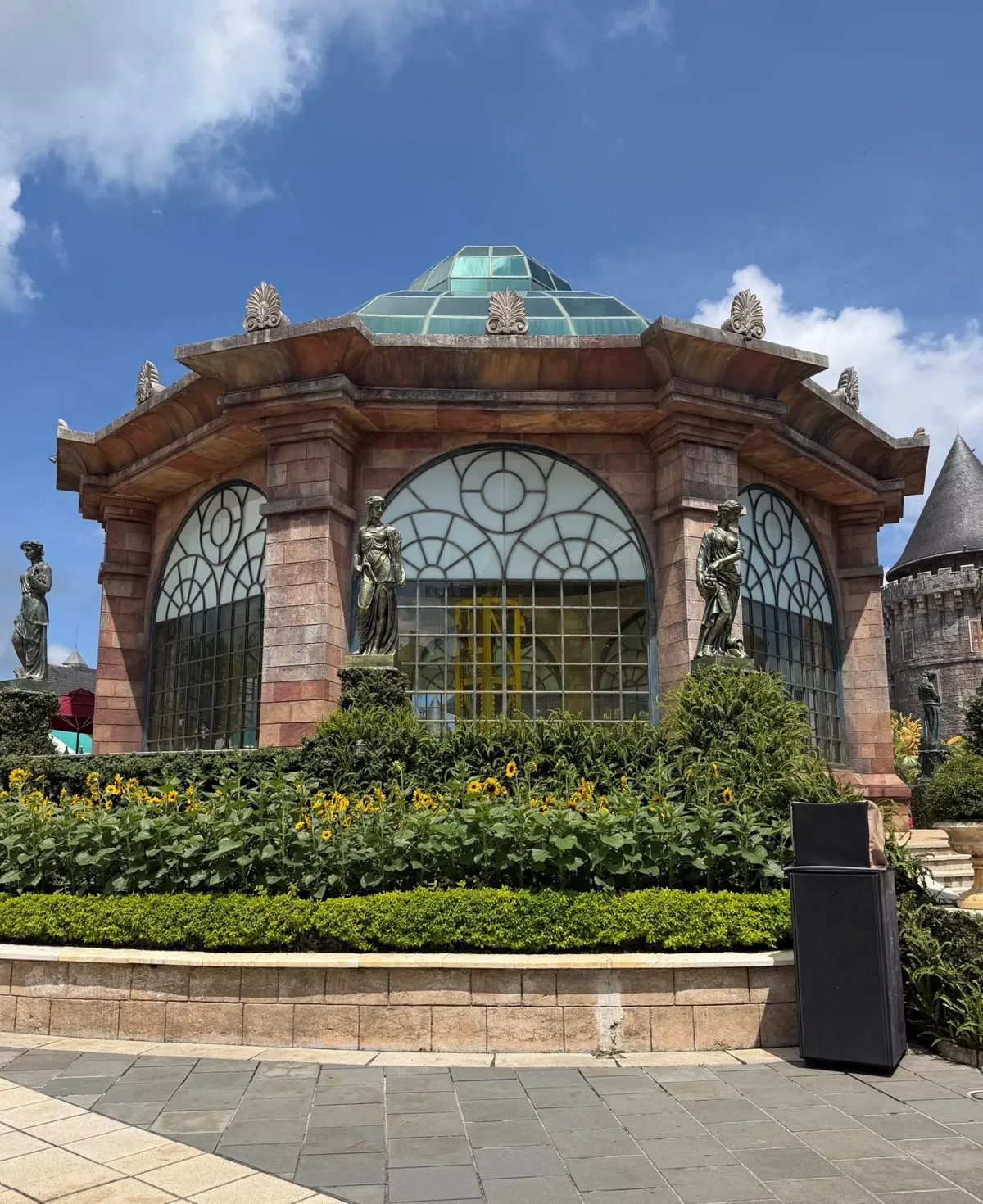
Ba Na Hills, located 35 kilometers southeast of Da Nang, is a well-known hill station and resort. Unlike typical ground-level resorts, Ba Na Hills is positioned 1,489 meters high on Nui Chua mountain. Established in 1919, it was initially promoted as “the Da Lat of Da Nang province” by its French colonial investors, who envisioned it as a recreational destination for French visitors. The area offers a variety of attractions, with the Golden Bridge being a prominent highlight.
The Golden Bridge, situated within the Thien Thai garden, is considered a connection between different sections of the resort, including the French village and the Le Jardin D’Amour flower garden. A notable feature that captures the attention of visitors is the colossal, moss-covered hand appearing to support the bridge. A single ticket typically includes access to several other key sites:
- Le Jardin D’Amour Flower Garden
- 100-year-old Wine Cellar
- Debay Wine Cellar
- The French Village
- Linh Ung Pagoda
- Fantasy Park
- Tru Vu Tra Quan Tea House
Travel Logistics and Getting to Da Nang
Da Nang is well-connected within Vietnam and to several international destinations, making it a convenient arrival point for many travelers. Domestic flights from Hanoi and Ho Chi Minh City typically take about an hour to reach Da Nang. For international visitors, Vietjet operates direct flights from Singapore to Da Nang three times per week, specifically on Tuesdays, Fridays, and Sundays. Additionally, direct flights are available from Siem Reap in Cambodia and Seoul in South Korea. The availability of numerous direct flight options significantly enhances accessibility to this coastal city. For managing finances during your stay, refer to our guide on banking services in Da Nang.
Attractions Near Da Nang Overview
| Attraction Name | Type of Attraction | Distance from Da Nang | Estimated Visit Time | Key Features |
|---|---|---|---|---|
| Ba Na Hills & Golden Bridge | Hill Station/Resort | 35 km Southeast | Full day | Cable car, French village, Golden Bridge, gardens, pagoda |
| Cham Museum | Historical Museum | Short drive from airport | 1-2 hours | Champa sculptures, civilization artifacts |
| My Son Holyland | UNESCO Heritage Site | ~1 hour drive | Half day | Ancient Champa temples, jungle setting |
| Marble Mountains | Natural/Spiritual Site | 9 km | Half day | Limestone/marble hills, caves, pagodas, stone carving village |
| Hoi An Old Town | UNESCO Heritage Town | 30 km South | Full day/Overnight | Ancient trading port, Japanese Covered Bridge, assembly halls |
| Hue Citadel | UNESCO Heritage Site | 3 hour drive | Full day/Overnight | Imperial City, Nguyen Dynasty history |
Frequently Asked Questions
What are the most popular beaches in Da Nang?
My Khe beach and Pham Van Dong beach are widely considered the most popular choices for both local residents and international visitors in Da Nang. They are known for their smooth sand and gentle slopes, offering pleasant conditions for relaxation.
What local dishes should I try in Da Nang?
When visiting Da Nang, recommended local specialties include Banh Beo, a heritage dish served with fish or chili sauce; Banh Xeo, a crispy rice flour crepe with various fillings; Bun Bo, a rich beef noodle soup; My Quang, a unique noodle dish with broth and choice of protein; and Banh Trang Thit Heo, a pork and vegetable roll served with a distinctive regional sauce.
How far is Hoi An Old Town from Da Nang?
Hoi An Old Town is located approximately 30 kilometers south of Da Nang City. It is a popular excursion that can be reached by a relatively short drive, making it suitable for a day trip or an overnight stay.
What is the Golden Bridge at Ba Na Hills known for?
The Golden Bridge at Ba Na Hills is famous for its distinctive architectural design, featuring a pedestrian walkway seemingly held aloft by two enormous, moss-covered stone hands. It connects different gardens and areas within the Ba Na Hills resort complex.
Are there direct international flights to Da Nang?
Yes, Da Nang receives direct international flights from several cities. As of recent information, Vietjet operates direct flights from Singapore three times a week (Tuesdays, Fridays, Sundays), and there are also direct connections from Siem Reap, Cambodia, and Seoul, South Korea.








