
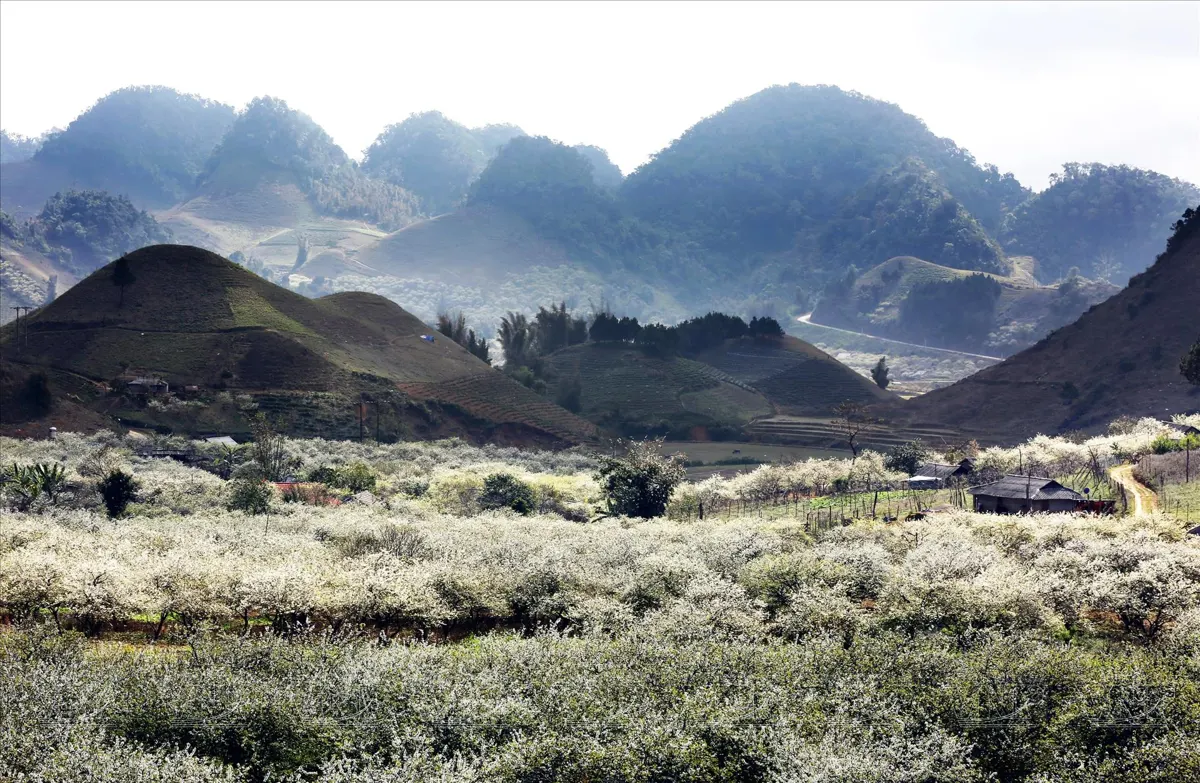
Moc Chau, a plateau region in Vietnam's northern Son La province, presents a compelling destination for those seeking natural landscapes and cultural experiences. Approximately 200 kilometers from Hanoi, this area gained international recognition as the "World's Leading Regional Nature Destination" at the 2022 World Travel Awards. Known as the "Green Pearl," Moc Chau offers varied scenery and activities throughout the year, making it a notable location for travelers.
The plateau stretches approximately 80 kilometers long and 25 kilometers wide, with elevations exceeding 1,000 meters above sea level. This elevated position contributes to its diverse natural features, including mountains, rivers, waterfalls, and caves. The region is also celebrated for its abundant floral displays, particularly the seasonal blossoms of apricot, plum, and peach trees.
Discovering Moc Chau's Natural Wonders
Moc Chau's landscape is characterized by several prominent natural attractions, each offering distinct experiences for visitors. From cascading water features to elevated mountain views and ancient cave systems, the region provides ample opportunities for outdoor exploration.
One notable site is Dai Yem Waterfall, which can be heard before it is seen. The sound of rushing water intensifies as visitors follow a winding path through dense forest. This waterfall is structured into two main tiers; the upper section features a drop exceeding 100 meters, while the lower tier allows for closer inspection and swimming in the pool below. Adjacent to Dai Yem Waterfall is the Love Glass Bridge (Cau Kinh Tinh Yeu), a transparent, red-painted structure that provides elevated perspectives of the falls and surrounding area.
For those seeking elevated vistas, Pha Luong Peak, often referred to as "The Roof of Moc Chau," stands at 2,000 meters above sea level. Reaching the summit involves an uphill trek through dense forest, with the mountainsides often adorned with rice terraces. From the peak, visitors can observe views extending towards the border with Laos. A prominent rock ledge at the summit has become a popular spot for photographs.
Another significant natural feature is Dong Doi, also known as Bat Cave, a national historical and cultural site. This extensive limestone cave measures over 7,000 square meters in area, with a height of 100 meters and a length of 930 meters. Entry requires ascending 240 steps. Inside, the cave reveals intricate stalactites that observers report resemble various figures such as Buddhas, elephants, tigers, and eagles. A dry lake occupies the central part of the cave system.
Tea Plantations and Agricultural Heritage
Moc Chau is recognized as Vietnam's largest tea-growing region, encompassing approximately 3,000 hectares of tea fields. These expansive, undulating green landscapes are primarily cultivated by the Hmong and Thai ethnic communities. Visitors often observe workers in traditional conical hats and colorful attire tending to the tea plants, creating a visually engaging scene.
Travelers have the opportunity to interact with local communities and take photographs amidst the tea fields. Bicycle and motorbike rentals are typically available for those wishing to explore the plantations more extensively. The Moc Suong eco-tourism area offers a deeper insight into this agricultural practice, allowing visitors to experience ancient tea ceremonies and observe the processing of tea leaves. For those interested in exploring more of Northern Vietnam's diverse landscapes and cultural practices, Moc Chau provides a representative experience.
Cultural Experiences and Eco-Villages
The region is home to 12 indigenous ethnic groups, whose cultural practices are integral to daily life and frequently showcased through local festivals. Several community-based green attractions, such as Ang Village, Doi Village, and Vat Village, actively promote eco-tourism and sustainable practices.
Ang Pine Tree Village, for instance, offers a serene setting with traditional stilt houses situated beneath green canopies, alongside a lake framed by pine forests. Nearby hills are covered in tea leaves, while the pine areas are dotted with various blossoming flowers. This village is inhabited by the Thai ethnic people, whose culture is evident in their housing styles, farming methods, traditional costumes, customs, music, and dance. Visitors are welcomed to engage with both the natural surroundings and the local culture. Opportunities exist to sample traditional Thai cuisine and try homemade rice wine, typically consumed from a gourd using a long, narrow bamboo tube. Horseback riding is also an option for exploring the area.
Moc Chau Island: A Modern Eco-Destination
Moc Chau Island represents an initiative to combine natural preservation with modern attractions, integrating elements of both heritage and contemporary design. Although not surrounded by water, it functions as a distinct area offering a range of activities.
A central feature is the Bach Long Bridge, also known as the White Dragon Bridge, which holds the distinction of being the world's longest glass bridge. It spans two mountains and includes a cliff-side path. After crossing the bridge, visitors can explore Chim Than (God Bird) Cave, which contains natural stalactites, small ponds, and stone formations. The island also features Central Park Lake, equipped with a performing arts water-stage, along with artificial beaches, amusement park facilities such as ziplines and air slides, bike paths, and a swimming area. The resort park farming area, maintained with regulated humidity and a clean water source, allows guests to stroll through fields or engage in fishing. A natural culture area and rural tourism ethnic zone are dedicated to showcasing traditional ethnic villages, hosting festivals, and offering local crafts and cuisine. Other areas include the Ecology Tea Garden, the Grasslands Tourism Area, Experimental Gardens, and a Flower Park. The island also provides eco-friendly, modern accommodations, and a distinctive open-air dining option at TaBamboo restaurant, constructed entirely from bamboo with a thatched roof.
Planning Your Visit to Moc Chau
Moc Chau offers a variety of experiences suitable for travelers interested in nature, culture, and outdoor activities. The region's diverse landscape means there is something to explore throughout the year, with different seasons highlighting various aspects of its natural beauty, from spring blossoms to lush summer greens.
When preparing for a visit, consider the activities that align with your interests, whether it's hiking Pha Luong Peak, exploring the extensive tea plantations, or engaging with the local ethnic communities. Many visitors find that spending a few days allows for a comprehensive experience of the plateau's offerings. For those interested in similar natural reserves and cultural destinations, researching other northern Vietnamese regions can provide additional travel ideas.
Comparison of Key Moc Chau Attractions
| Site Name | Key Feature | Elevation/Height | Access/Notes |
|---|---|---|---|
| Dai Yem Waterfall | Multi-tiered cascade | Over 100m drop (top) | Winding road, forest path; Love Glass Bridge nearby |
| Pha Luong Peak | Mountain summit | 2,000m above sea level | Uphill hike through dense forest; views towards Laos border |
| Dong Doi (Bat Cave) | Extensive limestone cave | 100m height, 930m long | 240 steps to entrance; notable stalactite formations |
| Ang Pine Tree Village | Cultural village, lake, pine forest | Approx. 1,000m ASL (plateau) | Accessible by road; Thai ethnic culture, horseback riding options |
Frequently Asked Questions
What is the best time of year to visit Moc Chau?
Moc Chau is considered a year-round destination due to its temperate climate. However, specific seasons offer different attractions. Spring (February-March) is ideal for viewing plum and apricot blossoms, while summer (May-August) brings lush green tea fields and cooler temperatures. Autumn (September-November) features golden rice terraces, and winter (December-January) can occasionally see frost or light snow, along with wild sunflower blooms.
How do I get to Moc Chau from Hanoi?
Moc Chau is located approximately 200 kilometers from Hanoi. Travelers can reach the plateau by bus, private car, or motorbike. Public buses depart regularly from various Hanoi bus stations, such as My Dinh or Yen Nghia, with the journey typically taking around 4-5 hours. Renting a private car with a driver offers more flexibility, while motorbiking is a popular option for independent travelers seeking scenic routes.
Are there accommodations available in Moc Chau?
Yes, Moc Chau offers a range of accommodation options, from guesthouses and homestays in ethnic villages to more modern hotels and eco-resorts. Moc Chau Island, for example, features eco-friendly, contemporary accommodations. Many local homestays provide an opportunity to experience the culture of the ethnic communities firsthand.
What local cuisine should I try in Moc Chau?
Moc Chau is known for its fresh agricultural products and ethnic minority dishes. Popular local specialties include various preparations of fresh milk and dairy products, grilled stream fish, Thang Co (a traditional stew), and different types of sticky rice. In Ang Pine Tree Village, visitors can try traditional Thai food and homemade rice wine.
Can I explore Moc Chau independently?
Yes, independent exploration is feasible in Moc Chau. Many attractions are accessible by motorbike or bicycle, with rentals often available locally. Taxis and local xe om (motorbike taxis) can also be hired for shorter distances. For longer journeys or specific tours, it is advisable to arrange transport in advance or through your accommodation.








