
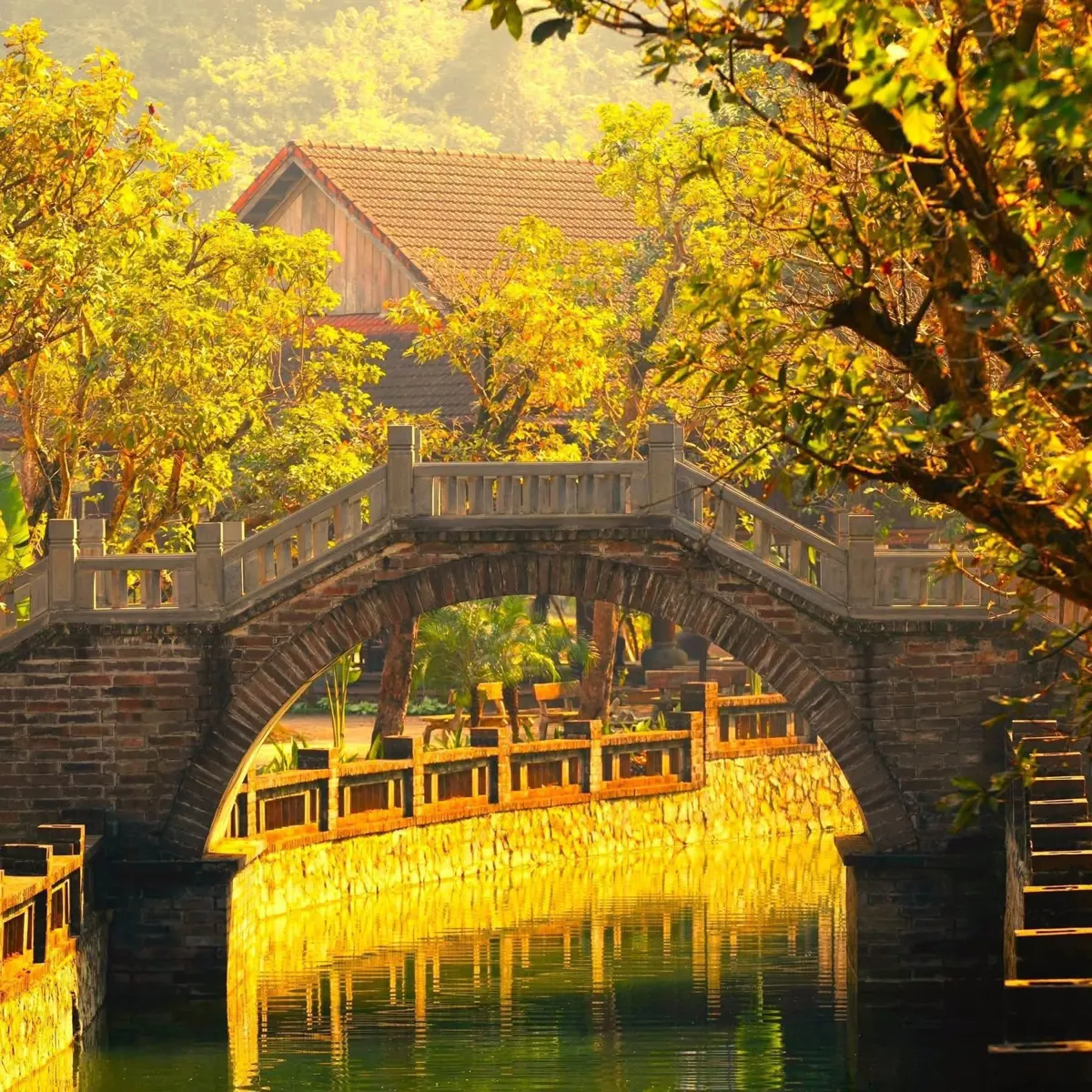
Ninh Binh, a region celebrated for its dramatic limestone karsts and historical significance as Vietnam's former capital, also offers a rich collection of spiritual sites. These ancient temples and pagodas provide insight into the nation's religious traditions and past rulers, drawing many visitors seeking cultural exploration and serene environments. Exploring these sacred locations reveals layers of history and devotion within a remarkable natural setting.
Exploring Ninh Binh's Spiritual Heritage
Ninh Binh holds a special place in Vietnamese history, particularly as the site of Hoa Lu, the country's first independent capital. This historical depth is complemented by a spiritual landscape dotted with numerous temples and pagodas, many of which are centuries old. These sites are not merely places of worship but also repositories of art, architecture, and folklore, reflecting the enduring influence of Buddhism and ancestral veneration in Vietnamese culture.
The religious structures in Ninh Binh range from expansive complexes to smaller, more secluded sanctuaries carved into mountainsides. Each location presents a unique narrative, whether it's tied to a legendary emperor, a significant historical event, or a local spiritual practice. Travelers often find that a visit to these sites offers a peaceful contrast to the more active sightseeing experiences, providing moments for reflection amidst beautiful surroundings.
Notable Religious Sites in Ninh Binh
Ninh Binh is home to several significant temples and pagodas, each offering a distinct experience for those interested in history, architecture, and spirituality. These locations are popular stops for both local pilgrims and international visitors, showcasing diverse aspects of Vietnamese heritage.
Bai Dinh Pagoda
Situated in Gia Sinh commune, Gia Vien District, Bai Dinh Pagoda stands as a major cultural and spiritual complex in Vietnam. It is recognized as one of the largest pagodas in Southeast Asia, spanning an area of 539 hectares. The original Bai Dinh pagoda was established in 1136, with extensive reconstruction and expansion efforts beginning in 2003, resulting in the expansive site seen today.
This site is a prominent destination for Buddhist pilgrimages and is known for holding several national and regional records. Among these are Asia's largest golden-copper Buddha statue, the longest corridor featuring Arahant statues, Vietnam's largest copper bell, and Asia's tallest Buddhist tower. The sheer scale and intricate details of the various temples and pagodas within the complex are often a point of interest for visitors.
Hoa Lu Temple
Hoa Lu Temple is a historical monument located in Truong Yen commune, Hoa Lu district, commemorating Vietnam's initial period of independence from Chinese rule. This site honors Emperor Dinh Tien Hoang and Emperor Le Dai Hanh, who governed the nation during the 10th and 11th centuries. The area was the capital during the Dinh and early Le dynasties until the capital was relocated to present-day Hanoi in 1010 by Ly Cong Uan, the founder of the Ly dynasty.
While few original structures from the ancient capital remain due to natural degradation and time, the citadel was rebuilt in the 17th century, drawing inspiration from the original temple designs. The temple grounds are also associated with the four sacred temples of Hoa Lu (Hoa Lu Tu Tran), dedicated to deities representing the four cardinal directions: Quy Minh temple, Thien Ton temple, Cao Son temple, and Nguyen temple. The temple's setting amidst limestone mountains and rice fields contributes to its appeal as a historical destination.
Bich Dong Pagoda
Bich Dong Pagoda is a distinctive three-tiered pagoda system carved into a mountain, located approximately 3 kilometers from Tam Coc and a few kilometers west of Ninh Hai Village. This site is renowned for its ornate entrance gate, which frames a stone bridge crossing a large lotus pond that typically displays pink blossoms during the summer months.
The pagoda complex comprises three distinct levels: Ha Pagoda (Lower Pagoda), Trung Pagoda (Middle Pagoda), and Thuong Pagoda (Upper Pagoda). Ha Pagoda is situated at the base and houses a Buddha shrine. A climb of 120 steps leads to Trung Pagoda, which is partially built inside a cave and features three compartments. Further ascent of 40 steps, passing through the Dark Cave, brings visitors to Thuong Pagoda, positioned at the highest point of Bich Dong Pagoda, offering expansive views of the surrounding countryside.
Thai Vi Temple
Within the Tam Coc – Bich Dong tourism area, Thai Vi Temple is recognized for its historical ties to the Tran Dynasty. Legend suggests that King Tran Thai Tong, after successfully defending against Chinese invaders, retreated to this area, captivated by the Ngo Dong River's beauty. He established a small temple at the base of Van Lam Cave, initially for meditation and to assist local communities.
Today, the temple serves as a place of worship for King Tran Thai Tong, his consort, and his son. The architecture is notable for its stone carvings and a steeple crafted from ironwood. The use of monolithic greenstone for items such as altars and incense burners is a distinctive feature. The Thai Vi Temple Festival, a significant event for Ninh Hai Village, occurs annually on the 14th day of the third lunar month (please verify current dates locally), gathering people to honor the Tran Kings' contributions to the nation and its people.
Dich Long Pagoda
Dich Long Pagoda, a combined natural and cultural site, is found in Gia Thanh commune, Gia Vien District. This complex integrates a pagoda with a series of caves, set against a backdrop of limestone mountains. The site includes various temples and communal structures, some of which feature architectural elements dating back several centuries.
Accessing the main pagoda involves ascending 105 steps, which lead to three distinct caves. These caves are known for their impressive stalactite formations and other mineral deposits. One cave is dedicated to Buddha worship, while the others are referred to as the Dark Cave (Hang Tối) and the Light Cave (Hang Sáng), offering different experiences of the cave system.
Duyen Ninh Pagoda
Located in Chi Phong Village, Truong Yen commune, Hoa Lu District, Duyen Ninh Pagoda is an ancient spiritual site within the well-preserved Hoa Lu ancient capital area. It is situated along a popular tourist route that includes Trang An, Bai Dinh, and Am Tien Temple. The pagoda's origins trace back to the 10th century, during the reign of King Dinh Tien Hoang.
Historical accounts suggest that princesses of the Dinh and Le dynasties frequently visited this pagoda. Notably, Princess Le Thi Phat Ngan and General Ly Cong Uan are said to have made a vow of love here, leading to the birth of Ly Phat Ma, who later became King Ly Thai Tong. The pagoda's name was subsequently changed by Khai Quoc Vuong. In her later years, Empress Phat Ngan resided here, dedicating her life to religious practice and overseeing the tomb of her father, Emperor Le Dai Hanh. During this time, she reportedly facilitated many marriages, leading to the pagoda's reputation as a place where individuals seek blessings for their romantic lives.
Am Tien Temple
Am Tien Temple is located within Am Tien Cave, in Truong Yen Commune, Hoa Lu District, positioned within a secluded valley. The temple is surrounded by rocky peaks, a tranquil forest, and a clear, emerald-toned lake at its center. This location served as a place for Queen Duong Van Nga to practice Buddhism during her later years, following her crucial role in assisting the Dinh and Le Kings in their defense against Chinese forces.
Beyond its dedication to Buddha, the temple also honors Queen Duong Van Nga and other significant figures who served the Dinh Dynasty. Its relative isolation and natural beauty contribute to a serene atmosphere, attracting travelers from various backgrounds.
Non Nuoc Pagoda
Non Nuoc Pagoda in Ninh Binh is an ancient religious site recognized as a national historical and cultural relic. It is also a significant point of interest for visitors to the region. The pagoda is situated at the base of Non Nuoc Mountain, adjacent to the Day River, creating a peaceful and scenic village setting for those who come to explore it.
Practical Information for Visiting Ninh Binh's Temples and Pagodas
When planning a trip to Ninh Binh's spiritual sites, considering logistical details can enhance the experience. Most pagodas and temples are accessible by road, and some, like Bich Dong, require a short climb. Visitors typically find that combining a temple visit with nearby natural attractions, such as boat tours in Tam Coc or Trang An, offers a comprehensive view of the region.
It is advisable to wear modest clothing that covers shoulders and knees when visiting religious sites as a sign of respect. Comfortable footwear is also recommended, especially for locations that involve walking or climbing steps. While many sites are open daily, specific opening hours can vary and are subject to change, so checking locally upon arrival is often helpful. After exploring the spiritual sites, visitors might also consider looking for unique purchases and souvenirs from a trip to Vietnam to remember their journey. While Ninh Binh offers a serene experience, other regions like Halong Bay present different natural wonders, such as its best beaches for relaxation.
Comparison of Key Ninh Binh Religious Sites
To assist in planning your itinerary, here is a summary of some prominent temples and pagodas in Ninh Binh, highlighting their key characteristics.
| Site Name | Location | Primary Focus / Significance | Notable Features |
|---|---|---|---|
| Bai Dinh Pagoda | Gia Sinh commune, Gia Vien District | Largest pagoda complex in Vietnam, Buddhist pilgrimage site | Asia's largest Buddha statue, longest Arahant corridor, tallest Buddhist tower |
| Hoa Lu Temple | Truong Yen commune, Hoa Lu district | Historical site honoring Dinh and Le Emperors | Rebuilt 17th-century citadel, four sacred temples, ancient capital remains |
| Bich Dong Pagoda | 3km from Tam Coc, west of Ninh Hai Village | Three-tiered pagoda system within a mountain cave | Ornate gate, lotus pond, Ha, Trung, and Thuong pagodas, cave exploration |
| Thai Vi Temple | Tam Coc – Bich Dong tourism area | Worships Tran Dynasty kings, historical meditation site | Stone carvings, ironwood steeple, monolithic greenstone artifacts, annual festival |
| Dich Long Pagoda | Gia Thanh commune, Gia Vien District | Pagoda and cave complex | 105 steps to caves, impressive stalactites, Dark and Light Caves |
| Duyen Ninh Pagoda | Chi Phong Village, Truong Yen commune, Hoa Lu District | Ancient spiritual site, associated with royal love stories | 10th-century origins, connection to Ly dynasty, known for blessings in love |
| Am Tien Temple | Am Tien Cave, Truong Yen Commune, Hoa Lu District | Secluded temple in a valley, associated with Queen Duong Van Nga | Rocky mountain enclosure, clear lake, serene atmosphere, historical figures honored |
| Non Nuoc Pagoda | Foot of Non Nuoc Mountain, by Day River | Ancient temple, national historical and cultural relic | Scenic location, tranquil village setting |
Frequently Asked Questions
What is the historical significance of Ninh Binh's temples?
Ninh Binh's temples and pagodas often have deep roots in Vietnamese history, particularly related to the Dinh and early Le dynasties when Hoa Lu served as the national capital. Many sites commemorate emperors, queens, and significant historical events, offering a tangible connection to the country's past and its struggle for independence.
Are there any specific dress codes for visiting these religious sites?
Yes, visitors are generally expected to dress respectfully when entering temples and pagodas. This typically means wearing clothing that covers the shoulders and knees. Removing hats and shoes before entering certain areas is also a common practice.
Can I combine a visit to temples with other attractions in Ninh Binh?
Absolutely. Many of Ninh Binh's temples and pagodas are located near other popular sites, such as the Trang An Scenic Landscape Complex or Tam Coc. It is common for travelers to integrate spiritual site visits with boat tours through grottoes and rice paddies, creating a diverse itinerary that encompasses both cultural and natural wonders. For those interested in exploring more of Vietnam's diverse offerings, considering overnight rail journeys in Vietnam can provide a unique travel perspective across the country.
What is the best time of year to visit Ninh Binh's pagodas?
The dry season, from November to April, is generally considered the most favorable time to visit Ninh Binh. The weather is cooler and less humid, making it more comfortable for exploring outdoor sites and climbing steps. However, the lotus ponds at Bich Dong Pagoda are most vibrant during the summer months (May to August).
Are there any entrance fees for Ninh Binh's temples?
While some smaller, local temples may not have an entrance fee, larger and more prominent sites like Bai Dinh Pagoda or the Hoa Lu Ancient Capital complex typically have an admission charge. These fees contribute to the maintenance and preservation of the sites. It is advisable to check current pricing information locally, as fees can change.








