
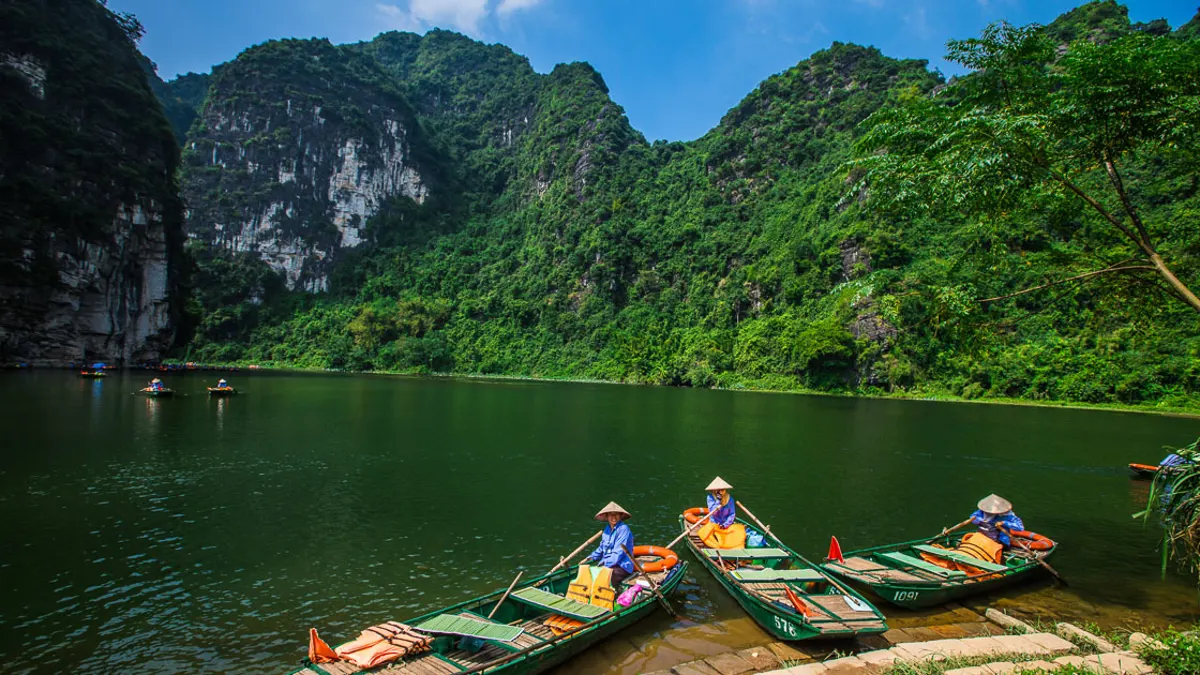
Ninh Binh, located approximately 100 kilometers south of Hanoi, stands as a prominent destination in northern Vietnam, celebrated for its distinctive natural scenery and significant historical sites. The region features expansive rice fields, winding waterways, and impressive limestone formations, alongside ancient temples and pagodas. It provides an opportunity to experience rural Vietnamese life and a peaceful environment, offering a notable contrast to urban settings.
A Glimpse into Ninh Binh's Past
The area now known as Ninh Binh once served as Hoa Lu, the capital of Dai Co Viet (the former name for Vietnam) for 42 years. This period spanned three significant dynasties: the Dinh, the Early Le, and the Ly. Its strategic geographical position, characterized by towering mountains and protective valleys, made it an ideal location for the kingdom's capital, providing natural defenses against invaders.
In the year 1010, King Ly Cong Uan made the decision to relocate the national capital from Hoa Lu to Dai La, which he subsequently renamed Thang Long – the city known today as Hanoi. Despite this relocation, Hoa Lu maintained its importance as a key military outpost in the northern part of Vietnam, underscoring its enduring strategic value even after its time as the primary seat of power.
Optimal Seasons for Visiting Ninh Binh
Ninh Binh experiences a tropical monsoon climate, typical of northern Vietnam, featuring four distinct seasons: a dry winter, a rainy summer, and transitional periods of spring and autumn. While the region generally welcomes visitors throughout the year, specific periods offer particularly favorable conditions for certain activities and views.
From March through April, the weather is generally mild and agreeable, neither excessively hot nor cold, making it suitable for outdoor exploration. This period is ideal for river excursions to appreciate the landscapes or for visits to cultural sites like Bai Dinh Pagoda and Hoa Lu Ancient Capital. Late May and early June present a chance to observe the rice paddies turn a golden hue before harvest. Although the temperatures can be quite warm, the visual spectacle of the fields often compensates. During this time, a boat tour along the Ngo Dong River is highly recommended for viewing the surrounding scenery, or ascending Mua Cave for expansive vistas of Tam Coc – Bich Dong. Additionally, June marks the blooming season for lotuses, appealing to those interested in photography or floral beauty. For those traveling in October and November, the autumn climate is generally comfortable, with temperatures around 20°C. While the golden rice fields may no longer be visible, this season is well-suited for activities such as trekking in Cuc Phuong National Park, cycling through the countryside, or climbing Mua Cave.
Conversely, certain months are less ideal for particular activities. December and January, for instance, are often cold and characterized by frequent drizzles, which can detract from boat excursions. Furthermore, planning a trip immediately before or after the Vietnamese Traditional Lunar New Year (Tet holiday) is generally not advised due to significant increases in visitor numbers and potential service disruptions.
Navigating Your Way to and Around Ninh Binh
Reaching Ninh Binh from Hanoi is most commonly done by bus. Local buses depart from Giap Bat Station, situated in the southern part of Hanoi, with tickets typically costing between 70,000 and 80,000 VND (approximately 3 USD). Alternatively, tourist buses are available for 7-10 USD, often including hotel pickup services. Both options usually complete the journey in about two hours. For travelers coming from Halong Bay or Cat Ba, direct bus services to Ninh Binh are available, eliminating the need to return to Hanoi. If your journey originates from central or southern Vietnam, such as Hue, Da Nang, or Quy Nhon, traveling by train is often the most practical choice. For those considering longer rail trips, information on overnight rail journeys in Vietnam can be helpful.
Once in Ninh Binh, independent transportation is generally necessary due to the spread-out nature of its attractions. Renting a bicycle from your accommodation or a local shop is a popular choice, offering a pleasant way to explore the rural areas, local villages, and various temples. Be prepared for daily distances of 30 to 40 kilometers if you plan to reach several points of interest. Motorbikes provide another excellent option for getting around, offering greater flexibility and covering distances more efficiently. Rental costs for a motorbike are typically around 100,000 VND (approximately 4 USD) per day, plus fuel expenses. For groups or families with young children, a private car with a driver can be arranged through local travel agencies. Engaging a local tour guide alongside this service is often recommended to enhance understanding of the sites.
Where to Stay in Ninh Binh
Ninh Binh, as a popular destination near Hanoi, offers a broad spectrum of lodging choices, from budget-friendly hostels in the urban center to upscale hotels and resorts. For a more peaceful and natural experience, and to be closer to many of the region's main attractions like temples, pagodas, and rice fields, it is often suggested to secure accommodation in or near the Tam Coc area. This location provides a pleasant small-town atmosphere.
Below is a selection of recommended hotels for consideration, with prices noted as starting rates and subject to change based on season and availability:
| Accommodation Name | Star Rating | Address | Starting Price (approx.) | Key Features |
|---|---|---|---|---|
| Tam Coc Rice Fields Resort | 3-star | Hai Nham, Ninh Hai, Hoa Lu, Ninh Binh | 40 USD | Tropical bamboo bungalows, private terrace, views of rice fields or limestone peaks. |
| Ninh Binh Hidden Charm Hotel & Resort | 4-star | No. 9, Tam Coc – Bich Dong Tourist Center, Ninh Thang, Hoa Lu, Ninh Binh | 80 USD | 98 rooms with warm colors, mosaic ceramic tiles, fine-art decor, views of rice fields and limestone mountains. |
| Emeralda Resort Ninh Binh | 5-star | Van Long Reserve, Gia Van, Gia Vien, Ninh Binh | 100 USD | Traditional Tonkin village design with modern amenities, large rooms, restaurant, spa, located in Van Long Nature Reserve. |
Key Attractions and Activities in Ninh Binh
While Ninh Binh City itself is generally considered to lack major tourist appeal, the surrounding areas are rich with natural and historical sites. For this reason, selecting accommodation outside the city center, preferably in tourist-focused zones like Tam Coc, is often advised. The region provides numerous places to explore throughout the day, including:
- Hoa Lu Ancient Capital: The former capital of Vietnam, featuring temples dedicated to the Dinh and Le dynasties.
- Trang An Grottos: A UNESCO World Heritage site known for its scenic riverboat tours through limestone caves and waterways.
- Bai Dinh Pagoda: A sprawling complex of Buddhist temples, notable for its large statues and impressive architecture.
- Thung Nham Bird Garden: A natural reserve offering opportunities for birdwatching and boat trips through caves.
- Tam Coc Boat Tour: Often referred to as "Ha Long Bay on land," this involves a traditional sampan ride through rice fields and caves along the Ngo Dong River.
- Bich Dong Pagoda: A series of cave pagodas set into a mountain, accessible by a stone bridge.
- Mua Cave: Known for its challenging climb to the top, offering expansive panoramic views of the Tam Coc landscape.
- Cuc Phuong National Park: Vietnam's oldest national park, home to diverse flora and fauna, ideal for trekking and nature exploration.
Essential Advice for Travelers
To enhance your visit to Ninh Binh, consider the following practical recommendations:
- Accommodation Location: It is generally more rewarding to book lodging in or around the Tam Coc area rather than in Ninh Binh City, as the latter offers fewer points of interest for visitors.
- Transportation: Exploring the region is often best accomplished by motorbike or bicycle, allowing for flexibility and access to rural areas. For those who prefer not to operate these vehicles, arranging a private car with a driver, possibly accompanied by a local tour guide, is a suitable alternative.
- Cash Availability: The Tam Coc area typically does not have ATMs. Visitors should ensure they carry sufficient cash for their expenses or be prepared to travel to Ninh Binh City to access banking services. For general information on banking services in Hanoi and other Vietnamese cities, resources are available.
- Trip Duration: While a single day can cover some of Ninh Binh's highlights, staying for at least one or two nights allows for a more comprehensive and relaxed experience of the area.
Frequently Asked Questions
What is the most favorable time of year to visit Ninh Binh?
The most favorable times to visit Ninh Binh are typically from March to April for mild weather and lush greenery, or from late May to early June to see the golden rice paddies. October and November also offer pleasant autumn temperatures suitable for outdoor pursuits.
How far is Ninh Binh from Hanoi, and what are the transport options?
Ninh Binh is approximately 100 kilometers from Hanoi. Transportation options include local buses from Giap Bat Station (around 70,000-80,000 VND) or tourist buses with hotel pickup (7-10 USD), both taking about two hours.
Is it better to stay in Ninh Binh City or Tam Coc?
Most travelers find it more advantageous to stay in or around the Tam Coc area. This location is closer to many of the main attractions and offers a more tranquil, scenic environment compared to Ninh Binh City itself, which has fewer tourist-oriented sites.
What are the primary ways to get around Ninh Binh?
The primary ways to navigate Ninh Binh are by renting a bicycle or a motorbike, which provide flexibility for exploring the spread-out attractions. For those preferring not to self-drive, private cars with drivers can be arranged.
Are there ATMs available in the Tam Coc area?
No, ATMs are generally not available in the Tam Coc area. Visitors should carry enough cash for their needs or plan to visit Ninh Binh City for banking services.








