
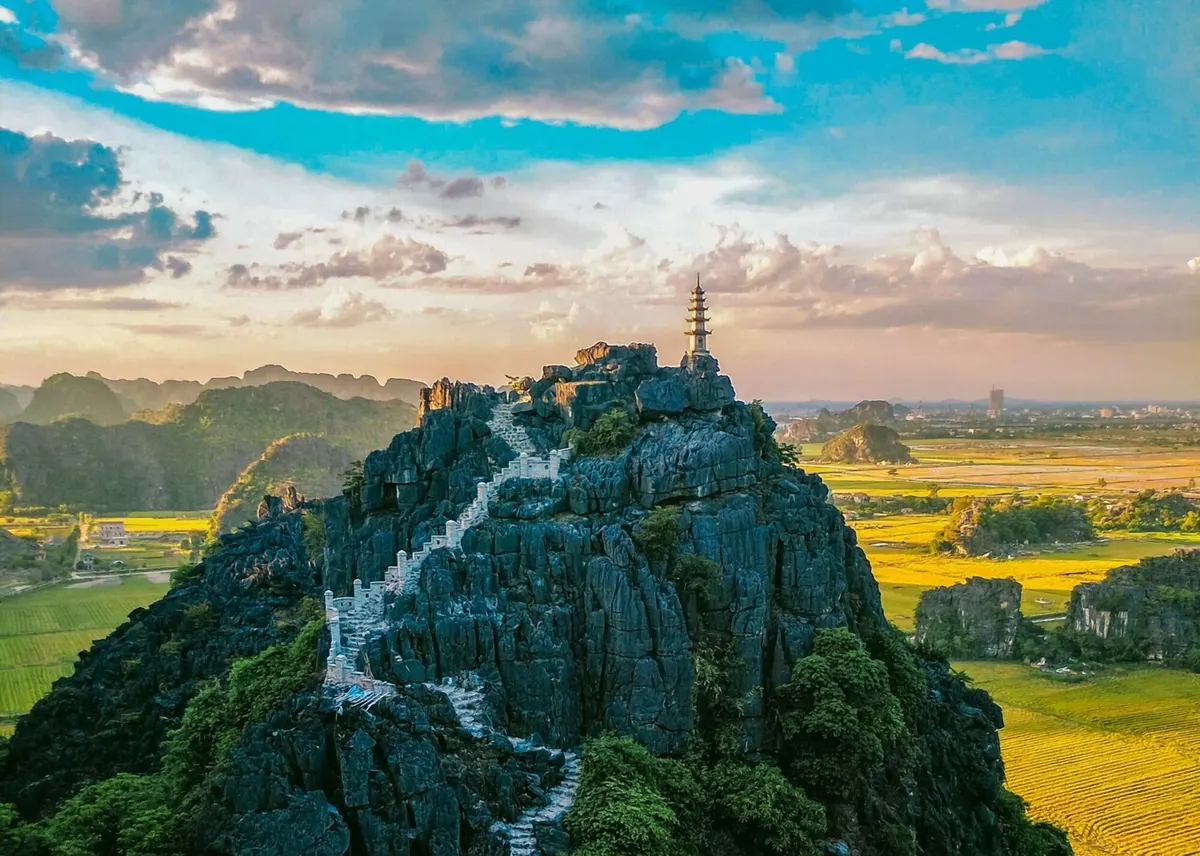
The Trang An Scenic Landscape Complex, located in Vietnam's Ninh Binh Province, offers visitors a unique blend of natural beauty and historical significance. Recognized as a UNESCO World Heritage Site, this area presents an opportunity to experience serene waterways, ancient temples, and significant historical locations. It serves as an ideal destination for those seeking a tranquil escape from urban environments like Hanoi, providing insights into both Vietnam's geological formations and its rich cultural heritage.
Situated approximately 90 kilometers southeast of Hanoi, the complex is easily accessible for day trips or longer stays. It encompasses a diverse environment featuring limestone mountains, clear rivers, and a network of caves, alongside important cultural landmarks. The region's distinct character allows travelers to connect with Vietnam's past while enjoying its natural splendor.
Understanding the Trang An Scenic Landscape Complex
The Trang An Scenic Landscape Complex is a vast area where natural geology and human history converge. It is composed of three primary zones: the Bai Dinh Pagoda, the ancient capital of Hoa Lu, and the scenic areas of Trang An – Tam Coc – Bich Dong. These components are interconnected by a unique ecosystem of limestone mountains, rivers, lakes, and wetlands, all protected within the Hoa Lu special-use primary forest.
This region is celebrated for its geological formations, including numerous limestone karsts and caves shaped over millennia. The waterways provide a means to navigate through the landscape, offering different perspectives of the towering rock formations and the surrounding environment. Beyond its natural features, Trang An holds deep cultural meaning, reflecting centuries of Vietnamese history and spiritual practices.
Bai Dinh Pagoda
Bai Dinh Pagoda is a prominent spiritual site within the complex, known for its expansive grounds and significant Buddhist structures. It holds several notable distinctions, including housing Asia's longest Arhat corridor and Asia's largest gold-plated Buddha statue. Additionally, it features Southeast Asia's largest bronze Maitreya Buddha statue. The complex also contains various caves and Ngoc Well, which is reported to be the largest well in Vietnam.
- Operating Hours: 7 a.m. – 6 p.m. daily (Please verify current hours before visiting).
- Entrance Fees (as reported in 2020):
- Electric car: 30,000 VND (approximately US $1.3) per person.
- Ticket to visit the Stupa: 50,000 VND (approximately US $2.2) per person.
Hoa Lu Ancient Capital
For individuals interested in Vietnamese history and cultural narratives, Hoa Lu Ancient Capital offers a compelling experience. This site served as the capital of Vietnam during the Dinh and early Le dynasties in the 10th and 11th centuries. Visitors can explore the remnants of this former imperial city and learn about the historical events and figures that shaped early Vietnamese nationhood.
- Operating Hours: 7 a.m. – 4 p.m. daily (Please verify current hours before visiting).
- Entrance Fee (as reported in 2020): 20,000 VND (approximately US $0.9) per person.
Trang An – Tam Coc – Bich Dong Scenic Areas
The Trang An area itself is a UNESCO natural and cultural World Heritage Site, renowned for its system of natural limestone caves and serene river landscapes. A boat excursion is a popular way to experience the wild beauty of the mountains and explore the various grottoes.
Tam Coc, meaning 'three caves,' refers to three impressive caves—Hang Ca, Hang Giua, and Hang Cuoi—formed by the Ngo Dong river as it flows through the mountain. Nearby, Bich Dong, also known as the 'Emerald Grotto,' offers additional exploration opportunities. Bich Dong Pagoda is situated approximately 3 kilometers from the Tam Coc boat pier, accessible by walking or bicycle. The pagoda overlooks a valley of rice fields, which turn golden in May and June, creating a particularly scenic view.
- Trang An Boat Trip Fee (as reported in 2020): 250,000 VND (approximately US $11.5) per person.
- Bich Dong Entrance Fee (as reported in 2020): 120,000 VND (approximately US $5.5) per person.
- Bich Dong Boat Fee (as reported in 2020): 150,000 VND (approximately US $6.4) per boat.
Important Note: As a spiritual and cultural destination, visitors to the Trang An Complex are advised to dress respectfully, avoiding short skirts, shorts, or leggings. Comfortable walking shoes or sneakers are recommended due to the extensive walking and climbing involved.
Optimal Times to Plan Your Visit
Selecting the right time to visit Trang An can significantly enhance your experience. The period from February to April, following the Lunar New Year, is generally considered favorable. During these months, the weather is often pleasant, and the rice fields display a lush green hue.
For photographers specifically seeking the iconic golden rice field scenery, the second week of June is often recommended. While temperatures can be quite high during this time, the visual reward of the fields ready for harvest can be considerable. Visitors should be prepared for warm conditions if choosing to travel in June.
Navigating to Trang An (Ninh Binh)
Reaching Ninh Binh, the province where Trang An is located, is straightforward due to well-maintained national highways (1A, 10, 12A, 12B) and a segment of the north-south railway line. Travelers have several transportation options from Hanoi:
- Private Car: This option offers the highest level of comfort and flexibility. It allows for direct travel from your accommodation in Hanoi and provides a private space without sharing with other passengers.
- Bus: Buses present a more economical alternative to private cars. However, schedules are fixed, and additional taxi fares may be incurred for transfers between destinations within Ninh Binh.
- Train: Traveling by train from Hanoi to Ninh Binh covers a distance of 115 kilometers and typically takes between 2 to 3 hours. Daily services include trains such as SE5, SE7, and SE19, which are part of the north-south railway network. Ticket prices, as reported in 2020, range from 80,000 VND (approximately US $3.4) to nearly 200,000 VND (approximately US $8.6) per person, depending on the seating class. For more detailed information on overnight rail journeys in Vietnam, consider reviewing dedicated guides.
- Motorbike: For independent travelers seeking an adventurous approach, renting and riding a motorbike offers a direct route and the freedom to explore at your own pace.
Activities and Experiences in Trang An
Beyond the popular boat excursions through the Trang An Complex, several other activities allow visitors to engage with the region's natural and cultural offerings:
- Cycling: Explore local villages and the dramatic karst mountains that rise above the rice paddies by bicycle. This provides a closer look at rural life and leads to historical sites like Hoa Lu Ancient City.
- Trekking: Opportunities for hiking are available in nearby Cuc Phuong National Park, offering a chance to experience the area's biodiversity.
Combining Your Visit with Nearby Attractions
Many visitors choose to include Trang An as part of a day trip from Hanoi, eliminating the need for separate accommodation arrangements. The region also features several other natural attractions that can be integrated into your itinerary for a more comprehensive experience. These include Mua Cave, Cuc Phuong National Park, and Thung Nham Bird Sanctuary.
When planning your trip to Vietnam, consider the diverse range of local products and traditional crafts available. Exploring options for unique purchases from a trip to Vietnam can add another dimension to your travel experience.
Frequently Asked Questions
What is the Trang An Scenic Landscape Complex?
The Trang An Scenic Landscape Complex is a UNESCO World Heritage Site in Ninh Binh Province, Vietnam, known for its natural limestone karsts, river systems, caves, and historical sites like Hoa Lu Ancient Capital and Bai Dinh Pagoda.
What are the main attractions within the Trang An Complex?
Key attractions include Bai Dinh Pagoda, Hoa Lu Ancient Capital, and the scenic areas of Trang An – Tam Coc – Bich Dong, which feature river boat trips through caves and past rice fields.
What is the best way to get around Trang An?
Boat trips are the primary way to explore the river and cave systems in Trang An and Tam Coc. Bicycles are also popular for navigating between local villages and attractions like Bich Dong Pagoda.
Are there any specific dress codes for visiting Trang An?
Yes, as a spiritual destination, respectful attire is recommended. Visitors should avoid short skirts, shorts, or leggings. Comfortable walking shoes or sneakers are advisable due to the amount of walking and climbing.
When is the most favorable time to visit Trang An?
The spring months, from February to April, offer pleasant weather and green landscapes. For photographers interested in golden rice fields, the second week of June is ideal, though temperatures will be warmer.








