
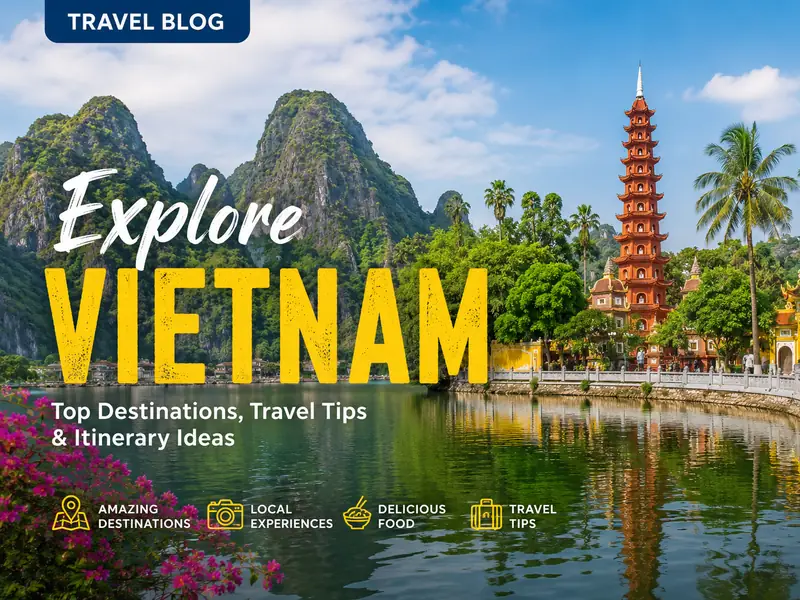
For travelers considering their initial visit to Southeast Asia, Vietnam and Cambodia present compelling options with their distinct cultural identities and significant historical sites. From the natural grandeur of Halong Bay in Vietnam to Cambodia's ancient Angkor Wat temple complex, these nations offer a wealth of experiences. This guide provides practical details to assist first-time visitors in planning their trip, covering cultural insights, optimal travel periods, inter-country transportation, and key destinations.
Cultural Landscapes of Vietnam and Cambodia
Vietnam is characterized by a rich cultural diversity, home to 54 distinct ethnic groups, each contributing to the nation's customs and traditions. Social events like weddings, funerals, and various rituals typically involve extensive participation from villagers, relatives, and friends. The country also embraces a multi-religious environment, with six primary faiths observed: Buddhism, Catholicism, Protestantism, Islam, Caodaism, and Hoa Hao Buddhism. Beyond organized religions, Vietnamese families commonly practice ancestor worship at home, particularly on the first and fifteenth days of each lunar month, alongside other significant dates.
In contrast, Cambodia's cultural identity is profoundly shaped by Buddhism, which approximately 80% of its population adheres to. This spiritual tradition has been a foundational element in Cambodian society and development for millennia, influencing various aspects of daily life and artistic expression. The principles of Buddhism have guided the evolution of Cambodian culture, and its influence has also extended to neighboring countries, including parts of southern-central Vietnam, where some Buddhist practices share characteristics with Cambodian doctrine.
Understanding the Climate and Best Times to Travel
Both Cambodia and Vietnam experience broadly similar climatic patterns, featuring two main seasons: a dry period and a rainy period. However, Cambodia generally exhibits a drier and warmer climate compared to Vietnam. Temperatures in Cambodia typically range from 21°C to 35°C, occasionally reaching up to 40°C, maintaining a hot and humid atmosphere throughout the year. The warmest months are usually May and June, while December and January tend to be the coolest.
Rainfall patterns are influenced by monsoons. From November to March, the northeast monsoon brings a higher chance of precipitation. Conversely, June through September sees heavy rains due to the southwest monsoon, though these downpours often occur for shorter durations. Therefore, the most agreeable time to visit both Cambodia and Vietnam is generally from November to April, when the weather is milder, with less heat and reduced rainfall. Travelers visiting in April might also have the opportunity to witness Cambodia's traditional New Year Festival, known as the Bom Chaul Chnam Water Festival, which takes place annually from the 13th to the 15th of April according to the Gregorian calendar. It is advisable for visitors to avoid planning trips during July and August, as this period marks the peak of the rainy season in both nations, potentially hindering outdoor activities and site visits.
Navigating Travel Between Vietnam and Cambodia
Traveling between Vietnam and Cambodia can be accomplished through several modes of transport, catering to different preferences and budgets.
By Air
Flights connecting Vietnam to Cambodia primarily depart from Ho Chi Minh City (HCMC) and Hanoi. Currently, Vietnam Airlines and Cambodia Angkor Air operate routes between the two countries. Airfares from Ho Chi Minh City typically range from approximately $275 to $454, while flights from Hanoi are generally priced between $320 and $545. Prices are subject to change and vary based on booking time and availability.
By Road
For a more budget-friendly option, travelers can take a bus from Ho Chi Minh City to either Phnom Penh or Siem Reap. The journey to Phnom Penh usually takes about 6 hours, with fares around $10. A trip to Siem Reap is longer, requiring approximately 10 to 11 hours, and costs about $20. These prices are approximate and can vary.
By Waterway
Another travel method involves taking a cruiser from Chau Doc in Vietnam to Cambodia. This riverine journey typically costs between $17 and $35. This option allows passengers to observe daily life along the Mekong River and enjoy the serene landscapes from the water.
| Travel Method | Origin (Vietnam) | Destination (Cambodia) | Approximate Duration | Approximate Price (USD) |
|---|---|---|---|---|
| Airline | Ho Chi Minh City | Phnom Penh/Siem Reap | 1-2 hours (flight) | $275 - $454 |
| Airline | Hanoi | Phnom Penh/Siem Reap | 2-3 hours (flight) | $320 - $545 |
| Road (Bus) | Ho Chi Minh City | Phnom Penh | 6 hours | $10 |
| Road (Bus) | Ho Chi Minh City | Siem Reap | 10-11 hours | $20 |
| Water (Cruiser) | Chau Doc | Cambodia (various ports) | Varies | $17 - $35 |
Notable Destinations for First-Time Visitors
Both Vietnam and Cambodia host numerous sites of historical and natural significance, offering diverse experiences for travelers.
Hoi An Ancient Town, Vietnam
Located in Central Vietnam, Hoi An Ancient Town is a preserved historical area featuring 1360 identified relics. These include 1068 old houses, 11 ancient wells, 38 churches, 19 temples, 43 shrines, 23 ancient gates, 44 distinctive ancient tombs, and a historic bridge. The town has maintained its aged character over centuries, with most structures remaining largely intact. This preservation contributes to Hoi An's unique appeal in the modern era. Visitors often seek out local products and traditional crafts here.
Halong Bay, Vietnam
Halong Bay, a renowned destination in Vietnam, is situated in the western part of the Gulf of Tonkin, within the northeastern region of the country. It is distinguished by thousands of striking limestone islands and islets, leading to its recognition by UNESCO as a natural world heritage site. The bay's remarkable scenery makes it a popular draw for both domestic and international visitors. Exploring the beaches in Halong Bay offers opportunities for relaxation and scenic views.
Angkor Wat Temple Complex, Cambodia
The Angkor Wat temple complex stands as Cambodia's most celebrated tourist attraction and is recognized by UNESCO as one of the world's wonders. It represents a significant architectural legacy of the Khmer civilization. Positioned approximately 6 kilometers north of Siem Reap, Angkor Wat was constructed in the 12th century by King Suryavarman II. The entire complex spans an area of about 400 square kilometers (248 square miles) and is encircled by a wide, deep moat.
Wat Phnom, Cambodia
Wat Phnom is often considered the namesake for Cambodia's capital, Phnom Penh. This temple is situated on an elevated hill in the northern part of the city. In the Khmer language, 'Wat' signifies a temple, and 'Phnom' means hill. The temple was reputedly established by Lady Penh in 1373. Wat Phnom holds considerable spiritual importance and attracts a substantial number of local and international visitors for sightseeing and worship. It is regarded as a key site for anyone visiting the capital. To complement your visit, consider exploring the culinary landscape of Phnom Penh.
Practical Advice for Your Journey
Preparing adequately for a trip to Vietnam and Cambodia can enhance the experience significantly.
Currency and Exchange
- Vietnam: The official currency is the Vietnamese Dong (VND). It is often recommended to exchange currency in your home country for potentially more favorable rates, though rates vary. An approximate exchange rate is 23,000 VND to 1 USD, but this is subject to fluctuations. For managing finances, understanding banking options in Hanoi or other major cities can be helpful.
- Cambodia: The US Dollar (USD) is widely accepted throughout Cambodia. It is advisable to carry smaller denominations of USD for convenience. The local currency is the Cambodian Riel (often pronounced 'Ria'), with an approximate exchange rate of 4000 Riel to 1 USD. This rate is also subject to change.
General Travel Preparedness
- Emergency Contacts: Keep a record of important phone numbers, including those for your airline, bank, credit card companies, and hotels. Storing these numbers separately from your phone can be useful in case of loss or theft.
- Travel Insurance: Purchasing travel insurance is recommended to provide coverage for unforeseen events such as medical emergencies, trip cancellations, or lost luggage.
- Weather Check: Before packing, verify the weather forecast for your planned destinations. Essential items often include an umbrella, a waterproof jacket, and comfortable walking shoes, especially during monsoon seasons.
- Advance Bookings: For popular attractions, consider booking tickets in advance. This can sometimes offer discounts and helps save time by avoiding queues. Some countries also allow pre-booking of bus and train tickets.
- Embassy Registration: Registering your travel details with your country's embassy or consulate in Vietnam and Cambodia can facilitate assistance during emergencies.
- Local Phrases and Customs: Learning a few basic phrases in Vietnamese or Khmer can aid communication and demonstrate respect for local culture. Familiarizing yourself with local customs, particularly regarding dress codes for religious sites, can help avoid cultural misunderstandings.
- Electronic Devices: Ensure all electronic devices are fully charged before long transit periods or potential flight delays.
- Initial Itinerary: Having a basic plan for your first day, including airport transfers and initial sightseeing, can help streamline your arrival and save time.
Frequently Asked Questions
What are the primary cultural differences between Vietnam and Cambodia?
Vietnam exhibits a diverse cultural landscape influenced by 54 ethnic groups and multiple religions, including Buddhism, Catholicism, and ancestor worship. Cambodia's culture is predominantly shaped by Theravada Buddhism, which has been central to its societal development for centuries and is practiced by about 80% of the population.
When is the most suitable time to plan a trip to both countries?
The period from November to April is generally considered the best time to visit Vietnam and Cambodia. During these months, the weather is typically more pleasant, with lower temperatures and less rainfall, making it ideal for exploring outdoor attractions.
Are there specific times to avoid traveling to Vietnam and Cambodia?
It is advisable to avoid traveling during July and August, as these months fall within the peak rainy season for both countries. Heavy rainfall can potentially disrupt travel plans and make visiting certain destinations challenging.
What currency should I use in Vietnam and Cambodia?
In Vietnam, the official currency is the Vietnamese Dong (VND). In Cambodia, the US Dollar (USD) is widely accepted, particularly for larger transactions, though the Cambodian Riel (KHR) is also used, especially for smaller purchases. Carrying a mix of USD and local currency in Cambodia, and VND in Vietnam, is often practical.
How can I travel efficiently between major cities in Vietnam and Cambodia?
Travel between major cities like Ho Chi Minh City and Phnom Penh or Siem Reap can be done by air, road (bus), or waterway (cruiser from Chau Doc). Flights offer the quickest option, while buses are more economical. Cruisers provide a scenic route along the Mekong River.








