
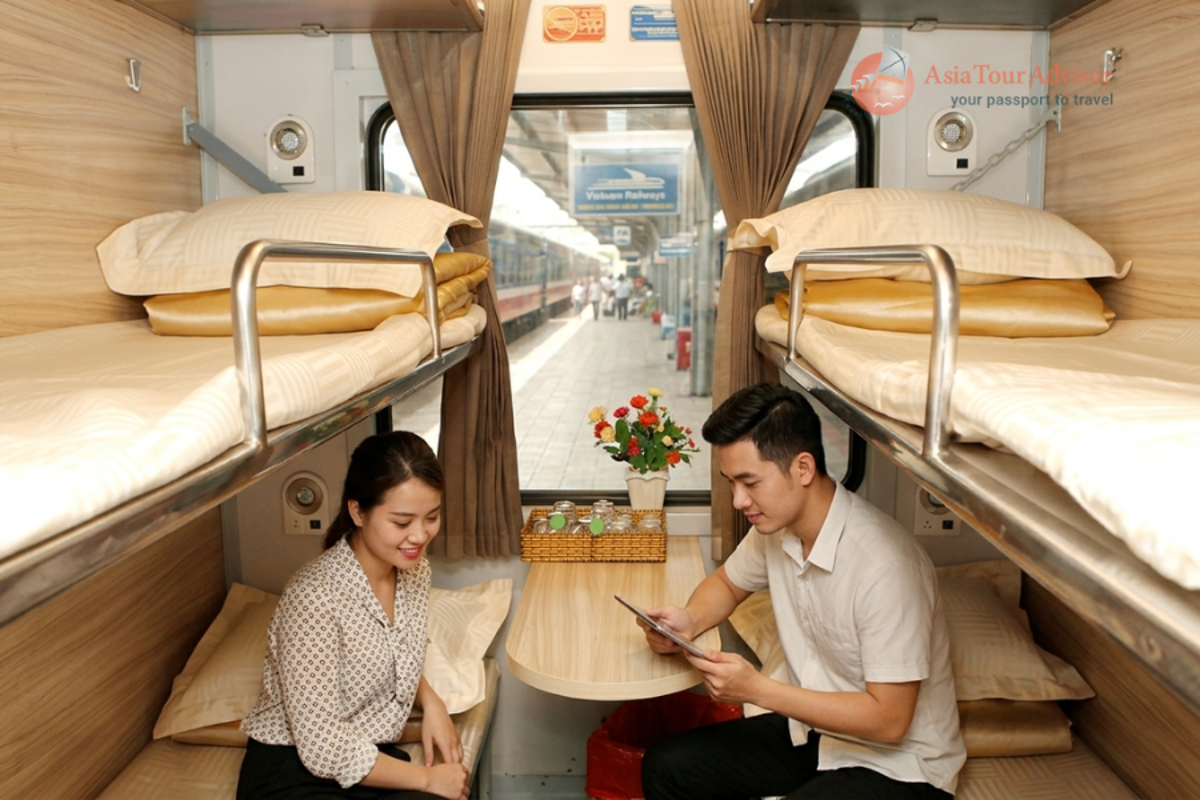
Travelers planning to explore Vietnam by rail have several convenient options for securing their train tickets. From digital platforms accessible via smartphones to traditional purchases at railway stations or through local travel agencies, acquiring passage for your journey is straightforward. Modern e-tickets further simplify the process, allowing for easy access to your travel details.
Understanding Vietnam's Rail System
Vietnam's railway network offers a distinctive way to experience the country, connecting major cities and scenic regions. Unlike some other systems, the Vietnamese rail service operates on a reservation-only basis, meaning travelers cannot simply board and disembark at will with a single "open" ticket. Each segment of a journey requires a distinct ticket, specifying the exact date, train number, and carriage details.
The cost of train travel in Vietnam is generally considered affordable, making it an economical choice for many visitors. For those undertaking longer distances, opting for a sleeper train can provide the added benefit of saving on accommodation expenses for a night, alongside avoiding taxi fares to and from airports. Specific fare structures apply to younger passengers: children under four years old may travel without charge, while those aged five to nine incur a fare equivalent to 70% of an adult ticket. Passengers ten years and older are required to pay the full adult rate.
Purchasing Train Tickets in Vietnam
Securing train tickets for your Vietnamese adventure can be accomplished through various channels, each offering different levels of convenience and support. Understanding these methods will help you choose the best option for your travel style.
Online Booking Platforms
The digital age has significantly streamlined the process of buying train tickets in Vietnam, with several reputable online services available. These platforms typically deliver an e-ticket directly to your email, which you should review carefully for departure and arrival times before finalizing your purchase. Key benefits include the ability to pay online, select specific seats, and choose your preferred boarding or disembarking stations. When booking for multiple individuals, it is advisable to prepare all necessary passenger information in advance to ensure a smooth transaction.
Among the widely recognized online services are:
- Baolau: This platform facilitates bookings for various modes of transport, including trains, cars, and ferries, across several Southeast Asian countries like Vietnam, Cambodia, Laos, Thailand, and Malaysia.
- 12go.asia: Another popular choice, 12go.asia provides a wide selection of train, bus, and flight tickets primarily for destinations in Thailand, Vietnam, Malaysia, Cambodia, Laos, China, and the Philippines.
- Dsvn.vn: This website represents the official online store for Vietnam Railways, offering a direct and reliable source for purchasing tickets.
These companies are based within Vietnam and are generally considered trustworthy for online transactions. While other travel agencies might also offer online booking, some may include higher commission fees.
Authorized Travel Agents
For travelers who prefer personalized assistance or have specific questions, purchasing tickets through authorized travel agents is a common and often recommended approach. Agents can provide detailed advice on routes and schedules, dedicating more time to individual customer inquiries compared to potentially crowded train station counters. The prices offered by these agents are typically aligned with the official railway rates, ensuring fair pricing when dealing with a recognized distributor of Vietnam railway tickets. Many reputable agents can also assist with broader travel arrangements that incorporate rail journeys throughout Vietnam.
Direct from Train Stations
Another method for acquiring train tickets is to visit a railway station upon your arrival in Vietnam. While it is often possible to secure tickets a few days before your intended travel date, even if your initial preferred train is fully booked, this option comes with certain considerations. A potential challenge is that many station staff may have limited English proficiency, which could complicate communication. Furthermore, some regional stations, such as those in Hue, Da Nang, or Nha Trang, might only permit the booking of journeys that originate from that specific station. Payments at train stations are typically accepted in Vietnamese currency. Since 2002, the ticket booking system at stations has been computerized, making the process more efficient. However, due to potential language barriers and the possibility of longer wait times, purchasing tickets online is frequently suggested as a more convenient alternative.
Key Considerations for Your Train Journey
Planning your train travel in Vietnam involves understanding a few crucial details to ensure a smooth experience. As previously mentioned, all train services in Vietnam require a reservation. This means spontaneous travel without a pre-booked ticket is not possible. Each ticket will clearly display essential information: the specific date of travel, the unique train number, and the designated vehicle number. If your itinerary involves multiple stops between major cities like Saigon (Ho Chi Minh City) and Hanoi, you will need to acquire separate tickets for each leg of your journey. It is advisable to reserve these tickets in advance, particularly during peak travel seasons, or purchase them at the station if your schedule allows for flexibility and potential queues.
Comparing Ticket Purchase Options
Choosing the right method to buy your train tickets can significantly impact your travel experience. Here is a comparison of the primary options available:
| Feature | Online Platforms | Authorized Travel Agents | Train Stations |
|---|---|---|---|
| Convenience | High (from anywhere, anytime) | Medium (during business hours, personalized service) | Low (requires physical presence, potential queues) |
| Language Support | Excellent (websites often in multiple languages) | Good (agents typically speak English) | Limited (staff may have low English proficiency) |
| Payment Methods | Credit card, digital payment | Cash, credit card (may vary) | Vietnamese Dong (cash) |
| Ticket Delivery | E-ticket via email | Physical ticket or e-ticket | Physical ticket |
| Advice & Support | Self-service, FAQs | Personalized advice, itinerary planning | Limited due to language barriers |
| Seat Selection | Often available | Often available | Possible, but may be challenging to communicate preferences |
Tips for a Smooth Train Travel Experience
To enhance your rail journey across Vietnam, consider these practical recommendations:
- Book in Advance: Especially for popular routes or during holiday periods, securing your tickets several days or even weeks ahead can prevent disappointment.
- Prepare Passenger Information: If booking for a group, have all names, dates of birth, and passport details readily available to expedite the online or agent booking process.
- Verify E-ticket Details: Always double-check your e-ticket for correct dates, times, and passenger names immediately after receiving it.
- Arrive Early: Give yourself ample time at the station before departure, particularly if you need to collect a physical ticket or orient yourself.
- Consider Sleeper Options: For longer overnight journeys, a sleeper berth can offer comfort and save on accommodation costs. Learn more about overnight rail journeys in Vietnam.
By keeping these points in mind, travelers can look forward to an enjoyable and efficient experience on Vietnam's trains. When planning your trip, consider what unique purchases and souvenirs from Vietnam you might want to bring home.
Frequently Asked Questions
Are train tickets in Vietnam expensive?
Generally, train fares in Vietnam are quite affordable. Opting for an overnight sleeper train can also offer cost savings by combining transportation with accommodation, potentially reducing the need for a hotel night and associated taxi fees.
Can I buy an open ticket to get on and off trains freely?
No, Vietnam's railway system requires reservations for all train services. Each ticket is specific to a particular date, train number, and carriage, meaning you cannot use a single "open" ticket to board and disembark at various points along a route. You will need separate tickets for each segment of your journey.
What are the fare rules for children on Vietnamese trains?
Children under four years old can travel free of charge. For children aged five to nine, the fare is 70% of the adult ticket price. Passengers ten years and older are required to pay the full adult fare.
Is it better to buy train tickets online or at the station?
While both options are available, purchasing tickets online is often recommended for international visitors due to the convenience of paying with international cards and the availability of English-language interfaces. Direct purchases at train stations can be challenging due to potential language barriers with staff and the requirement for payment in Vietnamese Dong.
What details are included on a Vietnamese train ticket?
Every train ticket in Vietnam includes essential information such as the specific date of travel, the unique train number identifying your service, and the vehicle (carriage) number where your seat or berth is located.








