
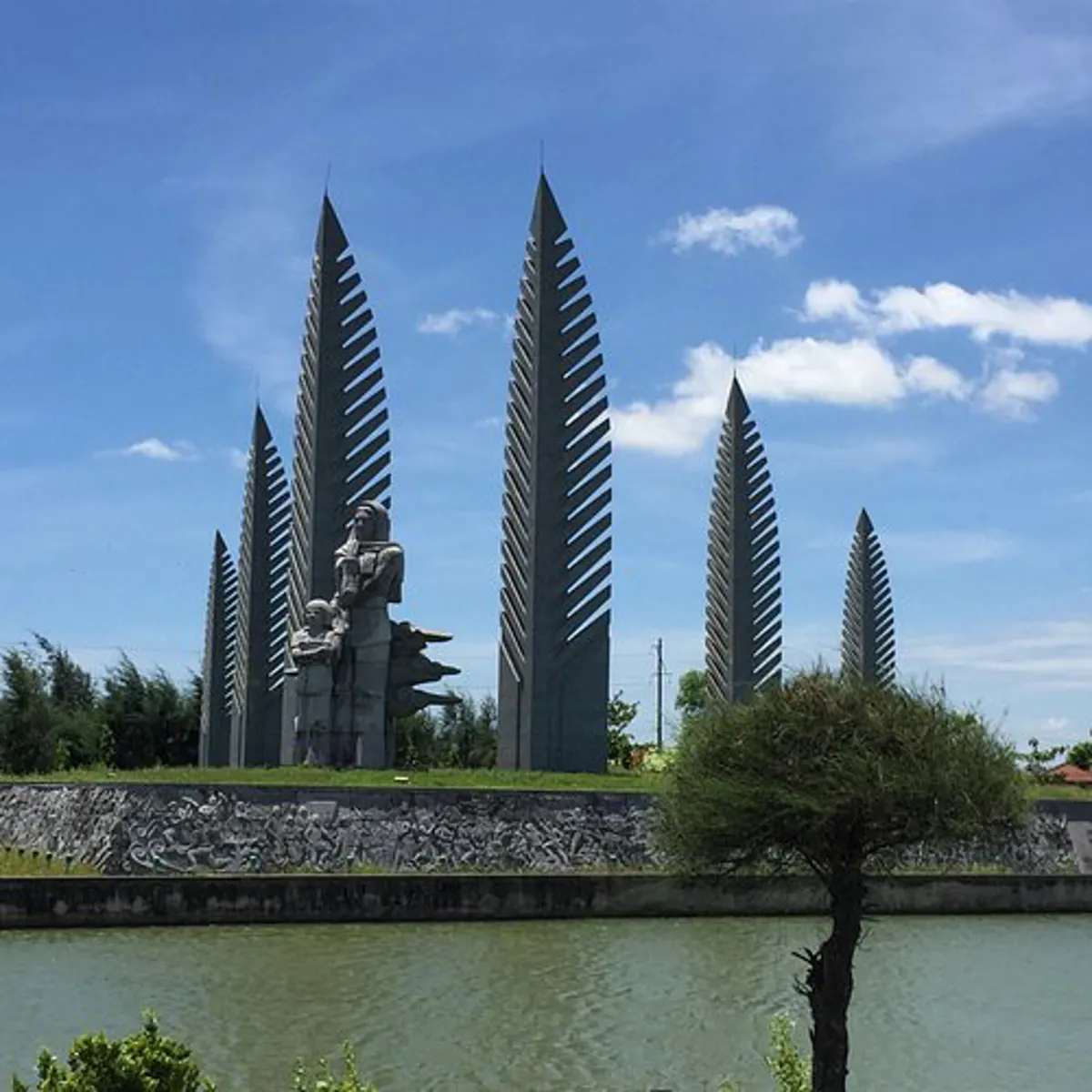
The Vinh Moc Tunnels, located in the Vinh Linh district of Quang Tri province, represent a remarkable example of civilian resilience during the American War, also known as the Vietnam War. This extensive underground complex served as a secure living space for an entire community, offering protection from intense aerial bombardments. Visitors to this historical site gain insight into the daily lives, ingenuity, and courage of the local population who adapted to life beneath the surface.
Situated within Vietnam's former Demilitarized Zone (DMZ), the tunnels provide a tangible connection to a pivotal period in the country's history. Understanding the strategic importance of this region and the daily challenges faced by its inhabitants helps contextualize the broader narrative of the conflict. A trip to Vinh Moc offers a profound educational experience, highlighting the human aspect of wartime survival.
The Historical Context of Vinh Moc Tunnels
Vinh Moc (Vịnh Mốc) refers to a network of subterranean passages in Quang Tri, Vietnam, positioned close to the Hien Luong Bridge. This bridge marked the division between North and South Vietnam from July 1954 until 1976, following the conclusion of the First Indochina War. According to one designer involved in the construction, the original designation was Son Vinh Tunnel, where 'Son' signifies mountain and 'Vinh' pays homage to both Vinh Moc and the people of Vinh Linh.
As American bombing campaigns intensified north of the DMZ in 1966, the residents of Vinh Linh district initiated the excavation of these tunnels into the distinctive red laterite soil. Over the subsequent two years, a comprehensive system was developed. While North Vietnamese soldiers also utilized these passages, their primary purpose was to provide sanctuary for the civilian populace. These villagers played a crucial role in maintaining the supply route to the Con Co islands, situated 28 kilometers offshore. The tunnels belonging to Vinh Moc village, located directly on the coast, became home to approximately 600 villagers. Over the period from early 1967 to 1969, 17 children were born within these underground confines. By 1969, half of the community relocated northward to the relative safety of Nghe An province. In 1972, the villagers were finally able to leave their subterranean existence and commence rebuilding their homes, with relatives from Nghe An rejoining them a year later.
An Underground Village: Life Within the Tunnels
The Vinh Moc tunnel system was engineered across three distinct levels, reaching a total length of nearly 2,000 meters. The complex featured six entry points leading to the hilltops and an additional seven entrances opening towards the East Sea. This multi-layered design allowed for various functions and ensured a degree of safety and operational efficiency for its inhabitants.
The first level, positioned between 12 and 15 meters below the surface, was designated as the living quarters for civilians. Deeper, at 18 meters, the second level housed the headquarters for the Party Committee, the People’s Committee, and the Military Command, serving as the administrative and strategic core of the underground community. The deepest section, 22 meters below ground, functioned as a vital warehouse for logistics, storing food and ammunition destined for Con Co Island, as well as provisions for the civilians and soldiers within the tunnel system. The elaborate complex also included essential amenities such as wells for water, communal kitchens, individual family rooms, and dedicated healthcare facilities, including an operation room, a maternity room, and a health station, demonstrating the comprehensive nature of this underground settlement.
Planning Your Visit to Vinh Moc Tunnels
The Vinh Moc Tunnels are a frequent stop for travelers journeying between Quang Binh and Hue, or as part of a day excursion from Hue city. This region, having been a significant battleground during the American War, is also home to other historical landmarks like Quang Tri Old Citadel, Khe Sanh Combat Base, Hien Luong Bridge, and the Ben Hai River.
Reaching Vinh Moc involves a drive of approximately 90 minutes (80 kilometers) from Dong Hoi city or about two hours (114 kilometers) from Quang Binh, typically by private car or van. The turn-off for Vinh Moc from Highway 1 is situated 6.5 kilometers north of the Ben Hai River, within the village of Ho Xa. From there, visitors should proceed east for an additional 13 kilometers. For those utilizing public transport, tourist shuttle buses operate between Phong Nha/Dong Hoi and Hue. Upon arrival in the vicinity, a taxi can be taken to access Vinh Moc and the Ben Hai River. While independent exploration is possible, engaging a knowledgeable guide is highly recommended. A guide, often equipped with a flashlight, can enhance the experience by providing detailed historical information and assisting with navigation through the potentially slippery and intricate passages. For comprehensive planning, considering overnight rail journeys in Vietnam might be beneficial for connecting major cities.
Vinh Moc Tunnels vs. Cu Chi Tunnels: Key Differences
Both Vinh Moc and Cu Chi Tunnels offer profound insights into Vietnam's wartime history, yet they served distinct purposes and present different visitor experiences. Understanding these differences can help travelers decide which site best aligns with their interests or plan a visit to both for a comprehensive perspective.
| Feature | Vinh Moc Tunnels | Cu Chi Tunnels |
|---|---|---|
| Primary Purpose | Permanent bomb shelters for civilians, an underground village | Combat operations, guerrilla warfare base |
| Occupants | Mainly civilians (entire village lived underground), some soldiers | Primarily Viet Cong soldiers |
| Tunnel Size | Larger, generally possible to stand and walk inside (can be wet/slippery) | Smaller, often requiring crawling through sections |
| Visitor Traffic | Receives fewer visitors | Very high visitor numbers |
| Location Context | Oceanfront, within the former DMZ in Quang Tri province | Near Ho Chi Minh City (Saigon) |
| Typical Visit Duration | Full day trip from Hue | Half-day trip from downtown Saigon |
While both sites are significant, Vinh Moc's focus on civilian life offers a unique perspective on survival and community resilience. The less crowded environment at Vinh Moc also allows for a more contemplative and personal experience, often described as having a pleasant oceanfront setting. Dioramas depicting scenes of daily life within the tunnels further add to the vividness of the visit. Exploring both tunnel systems provides a deeper appreciation for their respective roles and the broader narrative of the conflict.
Practical Information for Your Visit
For those planning to visit the Vinh Moc Tunnels, here are the essential details to help organize your trip. It is always advisable to verify opening hours and entrance fees closer to your travel date, as these details can change.
- Address: Vinh Moc hamlet, Kim Thach commune, Vinh Linh district, Quang Tri province
- Opening Hours: 7:00 AM – 5:00 PM (Please verify current hours locally)
- Entrance Fee: 40,000 VND / person (Please verify current fees locally)
The site is well-maintained, offering a respectful environment for learning about its history. Visitors should wear comfortable shoes, as the ground inside the tunnels can be uneven and, as noted, potentially wet and slippery, especially during the rainy season. Bringing a small flashlight can also be helpful for navigating darker sections. Considering the historical significance, many find that a guided tour enhances their understanding of the complex's purpose and the stories of the people who lived there. While in the region, travelers might also consider exploring financial services in Hue City if they are extending their stay or planning further travel in Central Vietnam.
Frequently Asked Questions
What were the Vinh Moc Tunnels used for during the war?
The Vinh Moc Tunnels primarily served as a permanent underground village and bomb shelter for civilians in the Vinh Linh district of Quang Tri province during the American War. They provided refuge from intense aerial bombardment and also facilitated the supply route to Con Co Island. Unlike some other tunnel systems, their main purpose was to sustain civilian life rather than direct combat.
How long does it take to visit the Vinh Moc Tunnels?
A visit to the Vinh Moc Tunnels typically requires a full day if traveling from Hue, considering the driving time to and from the site. The actual exploration of the tunnels and surrounding historical area can take several hours, depending on individual interest and whether a guided tour is taken.
Can you stand up inside the Vinh Moc Tunnels?
Yes, generally, visitors can stand and walk upright within the Vinh Moc Tunnels, as they were constructed to accommodate daily life for an entire village. This contrasts with some other tunnel systems, like parts of the Cu Chi Tunnels, where visitors often need to crawl. However, some sections may still be narrow or require bending, and the ground can be uneven or slippery.
Is it worth visiting Vinh Moc Tunnels?
Many visitors find the Vinh Moc Tunnels to be a highly worthwhile historical site. It offers a unique and poignant perspective on civilian life during wartime, showcasing incredible resilience and ingenuity. The site is less crowded than some other historical tunnels, allowing for a more reflective experience. Its historical significance and the insights it provides into Vietnamese history make it a valuable stop for those interested in the conflict.
What other historical sites are near Vinh Moc Tunnels?
The Vinh Moc Tunnels are located within Vietnam's former Demilitarized Zone (DMZ), an area rich with historical sites related to the American War. Nearby attractions include the Hien Luong Bridge and Ben Hai River, which marked the former division between North and South Vietnam, as well as the Quang Tri Old Citadel and the Khe Sanh Combat Base. These sites collectively offer a comprehensive understanding of the region's wartime past.








