
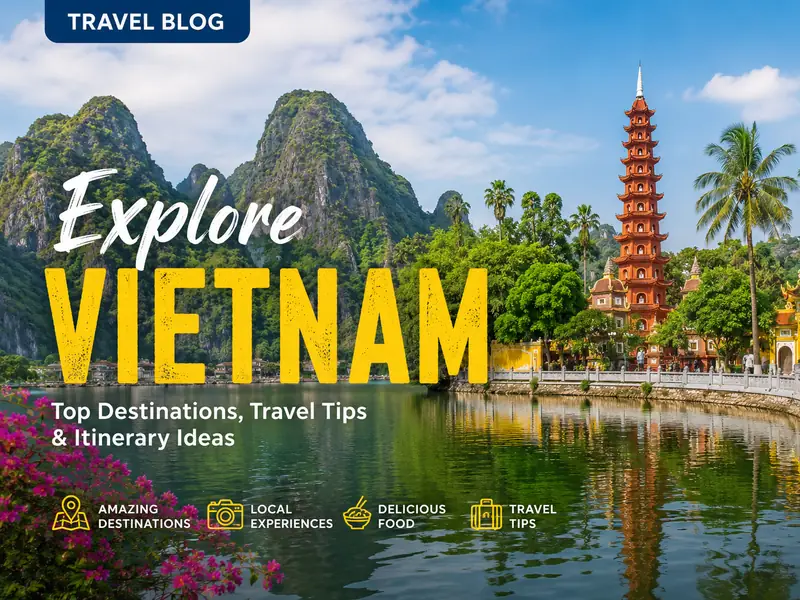
A three-week trip through Thailand, Cambodia, and Vietnam offers a comprehensive experience of Southeast Asia's diverse cultures and landscapes. This guide outlines a possible route, starting in Vietnam, continuing to Cambodia, and concluding in Thailand, designed to maximize exploration within the timeframe. It provides practical information for travelers seeking to experience major attractions and local life across these three nations.
Structuring Your Three-Week Southeast Asia Expedition
This itinerary is crafted for individuals seeking a broad introduction to Southeast Asia, encompassing historical sites, cultural experiences, and natural scenery. The proposed sequence begins in Vietnam for ten days, transitions to Cambodia for five days, and finishes in Thailand for five days. This order is suggested due to convenient international flight connections from Vietnam to other countries in the region, facilitating smoother transitions.
The journey is suitable for a wide range of travelers, including those interested in cultural heritage and natural environments, individuals traveling on a budget or seeking more luxurious options, and groups such as couples or friends. It aims to provide a well-rounded perspective of each destination.
A Detailed Three-Week Travel Plan for the Region
This section presents a day-by-day breakdown, highlighting key activities and locations in each country.
Vietnam: Ten Days of Exploration
Vietnam, situated on the Indochina peninsula, is recognized for its distinctive culture, varied geography, and compelling history. The following days offer a progression from urban centers to rural areas.
Days 1 & 2: Hanoi
Hanoi serves as the initial destination, showcasing a mix of historical depth and contemporary life. After settling into your accommodation, consider a relaxed walk through the Old Quarter or a traditional cyclo ride through its narrow lanes, observing traditional shops and local markets. An evening water puppet performance offers a unique cultural activity. For dining, try bun cha, a dish of grilled pork with noodles and herbs, or egg coffee, a local specialty. Cooking classes are also available for those wishing to learn Vietnamese culinary techniques.
The second day can start with a visit to the Temple of Literature, Vietnam's first university, followed by the One Pillar Pagoda, a unique structure resting on a single column. Conclude the morning at the Ho Chi Minh Mausoleum, a significant national landmark. Visitors must adhere to a conservative dress code, excluding shorts, sleeveless tops, and miniskirts, and check bags and cameras upon entry. In the afternoon, visit Tran Quoc Pagoda on West Lake, then relax at a lakeside cafe. Options include Santorini Vibes Cafe at 181 Nhat Chieu, Nhat Tan; Uptown Terrace at 11 Nguyen Dinh Thi, Thuy Khue; and Hanoi Roastery Coffee at 149 Nguyen Dinh Thi, Thuy Khue. Drinks typically start from US $1.99. For authentic bun cha, Bun Cha Huong Lien is a popular choice (around US $2.39 per person). Giang Cafe is known for its original egg coffee (around US $1.19 per person).
Days 3 & 4: Halong Bay
Halong Bay, a UNESCO World Heritage site in northern Vietnam, features over 1,600 limestone islands across 1,500 square kilometers. An overnight cruise is a favored way to experience its natural grandeur.
Guests can wake to views of towering karsts and clear waters. Activities often include squid fishing, morning Tai Chi sessions on deck, and exploring caves like Surprising Cave or Trung Trang Cave, known for their rock formations. Kayaking provides an opportunity to navigate calm waters and discover secluded lagoons. For an enhanced experience, consider a 3-night, 2-day cruise over a shorter option. Selecting a 4 or 5-star cruise often provides improved amenities and service. Transfers to the bay usually cost between US $20 - 40, though booking a cruise package that includes hotel transfers is recommended for convenience. Local seafood specialties such as oyster, Cha Muc (grilled chopped squid), and Bun Be Be (noodle with mantis shrimp) are popular. If you're interested in relaxing by the water, you can explore Halong Bay's beaches.
Days 5 & 6: Hoi An
Hoi An, a UNESCO World Heritage site, is known as the "yellow town" and was historically a significant trading port. Its well-preserved architecture reflects Chinese, Japanese, and European influences.
Begin by walking through the Old Town. An entry fee of VND 120,000 per person (approximately US $6) grants access to various historical sites. Visit the Japanese Covered Bridge, built in the 1590s, and the Fujian Assembly Hall, showcasing Chinese architecture and wood carvings. The streets also feature shops selling handcrafted items. For a refreshing local drink, try Mot at Quan Mot on 150 Tran Phu Street (around US $0.5). Alternatively, renting a bicycle (US $2 - 4) allows for quicker exploration of the flat town and its less-visited areas. Reputable rental shops are advisable.
On the second day, consider a guided tour. Options include:
- My Son Sanctuary Tour (from US $48/person): Explore 4th-century ruins and Champa culture, with views of the Thu Bon River.
- Cam Thanh Village Basket Boat Tour (from US $44/person): Ride along the river, observe local basket boat dances, and interact with residents.
- Hoi An Vespa Tour (from US $120/person): Tour the countryside on a vintage Vespa, finding less-known spots and engaging with locals.
Local dishes to try include cao lau (noodles with pork and herbs), Mi Quang (wide rice noodles with grilled pork), and banh canh (rice noodle soup with fish cakes and shrimp).
Days 7 & 8: Ho Chi Minh City
Ho Chi Minh City, named after Vietnam's former leader, is the economic and cultural center of the south. It blends modern development with historical traditions.
Upon arrival, explore colonial-era architecture at the Central Post Office and Notre Dame Cathedral, both designed with input from Gustave Eiffel. Continue to the Reunification Palace, where the Vietnam War concluded. For historical context, the War Remnants Museum exhibits artifacts from the conflict. The day can end at Ben Thanh Market, offering local products and souvenirs. These sites are within a 2-mile (3 km) walking distance, taking about an hour to traverse, though more time should be allocated for exploration. Taxis or buses are alternatives to walking.
The next morning can be dedicated to the Cu Chi Tunnels, an extensive underground system used during the Vietnam War, offering insights into Vietnamese ingenuity. In the afternoon, choose between experiencing the nightlife at Nguyen Hue and Bui Vien Walking Streets, known for street food and lively atmospheres, or a dinner cruise on the Saigon River for city skyline views.
Days 9 & 10: Mekong Delta
The Mekong Delta, known as Vietnam's "Rice Bowl," is a region of rivers, canals, and rice paddies, also recognized for traditional arts like Don Ca Tai Tu (folk music) and Cai Luong (Vietnamese opera).
A visit to a coconut candy factory in Cai Be offers a look at traditional production. A trailer ride provides scenic views before a sampan boat trip along the canals, passing lush vegetation and local fruit orchards. The Cai Rang floating market is a significant attraction, best visited at dawn to observe its activity. Here, you might find floating shops selling rice noodles and can sample fresh tropical fruits. Afterwards, prepare for onward travel to Chau Doc Province. For a more relaxed experience, consider a Mekong Delta cruise with operators like Song Xanh Sampan, Mekong Eyes Classic, or Bassac Cruise, offering quality wooden boats and service. Local dishes include banh xeo (savory pancakes), hu tieu (rice noodle soup), and banh bo thot not (steamed coconut rice cake).
Cambodia: Five Days of Ancient Wonders
Cambodia, centrally located in the Indochinese Peninsula, shares a convenient border with Vietnam. Transportation options between the two countries include air, bus, car, and boat.
Days 11 & 12: Phnom Penh
Phnom Penh, Cambodia's capital, is a central hub for economy, culture, and tourism. After a 5-6 hour speedboat journey from Chau Doc, Vietnam, explore the city's sites. Begin at the Victory Monument, symbolizing Cambodian independence. The National Museum, with its terracotta structure and courtyard, offers insights into art and history. A short walk leads to the Royal Palace, built in 1866, and the adjacent Silver Pagoda, adorned with precious metals and jewels. An evening Khmer dinner with an Apsara dance performance can conclude the day. For more dining options, refer to a dining guide to Phnom Penh.
The second day can include a boat trip to Koh Dach, a tranquil island known for its peaceful villages and local artisans. Return to Sisowath Quay for diverse dining options and enjoy city skyline views from a rooftop bar at sunset.
Days 13, 14 & 15: Siem Reap
Siem Reap, in northwestern Cambodia, is the most visited province, home to numerous ancient temples of the Khmer Empire.
Start at the South Gate of Angkor Thom, featuring colossal carved faces. Continue to Bayon Temple, a 12th-century structure by King Jayavarman VII. Ta Prohm, located 5-10 minutes away by tuk-tuk, demonstrates nature's embrace of ancient stones with towering fig trees. Conclude the day at Angkor Wat, the largest temple complex, exploring its galleries and reflecting pools.
The next day can involve further temple exploration: Banteay Srei, known for pink sandstone carvings; East Mebon, a pyramid temple on an artificial island; Ta Som, where trees intertwine with ruins; and Preah Khan, a sprawling complex. For alternative activities, consider a guided tour to Kbal Spean, a riverbed with intricate carvings, or the Siem Reap Zipline Half Day for an adventure through the jungle canopy.
Thailand: Five Days of Cultural Richness
Thailand, known as "The Land of Smiles," attracts visitors with its beaches, mountains, and elephants. Travel from Cambodia to Thailand is straightforward, with various transport modes available.
Days 16 & 17: Chiang Mai
Chiang Mai, in northern Thailand, surrounded by mountains, offers a peaceful retreat. Begin with a cultural tour of the city's temples: Wat Chedi Luang with its grand chedi, Wat Phra Singh housing the Phra Singh Buddha image, and Wat Chiang Man, the oldest temple, featuring ancient Buddha statues. These three sites are within walking distance. Wat Suan Dok, a serene monastery, provides a quiet conclusion.
The second day can be a trip to Chiang Rai. Visit Wat Rong Khun, the contemporary white temple. Explore the history of the Golden Triangle, where Thailand, Laos, and Myanmar converge. The Opium House offers insights into opium trading history with views of the Mekong River.
Days 18, 19, & 20: Bangkok
Bangkok, Thailand's capital, is a dynamic city with landmarks, skyscrapers, temples, and palaces.
Start with Wat Pho, Bangkok's oldest temple, home to the reclining Buddha. Visit the Grand Palace, a royal residence, and the Temple of the Emerald Buddha, a sacred site. An afternoon boat ride on the Chao Phraya River is a good option, followed by an evening dinner cruise.
The second day can feature the Damnoen Saduak Floating Market, where vendors sell goods from boats. In the evening, explore Yaowarat Chinatown for its sights and sounds.
On the final day, consider amusement parks like Dream World or Siam Amazing Park. Conclude the trip with a Muay Thai fight or the Siam Niramit dinner show.
Essential Travel Information for Your Journey
Transportation Across the Region
For travel between countries, flying is generally the most efficient option, with budget airlines offering affordable fares. These services are comparable to those in other developed nations.
Within and between cities, buses offer an economical choice with extensive routes. Trains provide a different perspective of the landscape. Domestic flights connect major cities for quicker travel. For shorter distances, ride-hailing apps like Grab or Bolt are widely available, similar to Uber. Major cities such as Bangkok and Hanoi have public transport networks, including Bangkok's BTS Skytrain, which functions like a metro system. If you're planning overnight rail journeys in Vietnam, consider reviewing available routes and services.
Estimated Travel Costs (Current as of 2024)
Here is a general breakdown of potential expenses:
- Accommodation:
- 3-star hotels: From US $16 per night.
- 4-star hotels: Around US $35 per night.
- 5-star luxury: Upwards of US $65 per night.
- Food: Approximately US $20 per day for meals, especially when dining at local eateries and street vendors.
- Attractions: Entrance fees for popular sites typically range from US $13 - 37.
- Flights (Sample Costs):
It is advisable to exchange currency at official points. The main currencies are Vietnamese Dong, Thai Baht, and Cambodian Riel.
Language and Currency Guidelines
English is spoken in tourist areas, but not universally, particularly in rural locations. Translation apps and basic phrases can be helpful:
- Hello: Xin chào (Vietnam), Choum reap suor (Cambodia), Sawasdee (Thailand)
- Thank you: Cảm ơn (Vietnam), Opasmek (Cambodia), Khop khun ka/kha (Thailand)
- Excuse me: Xin lỗi (Vietnam), Somtoh (Cambodia), Khot thod (Thailand)
- Where is the bathroom?: Nhà vệ sinh ở đâu? (Vietnam), Chanba de? (Cambodia), Hong nam yoo nai? (Thailand)
Currency Conversion (as of August 18, 2024):
- US $1 = VND 25,095
- US $1 = THB 34.96
- US $1 = KHR 4,065.89
Note: Exchange rates fluctuate; verify current rates before travel.
Cambodia operates a dual currency system, accepting both US dollars and Cambodian Riel. While US dollars are common in larger establishments, having Riel for smaller purchases or local markets is advisable. For managing finances in Vietnam, a guide to banking services in Hanoi can be useful.
Visa Policies for Travelers
- Cambodia: ASEAN citizens can enter visa-free for up to 30 days. Other nationalities can obtain a visa on arrival (US $30) or an e-visa (US $36) for a 30-day tourist stay. Overstaying incurs a US $10 per day penalty.
- Vietnam: Many nationalities qualify for visa-free entry for periods of 15, 30, or 90 days. For others, an e-visa application is available for US $25, requiring a valid passport, passport information page photo, and a personal passport photo.
- Thailand: Many nationalities can visit without a visa for up to 45 days. Visa on arrival or a traditional tourist visa are options if required. A traditional tourist visa costs US $30 and requires a passport valid for at least six months, a completed form, a recent photo, a round-trip ticket, and proof of sufficient funds. Overstaying can lead to deportation and re-entry bans.
Packing and General Advice
- Dress respectfully for religious sites, covering shoulders and knees.
- Bargaining is common in local markets.
- Google Maps can assist with navigation.
- Consider a local guide for deeper cultural insights.
- Pack light, breathable clothing for the tropical climate.
- Sunscreen and a wide-brimmed hat are recommended for sun protection.
Accommodation Suggestions Across the Region
Choosing suitable accommodation enhances the travel experience.
Thailand:
- Bangkok: The Sukhumvit or Silom districts offer diverse hotels, public transport access, and proximity to attractions.
- Chiang Mai: The Old City is ideal for historical temples and markets. The Nimmanhaemin Road area suits those seeking modern cafes and boutiques.
Cambodia:
- Phnom Penh: The riverside area is popular for Mekong River views. Toul Tom Pong or Boeung Keng Kang neighborhoods offer local experiences.
- Siem Reap: Siem Reap Town is close to the Angkor temples. For a lively atmosphere, consider hotels near Pub Street.
Vietnam:
- Hanoi: The Old Quarter is a prime choice for first-time visitors. The West Lake district provides a more contemporary stay.
- Ho Chi Minh City: District 1 is central with many hotel options. For quieter stays, District 3 or District 5 are alternatives.
- Hoi An & Da Nang: These coastal cities offer a relaxed setting. In Hoi An, stay in the Old Town. In Da Nang, beachfront areas like My Khe or Non Nuoc are popular.
Comparing Southeast Asia Itinerary Options
This table outlines various itinerary lengths for exploring Thailand, Cambodia, and Vietnam, catering to different travel preferences.
| Tour Name | Primary Focus |
|---|---|
| Thailand Cambodia Vietnam 3 Week Itinerary | A balanced introduction to the region, covering key attractions in all three countries. |
| Thailand, Vietnam, Cambodia Itinerary 4 Weeks | More extensive exploration, including less-traveled locations like floating villages on Tonle Sap Lake. |
| Thailand Cambodia Vietnam Itinerary 14 Days | A condensed experience, focusing on the main highlights of each country for shorter trips. |
| Thailand Cambodia Vietnam 21 Days | A slower-paced travel option, allowing greater flexibility and deeper engagement. |
Frequently Asked Questions
What is the best time of year for a three-week trip to Thailand, Cambodia, and Vietnam?
The most favorable period for visiting these three countries is typically between November and April. During these months, the weather is generally pleasant, and rainfall is minimal across the region.
Is three weeks sufficient for exploring Thailand, Cambodia, and Vietnam?
Yes, a three-week duration allows ample time to experience the significant attractions of Thailand, Cambodia, and Vietnam. This timeframe supports visits to major cities, cultural engagement, and opportunities for relaxation.
Is it safe to consume street food in Thailand, Cambodia, and Vietnam?
Street food in these countries is generally considered safe. However, exercising caution is advisable. Choose vendors with high customer turnover and avoid dishes that appear raw or undercooked.
A three-week journey through Thailand, Cambodia, and Vietnam provides a rich and varied travel experience. This guide aims to assist in planning a trip that covers major sites and local culinary offerings.








