
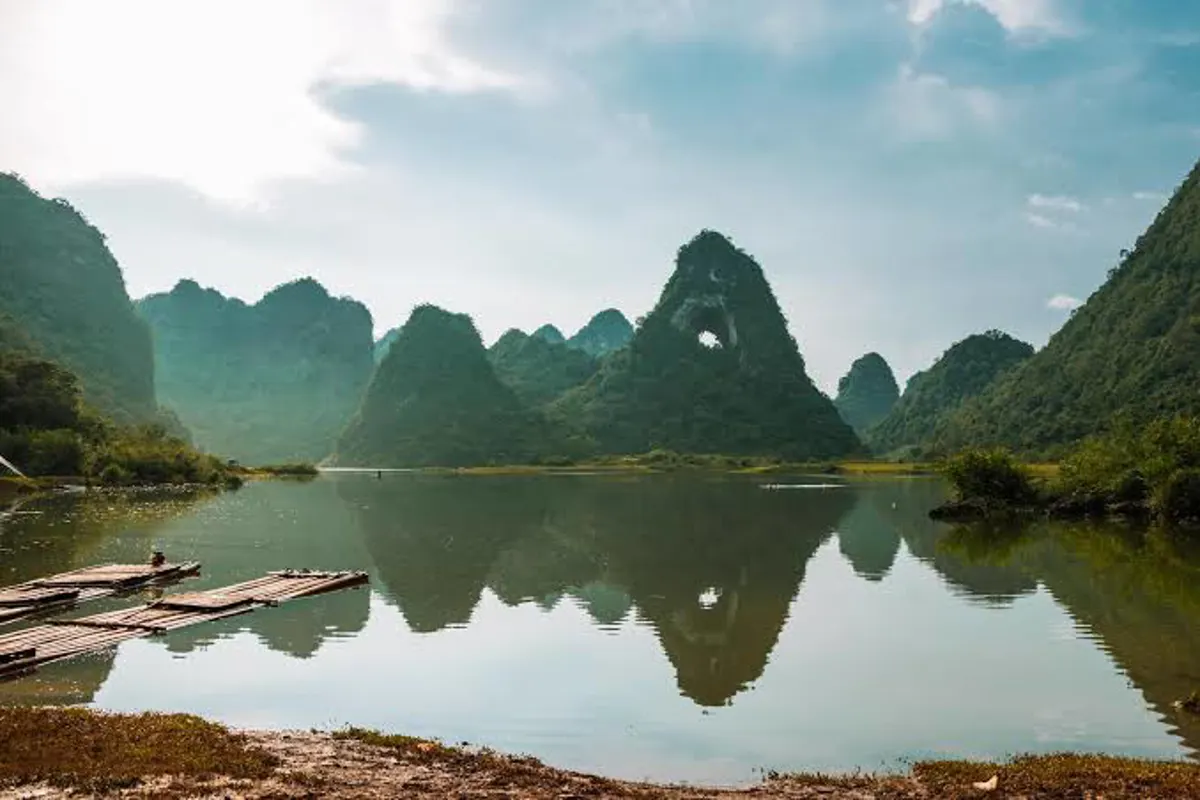
Ban Gioc Waterfall, situated in Vietnam's Cao Bang province near the northern border, is a prominent natural landmark. This multi-tiered cascade, fed by the Quay Son River, is recognized as one of Southeast Asia's most impressive border waterfalls. It offers visitors a striking display of water, rock, and lush surroundings, drawing attention for both its scale and its serene location.
Understanding Ban Gioc Waterfall's Features
The waterfall comprises distinct sections, each presenting a unique aspect of its natural grandeur and hydrological power. The primary drop, often referred to as the lower cascade, features torrents of water descending over 30 meters across three prominent tiers of rugged limestone formations. This immense volume creates a powerful, resonant sound that echoes through the valley and generates a consistent mist that often envelops the surrounding landscape, particularly on sunny days.
In contrast, the upper cascade exhibits a more gentle and intricate flow, branching into multiple delicate streams that meander gracefully through dense plant life and verdant foliage. This offers a serene visual counterpoint to the raw power of the main drop. The appearance of Ban Gioc transforms significantly with the changing seasons. From June to September, during the period of heavier rainfall, the Quay Son River swells dramatically, uniting the individual streams into a vast, continuous sheet of white water that spans the entire width of the falls, presenting a truly magnificent spectacle. Conversely, the drier months, from October to May, see the water flow diminish, revealing tranquil, crystal-clear turquoise pools at the base, often framed by golden rice paddies during the autumn harvest, creating a different but equally captivating scene.
Cultural Significance and Geological Heritage
Beyond its visual appeal, Ban Gioc holds deep cultural importance for the indigenous communities residing in the area, particularly the Tay and Nung ethnic groups, who have lived in harmony with this landscape for centuries. Travelers to the region can observe traditional stilt homes, taste unique regional highland dishes prepared with local ingredients, and witness a way of life that has remained closely attuned to the natural environment for many generations. These cultural elements add another layer of richness to the visit, offering insights into local traditions and hospitality.
The waterfall is also a central feature of the Non Nuoc Cao Bang UNESCO Global Geopark, a designation that highlights the region's exceptional geological value. This area is characterized by ancient limestone structures, extensive cave systems, and a rich variety of plant and animal life that has evolved over hundreds of millions of years. The geopark status underscores the importance of preserving this unique environment, which showcases significant geological processes and biodiversity.
Experiencing the Falls and Nearby Attractions
To fully appreciate the scale and grandeur of Ban Gioc, several activities allow for close engagement with the natural setting. One particularly popular option involves taking a bamboo raft excursion on the emerald waters of the Quay Son River. These rafts, operated by local individuals, transport guests directly to the base of the cascades, offering an intimate perspective of the powerful water and the refreshing spray that rises from the impact. Midday visits often provide the opportunity to see vivid rainbows forming in the mist as sunlight interacts with the water particles, creating memorable photographic moments.
The area surrounding the waterfall also features remarkable geological formations and cultural sites. A short distance away, Nguom Ngao Cave offers an extensive underground exploration. This vast limestone cavern stretches for several kilometers, with illuminated paths guiding visitors through impressive chambers filled with intricate stalactite and stalagmite formations, meticulously sculpted by natural processes over millions of years. The cave's cool, damp environment provides a striking contrast to the open air of the waterfall.
For a broader perspective and a sense of tranquility, a short ascent leads to the Phat Tich Truc Lam Ban Gioc Pagoda. This traditional temple, situated serenely on a hillside overlooking the valley, provides expansive, unparalleled bird's-eye views of the entire waterfall complex and the surrounding border landscape. It is particularly favored by photographers during the quieter times of early morning or late afternoon, when the soft light enhances the contours of the mountains and the falls, creating ideal conditions for capturing landscape images.
When planning your visit to Ban Gioc Waterfall, consider exploring these additional attractions:
- Bamboo Raft Excursion: These locally operated rafts depart from the Quay Son River, offering a unique perspective from the water directly at the base of the cascades. This experience provides an intimate encounter with the waterfall's power and cooling mist. (Note: Specific booking details or prices were not supplied in the source material; typically arranged on-site.)
- Nguom Ngao Cave: Located a short drive from the waterfall, this extensive limestone cavern features a network of illuminated pathways. Visitors can admire a wide array of stalactite and stalagmite formations shaped over geological eras. (Note: Specific operating hours or entry fees were not supplied in the source material.)
- Phat Tich Truc Lam Ban Gioc Pagoda: Perched on a hillside above the valley, this traditional pagoda offers panoramic vistas of the Ban Gioc Waterfall complex and the surrounding border region. It is an excellent spot for photography, especially during sunrise or sunset. (Note: Specific operating hours or entry fees were not supplied in the source material.)
Planning Your Visit to Ban Gioc
Accessing Ban Gioc Waterfall typically involves a journey of approximately 340 kilometers north from Hanoi, Vietnam's capital. The route follows well-maintained national highways, offering scenic drives through winding mountain passes and dramatic landscapes. This makes the trip particularly appealing to those who enjoy road travel and capturing landscape photographs. Travelers often combine this destination with other northern Vietnamese explorations; consider a road trip through northern Vietnam to experience the diverse topography and cultural richness of the region.
The choice of when to visit significantly impacts the experience you will have at the falls. The rainy season, from June to September, showcases the falls at their most powerful and expansive, with the river swelling to create a truly grand display. Conversely, the dry season, from October to May, offers clearer waters and the chance to see surrounding rice terraces, especially during the autumn harvest when they turn golden. For those interested in the agricultural landscapes, exploring Vietnam's northern rice terraces can provide additional context to the region's beauty and traditional farming practices.
Visitors should prepare for varying weather conditions depending on the season, bringing appropriate rain gear or sun protection as needed. Comfortable footwear is advisable for exploring the cave and pagoda areas, which may involve walking on uneven terrain or climbing steps. While the source material does not provide specific operating hours or ticket prices for individual attractions, these details are typically available upon arrival or through local tour operators in Cao Bang.
Why Visit Ban Gioc Waterfall?
Ban Gioc Waterfall continues to draw international attention, establishing itself as a significant destination for travelers seeking natural beauty and cultural insights in Southeast Asia. Its distinctive multi-tiered topography, the powerful flow of the Quay Son River, and the serene atmosphere along the border contribute to its reputation as a compelling site for exploration and photography. For a comprehensive overview of the region, consider exploring Cao Bang Province more broadly, which offers a wealth of natural wonders and cultural experiences beyond the waterfall itself. The combination of geological marvels, local traditions, and accessibility makes Ban Gioc a highlight for many visitors to Vietnam.
Frequently Asked Questions
Where is Ban Gioc Waterfall located?
Ban Gioc Waterfall is situated in the northeastern highlands of Cao Bang province, Vietnam, directly on the national border with China.
What are the best times to visit Ban Gioc Waterfall?
The rainy season, from June to September, offers the most powerful display of the falls with a vast sheet of water. The dry season, from October to May, presents clearer, turquoise waters and the opportunity to see golden rice terraces during the autumn harvest.
What activities are available at Ban Gioc Waterfall?
Visitors can take bamboo raft excursions on the Quay Son River to the base of the falls, explore Nguom Ngao Cave with its stalactite formations, and visit Phat Tich Truc Lam Ban Gioc Pagoda for panoramic views of the waterfall complex.
How far is Ban Gioc Waterfall from Hanoi?
Ban Gioc Waterfall is approximately 340 kilometers north of Hanoi, accessible via national highways offering scenic mountain drives.
Is Ban Gioc Waterfall part of a protected area?
Yes, Ban Gioc Waterfall is a key component of the Non Nuoc Cao Bang UNESCO Global Geopark, recognized for its significant geological features and biodiversity.








