
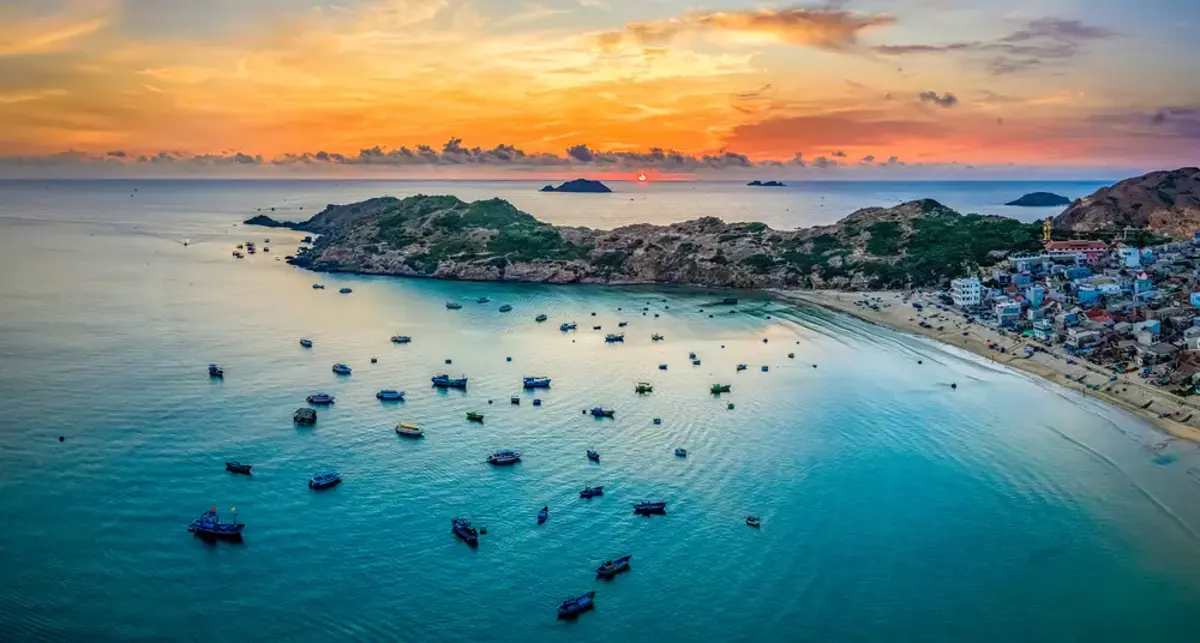
Binh Dinh province, situated along Vietnam's south central coast, serves as a significant economic hub for the central region. Its capital, Quy Nhon, is positioned approximately 649 kilometers from Ho Chi Minh City and 1,065 kilometers from Hanoi. The province shares its northern border with Quang Ngai, its western border with Gia Lai, and its southern border with Phu Yen, boasting an extensive 100-kilometer coastline dotted with numerous offshore islands. Renowned for its well-developed infrastructure, Binh Dinh is poised as a dynamic center for both commerce and tourism.
This coastal area is historically recognized as a focal point of the ancient Sa Huynh Culture and once functioned as a capital for the former Cham Kingdom for an extended period. Evidence of this rich past is visible in its Cham towers, such as the "Pyramid Shaped Black Cake" Tower, Duong Long Tower, "Flying Fairy Wings" Tower, and Twin Towers. Beyond its historical sites, the province's long coastline features many coves and inlets, creating scenic beaches like those at Phuong Mai Peninsula, Queen, Quy Hoa, and Ghenh Rang. For those preferring inland exploration, Ham Ho Valley provides a freshwater retreat, ideal for hiking and swimming in its streams.
An Overview of Binh Dinh Province
Binh Dinh's geographical makeup consists primarily of mountains and hills, with most districts presenting a mixed topography. The most extensive lowland area is found in the southern part of the province, following the lower Con River. The province's diverse landscape includes not only its celebrated beaches and historical Cham structures but also a vibrant cultural scene. It is considered the origin of Tuong opera (hat boi), Tay Son martial music, and Bai Choi musical plays, alongside traditional festivals like Tay Son, Cau Ngu, and An Thai Village Muscle art.
The region is also known for its distinctive local products, which include silk, swallow nests, various seafood like shrimp and fish, precious wood, vegetable oil, rice, marble, titanium, and a range of handicraft items. These elements combine to offer visitors a multifaceted experience, blending natural beauty with profound cultural depth.
Optimal Times to Visit Binh Dinh
Binh Dinh province experiences a typical tropical monsoon climate, with an average temperature around 27°C. The rainy season generally occurs from September to December, while the dry season spans from January to August. For travelers seeking the most comfortable conditions and fewer crowds, the period from March to May is often recommended. During these months, the weather is relatively dry and not excessively hot, making it suitable for sightseeing and outdoor activities.
Visitors planning a trip later in the dry season, particularly from late May to August, should anticipate higher temperatures. Additionally, the beaches tend to become more crowded during the summer vacation period, which typically runs through the end of August. Planning your visit during the shoulder seasons can enhance the experience, allowing for more relaxed exploration of the province's attractions.
Traveling to Binh Dinh
Binh Dinh is situated 1,065 kilometers from Hanoi and is accessible via air, train, or road. The provincial capital, Quy Nhon, is located 174 kilometers from Quang Ngai, 186 kilometers from Pleiku, 223 kilometers from Buon Ma Thuot, 238 kilometers from Nha Trang, 304 kilometers from Danang, and 677 kilometers from Ho Chi Minh City. National Highways No. 1A and 19 provide key road access. Depending on the starting point, several transportation options are available.
Air Travel
The quickest and most convenient way to reach Binh Dinh is by flying into Phu Cat Airport, which is approximately 30 kilometers from the center of Quy Nhon City. Daily direct flights connect Quy Nhon with major Vietnamese cities such as Hanoi, Ho Chi Minh City, Hai Phong, and Thanh Hoa. These routes are serviced by airlines including Vietnam Airlines, Vietjet Air, and Bamboo Airways.
Train Journeys
Dieu Tri Train Station, located about 10 kilometers outside Quy Nhon City, offers another viable travel option. For passengers already in central cities like Hue, Danang (near Hoi An), or Nha Trang, taking a train to Quy Nhon (Dieu Tri) is highly suggested, especially if time is not a critical factor. The train journey provides scenic views of the countryside and an opportunity to experience local travel. While the Reunification Train connects Hanoi and Ho Chi Minh City, the full journey to Quy Nhon from these distant cities is generally not recommended due to its length and potential for fatigue. For those interested in overnight rail journeys in Vietnam, shorter segments can be more enjoyable.
| Destination | Train SE5 | Train SE7 | Train TN1 | Train SE1 | Train SE3 |
|---|---|---|---|---|---|
| Hanoi | 06:00 | 09:00 | 13:10 | 19:30 | 22:00 |
| Hue | 19:55 | 22:50 | 03:47 (+1 day) | 08:56 (+1 day) | 10:35 (+1 day) |
| Danang | 22:47 | 01:43 (+1 day) | 07:15 (+1 day) | 11:41 | 13:15 |
| Dieu Tri | 04:23 (+1 day) | 07:25 | 13:38 | 17:41 | 18:36 |
| Nha Trang | 08:35 | 11:23 | 17:55 | 21:22 | 22:12 |
| Ho Chi Minh City | 16:08 | 19:11 | 02:30 (+2 days) | 04:39 (+2 days) | 05:20 (+2 days) |
| Destination | Train SE8 | Train SE6 | Train TN2 | Train SE2 | Train SE4 |
|---|---|---|---|---|---|
| Ho Chi Minh City | 06:00 | 09:00 | 13:10 | 19:30 | 22:00 |
| Nha Trang | 13:26 | 16:29 | 21:29 | 03:21 (+1 day) | 05:00 (+1 day) |
| Dieu Tri | 17:29 | 21:17 | 01:50 (+1 day) | 07:13 | 08:46 |
| Danang | 22:59 | 03:02 (+1 day) | 08:41 | 12:46 | 14:13 |
| Hue | 01:36 (+1 day) | 05:39 | 12:14 | 15:31 | 16:47 |
| Hanoi | 15:33 | 19:58 | 03:30 (+2 days) | 04:50 (+2 days) | 05:30 (+2 days) |
Coach Services
As Binh Dinh is centrally located, public coach services are available from various cities in both northern and southern Vietnam. Daily coaches operate from Ho Chi Minh City and Hanoi, though these journeys are quite long, typically lasting between 15 and 18 hours. Despite the extended travel time, coach travel remains the most economical option for reaching Binh Dinh or Quy Nhon, often costing about half the price of a train ticket.
Private Car/Van
For enhanced comfort and convenience, travelers can arrange for a private car or van. After arriving at Phu Cat Airport or Dieu Tri Train Station, a pre-booked private driver can provide direct transport to hotels or other destinations within Binh Dinh province, offering a personalized and relaxing start to your visit.
Notable Destinations in Binh Dinh
The landscape of Binh Dinh province is largely characterized by mountains and hills, with lowlands concentrated along the lower Con River in the south. The extensive coastline, featuring numerous coves and inlets, gives rise to many appealing spots and beaches, including the Phuong Mai Peninsula, Queen Beach, Quy Hoa Beach, and Ghenh Rang Beach. For those seeking a change of scenery from the coast, Ham Ho Valley offers a refreshing freshwater environment, suitable for walking through the bush and swimming in its cool streams.
Ghenh Rang – Tien Sa Tourist Area
Ghenh Rang is a prominent attraction situated 3 kilometers southeast of Quy Nhon City. This area presents a remarkable combination of mountains, forests, beaches, and islands. To the southwest, tall mountains meet the ocean, offering expansive views of natural formations such as the Lion’s Head rock, the Waiting Statue, and the Lying Elephant and Bear rocks that seem to guard the shores. Chong Islet, despite its appearance, stands firm against strong currents.
To the northeast, a clear blue ocean washes over white sandbanks. This section hosts one of Binh Dinh's most appealing beaches, known for its tranquil waters. In 1927, Vietnam's last monarch, Bao Dai, established a villa here for his family's leisure, reserving the beach exclusively for his wife, Queen Nam Phuong. Consequently, the area became known as Queen Beach. From elevated viewpoints, the beach resembles a vast turquoise expanse filled with jade and granite stones, leading locals to also call it “Egg Stone” beach.
Ham Ho Tourist Spot
Ham Ho, known locally as Hầm Hô, is a section of the Kut River in Tay Son, Binh Dinh, located 55 kilometers northwest of Quy Nhon City. Its name originates from a phenomenon observed during dry seasons when sounds resembling shouts and prayers were heard at a river bend, leading locals to name it 'Yelling Cellar.' This one-kilometer stretch of the Kut River remains lush and cool year-round. The riverbanks are lined with dense forests and high cliffs, interspersed with uniquely shaped marble outcroppings, including Chess Stone, Flying Fish Stone, and the Gates of Life and Death, also referred to as the Giant’s Feet.
Ham Ho is also noted for its abundance of fish, particularly during flood seasons. Local lore suggests this is when the Dragon King organizes a 'Contest of Fishes,' where the victor transforms into a dragon. Fish in Ham Ho are often seen swimming against the current and leaping into the air, giving this part of the river the alternative name 'The Flying Fish.' Activities at Ham Ho include boat tours along the river, offering views of old-growth forests, mountainous scenery, and rock formations both on the banks and beneath the clear water. Swimming in the cool river is also popular, with safety ropes provided. Nearby, the Quang Trung Museum across the Kon River displays artifacts related to King Quang Trung and occasionally features Kung Fu Dancing reenactments.
FLC Zoo Safari Park Quy Nhon
FLC Zoo Safari Park Quy Nhon, which opened on March 25, 2017, is the first wildlife safari of its kind in South Central Vietnam. It features a tropical climate, natural sand dunes, and conifer trees. As part of the Nhon Ly – Cat Tien Beach Tourism Spot, the park is connected to the FLC Quy Nhon Beach & Golf Resort, offering high-end accommodation and recreational amenities. Spanning 129 hectares, the park is designed to international safari standards and houses nearly 900 individual animals. Protected species found here include Purple Swamphen, Hare, Wild Duck, Chinese Goose, Geese, Spotted Deer, African Ostrich, Black Swans, Yellow Tadorama Duck, Monkey, and Peacock.
Trung Luong Camping Site
Located in Phu Cat District, approximately 30 kilometers from Quy Nhon City, Trung Luong Camping Site has rapidly gained popularity, especially among younger travelers seeking outdoor and camping activities. This picnic and camping area features a large green lawn with views of the expansive coastline and white sandy beaches. Surrounded by undulating mountains, the setting is often compared to South Korea's Jeju Island. A key feature of the site is its spacious amusement park, offering beach views and equipped with camps featuring red and green roofs, along with colorful chairs. Group visitors can enjoy overnight fire camping, singing, stargazing, and listening to the ocean waves. A paved path from the picnic area leads to Trung Luong Beach, known for its clear, calm waters and smooth sands. Along this path, numerous large, unusually shaped rocks capture attention. Beyond camping, visitors can engage in snorkeling and diving to explore the coral reefs.
Cham Towers
While Cham cultural relics are found across Vietnam’s central coast, Binh Dinh province was central to the Champa Kingdom, which thrived from the 10th to the 15th century. The Cham Pa people were early inhabitants of what is now Central and South Vietnam. Binh Dinh hosts eight complexes comprising 14 Cham towers. Architecturally, the Cham towers in this province are among the largest in Southeast Asia, concentrated mainly in Quy Nhon City and the districts of Tuy Phuoc, An Nhon, and Tay Son, particularly around Do Ban Citadel, the final stronghold of the ancient Champa Kingdom. A visit to Binh Dinh offers the opportunity to see these historical structures firsthand.
Twin Towers (Tháp Đôi)
The Twin Towers are the most recognized Cham towers in Binh Dinh, located in Dong Da Ward, Quy Nhon City. Constructed in the late 12th century, one tower stands 20 meters tall, and the other 18 meters. Unlike most Cham towers with tapering tops, these feature upward-curving roofs. Their artwork displays clear Hindu influences, with carvings of dancing monkeys, deer, elephant-headed lions, and meditators on the upper sections. The corners are adorned with mythical Hindu stone birds, and decorative motifs depict animal spirits revered in Cham religion. These towers were designated a national cultural and historical relic in 1980.
“Pyramid Shaped Black Cake” Tower (Tháp Bánh Ít)
This tower is situated near Phuoc Hiep Commune, Tuy Phuoc, approximately 20 kilometers from Quy Nhon City. Built in the early 12th century atop a hill, it is named for its distinctive four-tower pyramid structure. Each tower exhibits unique architecture, intricate decoration, and significant aesthetic value. Vietnam’s Ministry of Culture recognized it as an art monument in 1982.
Duong Long Tower (Tháp Dương Long)
Duong Long Tower is located in Tay Binh Commune, Tay Son District, about 50 kilometers from Quy Nhon City. Erected in the late 12th century during the Champa culture’s peak, it consists of three towers: a central tower reaching 42 meters, a southern tower at 36 meters, and a northern tower at 34 meters. The exterior is crafted from bricks, featuring sculptures and carvings of animals that appear lifelike. Detailed decorative patterns of flowers and animals highlight sophisticated carving techniques. The Ministry of Culture recognized it as an Art Architecture Monument in 1980, and it was further designated a significant national monument by the Prime Minister on December 23, 2015.
“Flying Fairy Wings” Tower (Tháp Cánh Tiên)
Found at Do Ban Citadel in Nhon Hau Commune, An Nhon district, the “Flying Fairy Wings” Tower dates to around the 16th century. Its interior design incorporates twisting and carved purple sandstone. The exterior features four tiers that progressively narrow as they ascend, creating the impression of a bird or fairy in flight.
Ong Nui Pagoda (Chùa Ông Núi)
Ong Nui Pagoda, also known as Linh Phong Sơn Tự, is a significant Buddhist site in Binh Dinh province, located on Chop Vung Mountain in Phu Cat district, 30 kilometers from Quy Nhon City. The pagoda honors the Buddhist monk Tinh Giac-Thien Tri, whom locals affectionately called “Ông Núi” (meaning 'Old Man Mountain') for his work in healing villagers with traditional medicines. The Binh Dinh provincial People’s Committee and the provincial Buddhist Sangha have undertaken a 500 billion VND project to develop a historical, ecological, and spiritual tourism complex here, with its centerpiece being a 69-meter sitting Buddha statue. From Ong Nui Pagoda, visitors can observe expansive rice fields to the southwest and the boundless blue sea to the east, while Thi Nai lagoon and a willow forest are visible to the southeast.
The Windy Pass (Eo Gió)
Eo Gió, approximately 20 kilometers from Quy Nhon City, is a dramatic location where lush, moss-covered mountains meet the tranquil coastal waters. To reach it, travelers cross the Thi Nai Bridge and proceed towards Nhon Ly Commune. This spot is considered ideal for viewing the sunrise in Quy Nhon – Binh Dinh. While swimming is not advisable due to strong waves, visitors can enjoy a peaceful walk along a winding pathway built into the mountainside. The experience is enhanced by the surrounding rugged cliffs, large caves, strong winds, and deep blue waters crashing against massive rocks, creating a memorable landscape.
Ky Co Beach (Bãi biển Kỳ Co)
Situated about 25 kilometers from Quy Nhon city center, Ky Co Beach is a highly recommended coastal destination, often referred to as the “Maldives of Vietnam” due to its curved shoreline. The beach is bordered by mountains on three sides and opens to the sea on one. There are two primary ways to access this coastal haven: by private car from Quy Nhon’s center, offering scenic mountain views along the route, or by taking a private car to the Eo Gio area and then a 30-minute canoe ride to the beach. Visitors are typically captivated by the impressive rocky mountains, soft white sands, and clear blue waters dotted with small sea rocks. Spending time here, whether swimming in the cool water or relaxing on the sand under the sun, provides a serene natural experience.
Phuong Mai Sand Dune (Đồi cát Phương Mai)
Just 20 kilometers from Quy Nhon city, the Phuong Mai peninsula features extensive sand dunes adjacent to Nhon Trach beach. These dunes are widely regarded as some of the most impressive in the central region, comparable to those found in Mui Ne (Binh Thuan), Quang Phu (Quang Binh), and Nam Cuong (Ninh Thuan). The large sandy formations constantly shift shape due to winds from nearby beaches, making them suitable for sand sliding activities. Additionally, a lake formed within a sand pit, approximately 100 meters deep, runs close to Thi Nai Lagoon.
Cu Lao Xanh Island (Vân Phi island)
Cu Lao Xanh, also known as Vân Phi island, is a charming island belonging to Quy Nhon city, Binh Dinh province, often described as a precious jewel of the East Sea. Located about 24 kilometers from the mainland, near Xuan Dai Bay in Nhon Chau Commune, Binh Dinh Province, its name, translating to 'Green Islet,' reflects its lush natural beauty. The island is covered in verdant forests, with tall coconut trees lining the beaches, complemented by a clear blue sky and crystal-clear sea water. The sparkling water surface under the sunlight is particularly captivating. Cu Lao Xanh features soft white sand dunes, and from an aerial perspective, it is said to resemble a graceful figure resting in the vast ocean. This island is a recommended addition to any Quy Nhon travel itinerary.
Local Cuisine of Binh Dinh
Binh Dinh offers a distinctive culinary landscape that reflects its coastal location and cultural heritage. Exploring the local dishes is an integral part of the travel experience.
“Jumping” Shrimp Pancake (Bánh xèo tôm nhảy)
This pancake earns its name from its key ingredient: fresh, live river shrimps that are still active when prepared. Smaller than the southern Vietnamese version, this dish allows diners to hear the sizzle of the batter and fresh shrimps as they cook. It can be customized with squid, egg, or rare beef, complemented by bean sprouts, onions, and green onions. The dish is traditionally served with a platter of fresh green herbs, rice paper, and a sweet fish sauce. The combination of fresh shrimp, local herbs, and a crispy crust creates a memorable flavor.
Price Range (check locally for current prices): VND25,000 – 30,000 per serving.
Where to eat:
- Mr. Hung – 24 Dien Hong St, Quy Nhon City, Binh Dinh.
- Gia Vy 2 – 14 Dien Hong St, Quy Nhon City, Binh Dinh.
- Rau Mam – 91 Dong Da St, Quy Nhon City, Binh Dinh.
Local Thin Vermicelli with Pig Intestine (Bánh hỏi lòng heo)
A popular breakfast item in Quy Nhon, Bánh hỏi is a type of rice vermicelli common in several Central Vietnamese provinces. It is prepared with a drizzle of oil and finely chopped chives, with pig intestine placed in the center of the vermicelli plate. Accompaniments typically include boiled bean sprouts, basil, salad, coriander, or a side bowl of porridge. The accompanying sauce is crucial: fish sauce is simmered with sugar until thickened, then mixed with ground garlic, lime juice, and chili slices, served in a small bowl.
Price Range (check locally for current prices): VND25,000 – 30,000 per serving.
Where to eat:
- Chi Hong – 20 Dien Hong, Ly Thuong Kiet, Quy Nhon City, Binh Dinh.
- Man – 76A Tran Phu, Quy Nhon City, Binh Dinh.
Fish Rolls Noodle (Bún cá)
Among Vietnam's many noodle dishes, Quy Nhon's fish rolls noodle stands out. The fish rolls are crafted from freshly caught fish, resulting in a firm, fragrant, and savory texture. Each bowl typically contains two types of fish rolls: deep-fried and steamed. The fried rolls offer a chewy, crispy, and spicy experience with a distinct tuna aroma, while the steamed rolls are lighter, less oily, and often feature a yellow egg coating. Both varieties are enhanced when dipped in fish sauce. The broth, made from fresh fish bones rather than pork bones, is clear and free of fishiness, infused with red onion and pineapple. A bowl of fish noodle is usually served with a plate of fresh green herbs, red chili, and sweet onion, creating a harmonious and appealing flavor.
Price Range (check locally for current prices): VND25,000 – 35,000 per serving.
Where to eat:
- Bun ca Ngoc Lien – 379 Nguyen Hue, Quy Nhon City, Binh Dinh.
- Bun ca Phuong Teo – 209 – 221 Nguyen Hue, Tran Phu, Quy Nhon City, Binh Dinh.
- Bun ca Thuan Hong – 415 Nguyen Hue, Tran Phu, Quy Nhon City, Binh Dinh.
Water Fern Cake (Bánh bèo chén)
While not originating in Quy Nhon, water fern cake is a popular and flavorful snack in the region. The Quy Nhon version is made from rice flour, topped with chopped chives, dried shrimp, and ground peanuts. An alternative preparation includes crunchy fried breadcrumbs. Once cooked, it is garnished with a layer of onions and a sweet fish sauce, adding a distinct Vietnamese zest.
Price Range (check locally for current prices): VND5,000 – 10,000 per small plate.
Where to eat:
- Banh beo Ba Xe – 50/22C Nguyen Thai Hoc, Quy Nhon City, Binh Dinh.
- Banh beo Cay Man – 742 Tran Hung Dao, Quy Nhon City, Binh Dinh.
- Banh beo Kim Dinh – 20 Nguyen Hue, Tran Phu, Quy Nhon City, Binh Dinh.
Rice Pyramid Dumpling / Thorn Leaf Cake (Bánh ít lá gai)
This pyramid-shaped dessert is a signature specialty of Quy Nhon-Binh Dinh and makes for an essential souvenir. The outer layer is made from sticky rice flour combined with thorn leaves and sugar. The filling typically consists of coconut flesh, peanuts, green beans, and ginger. Each cake is then wrapped in banana leaves. A well-made cake is characterized by its soft texture, mild flavor, and balanced sweetness. A savory variant also exists, featuring glutinous rice flour filled with minced pork and shrimp. Travelers frequently purchase these cakes as gifts when visiting Quy Nhon – Binh Dinh.
Price Range (check locally for current prices): VND3,000 – 4,000 per item.
Where to eat:
- Thanh Liem – 128 Chuong Duong, Quy Nhon City, Binh Dinh.
- Nhu Y – 156 Nguyen Hue Street, Quy Nhon City, Binh Dinh.
- Ba Du – Tuy Phuoc Town, Binh Dinh.
Fresh Seafood
A visit to a coastal destination like Binh Dinh would be incomplete without sampling its fresh seafood. The variety of seafood available is extensive, including shrimp, sea snails, crabs, king crabs, clams, and scallops. Visitors can purchase seafood directly from local fishermen or at wet markets, or conveniently enjoy it at local restaurants. Ngoc Han Cong Chua Street in Quy Nhon City is particularly known for its abundance of sea snail vendors, offering a wide array of preparations.
Accommodation Options in Binh Dinh
Binh Dinh province, particularly around Quy Nhon, offers a range of lodging choices, from luxurious resorts to comfortable hotels, catering to different preferences and budgets.
| Accommodation Name | Address | Key Features |
|---|---|---|
| Anantara Quy Nhon Villas | Bai Dai, Ghenh Rang, Quy Nhon City, Binh Dinh Province | 10km from Quy Nhon Town, private beach, mountain-backed, ocean views, 26 beachfront/ocean view villas with private pools, dedicated butler service, local materials (wood, blue stone, granite, marble). |
| Avani Quy Nhon Resort & Spa | Bai Dai Area, Ghenh Rang Ward, Quy Nhon City, Binh Dinh Province | Secluded location near Quy Nhon, between a pristine beach and orchard-covered mountains, on a rocky promontory, 63 Deluxe Studio Rooms & Junior Ocean Suites with ocean/beach views. |
| FLC Quy Nhon Beach & Golf Resort | Zone 4, Nhon Ly – Cat Tien beach, Nhon Ly, Quy Nhon, Binh Dinh | 40-minute drive from Phu Cat Airport, 15-minute drive from city center, easy access to Ky Co beach, Eo Gio, FLC Zoo Safari Park, blend of traditional and contemporary design, villas with panoramic Nhon Ly – Cat Tien beach views. |
| Anya Premier Quy Nhon Hotel | 44 An Duong Vuong Street, Quy Nhon City, Binh Dinh | First international standard 5-star hotel in Quy Nhon city center, 24-story building at Chuong Duong and An Duong Vuong intersection, overlooks City Park and Quy Nhon beach, 256 rooms (Superior to Presidential Suite), contemporary architecture with natural elements. |
| Anya Quy Nhon Hotel | No. 3 Nguyen Trung Truc Street, Quy Nhon, Binh Dinh | Brand new 4-star hotel in Quy Nhon city center, close to shopping, entertainment, and natural landscapes, 37km from Phu Cat Airport (approx. 45 min by car), 229 rooms with city/sea views, free WIFI, restaurant, lobby bar, pool bar, spa (Himalaya salt rock sauna), kid club, fitness center, swimming pool. |
Frequently Asked Questions
What is Binh Dinh known for?
Binh Dinh is recognized for its historical significance as a center of the ancient Sa Huynh Culture and a former Cham Kingdom capital, evident in its numerous Cham towers. It is also celebrated for its long coastline with diverse beaches, traditional performing arts like Tuong opera and Tay Son martial music, and unique local cuisine.
When is the best time to visit Binh Dinh's beaches?
The dry season, particularly from March to May, offers the most pleasant weather for visiting Binh Dinh's beaches. Temperatures are mild, and there are fewer tourists compared to the peak summer months (late May to August), when beaches can become crowded and temperatures higher.
How can I travel to Quy Nhon City?
Quy Nhon City, the capital of Binh Dinh, is accessible by air via Phu Cat Airport (30km away), by train to Dieu Tri Station (10km away), or by public coach and private car/van. Flights are generally the quickest option, while trains offer scenic routes from nearby central cities. Coaches are a budget-friendly choice, though journeys can be long.
What traditional dishes should I try in Binh Dinh?
Must-try traditional dishes in Binh Dinh include "Jumping" Shrimp Pancake (Bánh xèo tôm nhảy), Local Thin Vermicelli with Pig Intestine (Bánh hỏi lòng heo), Fish Rolls Noodle (Bún cá), Water Fern Cake (Bánh bèo chén), and Rice Pyramid Dumpling or Thorn Leaf Cake (Bánh ít lá gai). Fresh seafood is also a highlight of the coastal region.
Are there any historical sites in Binh Dinh?
Yes, Binh Dinh is rich in historical sites, primarily its Cham towers. Notable examples include the Twin Towers, "Pyramid Shaped Black Cake" Tower, Duong Long Tower, and "Flying Fairy Wings" Tower. These structures are remnants of the ancient Champa Kingdom and are scattered across the province, offering insights into its cultural past.








