
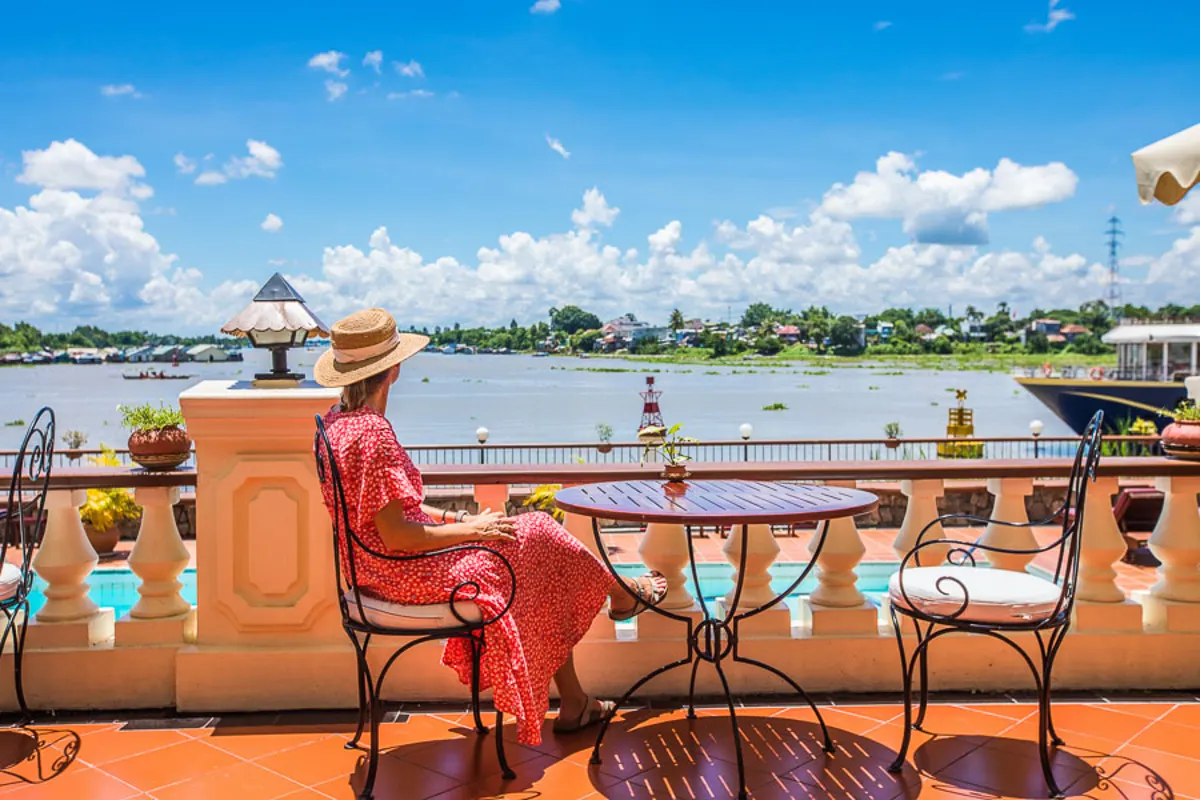
Chau Doc, a city situated in Vietnam's Mekong Delta, serves as a significant cultural and economic center near the Cambodian border. Visitors often find it an essential stop for its diverse heritage, scenic landscapes, and as a transit point for onward travel to Phnom Penh. This location makes it a compelling destination for those interested in exploring the region's unique character.
Introducing Chau Doc: Location and Significance
Located in the northwestern part of the Mekong Delta, approximately 250 kilometers west of Ho Chi Minh City, Chau Doc sits strategically between the Hau Giang river, a branch of the Mekong, and the man-made Vinh Te Canal. This position makes it a key economic hub within An Giang province and a popular gateway for travelers moving between Vietnam and Cambodia. The city is notable for its blend of Chinese, Cham, and Khmer communities, reflected in its varied religious sites and local customs.
Its proximity to the river border at Vinh Xuong and the Tinh Bien International Border Gate offers convenient access for those planning to continue their journey into Cambodia. Many travelers choose to spend at least one night in Chau Doc before proceeding to Phnom Penh without returning to Ho Chi Minh City.
Optimal Times to Visit Chau Doc
Chau Doc experiences a tropical monsoon climate, characterized by two distinct periods: a wet season from May to November and a dry season from December to April. While the region is generally suitable for visits throughout the year, each season offers a different perspective on local life and scenery.
The wet season, particularly from early May, brings heavier rainfall, which allows visitors to observe the local way of life during the high water period. The dry season in Chau Doc, typically sunny and warm, maintains comfortable temperatures that do not significantly interfere with sightseeing activities.
Reaching Chau Doc and Local Transport Options
Travel from Major Cities
Travelers can reach Chau Doc from Ho Chi Minh City, a distance of about 245 kilometers, typically taking 5 to 6 hours by bus. Bus tickets from Mien Tay bus station usually range from 150,000 to 250,000 VND for a one-way trip (prices current as of 2020, please verify). Reputable bus companies include Phuong Trang, Thao Nguyen, Hung Cuong, and Trong Tin Limousine. Combining this trip with a visit to the floating markets in Can Tho is often suggested for those with more time.
From Can Tho, Chau Doc is approximately 120 kilometers away, with bus journeys lasting around 3 hours. One-way tickets from Can Tho station are generally priced between 100,000 and 200,000 VND (prices current as of 2020, please verify). For those traveling from Da Nang or Hanoi, flights to Tra Noc Airport in Can Tho are available via Vietnam Airlines or Vietjet Air, followed by a nearly 3-hour bus or private transfer to Chau Doc. For information on managing finances in the region, consider consulting a Can Tho City banking guide.
Getting Around Chau Doc
Within Chau Doc, popular sites are often close enough for visitors to use bicycles or motorbikes, which can be rented from hotels or local shops for about 5-10 USD per day (excluding fuel, prices current as of 2020, please verify). Buses are also available, with a main station on Le Loi Street, near the Chau Doc Tourist Wharf, offering stops at key attractions like Sam Mountain.
For those preferring taxis, several companies operate in the area:
- Taxi Mai Linh – Tel: 0296 3922266 – 0296 38383838
- Taxi Sài Gòn Hoàng Long – Tel: 0296 3688688
- Taxi Long Xuyên – Tel: 0296 3858788
- Taxi Đức Thành – Tel: 0296 3852403
- Taxi Sao Đỏ Long Xuyên An Giang – Tel 0296 3676767
- Taxi Vinasun An Giang – Tel 0296 3872872
The traditional pedicab, known as Xe Lôi, offers a unique local experience, though its prevalence has decreased with modern transport options. To explore areas accessible by water, such as Bung Binh Thien, fishing villages, or the Cham village in Chau Giang, boats and ferries are necessary. These can be chartered from the Chau Doc Tourist Port at No.3 Le Loi Street, Chau Phu Ward, Chau Doc. A daily speedboat service also departs from Chau Doc to Phnom Penh at 07:30 AM, taking approximately six hours. Hang Chau Speedboat is a well-known operator, with tickets priced around US$27 for a single journey (prices current as of 2020, please verify). Exploring Cambodian cuisine in Phnom Penh can be a great way to continue your journey.
Notable Sites and Experiences in Chau Doc
Chau Doc offers a range of attractions that typically encourage a stay of two to three days, allowing visitors to appreciate both its natural beauty and distinctive local culture. The city's significant Chinese, Cham, and Khmer populations contribute to a diverse cultural landscape, evident in its mosques, temples, and churches.
Cultural and Historical Landmarks
Sam Mountain: Situated about 6 kilometers west of Chau Doc Town, Sam Mountain rises to 230 meters and is a prominent spiritual site. It hosts numerous pagodas and temples, making it a pilgrimage destination, particularly for ethnic Chinese. Notable religious structures at its base include Ba Chua Xu Temple, Tay An Pagoda, and Thoai Ngoc Hau Tomb. The annual Chua Xu Festival, held in the latter half of the 4th lunar month (Khmer lunar calendar, date varies annually), draws many devotees. From the summit, weather permitting, expansive views extend towards Cambodia.
Chau Giang Cham Village: This village is a center for the Cham community in An Giang province, offering insights into their distinct ethnic culture. The architecture features wooden stilt houses, often constructed from durable woods, with entrance doors designed to encourage a respectful bow upon entry. Most residents practice Islam, and the Mubarak Mosque stands as one of the oldest and most significant prayer venues for the Cham Muslim population in An Giang. Visitors are welcome, but should avoid entering during the five daily prayer calls unless they are Muslim.
The Lê Công “100 Years Old Big House”: Located on Le Loi Street, across from the Victoria Chau Doc Hotel, this historic residence was constructed between 1909 and 1912. It earned its “Big House” moniker as it was the largest dwelling in the town at that time. The architecture blends French-influenced exteriors with intricate ornamentation and Western-style interiors featuring chandeliers and tiled floors. Notably, its construction utilized shell powder, sand, treacle, and lindera myrrha resin instead of concrete. Furniture incorporates nacre or mother-of-pearl, with wood sourced from Laos and Cambodia. The house's history is tied to Lord Le Cong Thoan, who settled in Chau Doc, contributing to the community's welfare. It remains a testament to enduring Asian architectural and cultural stability.
Natural Wonders
Chau Doc Floating Market: While perhaps less famous than Cai Be or Cai Rang, Chau Doc's floating market offers a genuine glimpse into An Giang's riverine trade. Locals refer to it simply as “taking a boat” (“ra ghe”). A unique aspect is the “bẹo hàng” system, where sellers display their goods, primarily tropical fruits and vegetables, on tall poles to be seen from a distance. The market is most active between 6 and 7 AM, making an early morning visit advisable.
Tra Su Cajuput Forest: Approximately 23 kilometers from Chau Doc City, in Van Giao commune, Tinh Bien district, lies the Tra Su Cajuput Forest, also known as Tra Su flooded forest or bird sanctuary. This area provides an opportunity to experience a typical Mekong Delta ecosystem, home to numerous cajuput trees, diverse wildlife, and over 70 bird species, including egrets and storks. During the flood season, the forest floor is covered by a striking green carpet of duckweed.
Forbidden Mountain (Thiên Cấm Sơn): Situated in An Hao Commune, Tinh Bien district, Forbidden Mountain is the highest peak in the Mekong Delta's Seven Mountain Range, reaching about 710 meters above sea level. Its consistently cool climate has earned it comparisons to Da Lat. The mountain features lush green forests and abundant flowers year-round. It also hosts significant religious architecture, including Asia’s largest Maitreya Buddha Statue, standing 34 meters tall. Visitors can opt for an overnight stay to fully appreciate the peaceful mountain environment.
Ta Pa Rice Paddy: Located in Tri Ton district, about a 1.5-hour drive from Chau Doc, Ta Pa hills offer expansive views of rice fields dotted with palm trees. This location is popular with photographers seeking scenic landscapes. The optimal time for viewing is from August to early December.
Unique Local Events
Cow Racing Festival: Travelers visiting Chau Doc during the Khmer Sene Dolta Day (typically the 9th to 10th day of the Khmer lunar calendar, date varies annually) can witness the Cow Racing Festival. This long-standing tradition in the Seven Mountains Region of An Giang expresses gratitude to ancestors. The race involves two cows yoked to a special rake, driven by a skilled individual who must maintain balance and ensure both cows run at an even pace. The atmosphere is often described as exhilarating, with crowds cheering on the competitors.
Accommodation Choices in Chau Doc
Chau Doc offers various lodging options, from luxury riverside hotels to more budget-friendly choices, catering to different traveler preferences.
| Hotel Name | Category | Address | Key Features |
|---|---|---|---|
| Victoria Chau Doc Hotel | 4.5 star standard | No.1 Le Loi Street, Chau Doc Town, Chau Doc City, An Giang Province | Indochina-inspired, river views, outdoor pool overlooking Bassac River, 92 wooden-floored rooms (4 suites), Bassac Restaurant, Tan Chau Salon Bar. |
| Victoria Nui Sam Lodge | 3.5 star standard | Vinh Sam 1 Street, Nui Sam Ward, Chau Doc City, An Giang Province | Located on Sam Mountain flank, exceptional views of paddy fields to Cambodia, infinity pool, 40 bungalows with private terraces/balconies, La Giang Restaurant (Vietnamese, Asian, Western). |
| Chau Pho Hotel | 3 star standard | 88 Trung Nu Vuong Street, Chau Doc City, An Giang Province | Central location, 15 minutes drive to major sites, rooms with flat-screen cable TV, desk, minibar, private bathroom. |
Culinary Delights of Chau Doc
Chau Doc's cuisine reflects its cultural diversity, offering a range of distinctive flavors that are a highlight for many visitors.
Savory Main Dishes
Chau Doc Fish Rice Noodles (Bún cá Châu Đốc): This signature dish is renowned for its rich flavor profile. Local chefs employ specific techniques to ensure the broth is savory without any lingering fishiness, often incorporating ingredients like goldfish broccoli, pork rolls, and spinach meat. It is typically enjoyed with a dipping sauce of fish sauce, sugar, and chopped chili.
Special Beef Sausage (Tung lò mò or Lạp xưởng bò): A traditional Cham delicacy, “tung lò mò” derives its name from Cham words meaning “cow intestine.” This sausage is prepared from cow intestines, fat, and thigh meat, which are cleaned with alcohol and ginger, then mixed with Cham spices. The mixture is stuffed into cow's gut and sun-dried for several days. It is often grilled over charcoal and served with cinnamon, papaya, cilantro, and a dipping sauce.
Dishes from Sesbania Sesban Flowers (Bông điên điển): These flowers are a common ingredient in Chau Doc, especially during the flood season. They feature in sour soups, can be pickled, or served raw. A popular choice is sesban flower sour soup, which combines the sweetness of vegetables and fish with the tang of tamarind and a hint of chili. The flowers are also used in fried shrimp dishes or traditional pancakes.
Fermented Seafood (Mắm): Chau Doc is widely recognized as a center for fermented seafood, or “mắm.” Locals use various spices to preserve different types of seafood, resulting in a product that is typically consumed with rice. It offers an initial sweetness followed by a salty aftertaste. The Chau Doc Market is considered the best place to find and sample this local specialty. Discovering unique local products like mắm is a key part of the travel experience.
Indica Salad (Gỏi sầu đâu): The bitter “lá sầu đâu” (Azadirachta Indica leaf) is a favored vegetable in Chau Doc, often accompanying braised fish or pork. However, it truly shines in salads. Young leaves and flowers are blanched in boiling water to reduce their bitterness, or chilled in ice water for a crisper texture. The salad combines these leaves with shredded boiled bacon, steamed shrimp, dried fish, raw mango slices, cucumber, coriander, and peanuts, all dressed with a sweet-and-sour tamarind sauce. This complex dish balances the bitterness of the leaf with the richness of other ingredients, creating a distinctive flavor profile.
Seven Beef Dishes of Sam Mountain (Bò bảy món núi Sam): After visiting Sam Mountain, many visitors stop to enjoy a selection of seven beef preparations. These typically include boiled tripe, boiled meat with rice vermicelli cake, cow's head porridge, grilled beef with bread, fried beef with Aganonerion, beefsteak, and roasted beef. Among these, the fried beef with Aganonerion is particularly celebrated, combining the sweetness of beef with the tartness of Aganonerion leaves, the spice of pepper, and the richness of peanuts and coconut. It is served with a special dipping sauce made from soybean sauce and chopped lemongrass. The boiled tripe, served with a crab sauce infused with garlic, chili, and lemon, is also a highly regarded delicacy, offering a unique combination of crunchiness and softness from the cow's organs.
Sweet Treats and Unique Flavors
Steamed Palm Sugar Rice Cake (Bánh bò thốt nốt): This warm, sweet rice cake is a must-try. Its flavor comes from palm sugar and coconut, complemented by the aromatic jaggery, offering a memorable dessert experience.
Frequently Asked Questions
What is Chau Doc known for?
Chau Doc is recognized for its cultural diversity, serving as a transit point to Cambodia, and its scenic landscapes. It is home to significant Chinese, Cham, and Khmer communities, reflected in its various religious sites and local cuisine.
How far is Chau Doc from Ho Chi Minh City?
Chau Doc is approximately 250 kilometers west of Ho Chi Minh City. Travel by bus typically takes around 5-6 hours.
Can I travel from Chau Doc to Phnom Penh?
Yes, a daily speedboat service operates from Chau Doc to Phnom Penh, departing at 07:30 AM and taking about six hours. Hang Chau Speedboat is a popular provider, with one-way tickets costing around US$27 (prices current as of 2020, please verify).
What are the main attractions in Chau Doc?
Key attractions include Sam Mountain with its numerous temples, the Chau Doc Floating Market, the cultural Chau Giang Cham Village, the Tra Su Cajuput Forest, Forbidden Mountain, and the historic Lê Công “100 Years Old Big House.”
What local dishes should I try in Chau Doc?
Visitors should sample Chau Doc fish rice noodles (Bún cá Châu Đốc), steamed palm sugar rice cake (Bánh bò thốt nốt), special beef sausage (Tung lò mò), dishes made from sesbania sesban flowers, fermented seafood (Mắm), Indica Salad (Gỏi sầu đâu), and the Seven Beef Dishes of Sam Mountain.








