
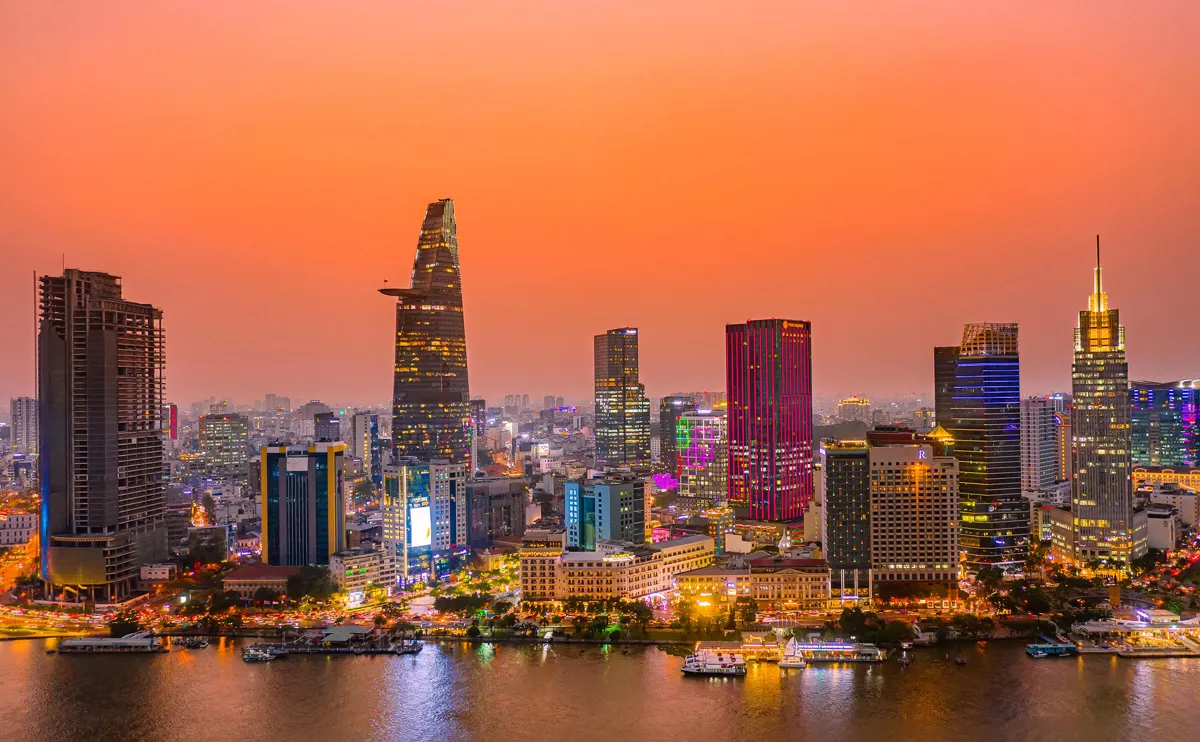
Ho Chi Minh City in February typically experiences warm and dry weather, presenting favorable conditions for visitors. This month often coincides with Tet, the Vietnamese Lunar New Year, a period when the city is adorned with decorations, cultural displays, and celebrations. With predominantly clear skies and a festive atmosphere, February is considered an excellent time to explore the city's markets, historical sites, and riverside areas.
Climate Overview for Ho Chi Minh City in February
February marks a period of pleasant warmth and minimal precipitation in Ho Chi Minh City, making it an appealing destination for sightseeing and cultural activities. The consistent temperatures and low rainfall contribute to an enjoyable environment for exploring the city's dynamic character.
The average temperature throughout February settles around 27°C, providing a comfortable escape for those from colder climates. Daytime temperatures generally range from 30°C to 34°C, while evenings offer a refreshing coolness, typically between 22°C and 23°C. This period is slightly warmer than January but avoids the intense heat that characterizes the later dry season months. Travelers seeking a sunny retreat from winter conditions will likely find Ho Chi Minh City in February to be an inviting choice.
Regarding rainfall, February in Saigon is notably dry, with only about 3 to 8 days experiencing rain across the month. The total precipitation averages around 0.2 inches (approximately 5 mm) over 31 days. Monthly totals rarely exceed 0.9 inches (23 mm) or fall below zero, ensuring ample opportunity for outdoor pursuits.
Humidity levels during February are moderate, with an average relative humidity of approximately 61%. While some stickiness might be felt, it is generally more comfortable than the higher humidity experienced in months like August, which can reach 84%. Comparatively, February offers one of the lower humidity levels throughout the year.
Air quality in Ho Chi Minh City during February is generally moderate, with the Air Quality Index (AQI) typically remaining in the mid-60s. The Ultraviolet (UV) index frequently reaches high levels, often around 7, emphasizing the importance of sun protection for visitors.
The weather patterns in February align with the peak of the dry season, characterized by consistent sunshine and stable conditions. The city receives about 10 to 11 hours of sunlight daily. Average daytime temperatures hover between 32°C and 34°C, with cooler evening temperatures ranging from 22°C to 24°C. Humidity remains manageable, typically between 60% and 70%. Any rainfall is usually limited to 2 to 4 brief showers, totaling about 5 to 12mm, which seldom impacts travel plans. Evenings frequently bring light breezes, around 9 km/h, offering a pleasant contrast to the daytime warmth.
Is February an Optimal Time to Visit Ho Chi Minh City?
February presents some of the most favorable conditions for a trip to Ho Chi Minh City, combining pleasant, dry weather with significant cultural events surrounding Tet. However, visitors should be aware that this is also a peak travel period. Consequently, higher prices for flights, accommodation, and tours are common, potentially increasing by 30% to 50%. Additionally, some local establishments may observe temporary closures during the holiday. Despite these considerations, with adequate advance planning, February remains a highly rewarding month to experience the city's energy and traditions.
Key Attractions to Explore in Ho Chi Minh City During February
Ho Chi Minh City offers a variety of sites for travelers in February, perfect for experiencing the city's history, culture, and lively atmosphere. Below is a summary of notable attractions:
| Attraction | Distance from City Center | Entrance Fee (Approximate) | Address/Notes |
|---|---|---|---|
| Nguyen Hue Walking Street | District 1 | Free | Connects City Hall with Saigon River |
| Bui Vien Walking Street | ~1 km (District 1) | Free | Nightlife hub |
| Saigon Opera House Performance | ~1 km (District 1) | US$5.72–38.16 | 7 Lam Son Square, District 1 |
| Independence Palace | ~1 km (District 1) | US$1.53 – 2.48 | Former Presidential residence |
| Saigon Zoo and Botanical Garden | ~2.5 km (District 1 to District 1/Binh Thanh) | US$1.14 - 1.91 | 2 Nguyen Binh Khiem Street, District 1 |
| Cu Chi Tunnels | ~35 km from City Center | US$3.43 - 4.2 | Underground network |
Nguyen Hue Walking Street
Situated in District 1, Nguyen Hue Walking Street extends from the City Hall to the Saigon River. This pedestrian area is a popular gathering spot for both residents and visitors, particularly active in February due to the Tet festivities. During the holiday season, the street is adorned with flower displays, hosts lion dances, and features live performances. With various food stalls and decorative installations, it provides an excellent setting for a leisurely stroll and enjoying the celebratory mood of Ho Chi Minh City.
Bui Vien Walking Street
Located in District 1, Bui Vien Walking Street serves as a central point for the city's backpacker community. This area is known for its nightlife, offering numerous bars, street food vendors, cafes, and live entertainment, from acoustic music to fire-dancing displays. It is a suitable location for observing local life, trying different foods, and experiencing the city's evening energy.
Saigon Opera House Performance
The Saigon Opera House, found at 7 Lam Son Square in District 1, stands as an architectural landmark from the French colonial era and a significant cultural venue. This elegant building hosts various evening shows, including the well-known AO Show, which combines acrobatics, bamboo artistry, traditional music, and folk narratives. Ticket prices typically begin around US$30, with variations depending on seating and the specific program.
Independence Palace
Historically, the Independence Palace functioned as the official residence and operational center for the President of the Republic of Vietnam. Today, it operates as a public museum, preserving its original interiors, wartime command bunkers, and exhibits detailing the conclusion of the Vietnam War. Visitors can explore the site independently or join guided tours to gain a deeper understanding of Vietnam's reunification narrative.
Saigon Zoo and Botanical Garden
The Saigon Zoo and Botanical Garden, located at 2 Nguyen Binh Khiem Street in District 1, covers over 20 hectares, combining animal exhibits with extensive plant collections. Established in 1865, it ranks among Southeast Asia's oldest zoos, housing more than 1,300 animals and 1,800 plant species, including orchids, bonsai, and ancient trees. The site also offers a mini-train, a children's play area, and occasional cultural presentations.
Cu Chi Tunnels
Approximately 35 to 55 km from Ho Chi Minh City, the Cu Chi Tunnels represent an extensive underground network spanning 250 km. These tunnels were constructed during the conflicts against French and American forces and were utilized by the Viet Cong for command posts, kitchens, and living quarters, enabling covert movement. Today, visitors can explore sections of the tunnels, view war artifacts, and learn about guerrilla warfare tactics and daily existence during the conflict.
Experiencing Lunar New Year (Tet) in Ho Chi Minh City
February is often an opportune time to visit Ho Chi Minh City, as it frequently coincides with Tet, the Vietnamese Lunar New Year. During this significant traditional holiday, the city's streets are adorned with flowers, lights, and a festive spirit. Tet symbolizes new beginnings, family reunions, and various cultural rituals, offering travelers a profound and memorable cultural encounter.
In areas with substantial Chinese-Vietnamese communities within Ho Chi Minh City, such as Districts 5, 6, 10, and 11, a range of traditional cultural activities takes place during Tet. Streets are decorated with lanterns, red banners, apricot blossoms, and other customary Tet items. Temples like Thien Hau Pagoda (District 5) and Quan Am Tu Vien (Phu Nhuan District) draw worshippers who come to light incense and participate in early-year ceremonies. Lion and dragon dances are commonly performed near temples and along main thoroughfares, adding to the celebratory atmosphere.
Flower markets, including Ho Thi Ky (District 10), Binh Dong Wharf (District 8), and Dam Sen Park (District 11), become busy centers where people purchase symbolic flowers such as apricot blossoms, kumquat trees, and orchids. During the holiday, children typically receive lucky money (li xi), while adults visit temples and relatives as part of established traditions. Popular public spaces, including Nguyen Hue Flower Street (District 1) and Ong Do Street near the Youth Cultural House, feature calligraphy booths, decorative displays, and cultural exhibitions. These locations are frequently visited for photography and to experience the festive ambiance of Tet in Ho Chi Minh City.
Essential Travel Advice for Ho Chi Minh City in February
February falls within Ho Chi Minh City's dry season, characterized by warm days averaging 33°C and very little rain. While these conditions are excellent for sightseeing, travelers should prepare thoughtfully for both the weather and the Tet holiday period. Here are some key considerations for visiting Saigon this month:
- Clothing for the Warm Climate: Pack light, breathable fabrics such as cotton or linen. A wide-brimmed hat, sunglasses, and sunscreen are essential for sun protection. Carrying a refillable water bottle is also recommended to stay hydrated.
- Comfort and Personal Care Items: Comfortable walking shoes or sandals are advisable for exploring. A face mask can be useful for dust, along with moisturizing cream, insect repellent, and wet wipes, particularly when visiting temples or outdoor locations.
- Advance Planning for Tet: It is crucial to book hotels and tours at least 2 to 3 months in advance when traveling during Tet to avoid significant price increases (30% to 50%) and limited availability.
- Navigating Traffic: To minimize delays, try to avoid peak traffic hours, typically from 7:00 AM to 9:00 AM and 4:30 PM to 6:30 PM, especially when using taxis or ride-hailing services.
- Transportation and Payment: Utilize ride-hailing applications like Grab, Be, or Xanh SM for convenient transport. It is also advisable to carry cash, as many smaller shops may close or have reduced hours during Tet and might not accept card payments. For managing finances during your trip, understanding the local banking services in Ho Chi Minh City can be very helpful. When considering what to bring home, exploring the range of unique purchases from Vietnam can enhance your travel experience.
Frequently Asked Questions
Is February considered part of the dry season in Ho Chi Minh City?
Yes, February is firmly within Ho Chi Minh City's dry season, which typically extends from December through April. During this month, rainfall is minimal, averaging only around 5 mm over a few days, and the weather is predominantly sunny. These conditions are highly suitable for various leisure and travel activities.
Is it safe to travel during Tet (Lunar New Year) in February?
Traveling during Tet in Ho Chi Minh City is generally safe and can be a very enjoyable experience. With Ho Chi Minh City's February weather offering warm, dry days, it is an excellent time to explore the festive streets, cultural events, and traditional celebrations. Visitors are advised to observe standard travel precautions, as minor opportunistic crimes might see a slight increase leading up to the holiday.
Are tourist attractions in Ho Chi Minh City open during the Tet holiday?
Most major tourist attractions in Ho Chi Minh City, such as the War Remnants Museum, Independence Palace, Cu Chi Tunnels, Saigon Central Post Office, and Notre-Dame Cathedral, typically remain accessible to visitors during Tet. Many shopping centers, eco-tourism sites, and amusement parks also continue operations to serve holiday travelers. However, smaller businesses, family-operated eateries, and certain services might temporarily close or operate with reduced hours during the initial days of the Lunar New Year.
Can I wear summer clothes in Saigon in February?
Absolutely. With average temperatures ranging from 23°C to 34°C, lightweight and breathable summer attire, including cotton or linen t-shirts, shorts, dresses, and sandals, is ideal. It is also recommended to bring a hat, sunscreen, and sunglasses to ensure comfort during daytime excursions.








