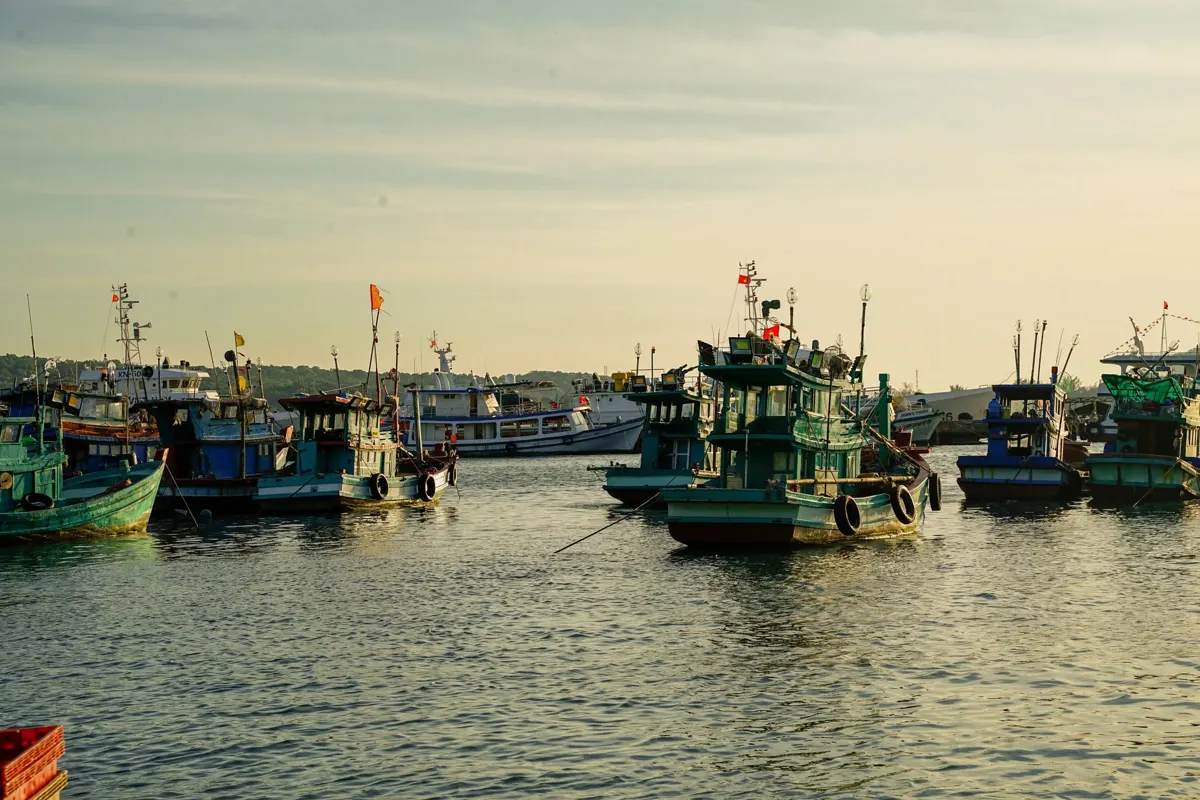
Phu Quoc Island, renowned for its beautiful beaches and contemporary resorts, also serves as a significant destination for those interested in Vietnam's spiritual and historical depth. Beyond the leisure activities, the island hosts numerous temples and pagodas that offer a glimpse into local religious practices and architectural traditions. These sites provide opportunities for quiet contemplation and cultural exploration, complementing the island's natural allure.
An Introduction to Phu Quoc's Spiritual Landscape
The religious sites on Phu Quoc reflect a blend of Buddhist, Taoist, and local folk beliefs, contributing to the island's diverse cultural fabric. From ancient pagodas to more recently constructed temples, each location tells a part of Phu Quoc's story and offers a unique experience. Many of these sites are easily accessible, allowing visitors to combine spiritual exploration with other island activities.
These sacred spaces are not only places of worship but also often feature distinctive architectural elements and serene surroundings. They provide a contrast to the island's more modern developments, inviting visitors to connect with its enduring traditions. Understanding the purpose and history of these sites enhances the overall travel experience on Phu Quoc.
Notable Temples and Pagodas on Phu Quoc Island
Phu Quoc is home to several significant religious structures, each with its own character and historical background. Exploring these sites can offer a deeper appreciation for the island's cultural identity.
Ho Quoc Temple (Truc Lam Ho Quoc)
Ho Quoc Pagoda, also known as Truc Lam Ho Quoc, stands as the largest Buddhist temple on Phu Quoc Island, offering a tranquil atmosphere. Completed in 2012, its design draws inspiration from the architectural styles of the Ly and Tran Dynasties. The temple is situated along a coastal road approximately 10 kilometers north of Sao Beach, providing impressive views.
Many individuals visit Truc Lam Ho Quoc annually to observe the main temple, offer incense, and engage in prayers beneath the large Buddha statues housed within. Additionally, climbing the dragon-themed stairs leads to an elevated position, from which a wide vista of the surrounding mountains and sea can be enjoyed.
Dinh Cau Rock (Cau Temple)
Dinh Cau Rock, also referred to as Cau Temple, is a distinctive natural rock formation on Phu Quoc Island. A temple was established here in 1937 to honor Thien Hau, the sea goddess believed to safeguard fishermen. The site includes a vividly colored lighthouse and a Buddhist shrine, making it a popular location for photography.
To reach the temple's upper terrace, visitors ascend 29 stone steps. From this vantage point, views extend over Dinh Cau Beach, traditional fishing vessels, Duong Dong Town, and nearby smaller islands. The temple is open daily from 07:00 to 18:00 and is located on Bach Dang Street, Duong Dong, Phu Quoc Island.
Sung Hung Pagoda
Sung Hung Pagoda holds the distinction of being the oldest pagoda on Phu Quoc, with origins tracing back to the early 10th century. This pagoda was formed by the amalgamation of Sung Nghia and Hung Nhan Pagodas. Despite undergoing two major restoration efforts, much of its original architectural integrity has been maintained over time.
The front courtyard features numerous Bodhi trees, a statue of the Goddess of Mercy positioned within a lotus pond, and a sanctum housing a bronze bell, various sculptures, and red lacquered panels inscribed with writings. The main hall, spanning three stories, contains statues of three Buddhas (Amitabha, Mahasthamaprapta Bodhisattva, and Avalokitesvara Bodhisattva) alongside detailed paintings depicting Buddhist mythical creatures and narratives. Sung Hung Pagoda operates daily from 07:00 to 18:00 and is found at 7 Tran Hung Dao, Duong Dong, Phu Quoc Island.
Hung Long Tu Pagoda (Su Muon Pagoda)
Hung Long Tu Pagoda, also known as Su Muon Pagoda, was constructed in the early 1930s, reflecting a traditional folk architectural style. Originally a modest structure of leaves and wood, it has evolved. The site features a three-door gate positioned at the base of a mountain, approximately 800 meters from the main temple. Accessing the temple requires climbing over 60 stone steps.
At the front of the pagoda, a statue of Quan Am is displayed on a lotus throne. Adjacent to it is a large rock sculpted to resemble a tiger resting beneath bamboo roots, referencing a local Phu Quoc legend. Behind the temple stands a statue of Thich Ca Buddha, next to a 200-year-old 'Konia' tree with extensive foliage. The main hall, built on a 3-meter-high stone foundation, houses several large Buddha statues with distinct carvings, encircled by a sturdy railing. This hall remains airy and cool throughout the year due to the surrounding lush forest. Local residents primarily visit for worship, while others come to appreciate the scenery, enjoy the fresh air, and seek respite from daily pressures. The pagoda is located at Suoi Da, Duong To commune, Phu Quoc, Kien Giang province, and is open from 07:00 to 19:00.
Nguyen Trung Truc Temple
The Nguyen Trung Truc Temple is the largest among nine temples in Kien Giang dedicated to Nguyen Trung Truc, a national hero celebrated for his victories against French forces. Established in 1869 following his passing, the temple exhibits a traditional design with a curved roof adorned with yin and yang tiles. The roof's apex features a dragon motif, painted in a respectful red hue. The main shrine contains artifacts typical of Southern Vietnamese temples.
Beyond the entrance gate, a dignified bronze statue of Nguyen Trung Truc is present, along with his tomb, which was constructed in 1986. The temple also operates a medicine room where qualified practitioners offer free treatments. Many individuals visit daily for medical care, to collect medicine, or to perform charitable acts. Additionally, a solemn festival commemorating his death is held on the 27th, 28th, and 29th days of the lunar month, featuring traditional cultural activities such as boat races and chess games. The temple's address is 9RFV+948, Gành Dầu, Phú Quố.
Cao Dai Temple Phu Quoc
Phu Quoc is recognized as a significant location for Cao Daism, making its Cao Dai temple an interesting religious destination. Erected in 2008 along Nguyen Trai Street, this temple shares architectural similarities with the Cao Dai Temple in Ho Chi Minh City. This particular temple distinguishes itself from other Phu Quoc religious sites by incorporating not only Buddhist swastikas and statues but also Christian crosses and Islamic crescent moons. It also honors notable figures such as Vietnamese poet Trang Trinh, Chinese president Sun Yat-Sen, French poet Victor Hugo, and Jesus Christ among its many revered saints. The Cao Dai Temple Phu Quoc is open daily from 07:00 to 18:00 and is located at 40 Nguyen Trai Street, Duong Dong, Phu Quoc Island.
Dinh Ba Temple
Approximately three kilometers north of Duong Dong, visitors will find the modest Dinh Ba Temple. This structure primarily serves to honor Thuy Long Thanh Mau, who is believed to be the first person to discover Phu Quoc Island. Legend states that Thuy Long Thanh Mau, a woman from a Cambodian royal family, sought refuge on Phu Quoc from adversaries. She is credited with establishing grazing lands for her buffalo herds and encouraging people to clear land for cultivation and raising livestock. The people of Phu Quoc consider her the island's founder and builder, revering her as Thuy Long Thanh Mau. A ceremony in her honor is held annually on the full moon day of January. Before this holiday, local residents redecorate her altar to ensure it is splendid and dignified. Dinh Ba Temple is located at 44 Vo Thi Sau, Duong Dong, Phu Quoc Island, and is open daily from 12:00.
Phap Quang Pagoda
Phap Quang is a Chinese Buddhist Pagoda situated near the main tourist areas of Phu Quoc Island. It was established in 1986 by Minh Phap citadel and has undergone several refurbishments, with the most recent in 1992. Upon entering the temple grounds, visitors will encounter numerous arhat statues, each displaying distinct and impressive expressions. The halls dedicated to the Bodhisattvas Avalokiteshvara and Ksitigarbha are particularly noteworthy for their beauty. Phap Quang Pagoda is located on Tran Hung Dao, Duong To.
Planning Your Visit to Phu Quoc's Religious Sites
When planning to visit these spiritual locations, consider a few practical aspects to enhance your experience. Most temples and pagodas are open during daylight hours, typically from early morning to late afternoon or early evening. It is advisable to wear respectful attire, covering shoulders and knees, as these are active places of worship.
Transportation around Phu Quoc can be arranged via taxi, rented motorbike, or organized tours. Some sites, like Dinh Cau Rock, are centrally located in Duong Dong, while others, such as Ho Quoc Temple, are further afield and may require dedicated travel time. Combining a visit to a temple with other nearby attractions can make for an efficient itinerary. For instance, after exploring a temple, you might consider looking for unique purchases and souvenirs in Vietnam to take home.
Table of Phu Quoc Temples and Pagodas
| Site Name | Address | Operating Hours (Verify Locally) | Key Features |
|---|---|---|---|
| Ho Quoc Temple | North of Sao Beach | Not supplied (typically daylight hours) | Largest Buddhist temple, Ly-Tran architecture, panoramic views |
| Dinh Cau Rock (Cau Temple) | Bach Dang Street, Duong Dong, Phu Quoc Island | Daily 07:00 – 18:00 | Natural rock formation, sea goddess shrine, lighthouse, 29 steps |
| Sung Hung Pagoda | 7 Tran Hung Dao, Duong Dong, Phu Quoc Island | Daily 07:00 – 18:00 | Oldest pagoda, Bodhi trees, Goddess of Mercy statue, three-story hall |
| Hung Long Tu Pagoda (Su Muon Pagoda) | Suoi Da, Duong To commune, Phu Quoc, Kien Giang province | Daily 07:00 – 19:00 | Traditional folk architecture, 60 stone steps, Quan Am statue, 200-year-old tree |
| Nguyen Trung Truc Temple | 9RFV+948, Gành Dầu, Phú Quố | Not supplied (typically daylight hours) | Worships national hero, traditional Southern style, free medicine room, annual festival |
| Cao Dai Temple Phu Quoc | 40 Nguyen Trai Street, Duong Dong, Phu Quoc Island | Daily 07:00 – 18:00 | Birthplace of Cao Daism, blend of religious symbols, honors various figures |
| Dinh Ba Temple | 44 Vo Thi Sau, Duong Dong, Phu Quoc Island | Daily from 12:00 | Homage to island's discoverer Thuy Long Thanh Mau, annual ceremony |
| Phap Quang Pagoda | Tran Hung Dao, Duong To | Not supplied (typically daylight hours) | Chinese Buddhist pagoda, arhat statues, renovated in 1992 |
Frequently Asked Questions
What is the largest temple on Phu Quoc?
The largest Buddhist temple on Phu Quoc Island is Ho Quoc Temple, also known as Truc Lam Ho Quoc. It is recognized for its significant size and serene coastal location.
Are there any historical temples in Phu Quoc?
Yes, Phu Quoc features several historical temples. Sung Hung Pagoda is noted as the oldest, with origins dating back to the early 10th century. Nguyen Trung Truc Temple, built in 1869, also holds considerable historical importance.
Do I need to pay an entrance fee to visit these temples?
Information on entrance fees for these specific temples and pagodas was not supplied. Typically, many religious sites in Vietnam do not charge a mandatory entrance fee, though donations are often welcome. It is advisable to verify locally upon arrival.
What should I wear when visiting religious sites in Phu Quoc?
When visiting temples and pagodas in Phu Quoc, it is generally recommended to wear modest clothing. This usually means covering your shoulders and knees as a sign of respect for the sacred environment.
Can I take photos inside the temples?
Photography policies vary by site. While exterior photos are generally permitted, it is always best to observe signs or ask for permission before taking pictures inside the main halls or during active prayer times. Some areas may prohibit photography entirely.