
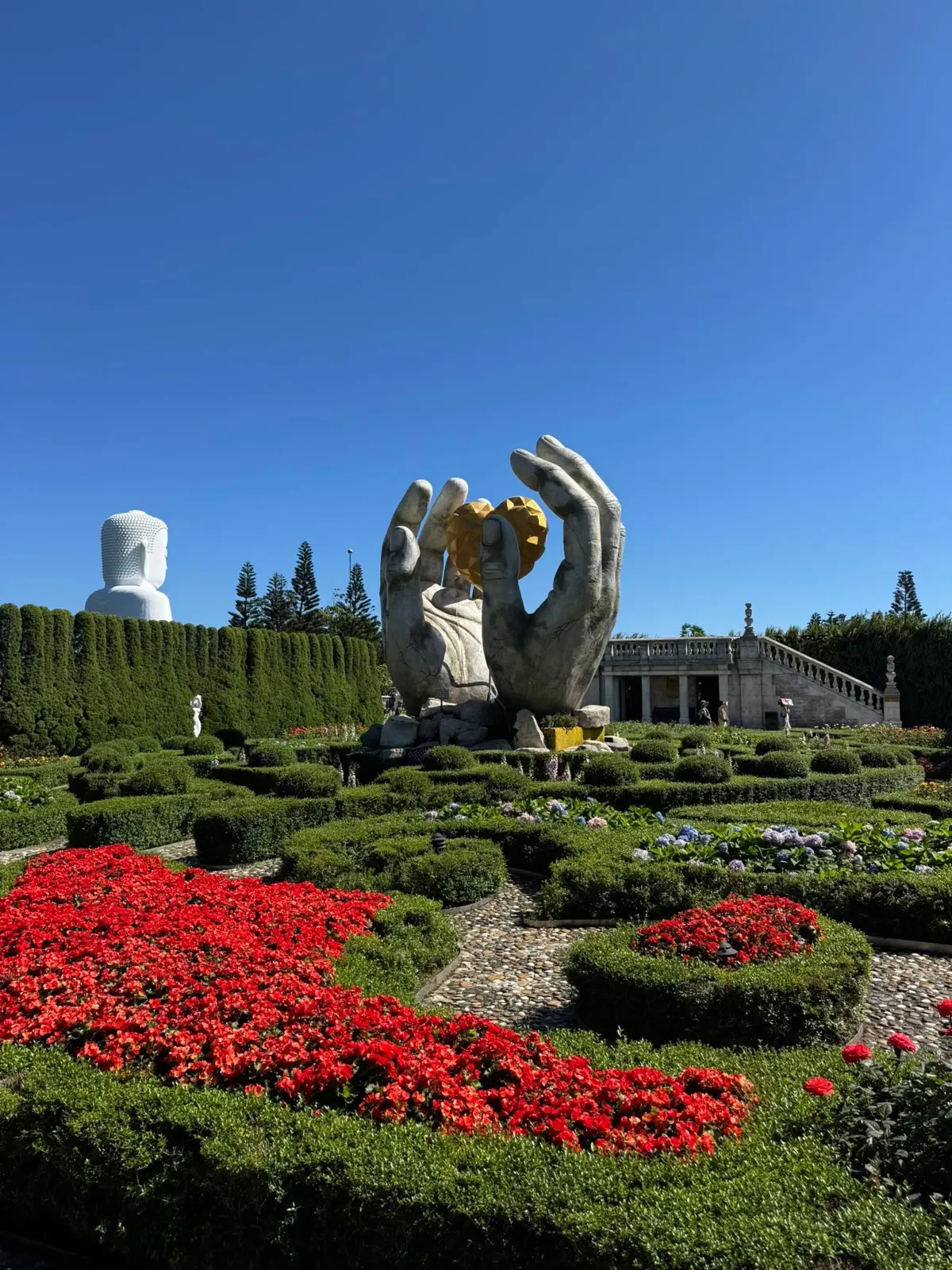
The Golden Bridge, or Cầu Vàng, stands as a prominent architectural feature within the Sun World Ba Na Hills complex near Da Nang, Vietnam. Since its public opening in 2018, this elevated pedestrian walkway has garnered international attention for its unusual design, appearing as though it is held aloft by two colossal stone-colored hands emerging from the mountainside. Visitors to Da Nang, often referred to as the "City of Bridges," frequently include this unique structure in their itineraries for its distinctive appearance and the sweeping views it offers over the surrounding landscape.
Understanding the Golden Bridge and Ba Na Hills
The Golden Bridge is situated within the Sun World Ba Na Hills complex, positioned at an elevation exceeding 1,400 meters on Nui Chua mountain. This location is specifically in An Son Hamlet, Hoa Ninh Commune, Hoa Vang District, Da Nang City. From this vantage point, on clear days, guests can observe the vast expanse of jungle and mountains, with the distant urban sprawl of Da Nang visible on the horizon. The bridge was conceived to connect the landscape between Marseille Station, Thien Thai Garden, and Le Jardin D’Amour Flower Garden, all components of the larger Ba Na Hills resort.
Ba Na Hills itself is located approximately 40 kilometers southwest of Da Nang's city center. It was originally established as a hill station in 1919 by French colonists seeking a cooler climate. Today, it operates as a comprehensive leisure destination, featuring diverse natural scenery, a world-class amusement park, and various architectural constructions. The area also holds spiritual significance, with the Thich Ca Mau Ni Buddha Statue of Linh Ung Pagoda in Ba Na Hills forming one point of a spiritual triangle with Linh Ung Pagoda on the Marble Mountains and Linh Ung Pagoda on But Beach of Son Tra Peninsula, said to protect Da Nang City. The Golden Bridge has received global recognition, including being listed by the US news site Insider as one of the world's notable bridges.
Architectural Design and Construction
Distinguished from other bridges in Da Nang, the Golden Bridge does not span a river but rather stretches across a mountain ridge. Its design evokes the image of a golden ribbon gracefully drawn from the mountain, supported by two immense, weathered hands. This striking visual was brought to life by TA Landscape Architecture for the investor, Sun Group, a Vietnamese enterprise with significant investments in tourism, entertainment, real estate, and construction.
The concept for the bridge originated from the idea of a structure held by a giant deity, a vision that resonated with the design team and the investor. Construction of the Golden Bridge took six months, from October 2017 to April 2018, with its public debut in June 2018. The project quickly garnered praise from major international news organizations such as Time, CNN, BBC, The New York Times, and The Guardian. The bridge measures 150 meters in length, comprising eight spans, seven pillars, and two abutments. Its total width is 5 meters, with a 3-meter-wide pedestrian walkway flanked by two 1-meter-wide flower beds. The foundation is reinforced concrete, while the pillars and supporting elements are steel pipes. The bridge's exterior is clad in gold-painted steel plate and polished gold-plated stainless steel railings, creating a radiant effect in sunlight. The walking surface is paved with natural sandalwood, chosen for its durability against the local weather conditions. The most recognized feature, the 'hands,' are not carved from natural rock but are constructed from tubular steel and grouted steel mesh, giving them their aged, rock-like appearance.
Planning Your Visit: Climate and Timing
The Ba Na Hills region experiences a generally cool climate throughout the year, making the Golden Bridge accessible in any season. The daily weather can be quite varied, with visitors potentially experiencing conditions akin to spring in the morning, summer at midday, autumn in the afternoon, and winter in the evening. Average temperatures typically hover around 20°C.
From April to September, the area often sees a higher volume of visitors, particularly domestic and Asian tourists on summer holidays. This period also coincides with school breaks in Vietnam, leading many families to popular attractions. Those who prefer a more energetic atmosphere may appreciate the opportunity to interact with a diverse crowd during these months. For a less crowded experience, weekdays or the cooler season from October to February are generally recommended. However, travelers should be aware that October and November mark the rainy season in Central Vietnam, which can bring heavy rainfall and potential flooding. To capture the most favorable views and photographs of the Golden Bridge, arriving early in the morning, shortly after opening, is often advised to avoid peak crowds.
Admission and Operating Information
Accessing the Golden Bridge requires a ticket to the Sun World Ba Na Hills Complex, as the bridge is an integral part of this larger resort. A single ticket provides entry to various attractions within the complex. The ticket price historically included several services designed to enhance the visitor experience:
- Two-way cable car journey to the mountain top.
- Tickets for the mountain climbing train.
- Entry to sites such as the French Village, Le Jardin Flower Garden, the Golden Bridge, Bich Hoa Street, Debay Wine Cellar, Sensory Garden, and the Spiritual Area.
- Access to over 100 indoor games at Fantasy Park, Vietnam's largest indoor amusement park, along with various festivals and musical performances.
As of January 1, 2020, the ticket prices were:
Adults and children above 1.4 meters: 750,000 VND per ticket
Children between 1 meter and 1.4 meters: 600,000 VND per ticket
Children under 1 meter: Free
Standard operating hours for the complex were typically from 07:00 to 22:00 daily. However, during specific periods, such as the Covid-19 pandemic, hours were temporarily adjusted to 08:00 to 17:00 daily. Visitors should always verify the most current ticket prices and operating hours directly with Sun World Ba Na Hills before planning their trip, as these details are subject to change.
Getting to the Golden Bridge
The Sun World Ba Na Hills complex, home to the Golden Bridge, is situated approximately 40 kilometers from the center of Da Nang City and about 60 kilometers from Hoi An Town. Several transportation options are available for reaching the complex's base station.
Travelers can opt for a motorbike, shared bus service, or a metered taxi for their transfer. For those preferring a private arrangement, various local tour operators and transport services can provide assistance. Once at the base, the journey to the Golden Bridge involves taking a cable car. The cable car ride from the initial station (Hoian Station) to Marseille Station, where the Golden Bridge is located, typically lasts around 17 minutes. This aerial journey offers expansive views of the surrounding mountains and valleys.
Essential Visitor Advice
To ensure a pleasant and safe visit to the Golden Bridge and the wider Ba Na Hills complex, consider the following recommendations:
- Environmental Responsibility: Please dispose of waste properly to help maintain the natural beauty and cleanliness of the area.
- Safety First: Avoid climbing on railings or leaning excessively over the bridge's edge. Always supervise young children closely during your visit.
- Weather Preparedness: Due to the variable mountain weather, it is advisable to carry a light raincoat for unexpected showers or cooler temperatures. Sunscreen, a hat or umbrella for sun protection, and comfortable walking shoes are also recommended.
- Food and Drink: Bringing outside food into the complex is generally not permitted. The Sun World Ba Na Hills complex features numerous restaurants and culinary spaces offering a variety of meal options for lunch or dinner.
- Photography: The Golden Bridge is a popular location for photography, including personal travel photos, wedding shoots, and even fashion editorials. Be prepared for crowds, especially during peak times, if you plan to capture specific shots.
For visitors managing their finances while exploring the region, understanding local banking services can be helpful. Information on banking services in Da Nang can assist with currency exchange and other financial needs during your stay.
Frequently Asked Questions
What is the Golden Bridge?
The Golden Bridge is a distinctive pedestrian bridge in Da Nang, Vietnam, known for its unique design featuring two giant hand sculptures appearing to hold up the golden-colored walkway. It is located within the Sun World Ba Na Hills complex.
Is the Golden Bridge a standalone attraction?
No, the Golden Bridge is part of the larger Sun World Ba Na Hills entertainment and resort complex. Visitors must purchase a ticket to the Ba Na Hills complex, which includes cable car access and entry to various other attractions, to reach the bridge.
What is the weather typically like at Ba Na Hills?
Ba Na Hills generally experiences a cool climate, with temperatures averaging around 20°C. The weather can change rapidly, sometimes offering four seasons in a single day. Visitors should be prepared for varying conditions, including potential rain or fog.
Are there dining options available at the Golden Bridge or Ba Na Hills?
Yes, the Sun World Ba Na Hills complex offers a wide array of restaurants and culinary spaces where visitors can purchase meals and refreshments. Bringing outside food into the complex is typically not allowed.
How long does the cable car ride to the Golden Bridge take?
The cable car journey from the Hoian Station to Marseille Station, which provides access to the Golden Bridge, takes approximately 17 minutes. This ride offers scenic views as it ascends the mountain.








