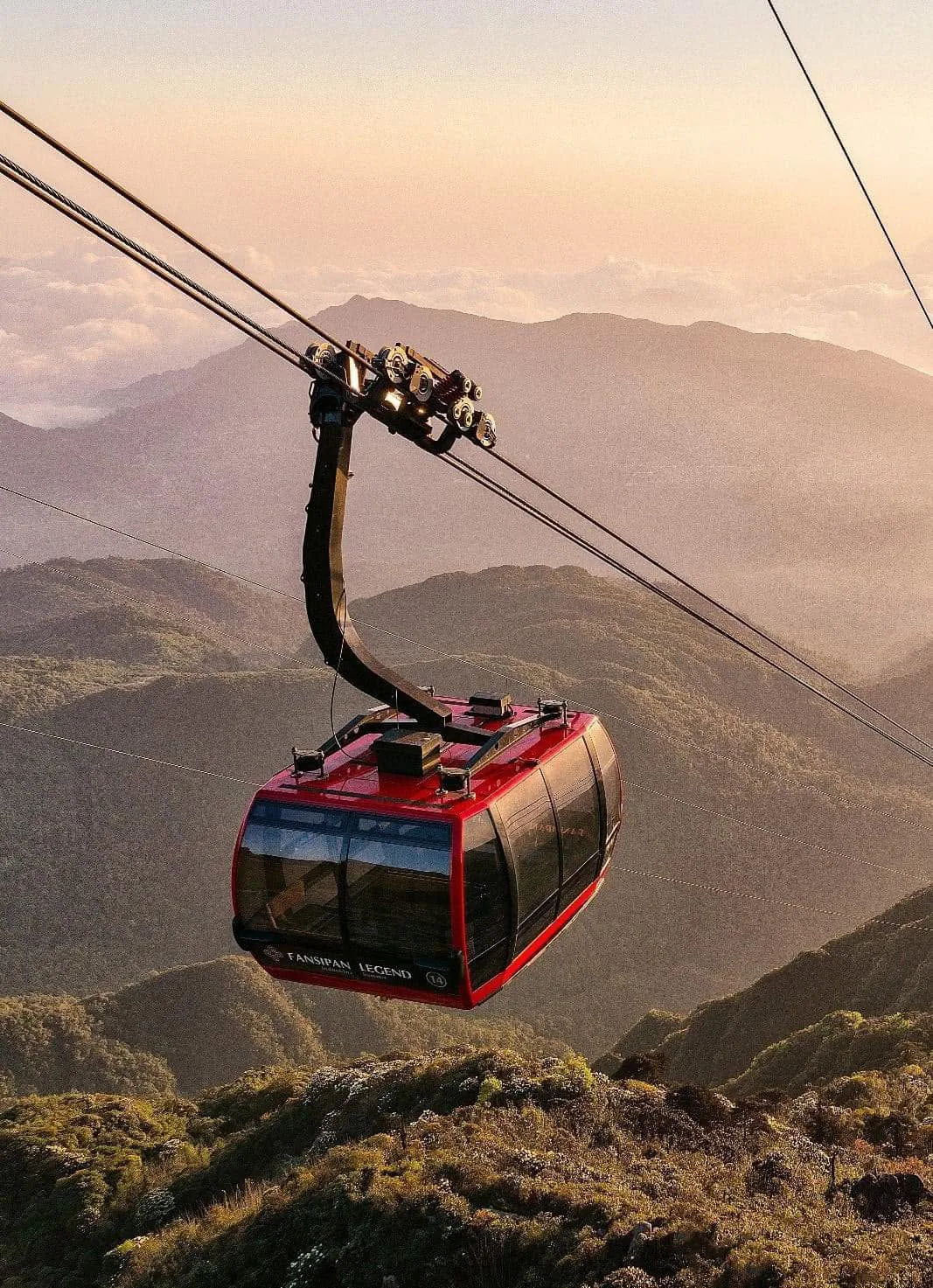
For visitors to Sapa aiming to reach the summit of Mount Fansipan, often called the 'rooftop of Indochina,' the cable car system provides a convenient and secure method. This aerial route allows travelers to reach the mountain's highest point in approximately fifteen minutes, a significant reduction compared to the one or two days typically required for a trek.
This guide offers comprehensive information regarding the Fansipan Cable Car, including its location, ticket pricing, operational schedules, transportation options to the station, and key attractions at the summit. Preparing with these details will help ensure a complete and enjoyable visit to Vietnam's tallest mountain.
Reaching the Summit of Fansipan by Cable Car
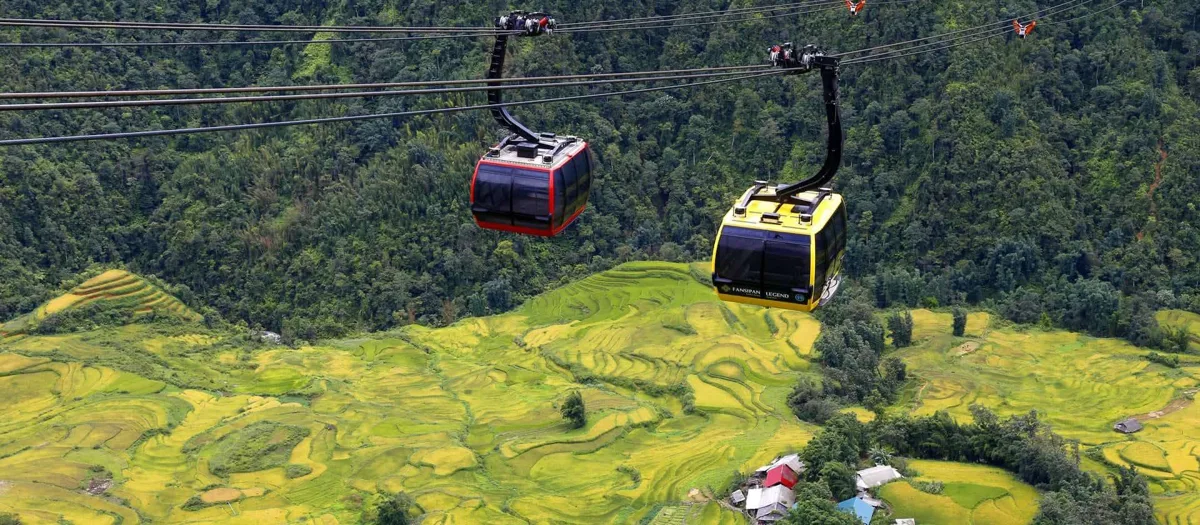
The journey to Fansipan's upper reaches is made efficient by the cable car, which covers a vertical distance of 1,400 meters in about 15 minutes. The starting point for this ascent is Hoang Lien Station, situated within the Fansipan Legend tourist area. This station is located approximately 3 kilometers from the Stone Church, a central landmark in Sapa town.
Each cable car cabin is designed to accommodate between 30 and 35 passengers, facilitating the transfer of up to 2,000 individuals per hour between the two stations. Upon arrival at the Fansipan cable car station, visitors have the option to continue their ascent by climbing approximately 600 stairs to reach the true peak of Fansipan and its iconic landmark. Alternatively, the Fansipan Funicular offers a shorter route to the summit. The Fansipan Legend complex itself presents various attractions, including the Bamboo Garden, Bao An Thien Tu, and Bich Van Thien, among others.
Ticket Information and Operating Hours
The SunWorld Group manages the pricing for Fansipan Cable Car tickets. The purchasing process is generally straightforward. Tickets are valid for a single day and must be retained carefully as they are required for return. Please note that a surcharge applies from January 1, 2025, to December 31, 2025.
Fansipan Cable Car Ticket Prices (All prices in VND)
| Service | Adult (>1.4m) Weekdays & Sunday | Children (1m-1.4m) Weekdays & Sunday | Adult (>1.4m) Saturday & Holiday | Children (1m-1.4m) Saturday & Holiday |
|---|---|---|---|---|
| Round Trip Cable Car | 800,000 | 550,000 | 850,000 | 550,000 |
| Applied for Buddhist | 680,000 | 480,000 | 680,000 | 480,000 |
| Muong Hoa Funicular (Round Trip) | 200,000 | 200,000 | 200,000 | 200,000 |
| Fansipan Funicular (Way-Up) | 150,000 | 150,000 | 150,000 | 150,000 |
| Fansipan Funicular (Way-Down) | 120,000 | 120,000 | 120,000 | 120,000 |
| Combo Cable Car + Buffet | 1,050,000 | 750,000 | 1,050,000 | 750,000 |
| Combo Cable Car + Buffet + Muong Hoa Funicular | 1,200,000 | 900,000 | 1,200,000 | 900,000 |
| Combo Cable Car + Dinner at Ban May (*) | 950,000 | 700,000 | 950,000 | 700,000 |
Note: (*) Minimum of 6 people per purchase, using cable car after 1 PM. Tickets are valid only for the selected visit date and are non-exchangeable or refundable. Children under 1 meter in height are not charged. Surcharge applies from January 1, 2025, to December 31, 2025.
Fansipan Cable Car Operating Hours (Applicable from February 28, 2025, until further notice)
Note: Schedules are subject to change due to weather conditions; notifications will be provided in advance when possible.
| Service | Monday - Thursday (To Fansipan / Last to Sapa) | Friday (To Fansipan / Last to Sapa) | Saturday (To Fansipan / Last to Sapa) | Sunday (To Fansipan / Last to Sapa) |
|---|---|---|---|---|
| Muong Hoa Funicular | 07:45 – 14:15 / 16:30 | 07:45 - 15:15 / 17:30 | 07:15 - 15:15 / 17:30 | 07:15 - 14:15 / 16:30 |
| Cable Car | 08:00 – 14:30 / 16:00 | 08:00 - 15:30 / 17:00 | 07:30 - 15:30 / 17:00 | 07:30 - 14:30 / 16:00 |
| Fansipan Funicular | 08:30 – 15:00 / 15:30 | 08:30 - 16:00 / 16:30 | 08:00 - 16:00 / 16:30 | 08:00 - 15:00 / 15:30 |
Ticketing and Restaurant Hours
| Location | Monday - Thursday | Friday | Saturday | Sunday |
|---|---|---|---|---|
| Sapa Station Ticketing | 07:30 - 14:00 | 07:30 - 15:00 | 07:00 - 15:00 | 07:00 - 14:00 |
| Hoang Lien Station Ticketing | 07:45 - 14:15 | 07:45 - 15:15 | 07:15 - 15:15 | 07:15 - 14:15 |
| Van Sam Restaurant (Buffet) | 11:00 - 15:00 | 11:00 - 15:00 | 11:00 - 15:00 | 11:00 - 15:00 |
| Rose Restaurant (Buffet/Set Menu) | 11:00 - 15:00 | 11:00 - 15:00 | 11:00 - 15:00 | 11:00 - 15:00 |
| Dinner Cuisine at May Village (Buffet/Set Menu/BBQ) | 17:30 - 20:00 | 17:30 - 20:00 | 17:30 - 20:00 | 17:30 - 20:00 |
Tickets for the Fansipan Cable Car can be purchased directly at the station. However, for a more streamlined experience, particularly during busy periods, booking in advance through a travel agent is often recommended. This approach can help reduce waiting times and secure your reservation. For those interested in exploring more of Sapa's surrounding areas, booking a package tour that includes visits to local villages before ascending the mountain is a popular choice.
Getting to the Fansipan Cable Car Station
Reaching the Hoang Lien Cable Car Station involves travel from Hanoi to Sapa, followed by a shorter journey from Sapa town itself. The distance between Hanoi and Sapa is approximately 332 kilometers, with several transportation options available.
From Hanoi to Sapa
- Car: For a quicker transfer, a private car journey takes about 4 hours. Costs typically range from US $110 to $200 per person.
- Bus: Sleeper buses offer an economical option for budget-conscious travelers, with fares around US $15 to $20 per person, depending on amenities. The travel time is approximately 5 hours.
- Train: The train journey, lasting about 8 hours, is a favored choice for those who appreciate observing the countryside's scenery during their transit. For more detailed information on routes, fares, and comfort, consider exploring resources on overnight rail journeys in Vietnam.
From Sapa Town to Hoang Lien Cable Car Station
Once in Sapa town, several local transportation methods can take you to the cable car station:
- Taxi: A taxi ride to Hoang Lien Station is the fastest option, taking around 10 minutes. Taxi fares in Sapa are typically around 17,000 VND per kilometer, which is higher than the average 10,000 VND to 12,000 VND per kilometer found elsewhere.
- On Foot: Travelers can walk to Hoang Lien Station, a route that offers views of Sapa's landscape. From Sapa Church, proceed towards the Silver Falls crossroads, then turn left onto Nguyen Chi Thanh and continue straight for about 1.7 kilometers until you reach Fansipan Legend. The path is generally well-marked.
- Mountain Train: A mountain train provides a convenient connection from the MGallery hotel in Sapa directly to the Fansipan cable car terminal. This railway is recognized as the longest mountain railway in Vietnam. The train passes through tunnels and over a viaduct, offering passengers expansive views of the Muong Hoa Valley and local villages.
Key Features and Attractions at Fansipan Legend
The Fansipan Cable Car system and the surrounding Fansipan Legend complex offer a range of experiences beyond just reaching the mountain's peak.
World Records and Accessibility
The Sunworld Fansipan Legend Cable Car System holds two world records: it is the longest three-line cable car system, measuring 6292.5 meters, and boasts the highest altitude difference globally at 1410 meters. Before its construction, reaching Fansipan Peak typically required at least a full day of arduous trekking, often necessitating months of physical preparation. The cable car has transformed this experience, allowing many more visitors to achieve the aspiration of standing on Indochina's highest point within a mere 20 minutes.
Panoramic Views and Photo Opportunities
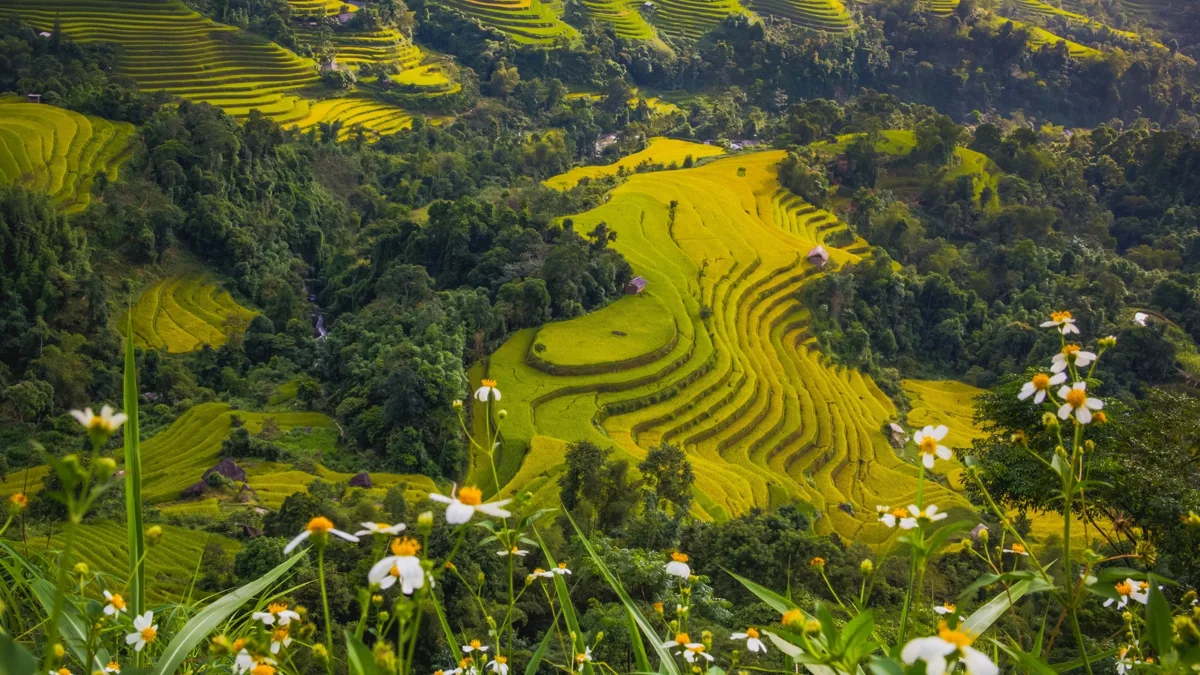
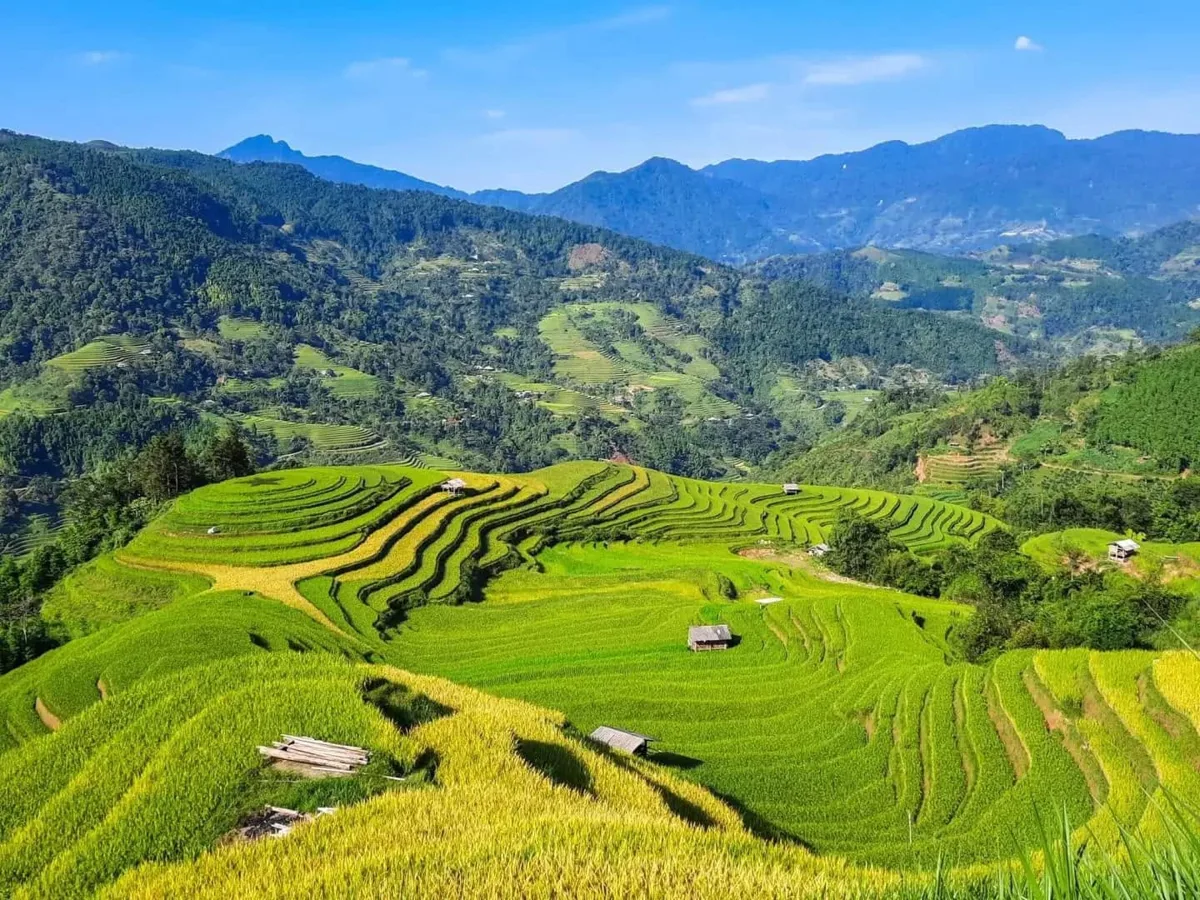
During the cable car ascent, passengers are afforded sweeping views from several thousand meters above the ground. This includes the Muong Hoa Valley and the Hoang Lien Son mountain range. The journey provides a 360-degree panorama of the landscape, encompassing terraced rice fields and small towns, creating a perception of Sapa as a tranquil haven amidst the clouds. The cable car stations and the surrounding complex also feature intricate artwork and cultural elements, providing excellent locations for photography that reflect the essence of Vietnamese culture and the North West region.
Top Attractions at Fansipan
Beyond the summit itself, the Fansipan Legend complex offers a variety of cultural, spiritual, and natural points of interest:
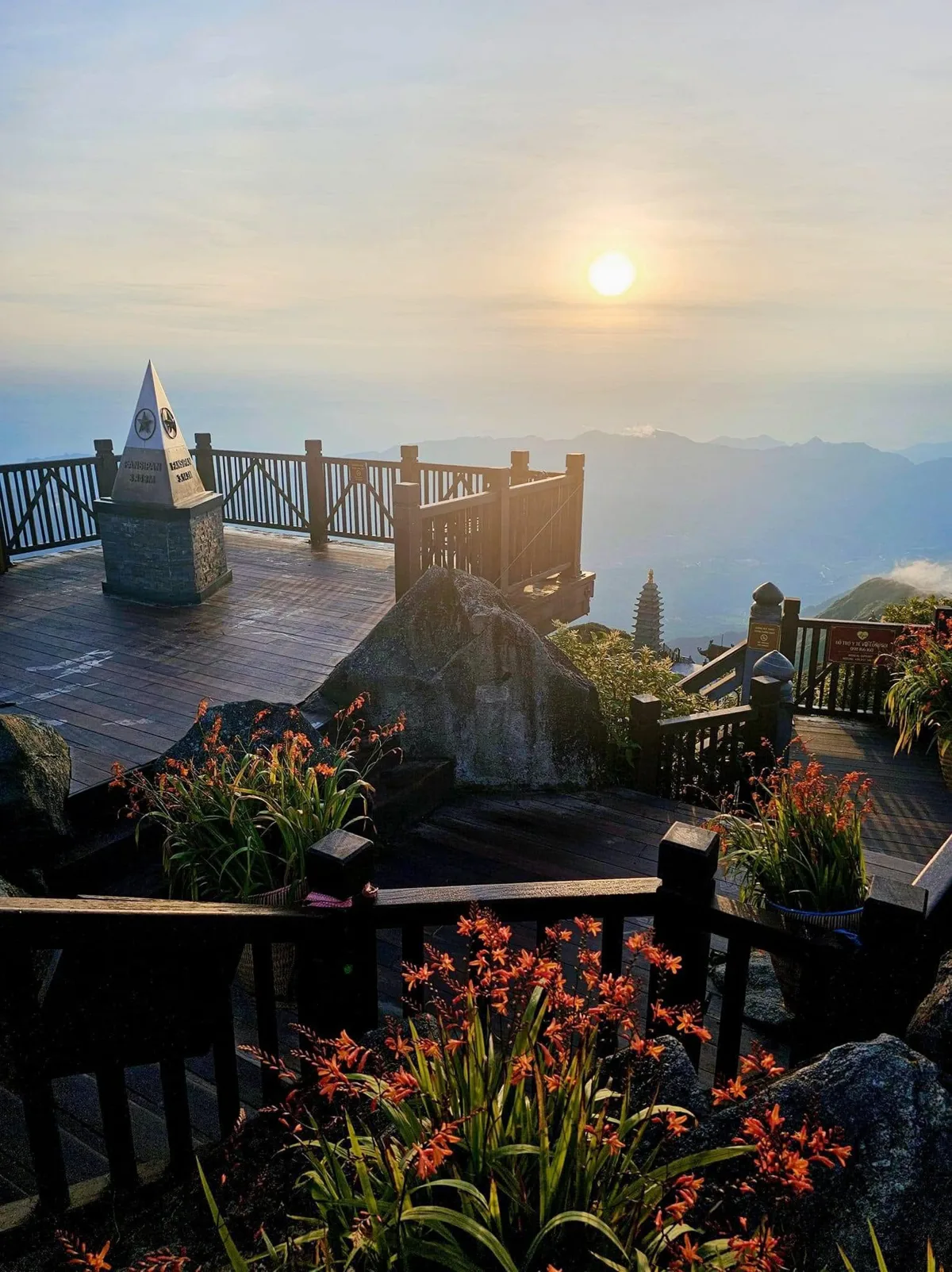
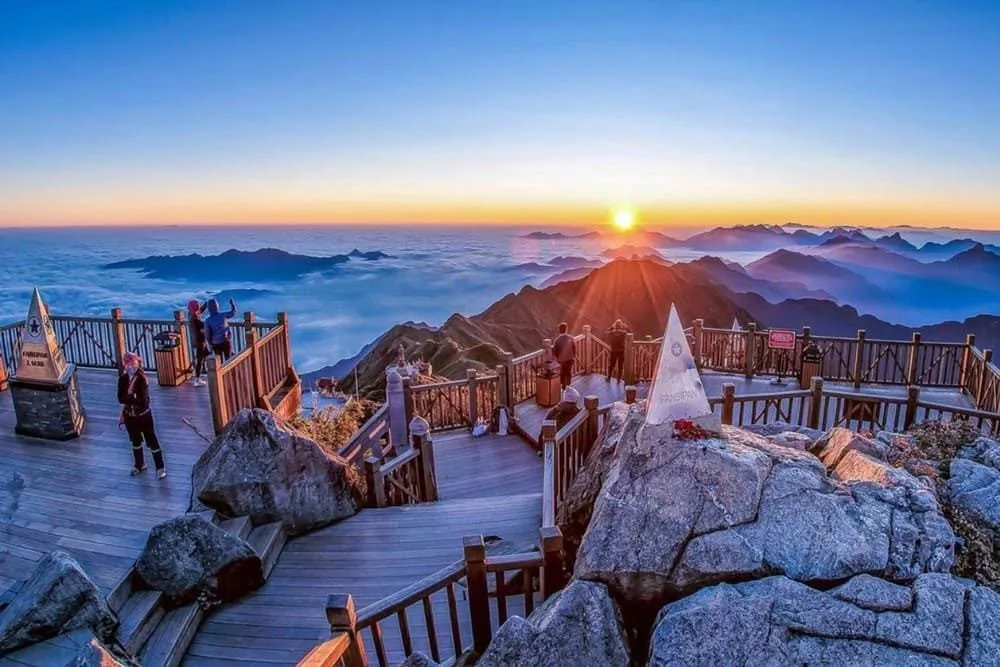
- Fansipan Summit (3,147m): The highest point in Indochina, marked by an iconic triangular landmark. Reaching it involves climbing approximately 600 steps from the cable car station or taking the funicular for a shorter path. Views extend across the Hoang Lien Son range and Muong Hoa Valley, often shrouded in clouds.
- Bamboo Garden (Vuon Tre): A serene area with winding paths through dense bamboo groves, offering a peaceful retreat and photo opportunities, especially when mist is present.
- Bao An Thien Tu Pagoda: A pagoda built in traditional Vietnamese architectural style, serving as a peaceful spot for prayer and offering views of the misty mountains.
- Bich Van Thien Tu: A smaller temple located midway, providing a balance of cultural insight and natural scenery, often used as a resting point.
- Kim Son Bao Thang Pagoda: The largest spiritual complex on Fansipan, featuring ornate shrines, bronze statues, and stone towers, known for its sacred atmosphere, particularly when enveloped by clouds.
- Great Amitabha Buddha Statue: A bronze Buddha statue standing 21.5 meters tall, the largest of its kind in Vietnam, symbolizing peace and enlightenment.
- Guan Yin Statue: An elegant statue of the Goddess of Mercy, a site for prayers and admired for its serene beauty against the mountain backdrop.
- Do Quyen Station & Funicular Ride: The final funicular stop before the summit, offering an alternative to the 600-step climb. The funicular ride itself presents panoramic mountain views.
- Heavenly Garden & Cloud Hunting Spots: Various viewing platforms and gardens ideal for relaxation and photography. Sunrise and sunset are particularly popular for capturing the famous 'sea of clouds.'
- Muong Hoa Valley Viewpoints: Terraces and walkways provide opportunities to observe the Muong Hoa Valley below, with its rice terraces, villages, and rivers, showcasing one of Vietnam's most scenic landscapes.
Essential Travel Advice for Fansipan
A visit to Fansipan requires some preparation to ensure a comfortable and safe experience, especially given the mountain's altitude and variable weather conditions.
Health Considerations
The ascent to over 3,000 meters, combined with high humidity and potentially reduced oxygen levels, means that individuals with pre-existing heart or lung conditions should exercise caution and ideally consult a medical professional before undertaking the trip. Should any unusual symptoms, such as breathing difficulties, arise during the visit, it is important to alert station staff immediately for assistance. For general health inquiries or medical needs during your stay in the region, information on Sapa healthcare services is available.
Packing and Attire
It is advisable to bring snacks and drinks, as provisions on the mountain tend to be more expensive. Dressing in layers is recommended, allowing for adjustments as temperatures change. Warm clothing, including gloves, a towel, and a woolen hat, is particularly useful for morning or late afternoon cable car rides. If you plan to climb the 600 steps to the peak from Do Quyen Station, comfortable and sturdy walking shoes are essential.
Optimal Visiting Times
The most favorable periods for experiencing the Fansipan cable car are typically from March to May and from October to November. During these months, the climate is generally mild and pleasant, suitable for outdoor pursuits like hiking. For clearer views and fewer crowds, aim for morning departures, ideally before 9:30 AM. Avoiding late afternoons in winter is suggested due to colder temperatures and potential fog.
Weather and Visibility
Temperatures at Fansipan Peak vary significantly with altitude. In summer, temperatures typically range from 5°C (41°F) to 25°C (77°F), while winter sees temperatures between 0°C (32°F) and 9°C (48°F). Humidity levels are consistently high, ranging from 66% to 95%, with distinct wet (June-August) and dry (December-February) seasons. Fog and heavy mist are common, especially from January to February and July to August, which can obscure panoramic views. Checking weather forecasts before your trip is crucial for appropriate preparation.
Crowd Management and Facilities
Weekends and Vietnamese public holidays (such as Tet, April 30 – May 1, and September 2) are the busiest times, often resulting in extended queues for the cable car, potentially up to 1-2 hours. For a quieter experience, consider visiting on weekdays during spring or autumn. Early mornings (8–10 AM) and late afternoons (after 3 PM) generally see fewer people. Both the bottom and summit cable car stations are equipped with restaurants, souvenir shops, restrooms, and luggage counters. Free WiFi is available at the Fansipan Legend station and the summit complex. For managing finances during your visit, information on banking facilities in Sapa can be helpful.
Accessibility and Parking
The funicular train from Do Quyen Station offers a way for elderly or disabled travelers to get closer to the summit, bypassing the 600 steps. However, there is no elevator directly to the very top, meaning some steps are unavoidable. Wheelchair accessibility is limited in the higher sections, but the main cable car and lower complexes are generally manageable. For those arriving by motorbike or car, paid parking is available at Fansipan Legend Station, with motorbikes costing approximately 10,000–20,000 VND per day and cars around 50,000 VND per day. The station is a short 3-4 kilometer drive (about 10 minutes by taxi) from Sapa town.
Suggested Sapa and Fansipan Itinerary (2-4 Days)
To fully appreciate the Fansipan Cable Car and other highlights of Sapa, a stay of 2 to 4 days in the area is often recommended. Here is a suggested itinerary to help plan your trip:
Day 1: Trekking Tour to Cat Cat Village
Begin your journey with a morning bus ride from Hanoi to Sapa. After settling into your accommodation, spend the afternoon on a 3-kilometer trek to Cat Cat Village. This provides an opportunity to observe the daily life and cultural traditions of the Hmong ethnic group. Conclude the day by returning to Sapa town center.
Day 2: Conquer Mount Fansipan
Dedicate a full day to ascending Mount Fansipan and experiencing the cable car. Head to the Fansipan Cable Car station in the early morning. After approximately 30 minutes by cable car, you can choose to climb the 600 steps to the summit or take an additional funicular ride to the very top.
Day 3 - 4: Explore Sapa’s Highlights
Spend the remaining days exploring more of Sapa's cultural and natural attractions, such as Ta Phin, Lao Chai, and Ta Van Villages, which are home to various local ethnic communities.
- Ta Phin Village: Known for its Red Dao community, this village offers insights into local heritage and opportunities for cultural interaction.
- Lao Chai Village: Located 6 kilometers from the town center, this village is inhabited by the Giay and Black H'mong communities and marks the beginning of the Muong Hoa Valley. Visitors can enjoy fresh air, terraced fields, and local hospitality.
- Ta Van Village: Situated adjacent to Lao Chai, Ta Van is home to Giay, H'mong, and Red Dao ethnic groups. Beyond its cultural aspects, the village is noted for the Muong Hoa Stream and May Bridge.
After exploring these locations and engaging with the local culture and natural surroundings, you will have experienced a comprehensive overview of Sapa and its iconic mountain.
Frequently Asked Questions about Fansipan Cable Car
How long does the Fansipan Cable Car ride take?
The cable car journey typically lasts between 15 and 20 minutes, covering a distance of 6.3 kilometers and ascending 1,410 meters in altitude.
How many people fit in one cabin?
Each cable car cabin is designed to hold 30 to 35 passengers, accommodating both individuals and groups.
Is it necessary to book cable car tickets in advance?
Booking tickets online or through travel agents is advised for weekends, holidays, or peak seasons to avoid potentially long queues. During weekdays, purchasing tickets directly at the station is usually sufficient.
What are the Fansipan Cable Car opening hours?
Operating hours vary slightly depending on the day of the week, with the last ride towards Fansipan typically between 07:30 and 15:30, and closing around 17:00. It is always recommended to check the most current schedule, as operations can be affected by weather conditions.
Is the cable car suitable for children and seniors?
The Fansipan Cable Car system is modern, secure, and generally suitable for all age groups. However, seniors, infants, or individuals with heart or lung conditions should seek medical advice from their doctor before traveling, due to the thinner air at altitudes exceeding 3,000 meters.
What is the best time of year to visit Fansipan by cable car?
The most pleasant weather for a visit is typically during spring (March to May) and autumn (October to November). These periods often feature clearer skies, which provide optimal viewing conditions.
How many steps are there from the cable car station to the summit?
From the upper cable car station to the actual peak of Fansipan, there are approximately 600 stone steps.
Can I bring food or drinks onto the cable car?
Yes, bringing snacks and water is permitted and advisable, as food and beverage prices at the summit tend to be higher than in Sapa town.
Are drones allowed at Fansipan?
Generally, the use of drones is restricted at Fansipan Peak and within the Sun World Fansipan Legend complex due to safety, weather, and operational regulations. Visitors should consult local authorities or staff for current rules before bringing a drone.