
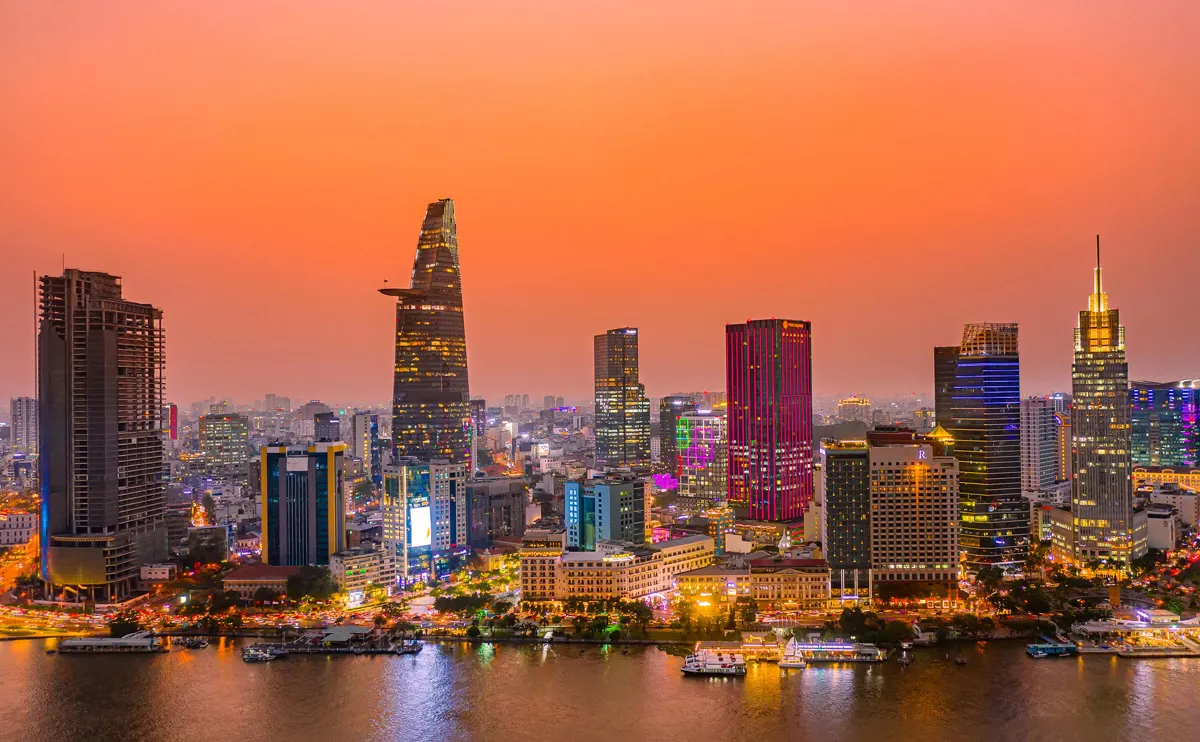
Ho Chi Minh City, often referred to by its former name Saigon, stands as Vietnam's most populous urban center and a significant hub for both culture and economy. Millions of visitors are drawn to this metropolis annually, seeking to experience its dynamic character. This guide provides essential information on the city's background, climate, notable places, and lodging choices to assist with travel preparations.
Geographical Context and Urban Layout
Ho Chi Minh City is positioned along the Saigon River, approximately 60 kilometers from the South China Sea and about 1,760 kilometers south of Vietnam's capital, Hanoi. Its geographical boundaries include Tay Ninh and Binh Duong provinces to the north, Dong Nai and Ba Ria – Vung Tau provinces to the east, and Long An Province to the west. To the south, it meets the South China Sea with a coastline stretching 15 kilometers.
As the largest and most densely populated city in Vietnam, Ho Chi Minh City spans an area exceeding 2,061 square kilometers and is home to an official population of over nine million residents. The city is administratively divided into 19 districts and five additional suburban districts. District 1, situated beside the Saigon River, forms the central downtown area. This district is recognized as the commercial heart of the city and hosts a majority of its historical monuments and significant landmarks.
Tracing Ho Chi Minh City's History
The origins of Ho Chi Minh City date back to 1698 when it was first established as an administrative unit under the Nguyen Dynasty, then known as Saigon Gia Dinh. During this period, it attracted settlers from across the country who came to cultivate the land and establish communities. In the mid to late 19th century, under French colonial rule, the city transformed into the primary urban center of Cochin China.
From 1956 until 1975, Saigon functioned as the capital of South Vietnam, led by anti-communist figures such as Ngo Dinh Diem and subsequent American-supported administrations. A pivotal moment occurred on April 30, 1975, when forces aligned with Ho Chi Minh successfully overthrew the South Vietnamese government, leading to the reunification of the nation. In July 1976, the city was officially renamed Ho Chi Minh City, honoring the influential leader of Vietnamese Communism. Over its more than 300 years of development, Ho Chi Minh City has evolved into a leading center for commerce, economy, education, science, and technology. It also remains a popular destination for travelers, celebrated for its rich culture, preserved French colonial architecture, modern high-rises, and traditional temples and pagodas.
Climate Patterns and Ideal Travel Periods
Ho Chi Minh City experiences a tropical monsoon climate, characteristic of its proximity to the equator, resulting in consistently high temperatures throughout the year. The city's weather cycle is defined by two distinct seasons: a dry season and a rainy season.
The dry season typically spans from December through April. Conversely, the rainy season commences in late May and extends until November. Visitors can expect the months of April and May to be particularly warm, while slightly cooler conditions are generally observed around December and January. For those planning a trip, considering these seasonal variations can help in deciding the most comfortable time to visit this expansive city.
Notable Attractions and Cultural Sites
Ho Chi Minh City presents a blend of historical preservation and contemporary development, where French-era boulevards and colonial structures coexist with modern skyscrapers. This creates a dynamic urban environment that captivates many visitors. The city offers a range of experiences, from reminders of the Vietnam War to ancient temples and lively traditional markets.
To assist in exploring the city's many points of interest, consider visiting these prominent locations:
- Saigon Notre Dame Cathedral: A significant architectural landmark reflecting French colonial influence.
- Saigon Central Post Office: Another example of French colonial design, still a functioning post office.
- Independence Palace: A historical site that served as the home and workplace of the President of South Vietnam.
- Ben Thanh Market: A central marketplace offering a variety of goods, from food to souvenirs.
- FITO Museum (Museum of Traditional Vietnamese Medicine): Showcases the history and practices of traditional Vietnamese medicine.
- Saigon’s Chinatown (Cho Lon): A historic district with a distinct cultural atmosphere, featuring temples, markets, and traditional architecture.
- Fine Arts Museum: Houses a collection of Vietnamese art across various periods.
- Ho Chi Minh City War Remnants Museum: Provides accounts and exhibits related to the Vietnam War.
- Cu Chi Tunnels: A network of underground tunnels used by Viet Cong soldiers during the war, located outside the city.
Accommodation Choices in Ho Chi Minh City
Selecting lodging in Ho Chi Minh City offers a broad spectrum of options, from budget-friendly rooms to luxurious suites. The most sought-after hotels are frequently found around Dong Khoi Street, situated within the city center. This area is known for its convenient access to many urban amenities and attractions.
For travelers seeking more economical stays, the vicinity of Pham Ngu Lao, De Tham, and Bui Vien Streets serves as a primary budget hub. While this area is approximately one kilometer west of the main city center, it remains well-connected to most major points of interest. Additionally, dining establishments, bars, and retail outlets in this district often feature more accessible pricing. Those desiring a premium experience can explore the numerous five-star hotels available throughout Ho Chi Minh City. Visitors should also consider the ease of managing their finances while traveling, with many banking services available in Ho Chi Minh City for travelers.
Frequently Asked Questions
What is the best way to get around Ho Chi Minh City?
Ho Chi Minh City offers various transportation methods. Taxis and ride-hailing apps like Grab are widely available and convenient. Motorbike taxis are also common for shorter distances. For a unique experience, cyclo (pedicab) rides are popular in tourist areas. Public buses cover extensive routes, offering an economical option for navigating the city.
Is Ho Chi Minh City suitable for family travel?
Yes, Ho Chi Minh City can be a great destination for families. Many attractions, such as the War Remnants Museum (for older children), the Independence Palace, and various parks, offer engaging experiences. The city also has numerous dining options that cater to different tastes, and some hotels provide family-friendly amenities. Planning activities that balance historical sites with lighter entertainment can ensure an enjoyable trip for all ages.
What local dishes should I try in Ho Chi Minh City?
Ho Chi Minh City is renowned for its diverse culinary scene. Essential local dishes to sample include Pho (noodle soup), Banh Mi (Vietnamese baguette sandwich), Com Tam (broken rice with grilled pork), Banh Xeo (savory pancake), and Goi Cuon (fresh spring rolls). Street food stalls and local eateries provide authentic flavors at reasonable prices. Exploring the city's food scene is a highlight for many visitors.
How does Ho Chi Minh City compare to Hanoi?
While both are major Vietnamese cities, Ho Chi Minh City and Hanoi offer distinct atmospheres. Ho Chi Minh City is often described as more modern, energetic, and commercially focused, with a faster pace of life. It retains a French colonial architectural legacy but has a more contemporary feel. Hanoi, the capital, is generally perceived as more traditional, with a greater emphasis on ancient history, tranquil lakes, and a slower, more elegant charm. Both cities provide rich cultural experiences but appeal to different preferences. For those traveling between the two, overnight rail journeys in Vietnam offer a comfortable way to cover the distance.
What currency is used in Ho Chi Minh City and how can I manage my money?
The official currency in Ho Chi Minh City, and throughout Vietnam, is the Vietnamese Dong (VND). Major credit cards are accepted at larger hotels, restaurants, and shops, but cash is essential for smaller purchases, street food, and local markets. ATMs are widely available across the city for cash withdrawals. It is advisable to carry a mix of cash and cards and to inform your bank of your travel plans to avoid issues with card usage.








