
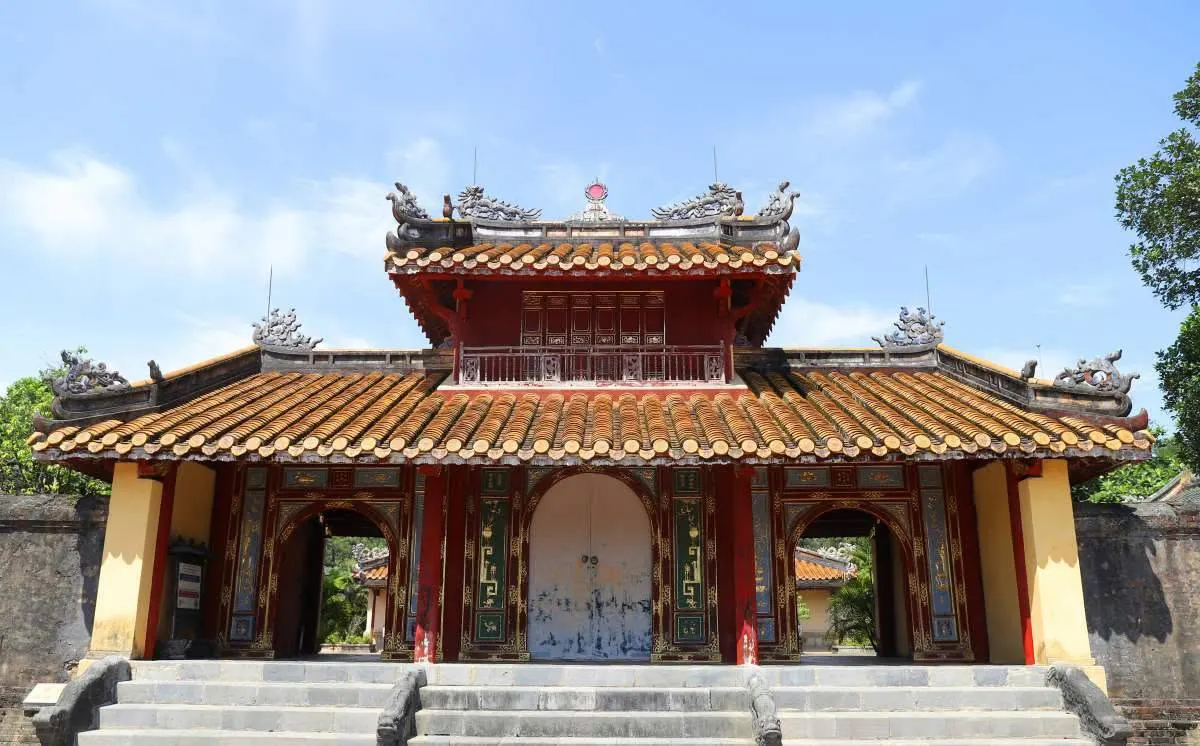
Hue, situated in Central Vietnam, holds significant historical importance as the former capital for nearly 400 years, from 1558 to 1945. It served as the seat for nine Nguyen Lords and thirteen Nguyen Kings, leaving behind a legacy of impressive feudal structures and a rich cultural heritage. The city is characterized by its tranquil setting along the Perfume River, surrounded by natural landscapes that contribute to its unique appeal, featuring palaces, temples, and royal mausoleums.
This destination is particularly appealing to those interested in Vietnamese history and traditional architecture. The blend of natural beauty with centuries of imperial influence makes Hue a distinctive stop for travelers exploring the country's central region.
Understanding Hue's Climate and Travel Logistics
Hue experiences warm and humid conditions throughout the year, with summers often feeling warmer than in other Vietnamese cities due to its geographical position and the influence of south-westerly winds from Laos. The city generally has two main periods: a dry season and a rainy season. The Perfume River maintains its green appearance year-round.
The most favorable period to visit Hue is typically from February to April, when the climate is generally pleasant, with average temperatures around 22°C, making outdoor activities comfortable. Travelers can still visit between May and August, though temperatures average around 30°C. The rainy season, from September to December, should generally be avoided, especially from October onwards, when floods are common and temperatures drop to approximately 20°C, with frequent, prolonged rainfall potentially affecting travel plans.
Getting to Hue from Major Vietnamese Cities
Hue is located approximately 700 kilometers south of Hanoi and about 1100 kilometers north of Ho Chi Minh City (Saigon), positioned on the Perfume River a few kilometers inland from the East Sea. Various transportation methods are available depending on your starting point and preferences.
- By Air: Phu Bai Airport (HUI) is Hue's airport, located about 15 kilometers from the city center. Direct flights are available from Hanoi and Ho Chi Minh City, operated by carriers such as Vietnam Airlines and Vietjet Air. Flights typically last over an hour, with reported ticket prices ranging from 70 USD to 120 USD. Booking in advance is advisable due to limited daily flights.
- By Train: An overnight train journey from Hanoi to Hue takes approximately 13 hours. Services like Livitrans offer first-class sleeper coaches with departures typically around 19:25 and 22:15, arriving in Hue the following morning. From Ho Chi Minh City or other locations across Vietnam, the Reunification Express train provides a scenic route, making several stops along the North-South railway line. Traveling by train offers views of the landscape, notably when passing through the Hai Van Pass. For more details on overnight rail journeys in Vietnam, consult a dedicated guide.
- From Da Nang and Hoi An: Hue is easily accessible from Da Nang (approximately 100 kilometers) and Hoi An (around 120 kilometers). Options include taxis, local buses, or motorbikes, with travel times typically ranging from 2 to 3 hours. For a more flexible and comfortable experience, particularly to drive over the Hai Van Pass with its mountain and ocean views, booking a private car through a local travel agent is often recommended. Taxis and buses generally use tunnels to save time.
Exploring Hue's Historical Sites and Landmarks
Hue is home to several significant historical attractions, many of which are recognized by UNESCO. These sites offer insights into Vietnam's imperial past and architectural traditions.
Hue Imperial Citadel
Designated a UNESCO World Heritage Site, the Hue Imperial Citadel served as a fortified palace complex and the capital of the Nguyen Dynasty for 140 years, from 1805 to 1945. Construction began in 1805 under Emperor Gia Long and was completed in 1832 during Emperor Minh Mang's reign. This extensive complex, covering 520 hectares on the north bank of the Perfume River, comprises three concentric ramparts: the Capital Citadel, the Royal Citadel, and the Forbidden Citadel. While many structures have been carefully restored, parts of what was once the Purple Forbidden City are now agricultural land. This site is ideal for visitors seeking to understand Vietnamese history and unique architectural styles.
- Location: Right on Perfume River, Hue City center.
- Entrance fee: 200,000 VND per visitor.
- Opening time: 6:30am – 17:00pm (summer), 7:00am – 17:00pm (winter).
Thien Mu Pagoda
Also known as Linh Mu Pagoda, Thien Mu Pagoda is among Hue's most ancient and revered pagodas. It is situated on Ha Khe hill, on the north bank of the Perfume River, in Huong Long village, approximately 5 kilometers from Hue city. The pagoda's name is linked to a local legend about an old woman who appeared on the hill, prophesying the construction of a Buddhist pagoda by a future lord for national prosperity. Lord Nguyen Hoang, upon hearing this, ordered its construction. The pagoda offers views of the Perfume River and surrounding areas, enhanced by pine trees, bonsai, and a pond, creating a peaceful atmosphere. Early morning or late afternoon visits are suggested to observe daily activities or enjoy the sunset. Visitors should dress respectfully, avoiding short skirts or tank tops, as entry to the main hall Dai Hung may be restricted for those wearing such attire.
- Location: Huong Hoa, Hue City, Thua Thien Hue.
- Entrance fee: Free.
- Opening time: 8:00am – 18:00pm.
Imperial Tombs of Hue
South of Hue city, along the Perfume River, lie the imperial tombs of the Nguyen Emperors. These sites are accessible by bicycle, motorbike, private car, or by taking a river boat cruise for a more immersive experience.
- Tomb of Minh Mang: Located 12 kilometers from Hue city center, this opulent complex features main buildings arranged along an east-west axis, including a courtyard with warrior statues, temples, and pavilions. Bridges span two lakes before reaching the large burial mound. The mausoleum is surrounded by extensive gardens and lakes, offering a tranquil setting.
- Location: Huong Tho, Huong Tra, Thua Thien Hue.
- Entrance fee: 150,000 VND per visitor.
- Opening time: 7:00am – 17:30pm.
- Tomb of Tu Duc: Constructed between 1864 and 1867, this complex, 7 kilometers from Hue, served as a retreat for Emperor Tu Duc. Its design reflects his contemplative and poetic nature, with a sprawling layout around a lake, featuring wooden pavilions, tombs, and temples dedicated to his consorts. While some areas are well-preserved, others, like the courtesans' quarters, are in ruins. The Emperor's own tomb is notably modest.
- Location: Thuong Ba, Hue City, Thua Thien Hue.
- Entrance fee: 150,000 VND per visitor.
- Opening time: 7:00am – 17:30pm.
- Tomb of Khai Dinh: Dating from 1925, this tomb, 10 kilometers from Hue, is considered the best preserved among the imperial mausoleums. Though relatively compact, it presents a grand appearance, following the classic layout of courtyards leading to the Emperor's tomb, complete with attendant statues. European influences are apparent in its architecture. The tomb's interior is adorned with detailed and opulent mosaics of dragons. Visiting early is recommended to avoid large tour groups. A small temple on a nearby hill offers views of the tomb and its valley.
- Location: Khai Dinh, Thuy Bang, Huong Thuy, Thua Thien Hue.
- Entrance fee: 150,000 VND per visitor.
- Opening time: 7:00am – 17:30pm.
Dong Ba Market
As Hue's oldest market, Dong Ba Market provides a glimpse into local daily life and serves as a shopping destination. Visitors can explore various street foods and purchase souvenirs, including handicrafts, garments, footwear, and jewelry. The market offers a comprehensive local experience.
- Location: 2 Tran Hung Dao, Phu Hoa, Hue City.
- Opening time: 6:00am – 18:00pm.
Where to Stay in Hue: Accommodation Options
Hue has become a popular destination, offering a wide range of accommodations to suit various budgets and preferences, from economical to luxurious. Here is a selection of recommended hotels based on their location, service quality, and staff reputation. For managing finances during your stay, refer to a guide on financial services in Hue City.
| Hotel Name | Star Rating | Address | Reported Price Range (USD/room/night) |
|---|---|---|---|
| Romance Hotel Hue | 3 star | 16 Nguyen Thai Hoc, Hue City, Vietnam | 45 – 120 |
| Hue Serene Palace Hotel | 3 star | 21 Lane 42 Nguyen Cong Tru street, Hue City, Vietnam | 30 – 50 |
| Cherish Hue Hotel | 3 star | 57 -59 Ben Nghe, Hue City, VietNam | 40 – 85 |
| Moonlight Hotel Hue | 4 star | 20 Pham Ngu Lao str, Hue City, Vietnam | 50 – 120 |
| Eldora Hotel Hue | 4 star | 60 Ben Nghe street, Hue City, Vietnam | 65 – 75 |
| Vinpearl Hue Hotel | 4 star | 50A Hung Vuong Street, Hue City, Vietnam | 80 – 135 |
| Indochine Palace Hue | 5 star | 105A Hung Vuong Street, Hue City, Vietnam | 90 – 250 |
| Pilgrimage Village Boutique Resort & Spa | 5 star | 130 Minh Mang road, Hue City, Vietnam | 120 – 350 |
| Lapochine Beach Resort | 5 star | An Hai village, Thuan An town, Phu Vang district, Thua Thien Hue province, Vietnam | 90 – 300 |
| Azerai La Residence Hue | Luxury | 5 Le Loi Street, Hue City, Vietnam | 210 – 800 |
A Taste of Hue: Essential Local Dishes
Hue's culinary scene is a highlight, forming a core part of Central Vietnamese cuisine with distinct flavors and spices that set it apart from dishes found in Da Nang or Hoi An. Hue cuisine encompasses both elaborate royal dishes and simpler, rustic fare. Reflecting its royal history, many Hue dishes are served in smaller portions with refined presentation and are often notably spicy.
Clam Cooked Rice (Com Hen)
Com hen is a distinctive Hue dish typically enjoyed for breakfast. It combines cooked rice with baby basket clams, crispy pork skins, roasted peanuts, shrimp paste, and fresh greens. The clams are stir-fried with garlic, onion, fish sauce, pepper, and mint leaves before being served over steamed jasmine rice. Some establishments also provide a bowl of clam broth and a platter of coriander leaves, shredded banana blossoms, and bean sprouts.
Hue-style Beef Noodle Soup (Bun Bo Hue)
Bun bo Hue is a widely recognized Vietnamese noodle soup and a signature dish of Hue. Unlike pho, this soup offers a complex profile of sweet, sour, and spicy notes, achieved through a blend of ingredients. The broth is prepared by simmering beef and bones for an extended period, infused with lemongrass and chili, and enhanced with shrimp paste. Bowls commonly include thin slices of beef shank, boiled oxtail, pig's knuckles or pork, and sometimes cubes of congealed pig blood. It is typically served with an assortment of herbs such as bean sprouts, lime wedges, cilantro sprigs, onions, and sliced banana blossom. While available elsewhere, Bun bo Hue in its city of origin is known for its heightened spiciness. This dish is suitable for either breakfast or dinner.
Steamed Rice Cake (Banh Beo)
Banh beo refers to small, steamed rice pancakes, named for their resemblance to waterfern. These white, sometimes translucent, cakes typically have a central dimple, which is filled with savory toppings. These toppings often include chopped dried or fresh shrimp, scallions, deep-fried pork rind, crispy fried shallots, rice vinegar, and various herbs. Served with fish dipping sauce and red chilies, banh beo offers a simple, affordable, and flavorful option that can be enjoyed throughout the day.
Hue Fig Salad (Va Tron)
Historically, va tron was a dish reserved for Hue royalty. This salad is prepared using boiled local figs, which are primarily found in Central Vietnam, particularly Hue, making it a unique culinary experience for visitors. It also incorporates onions, carrots, mushrooms, and either shredded pork or shrimp. Additional enhancements may include fried shallots, roasted sesame seeds, and fermented shrimp paste. Today, va tron is often served at special events like weddings and family celebrations, sometimes accompanied by rice crackers called banh trang.
Hue Lemongrass Skewer (Nem Lui)
Nem lui consists of skewers made from a mixture of pig's skin, minced pork, pig oil, pepper, salt, sugar, and a traditional Vietnamese spice blend. This mixture is formed around lemongrass stalks and grilled over charcoal, imparting a distinct flavor. Nem lui is served with fresh vegetables such as sliced lettuce, cucumbers, local figs, Vietnamese herbs, and rice paper wrappers. Diners assemble their own spring rolls and dip them into a special local sauce, typically made from minced peanuts boiled with fish sauce, sometimes enriched with minced pork and pig's liver.
Hue Lotus Seed and Longan Sweet Soup (Che Hat Sen Long Nhan)
This renowned dessert was once an imperial dish served exclusively to royal families. While still considered a delicacy for esteemed guests and important occasions, che hat sen long nhan is now available in many Hue restaurants. Its characteristic aroma of lotus seeds and the subtle sweetness of longan flesh create a memorable flavor. Beyond this specific sweet soup, Hue offers a variety of other traditional desserts worth sampling.
Frequently Asked Questions
What is the best time of year to visit Hue?
The most pleasant time to visit Hue is from February to April, when temperatures average around 22°C, providing comfortable conditions for sightseeing and outdoor activities. The period from May to August is hotter, while September to December marks the rainy season, with a risk of flooding from October onwards.
How far is Hue from Da Nang, and what are the transportation options?
Hue is approximately 100 kilometers from Da Nang. Travelers can reach Hue by taxi, local bus, or motorbike, with the journey typically taking 2-3 hours. For a more scenic route over the Hai Van Pass, a private car service is often recommended.
Are there any UNESCO World Heritage Sites in Hue?
Yes, the Hue Imperial Citadel is recognized as a UNESCO World Heritage Site. Additionally, the complex of Monuments of Hue, which includes the Imperial City, royal tombs, and other related structures, collectively holds UNESCO status.
What are some must-try local dishes in Hue?
Hue is famous for its distinctive cuisine. Must-try dishes include Bun bo Hue (Hue-style beef noodle soup), Com hen (clam cooked rice), Banh beo (steamed rice cakes), Nem lui (lemongrass skewers), and Va tron (Hue fig salad). These dishes showcase the city's unique flavors and culinary heritage.
What should I wear when visiting religious sites like Thien Mu Pagoda?
When visiting religious sites such as Thien Mu Pagoda, it is important to dress respectfully. This typically means covering shoulders and knees. Visitors wearing short skirts or tank tops may be denied entry to certain areas, such as the main hall Dai Hung.








