
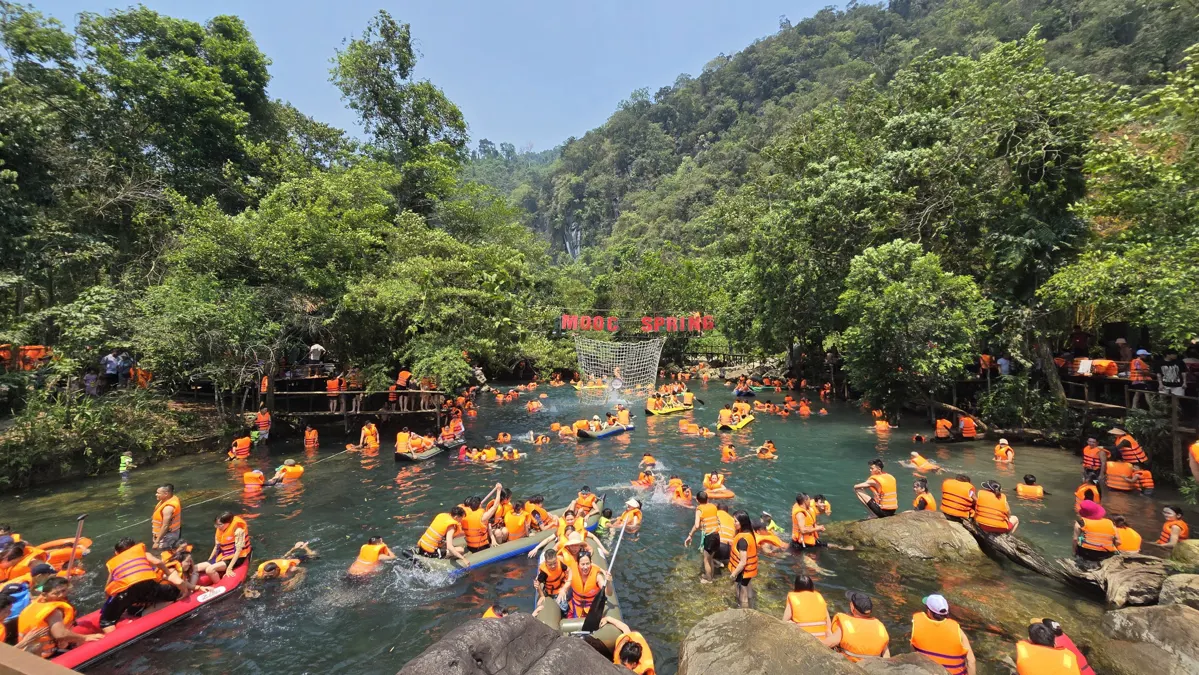
Phong Nha-Ke Bang National Park, a UNESCO World Heritage Site in Vietnam's Quang Binh Province, offers visitors a remarkable landscape of ancient karst mountains, extensive cave systems, and diverse ecosystems. This central Vietnamese destination is renowned for its geological formations and provides numerous opportunities for outdoor exploration and understanding local history. Travelers seeking natural wonders and active pursuits will find a range of experiences here.
An Overview of Phong Nha-Ke Bang National Park
The national park is situated within the Bo Trach and Minh Hoa districts along the North Central Vietnam coast. It lies approximately 500 kilometers south of Hanoi and about 1,200 kilometers north of Ho Chi Minh City. The park's designation as a UNESCO World Heritage Site highlights its exceptional geological value, particularly its ancient karst landscape. Its name originates from Phong Nha Cave, known for its rock formations, and the Ke Bang limestone forest.
The park encompasses a significant limestone area covering 2,000 square kilometers within Vietnam, extending to an adjacent limestone region in Laos, the Hin Namno Nature Reserve. The core protected zone spans 857.54 square kilometers, with an additional buffer zone of 1,954 square kilometers. This area is crucial for safeguarding important karst formations and the limestone forest ecosystem of the Annamite Range. Having developed over approximately 400 million years since the Paleozoic era, the karst system here represents the oldest major karst area across Asia. The terrain features both karstic and non-karstic landforms, including over two dozen mountain peaks exceeding 1,000 meters in elevation, such as Peak Co Rilata (1,128m) and Peak Co Preu (1,213m).
Phong Nha-Ke Bang is home to over 300 distinct grottoes and caves, including Son Doong Cave, identified in 2009 as the world's largest. The total length of these underground networks exceeds 100 kilometers, though only about a quarter has been thoroughly surveyed. Notable caves include Phong Nha Cave, the Vom Cave systems, Tien Son Cave, Paradise Cave, and Ruc Mon Cave. Beyond its subterranean features, the park is characterized by its extensive underground river, with the Son and Chay rivers being primary waterways that have shaped many of the caves. Surface features include striking streams, springs, and waterfalls like Gio Waterfall, Madame Loan Waterfall, Moc Stream, and Tra Ang Stream.
Beyond its geological and natural importance, Phong Nha-Ke Bang National Park holds significant archaeological and historical value. Researchers have uncovered ancient hieroglyphic scripts from the Cham people, suggesting early exploration of the area by this group. The region also served as a military stronghold for King Ham Nghi during his resistance against French colonial forces in the late 19th century. Later, it became a crucial part of the Ho Chi Minh Trail and Road 20 during the American resistance war. The park's biodiversity is another key aspect, forming part of the Annamites eco-region. The predominant vegetation is tropical dense moist evergreen forest on limestone, found below 800 meters above sea level. This forest supports 98 families, 256 genera, and 381 species of vertebrates, with 66 animal species listed in Vietnam’s Red Data Book and 23 in the World Red Book of Endangered Species.
Optimal Times to Explore Phong Nha-Ke Bang
The most favorable period for visiting Phong Nha-Ke Bang National Park is generally between February and April. During these months, the weather tends to be cooler and the risk of flooding is minimal, providing comfortable conditions for outdoor activities and cave exploration.
The warmer months from June to August can also be suitable for a visit, though temperatures will be higher. Conversely, from December to February, the weather can be quite cold. The period from August to December typically brings rain and potential flooding, which may lead to the closure of underground caves for safety reasons. Travelers planning a trip during October to December should verify local weather conditions carefully before their journey, as flooding can occur and impact accessibility to certain areas.
Activities and Attractions within the Park
Phong Nha-Ke Bang National Park offers a diverse array of activities and sites, catering to various interests from casual sightseeing to rigorous expeditions. The park's natural landscape provides a backdrop for exploring ancient caves, trekking through forests, and experiencing local culture.
Visitors can choose from several prominent caves, each offering a distinct experience. Paradise Cave is recognized as Asia's longest dry cave, extending for 31 kilometers. Phong Nha Cave, accessible by boat on the Son River, features impressive rock formations and can be combined with a visit to Tien Son Cave, located directly above it (requiring a climb). For those seeking a more physically demanding adventure, Dark Cave involves kayaking or zip-lining to reach its muddy interior.
Beyond cave exploration, the park provides other engaging attractions. The Botanical Garden offers tranquil pathways, diverse plant life, and a waterfall, making it suitable for families. The Nuoc Mooc Ecotrail guides visitors across gushing rivers via bamboo walkways to serene lagoons. The Bong Lai Valley presents an opportunity to experience rural life, with farms and villages offering local food and refreshments, including establishments like The Pub with Cold Beer, Wild Boar Eco Farm, Moi Moi Restaurant, and The Duck Stop.
For serious adventurers, Son Doong Cave, the world's largest cave, presents a challenging and costly expedition that requires booking many months in advance and a high level of physical fitness and specialized skills. Numerous other adventure routes are available for those interested in multi-day treks and explorations:
- Hang En Cave Camp: A 2-day, 1-night adventure covering 22 kilometers, rated moderate for physically active guests.
- Hang Tien Discovery: Options for 1, 2, or 3 days, with distances ranging from 8 to 28.5 kilometers. This is a moderate activity for physically active individuals, with swimming required for the 3-day itinerary.
- Hang Va Expedition: A 2-day, 1-night trip rated moderate to hard, suitable for very active participants.
- Nuoc Nut Discovery: A full-day excursion considered easy, requiring basic trekking experience.
- Tu Lan Cave: Available as 1, 2, or 3-day trips, rated easy to moderate for physically active guests.
Additionally, the region allows for combining a visit to Phong Nha-Ke Bang with other significant Central Vietnam destinations. Hue City is approximately 220 kilometers away (about 4 hours by car), Da Nang is around 310 kilometers (6 hours by car), and Hoi An is about 350 kilometers (6.5 hours by car). Exploring the Ho Chi Minh Trails (also known as the Annamite Range trail) offers insight into Vietnam's wartime history and culture.
Here is a summary of key attractions and their associated costs (prices are subject to change, verify upon arrival):
| Attraction | Description | Typical Price (VND) | Notes |
|---|---|---|---|
| Paradise Cave | Asia's longest dry cave (31 km) | 250,000 per person | Excludes electric cart fees |
| Phong Nha Cave | River cave with rock formations | 150,000 per person (entrance) | 360,000 per boat (up to 14 people); 300,000 for English guide (optional) |
| Dark Cave | Adventurous, muddy cave experience | 170,000 – 450,000 per person | Seasonal pricing; includes kayak or zip-line access |
| Botanical Garden | Peaceful paths, trees, waterfall | 40,000 per person | |
| Nuoc Mooc Ecotrail | Walkways over rivers to lagoons | 80,000 (basic), 180,000 (all access) per person | |
| Bong Lai Valley Eateries | Local farms/villages for food/drink | ~150,000 per person per meal with beers | Depends on group size; includes places like The Pub with Cold Beer, Wild Boar Eco Farm, Moi Moi Restaurant, The Duck Stop |
Accommodation Options Near Phong Nha-Ke Bang
For visitors planning an extended stay, Phong Nha-Ke Bang and its surrounding areas provide a range of accommodation choices, from resorts to guesthouses and hostels. These options are generally concentrated in three main locations: along the Son River in town, within the Bong Lai Valley (approximately 8 kilometers away), and scattered throughout the rural countryside.
Several specific establishments cater to different preferences and budgets. Here are some notable choices, with prices subject to change and best verified at the time of booking:
- Chay Lap Farmstay & Resort
- Price: From 55 USD per room per night (verify current rates)
- Location: Ho Chi Minh West Road, Phuc Trach, Bo Trach, Quang Binh
- Phone: +84. 911 030 057
- Details: Situated 8 km from the National Park entrance and 18 km from Phong Nha village, this resort features a swimming pool, a restaurant, and a comprehensive beverage menu. It also offers various water activities such as river cruises, sailing, kayaks, water skippers, round boats, and water bikes, with prices ranging from 100,000 VND per hour to 700,000 VND per tour or more.
- Victory Road Villas
- Price: From 100 USD per room per night (verify current rates)
- Location: DT 20 Victory Road, Phong Nha, Quang Binh
- Phone: +84.2323 675 699
- Details: Located in Phong Nha Village with views of the Son River, this boutique residence combines contemporary Western design with traditional Annamese and Tonkinese architectural elements. Villas include en-suite bathrooms, air conditioning, kitchens, entertainment systems, high-speed Wi-Fi, and king-size beds.
- Phong Nha Lake House Eco Resort
- Price: From 45 USD per room per night (verify current rates)
- Location: Ho Chi Minh East Road, Hung Trach, Bo Trach, Quang Binh
- Phone: +84.2323 675 999
- Details: Operated by a Vietnamese-Australian couple, Tham and Tony, this resort aims to provide comfort with modern amenities like air conditioning and Wi-Fi. Its architectural design draws inspiration from a traditional Vietnamese house originally constructed in 1954 in Northern Vietnam.
- Phong Nha Farmstay
- Price: From 65 USD per room per night (verify current rates)
- Location: Hoa Son Village, Cu Nam, Bo Trach, Quang Binh
- Phone: +84. 2323 675 135
- Details: Offering French Colonial-style accommodation, this farmstay is set amidst rice paddy fields near the edge of Phong Nha-Ke Bang, close to the Ho Chi Minh Trails. It serves as a convenient base for adventures or for experiencing local village life and relaxing by the pool.
Essential Travel Information for Visitors
Before traveling to Phong Nha-Ke Bang National Park, it is advisable to be aware of a few practical considerations to ensure a safe and comfortable visit.
Firstly, the internal temperature of the caves typically remains around 20°C, even during warmer seasons. Therefore, bringing some warmer clothing is recommended, especially for longer cave tours. Secondly, due to historical conflicts, unexploded ordnance (UXO) from the Vietnam War may still be present in certain areas of the park. For safety, visitors must strictly adhere to marked trails and avoid venturing into undesignated zones. Lastly, during the rainy season, which generally spans from October to December, some caves may become inaccessible due to high water levels or flooding. It is always prudent to check local conditions and accessibility updates before planning cave excursions during these months.
Reaching Phong Nha-Ke Bang National Park
Accessing Phong Nha-Ke Bang National Park involves traveling to Dong Hoi, the closest major city, located approximately 45 kilometers away, a journey that typically takes about an hour by car. Visitors have several transportation options from major Vietnamese cities like Hanoi and Ho Chi Minh City.
By Air: Direct flights are available from Hanoi or Ho Chi Minh City to Dong Hoi Airport (VDH). These flights usually take about 1.5 hours and are operated by carriers such as Vietnam Airlines, Vietjet Air, and Bamboo Airways. Airfares generally range from US$40 to US$125 for a one-way ticket, but prices can fluctuate based on booking time and availability.
By Train: Rail travel to Dong Hoi offers a different perspective on the Vietnamese landscape. The journey from Hanoi covers 522 kilometers and typically lasts around 10 hours. Trains like SE1 (departing 22:10), SE3 (19:30), or SE19 (20:00) depart from Hanoi railway station at 120 Le Duan Street. Passengers can choose from various seat types, including hard seat, soft seat, hard berth (6 berths per cabin), and soft berth (4 berths per cabin). Options include the national Reunification Express or luxury trains such as Livitrans, Viollete, Lotus, and Laman Express, which primarily offer soft berth cabins. Ticket prices range from US$35 to US$80, depending on the class selected. For those considering overnight rail journeys in Vietnam, this route provides a practical option.
From Ho Chi Minh City, the train journey to Dong Hoi is considerably longer, covering 1,204 kilometers and taking between 22 to 24 hours. Trains like SE2 (departing 21:55), SE4 (19:25), SE6 (08:45), or SE10 (14:30) depart from Saigon Railway station at 1 Nguyen Thong Street, District 9. One-way tickets from Ho Chi Minh City start from approximately US$45. Travelers from Hue or Da Nang can reach Dong Hoi by train in about 3 hours during the day or 6-7 hours for an overnight service, with tickets starting from US$12.
By Bus: Bus services provide a more economical alternative. From Hanoi, Hoang Long buses depart from Hanoi Nuoc Ngam station, with the journey to Dong Hoi lasting about 9.5 hours and costing around US$14 for a one-way ticket. From Ho Chi Minh City, Hoang Long buses depart from Mien Dong station at 8:00 PM, with a travel time of approximately 1 day and 2 hours, at an average cost of US$26 for a one-way ticket.
Private Vehicles: For maximum comfort and scheduling flexibility, hiring a private car or van is an option. While this is typically less economical than public transport, it offers privacy and the freedom to customize the travel itinerary, making it suitable for those who prefer not to adhere to fixed schedules.
Here is a summary of train routes and estimated travel times:
| Origin | Destination | Distance | Approx. Travel Time | Departure Times (Reunification Express) | Starting Price (USD) |
|---|---|---|---|---|---|
| Hanoi | Dong Hoi | 522 km | 10 hours | SE1 (22:10), SE3 (19:30), SE19 (20:00) | 35 |
| Ho Chi Minh City | Dong Hoi | 1,204 km | 22-24 hours | SE2 (21:55), SE4 (19:25), SE6 (08:45), SE10 (14:30) | 45 |
| Hue/Da Nang | Dong Hoi | (Not specified, but shorter) | 3 hours (day), 6-7 hours (night) | (Varies) | 12 |
Phong Nha-Ke Bang National Park stands as a significant natural treasure in Vietnam, comparable in importance to other renowned sites like Sapa's Fansipan mountain and Halong Bay's unique coastal features. Its distinct geological formations and diverse ecosystems make it a compelling destination for those exploring the country's natural heritage.
Frequently Asked Questions
What is the primary appeal of Phong Nha-Ke Bang National Park?
Phong Nha-Ke Bang National Park is primarily known for its ancient karst mountains, extensive cave systems including the world's largest, Son Doong Cave, and its rich biodiversity. It offers significant geological, historical, and ecological interest.
When is the best time to visit Phong Nha-Ke Bang?
The ideal time to visit is between February and April, when the weather is cooler and dry, making it comfortable for exploring. The period from August to December can experience heavy rains and potential flooding, which may affect cave accessibility.
Are there any safety warnings for visitors to Phong Nha-Ke Bang?
Visitors should remain on designated trails due to the potential presence of unexploded ordnance from past conflicts. Additionally, cave temperatures are consistently cool (around 20°C), so appropriate clothing is advisable.
Can I visit Son Doong Cave?
Visiting Son Doong Cave, the world's largest, requires booking months in advance, significant physical fitness, and specific skills due to the challenging nature and high cost of the expedition. There are other adventure caves with varying difficulty levels available.
What kind of accommodation is available in the area?
Accommodation options range from farmstays and boutique villas to guesthouses and hostels. These are located in Phong Nha village along the Son River, in Bong Lai Valley, and throughout the surrounding countryside, catering to different budgets and preferences.








