
Halong Bay, a renowned UNESCO World Heritage site in northern Vietnam, is celebrated for its thousands of towering limestone islands and islets. For individuals planning their inaugural visit, preparing with accurate information on travel logistics, optimal timing, and available activities can significantly enhance the experience. This guide offers comprehensive details to assist first-time travelers in organizing a memorable trip to this iconic destination.
Understanding Halong Bay Tourism
Halong Bay has consistently drawn a substantial number of visitors, both domestic and international, over the past decade. In 2019, the region welcomed 4.4 million tourists, with nearly 2.9 million international arrivals, marking a 6% increase from the previous year. The global events of 2020 led to a significant reduction in visitor numbers, with approximately 1.5 million tourists, representing over 30% of the 2019 figures. Despite this downturn, the sustained interest highlights the area's enduring appeal. Projections for 2023 anticipated a gradual recovery in tourism, supported by new policies and health initiatives.
The bay's unique geological formations and serene waters offer diverse experiences, from tranquil cruises to active exploration. Its popularity stems from a combination of natural beauty and a well-developed tourism infrastructure catering to various preferences and budgets.
When to Plan Your Halong Bay Visit
The most favorable period to visit Halong Bay, situated in northern Vietnam, is typically during March, April, September, and October. During these months, the weather is generally mild, and the risk of tropical storms is lower, providing ideal conditions for sightseeing and outdoor activities. Travelers might consider aligning their visit with spring or autumn holidays for optimal weather.
Other times of the year also present opportunities for travel. December and January are considered a secondary good period, coinciding with winter holidays. However, temperatures can be quite cool during this time. Visitors planning trips around December 24th, 25th, or January 1st should be aware that hotels and cruises may apply holiday surcharges. The summer months, from May through August, offer warm temperatures often exceeding 40°C, making them suitable for water-based activities and sunbathing. Nevertheless, this season also carries a higher likelihood of tropical storms, which can impact travel plans.
Getting to Halong Bay: Transportation Options
Accessing Halong Bay involves various transportation methods, depending on your starting point within Vietnam. The nearest domestic airport is Van Don Airport. International travelers typically arrive at major airports in Hanoi, Da Nang, or Ho Chi Minh City before continuing their journey to the bay.
From Halong City to Ports
From hotels in Halong City, reaching Tuan Chau Port or Halong International Port is straightforward, usually taking about 15 minutes by taxi. If your cruise departs from Got Port in Hai Phong, it is advisable to arrange transportation with your travel provider at least one to two days before your scheduled trip.
From Hanoi to Halong Bay
The drive from Hanoi to Halong Bay takes approximately 2.5 hours. Shuttle buses are a common and convenient option. These shared services often utilize comfortable Dcar Limousines with 7-9 seats. Booking this transfer through your cruise provider is recommended, as they can coordinate with your itinerary and address any specific needs, such as a front seat for motion sickness. For groups of friends or family, those with substantial luggage, or individuals preferring privacy, a private car offers a more flexible and comfortable alternative, though at a higher cost.
From Ninh Binh to Halong Bay
Traveling from Ninh Binh to Halong Bay typically requires a 3.5-hour drive. While shuttle buses are available, their quality may vary, as Halong Bay cruise tours often do not include pick-up services from Ninh Binh. A private car is generally a more reliable choice for this route. Due to the distance, an early start, around 7:30 AM, is necessary to reach the port on time. Alternatively, travelers might consider returning to Hanoi for an overnight stay before proceeding to Halong Bay, which can allow for more rest and potentially reduce travel costs and time.
From Sapa to Halong Bay
The journey from Sapa to Halong Bay is extensive, covering approximately 450 kilometers and requiring about 7 hours of driving. Direct travel on the same day as a cruise departure is often impractical. Travelers have two primary options: either return to Hanoi the day before by car, bus, or overnight rail journeys in Vietnam, and then proceed to Halong Bay by shuttle bus or private car; or travel to Halong Bay by private car the day before the cruise. This allows for sufficient rest and ensures timely arrival at the port.
From Da Nang to Halong Bay
For visitors starting from Da Nang, the journey to Halong Bay involves a flight of about 1 hour and 20 minutes. The most straightforward method is to fly from Da Nang to Cat Bi Airport in Hai Phong. Upon arrival, a private car can transport you to Got Ferry, where many Halong Bay cruises embark, rather than traveling directly to Halong City.
From Ho Chi Minh City to Halong Bay
Travelers from Ho Chi Minh City can reach Halong Bay by flying to Cat Bi Airport in Hai Phong, a flight lasting approximately 2 hours and 10 minutes. There are frequent flights on this route, making it a convenient option. If direct flights to Cat Bi are unavailable or priced unfavorably, an alternative is to fly to Hanoi, then transfer to Halong Bay by private car from the airport, or spend a night in Hanoi before continuing the journey as described above.
Exploring Halong Bay: Key Attractions
While a single visit may not cover every corner of Halong Bay, several prominent destinations are highly recommended for first-time visitors.
- Cat Ba Island: As the largest island in Halong Bay, Cat Ba offers a diverse vacation experience. It features luxury resorts, scenic beaches, and opportunities for soft adventure within its National Park, including exploring ancient forests and caves. Visitors can also enjoy cycling along coastal routes and visiting local fishing communities.
- Lan Ha Bay: Gaining popularity in recent years, Lan Ha Bay is known for its cruising experiences. It is somewhat more secluded, making a cruise the primary way to access its waters. Many consider it an excellent choice for a first-time cruise in the region.
- Bai Tu Long Bay: Often described as a tranquil alternative within Halong Bay, Bai Tu Long Bay is less frequented by tourists due to its more remote location. This preserves its unspoiled natural beauty. Activities include swimming at beaches on Cap La Island or Hon Co Island and exploring Thien Canh Son Cave.
- Sung Sot Cave (Surprise Grotto): This impressive cave earned its name from visitors' reactions to its grandeur. Its vast chambers and intricate formations make it a highly recommended stop for those exploring the bay.
- Ti Top Island: Featuring one of Halong Bay's popular beaches, Ti Top Island offers a clean, airy environment with clear emerald waters. Access to the island typically requires booking a cruise tour, which may be a day trip or an overnight itinerary, allowing visitors to experience the island fully. For more details on beaches, consider reading about Halong Bay's best beaches.
Accommodation Choices in Halong Bay
Visitors to Halong Bay have several distinct accommodation options, ranging from unique island resorts to city hotels and the popular overnight cruise experience.
Overnight Cruises
Spending at least one night on a Halong Bay cruise (with two-night options also popular) is a highlight for many travelers. This experience has been a staple of Halong Bay tourism for over a decade, with most visitors opting to sleep on board. Cruises are available across a wide price spectrum, from budget-friendly to luxury, making this distinctive activity accessible to many. A significant advantage of an overnight cruise is its comprehensive nature; it allows deeper exploration of the bay, includes sightseeing at famous attractions, offers various water activities, and provides all meals as part of the itinerary. This means travelers do not need to plan daily activities or meals independently.
Private Island Resorts
Halong Bay hosts a few exclusive island resorts that offer unique stays:
- Monkey Island Resort: Located on Monkey Island (also known as Cat Dua Island), this 3-star resort is the sole accommodation on the island. It attracts guests seeking a peaceful retreat away from urban noise, providing a serene holiday environment.
- Vinpearl Resort on Reu Island: Situated close to Halong City center, just a 5-minute speedboat ride away, Vinpearl Resort on Reu Island offers a different experience. This 5-star complex combines luxury accommodation with extensive excursion and entertainment facilities. It features opulent rooms, diverse dining, large swimming pools, and a private beach, making it an ideal choice for families or groups desiring a lively and amenity-rich vacation.
Hotels in Halong City
For those who prefer to stay on the mainland, Halong City provides a broad selection of hotels across different price points and standards. Below is a list of recommended accommodations:
| No. | Hotel Name | Standard | Address | Price From (USD) |
|---|---|---|---|---|
| 1 | Lapaz Resort | 3-star | Ngoc Chau St., Tuan Chau Island, Halong | $35 |
| 2 | Novotel Halong Bay | 4-star | 160 Halong Rd., Bai Chay, Halong | $51 |
| 3 | Halong Plaza | 4-star | 08 Halong Rd., Bai Chay, Halong | $30 |
| 4 | Wyndham Halong | 5-star | No.12 Halong Rd., Bai Chay, Halong | $46 |
| 5 | Premier Village Halong Bay Resort | 5-star | No.09 Halong Rd., Bai Chay, Halong | $272 |
For additional financial services while staying in the area, visitors can refer to a guide on banking services in Halong City.
Recommended Activities for New Visitors
Halong Bay offers a variety of activities that cater to different interests, ensuring a fulfilling experience for first-time travelers.
- Cruise Exploration: Booking a cruise is considered essential for fully experiencing Halong Bay. Options include day tours or overnight itineraries (2-day/1-night or 3-day/2-night) to match various travel schedules. Longer cruises generally allow for visits to more attractions and areas within the bay. Cruises are available across a wide price range, from economical to premium.
- Kayaking: While cruising provides an overview of the bay, kayaking offers the chance to access smaller areas and intricate water cave systems. This activity allows for a closer appreciation of the bay's distinctive natural structures. Kayaking services can be booked upon arrival in Halong, but it is often included as a complimentary activity in many cruise packages.
- Cycling on Cat Ba Island: Cat Ba Island, the largest in the bay, provides an excellent setting for cycling. Routes typically start from the town center and follow the coastline, offering scenic views. Cyclists can visit Cat Ba National Park or the Viet Hai fishing village. Many cruise tours incorporate cycling excursions on Cat Ba Island into their itineraries.
- Beach Enjoyment and Swimming: A visit to Halong Bay would be incomplete without time spent at its beaches. Notable locations include Monkey Island, Ti Top Island, Cat Ba Island, and Ba Trai Dao Islet, all known for their clean and inviting waters.
- Fine Dining on a Luxury Cruise: While Halong Bay is not particularly known for specific local dishes, luxury cruises offer exceptional fine dining experiences. Gastronomy is a key feature of many 5-star cruises, with some vessels providing unique culinary experiences designed to be a highlight of the trip. Cruises such as President Cruise, Paradise Cruise, Scarlett Pearl Cruise, and Orchid Cruise are recognized for their delightful culinary offerings.
- Night Squid Fishing: As evenings in Halong Bay tend to be quiet, night squid fishing provides an engaging activity. It is often enjoyed as a friendly competition among guests and an opportunity for social interaction. Any squid caught can be prepared and served as supper, either grilled or boiled.
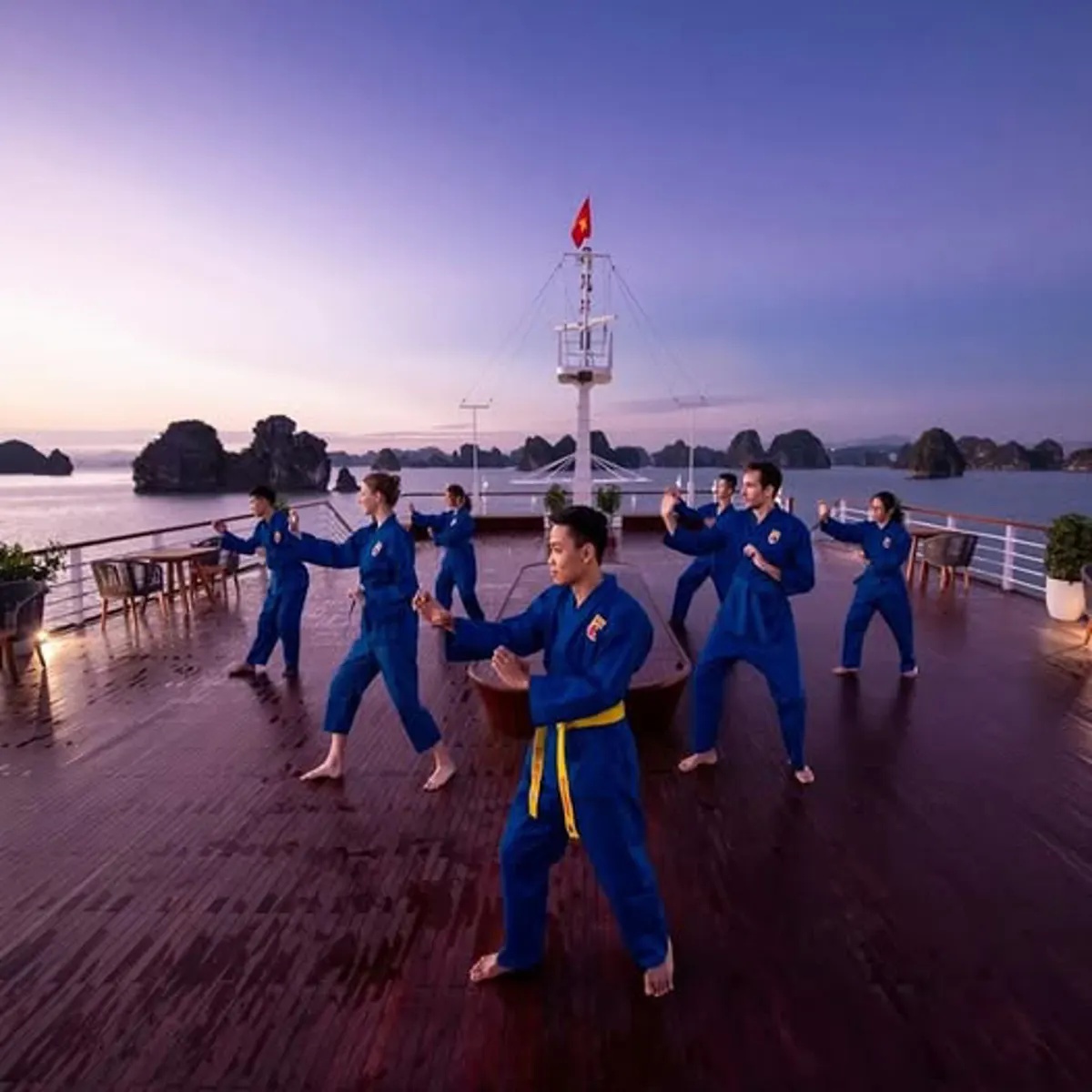
- Morning Tai Chi: The sunrise over Halong Bay is a sight to behold. Travelers can choose to observe this spectacle or participate in a morning Tai Chi lesson. This gentle exercise, involving slow, deliberate movements, is offered on some overnight cruises and can be a refreshing way to start the day amidst the calm bay environment.
Suggested Itinerary for a Two-Day Trip
While Halong Bay offers diverse itinerary options, including day tours and overnight stays of one or two nights, the 2-day/1-night cruise is a popular choice for first-time visitors seeking a comprehensive experience. The bay's vastness makes it impossible to explore fully in a short period, so itineraries are designed to highlight key areas. Below is a suggested 2-day/1-night plan:
Day 1: Hanoi to Halong Bay
- Pick-up: Between 8:00 AM and 8:30 AM from Hanoi Old Quarter.
- Travel: A shuttle bus will transport you to the harbor, a journey of approximately 2.5 hours.
- Embarkation: Board your cruise between 12:00 PM and 12:30 PM.
- Lunch: Served on board shortly after embarkation.
- Afternoon Exploration: The cruise will pass various islets before reaching the Dark & Light Cave area. This location is ideal for kayaking, or you can opt for a basket boat ride guided by local experts.
- Evening: Return to the cruise for a sunset party with music and cocktails, followed by dinner.
- Night Activity: Participate in night squid fishing; any catch can be prepared for supper.
Day 2: Halong Bay to Hanoi
- Morning: Begin with an optional Tai Chi lesson, followed by breakfast.
- Island Visit: Around 9:00 AM to 9:30 AM, arrive at Cat Ba Island, the largest island in the Gulf of Tonkin. A bus will take you to Cat Ba National Park to explore Trung Trang Cave.
- Return Journey: After about an hour of exploring Cat Ba, return to the cruise for a light brunch as the boat sails back towards Halong City.
- Departure: Typically, you will transfer to a car for the return journey to Hanoi around 12:30 PM, concluding the trip by 3:00 PM to 3:30 PM.
Practical Advice for Your Halong Bay Vacation
Preparing adequately can make your Halong Bay trip smoother and more enjoyable.
Packing Tips
Given the typically short duration of a Halong Bay trip, it is advisable to pack light. If you have excess luggage, many hotels offer storage services, allowing you to retrieve your belongings after your bay excursion. For those who must bring all luggage, arranging a private car instead of a shared shuttle may provide more space. Essential items to consider include:
- 2-3 sets of casual clothing
- 1 evening outfit (for fine dining on luxury cruises)
- Swimsuit
- Sunscreen and sunglasses
- Phone and camera
- Any necessary personal medicines
- Basic skincare and makeup items
- Cash and credit cards
- Travel documents: Passport with visa, ID card, booking voucher, tour itinerary with contact details for your guide and travel provider.
Tipping Guidelines
Tipping is not a mandatory practice in Vietnamese culture, but it is a gesture of appreciation for excellent service. In the tourism sector, a tip signifies a compliment to staff who have provided exceptional assistance. Here are some general suggestions for tipping in Halong Bay:
- Tour Guide: A single guide typically assists all guests on a cruise. If you are satisfied with their service, a tip of US$5-10 per day is often considered appropriate.
- Waiter/Waitress/Bartender: For attentive table service during meals, a tip of US$3-5 is suitable. For bartenders who provide skillful service and excellent drinks, US$5-10 might be considered.
- Spa & Massage Therapists: Services like spa treatments and massages, especially on 5-star cruises, can be costly, with commissions often included in the price. Tipping is therefore only expected for truly outstanding service.
Frequently Asked Questions
Is Halong Bay worth visiting for a first-time traveler?
Yes, Halong Bay is widely regarded as a premier destination in Vietnam. Its unique natural landscape and diverse activities make it a highly recommended experience for those visiting the country for the first time.
When should I book my Halong Bay tour?
To secure your preferred cruise and itinerary, it is generally advisable to book your Halong Bay tour well in advance, typically two to three months before your intended travel date. This is especially true during peak seasons.
What kind of luggage should I bring for a Halong Bay cruise?
For a Halong Bay cruise, it is recommended to pack light. Most trips are short, and excess luggage can be cumbersome. If you have a lot of baggage, consider leaving it at your hotel in a major city like Hanoi or arranging a private car transfer to the bay for more space.
Are there vegetarian or vegan meal options on Halong Bay cruises?
Most Halong Bay cruises, particularly those offering multi-day itineraries, can accommodate dietary restrictions such as vegetarian or vegan meals. It is crucial to inform your travel provider or cruise operator of your dietary needs when making your booking to ensure they can make appropriate arrangements.
Can I visit Halong Bay independently, or do I need a tour?
While it is possible to travel to Halong City independently, exploring the bay itself typically requires booking a cruise tour. Cruises offer the most comprehensive way to see the islands, visit attractions, and participate in activities, as many areas are only accessible by boat.








