
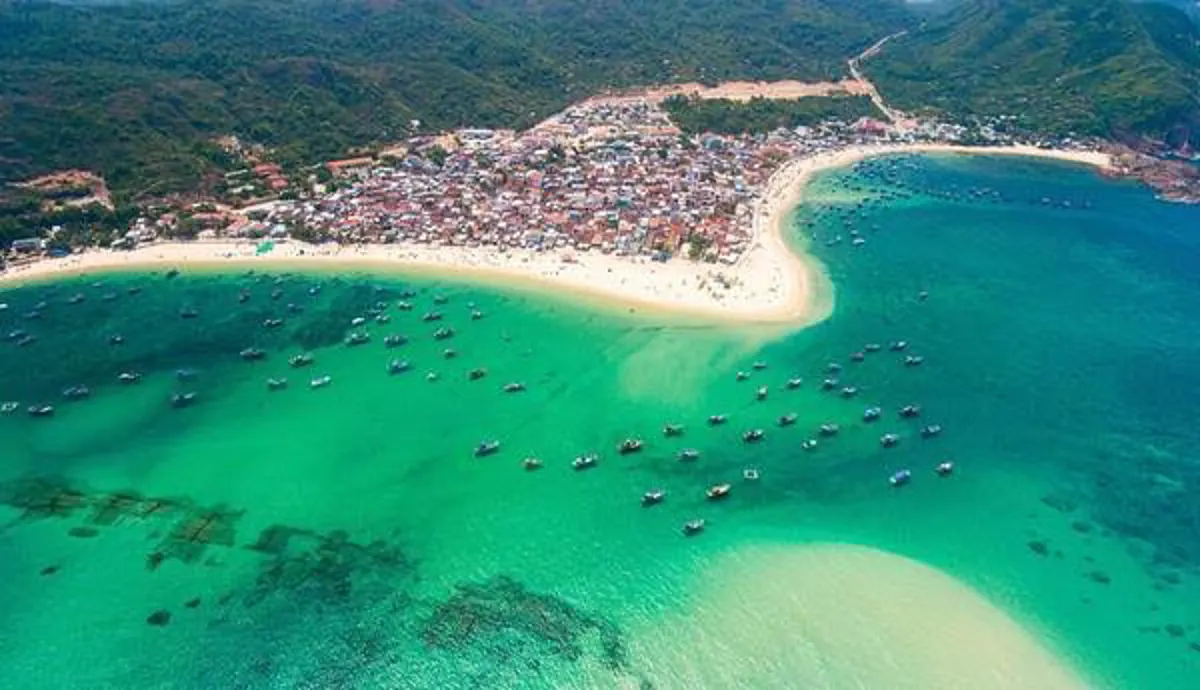
Binh Dinh Province, situated along Vietnam's South Central Coast, offers travelers a blend of historical depth and coastal beauty. Its capital, Quy Nhon City, serves as the primary hub for exploring a region rich in ancient Cham heritage and diverse natural landscapes. Visitors to this area can experience a unique cultural crossover alongside serene beaches and distinctive geological formations, providing a comprehensive Vietnamese travel experience.
Understanding Binh Dinh Province: Geography and Administration
Binh Dinh occupies a significant portion of Vietnam's South Central Coast, extending approximately 110 kilometers along the coastline. The province's terrain is predominantly mountainous in its western parts, gradually transitioning to coastal plains in the east. This geographical diversity creates varied scenery, from rolling hills to expansive ocean views, offering a rich backdrop for exploration. The provincial capital, Quy Nhon City, functions as Binh Dinh's largest economic and administrative center, benefiting from its developed infrastructure and strategic coastal position.
The province spans an area of 6,066.2 square kilometers and supports a population of 1,486,918 people. Binh Dinh is administratively divided into eleven district-level subdivisions: An Lao, Hoai An, Hoai Nhon, Phu My, Phu Cat, Vinh Thanh, Tay Son, Van Canh, An Nhon, and Tuy Phuoc. Geographically, it borders Quang Ngai Province to the north, Gia Lai Province to the west, and Phu Yen Province to the south. The western region, particularly near Gia Lai, is the most mountainous, with the An Khe Pass providing the sole land route connecting the two provinces. Along its coastline, Binh Dinh features 33 islands and islets of varying sizes, contributing to its maritime character. While the inland areas do not contain large rivers, they are characterized by an intricate network of lakes and streams, supporting local ecosystems and agriculture.
Historical Context of Binh Dinh
The history of Binh Dinh is deeply intertwined with the ancient Champa Kingdom, a powerful maritime state that once dominated much of central and southern Vietnam. From 803 AD, this territory was an integral part of Champa until its conquest by the Le Dynasty in 1471. This event marked a significant demographic shift, as more Viet people began to settle in the region, gradually integrating their customs and traditions. Over subsequent centuries, Binh Dinh experienced various political transformations and periods of upheaval, reflecting broader historical currents in Vietnam.
Ultimately, the province was unified with other liberated southern provinces under the Republic of South Vietnam, establishing its official administrative status within the interim government. This long and complex history has left a lasting legacy, particularly evident in the Cham architectural remnants, such as the ancient towers, and the cultural traditions that persist throughout the area. Understanding this historical foundation provides valuable context for appreciating the province's unique identity today.
Climate Patterns in Binh Dinh
Binh Dinh's climate is influenced by its varied topography, resulting in distinct weather conditions between its mountainous and coastal zones. Temperatures can drop to around 16°C during cooler periods, with the lowest recorded temperature being 15.8°C. Conversely, the highest temperature documented reached 39.9°C, indicating a significant seasonal range. These fluctuations mean that visitors should prepare for different conditions depending on their travel dates and specific destinations within the province.
The province experiences a rainy season that typically commences in September and continues through December. During these months, precipitation is higher, which can affect outdoor activities. For the remainder of the year, the weather is generally dry, offering more consistent conditions for exploring. Humidity levels average around 79% throughout the year, contributing to the tropical feel of the coastal areas. Visitors planning a trip should consider these seasonal variations, particularly if aiming to avoid heavy rainfall or extreme heat.
Notable Attractions and Cultural Sites in Binh Dinh
Binh Dinh is recognized for its rich Cham culture and architectural heritage, alongside its natural coastal and inland features. The province is home to several ancient Cham towers, which stand as testaments to its historical past and the sophisticated craftsmanship of the Champa Kingdom. These structures offer a glimpse into a bygone era and are significant archaeological sites. Beyond these cultural landmarks, the coastline offers numerous beaches and islands, providing opportunities for relaxation and water activities. For those interested in coastal beauty, exploring Vietnam's best beaches often highlights similar serene environments. Inland areas present unique geological formations and verdant valleys.
The region also holds significance as a historical center of the Sa Huynh culture, with archaeological findings and customs reflecting its ancient roots. This blend of Viet and Cham influences creates a distinctive cultural atmosphere that can be observed in local traditions and daily life. The local cuisine in Binh Dinh also reflects this cultural synthesis, offering a variety of regional specialties that visitors often enjoy. Exploring these culinary offerings can be a rewarding part of the travel experience, and a traveler's guide to unique purchases and souvenirs from Vietnam might offer ideas for local crafts or food items to take home.
| Attraction Type | Name | Description |
|---|---|---|
| Cham Tower | Twin Towers | An ancient Cham architectural site, known for its distinctive twin structures, located near Quy Nhon City. |
| Cham Tower | Duong Long Tower | Another prominent Cham tower complex, showcasing historical construction techniques and intricate carvings. |
| Cham Tower | Banh It Tower | A well-preserved Cham tower complex, offering insights into the kingdom's heritage and panoramic views from its elevated position. |
| Coastal Feature | Ky Co Beach | A popular beach known for its clear turquoise waters, white sand, and scenic surroundings, often accessed by boat. |
| Island | Cu Lao Xanh Island | An island destination providing opportunities for relaxation, snorkeling, and coastal exploration, featuring a lighthouse. |
| Coastal Feature | Eo Gio Pass | A dramatic coastal area characterized by unique rock formations and powerful ocean views, ideal for photography and nature walks. |
| Natural Landscape | Phuong Peninsula | A geographical feature offering diverse natural scenery, including coves and cliffs, providing a serene escape. |
| Natural Landscape | Ghenh Rang | A scenic area known for its distinctive rock formations, including Queen's Beach, and coastal vistas, located close to Quy Nhon. |
| Natural Landscape | Ham Ho Valley | An inland valley celebrated for its natural beauty, including rock formations and a tranquil river, suitable for boating and hiking. |
Traveling to and Around Binh Dinh
Accessing Binh Dinh Province is facilitated by Phu Cat Airport, making air travel a convenient option for many visitors, particularly for those coming from further afield within Vietnam. For travelers seeking more economical alternatives or a different perspective on the landscape, both train and bus services are available. The Thong Nhat express train provides daily connections to Dieu Tri station, which is located approximately 11 kilometers from Quy Nhon City. Considering an overnight train journey across Vietnam can be a practical choice for reaching the province, offering a comfortable and scenic way to travel.
Road travel to Binh Dinh involves National Highways No. 1A and 19, which are key arteries for regional transportation. Open buses typically complete the journey from Ho Chi Minh City to Quy Nhon in about 14 hours, providing a direct link for those traveling from the south. Once within the province, renting a motorbike is often cited as the most budget-friendly method for local transportation, allowing for flexibility in exploring various sites. Taxis and public buses also offer options for moving between destinations, particularly within Quy Nhon City and to nearby attractions. Currently, water travel is not generally available for public use within the province, so planning land-based transport is essential.
Frequently Asked Questions
What is the capital city of Binh Dinh Province?
The capital city of Binh Dinh Province is Quy Nhon City, which also serves as its main economic and administrative center and a key entry point for visitors.
What historical culture is prominent in Binh Dinh?
Binh Dinh is particularly known for its Cham culture and architecture, with several ancient Cham towers found throughout the province. It is also recognized as a historical center of the Sa Huynh culture, reflecting a deep historical legacy.
When is the rainy season in Binh Dinh?
The rainy season in Binh Dinh typically runs from September through December. Travelers planning visits during these months should be prepared for increased rainfall. The rest of the year generally experiences dry weather.
How can visitors travel to Binh Dinh Province?
Visitors can reach Binh Dinh by air via Phu Cat Airport. Train services connect to Dieu Tri station, and buses operate along National Highways No. 1A and 19, including routes from Ho Chi Minh City, offering various travel options.
Are there beaches in Binh Dinh Province?
Yes, Binh Dinh Province features numerous beaches and islands along its coastline, such as Ky Co Beach and Cu Lao Xanh Island, offering scenic coastal experiences and opportunities for relaxation and water activities.








