
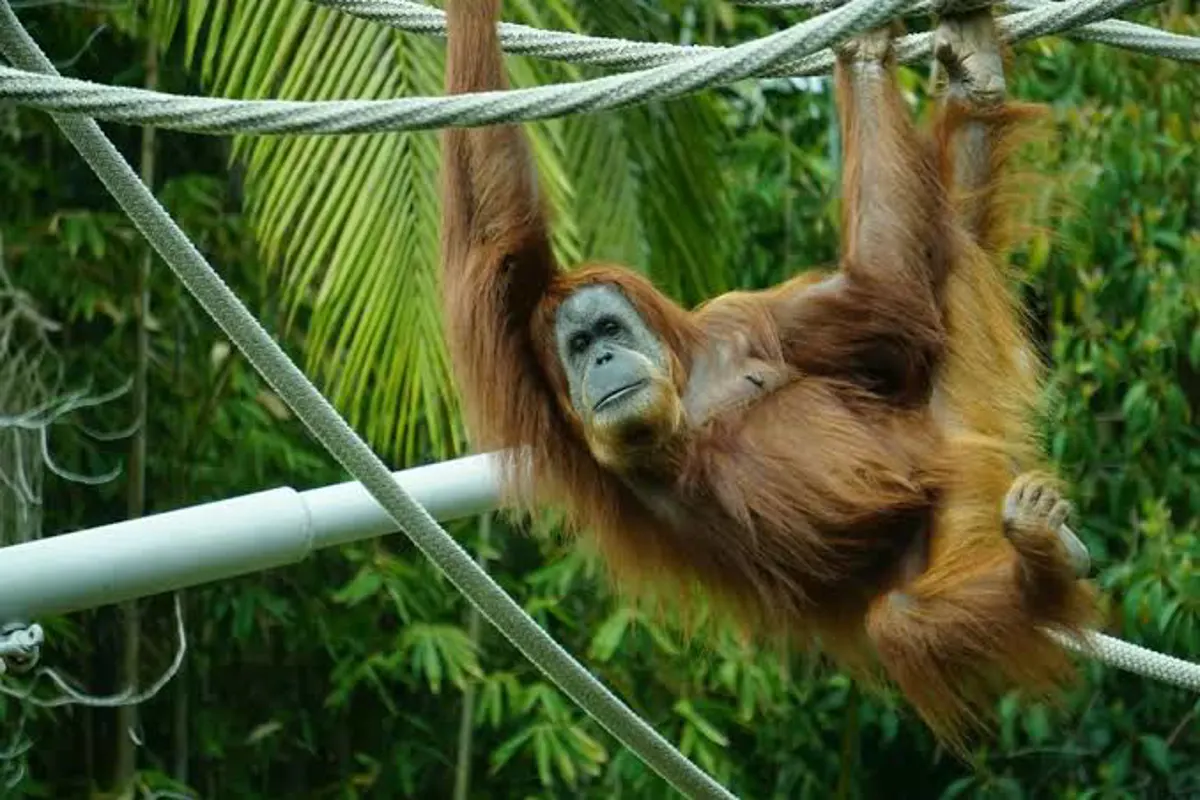
Cuc Phuong National Park, situated southwest of Hanoi, offers a significant natural escape for those seeking a break from urban environments. As Vietnam's first national park, it encompasses a rich ecosystem, ancient forests, and critical conservation programs for endangered species. Visitors can explore its diverse landscapes, learn about local culture, and observe a wide array of flora and fauna.
An Overview of Cuc Phuong National Park
Cuc Phuong National Park spans an area of 22,200 hectares, extending across three provinces: Ninh Binh, Hoa Binh, and Thanh Hoa. It is located approximately 130 kilometers southwest of Hanoi and 55 kilometers northwest of Ninh Binh City. This expansive protected area is characterized by dense forests containing millennia-old trees, specialized botanical gardens, and a broad spectrum of wildlife, including numerous bird, mammal, reptile species, and colorful butterflies. The park also hosts two animal sanctuaries that are open for exploration.
Historically, Cuc Phuong was home to the Muong minority people, and some scattered villages still exist around the park's periphery today. These local communities engage in community-based ecotourism, offering homestay experiences that encourage longer visits and provide incentives for supporting the park's conservation initiatives. The park holds the distinction of being Vietnam's oldest national park, having been established as a forest reserve in 1960 and officially designated a national park by President Ho Chi Minh in 1962. This designation underscored the importance of protecting the natural environment for future generations. The connection between humans and Cuc Phuong dates back much further, with archaeological evidence of prehistoric human habitation from 7,000 to 12,000 years ago found in various mountain caves within the park. The Quen Voi section of the park was also a significant battle site during a civil war in 1789. More recently, in 1987, around 500 Muong households were relocated to the park's edges due to land use considerations and conservation programs.
Planning Your Visit: Getting There and Best Times
Travelers have several options for reaching Cuc Phuong National Park:
- Public Bus: From Hanoi, visitors can take a bus from Giap Bat Bus Station to Nho Quan, the nearest town to the park. Upon arrival in Nho Quan, a motorcycle taxi is required to reach the park's entrance gate. The total journey typically lasts between 2.5 to 3 hours. This option may be less suitable for a one-day trip due to fixed bus schedules and potential communication challenges with local drivers. When planning your visit, especially if traveling from Hanoi, understanding local services can be beneficial.
- Private Vehicle: A private car or van offers a direct route from Hanoi to Cuc Phuong National Park, covering the 130-kilometer distance. This mode of transport provides greater flexibility for itineraries, allowing for day trips or longer stays. Many visitors choose to combine a visit to the park with other notable sites in Ninh Binh province, such as Tam Coc, Bich Dong, Trang An, and Bai Dinh Pagoda, over a two to three-day period. For those considering longer journeys across Vietnam, information on overnight rail travel can provide useful context.
The climate in Cuc Phuong National Park is characterized by a tropical monsoon, with an average annual temperature of 24.7°C. The park is generally suitable for visits throughout most of the year, with the exception of the rainy season, which typically occurs from July to September. During this period, trekking trails can become very slippery, and some areas may be closed to ensure visitor safety.
Bird enthusiasts often find February to April to be an ideal time to observe various rare bird species, including pheasants, orioles, marble babblers, and white-bellied woodpeckers. A particularly popular time for many visitors is late April to early May, when thousands of colorful butterflies emerge, creating a visually striking natural spectacle.
Activities and Natural Highlights
Cuc Phuong National Park offers a range of activities focused on exploring its natural environment:
- Forest Exploration (Trekking and Cycling): The park provides diverse jungle trekking routes, varying in duration from a few hours to multi-day expeditions. Most trekking paths can be undertaken with a park guide, and English-speaking guides are often available to provide informative commentary. Popular trails lead visitors to ancient trees, historical caves, and local Muong villages. Longer treks can extend into Ngoc Son Nature Reserve and Pu Luong Nature Reserve, with designated sites for overnight camping. Mountain bikes are also available for rent, offering an alternative way to navigate the forest trails.
- Cave Exploration: Key caves within the park include the Cave of Prehistoric Man, which contains archaeological vestiges dating back approximately 7,500 years. Mang Chieng Cave is another significant site, holding relics from Stone Age inhabitants, including artifacts and human and animal remains. Crescent Moon Cave is also a notable geological feature.
- Wildlife Observation: Situated between two limestone mountain ranges and featuring year-round rainforest, Cuc Phuong boasts a remarkably rich ecosystem. It supports over 2,234 species of vascular and non-vascular plants, 122 species of reptiles and amphibians, and 135 species of mammals, such as the Clouded Leopard, Delacour’s Langur, Owston’s Civet, and Asian Black Bear. The park is also home to an impressive 336 documented bird species. Paleontological findings include a fossilized sea reptile estimated to be 200–230 million years old. The park organizes night spotting and bird watching activities, with optimal times for bird watching being early morning or late afternoon, to help visitors observe more elusive species in their natural habitat. The period from late April to early May is particularly known for its abundant butterfly populations.
Conservation Efforts and Educational Centers
Cuc Phuong National Park is a hub for significant conservation initiatives, housing several specialized centers:
- Visitor Centre: This facility serves as the initial point of entry for visitors, where all necessary procedures are completed. The center features educational displays, photographs, and interpretive materials that inform visitors about the park's natural environment and promote awareness regarding nature and conservation.
- Cuc Phuong Botanical Garden: Established in 1985, this was the first botanical garden within a national park and protected area system in Vietnam. Recognized internationally, the garden plays a crucial role in preserving genetic resources and rare plant species. It functions as a semi-wild, protected enclosure that supports wildlife release programs. A morning stroll through the garden offers the chance to hear the calls of gibbons and various bird species.
- Endangered Primate Rescue Center: Founded in 1993 through a collaboration between the Frankfurt Zoological Society and Cuc Phuong National Park, this center provides care for approximately 180 primates representing 15 species. These include critically endangered species such as the Cat Ba Langur, Delacour’s Langur, and the Grey-Shanked Douc Langur. The center maintains semi-wild conditions to help prepare animals for eventual release into their natural habitats.
- Turtle Conservation Center: Established in 1998 by Fauna and Flora International, with management transferred to Cuc Phuong National Park in 2001, this center is a leading facility for the protection and conservation of tortoises and freshwater turtles in Vietnam. It also contributes to public education efforts regarding the critical threats to turtle survival in the region.
Local Culture and Accommodation Options
The historical presence of the Muong minority people in Cuc Phuong has led to the development of community-based ecotourism initiatives. These programs aim to generate income for local residents while providing visitors with authentic cultural experiences. Beyond traditional camping, travelers can choose to stay overnight in traditional stilt houses, participate in local cooking, and engage in activities such as bamboo rafting or kayaking on nearby streams or lakes. In the evenings, visitors may have the opportunity to enjoy traditional songs and dances performed by young Muong residents from surrounding areas.
Accommodation within Cuc Phuong National Park is generally designed with basic facilities and an eco-natural aesthetic, rather than luxurious standards. Lodging options are available in three distinct areas:
| Location | Room Types | Facilities | Rates (Current as of 2020, subject to change) | Services |
|---|---|---|---|---|
| Park Headquarter | 37 rooms (double/twin/single) | En-suite bathroom, hot water, air-con, TV, Wi-Fi | 350,000 – 1,200,000 VND/room/night | Guides, music performances, laundry, bike rental, souvenir & snack shop, restaurant |
| Mac Lake | 4 air-con double rooms, detached bungalow (fan only), dormitory stilt houses (separate bathroom) | Air-con (double rooms), fan only (bungalow), separate bathroom (dorm) | 350,000 – 800,000 VND/room/night (excluding dorms) | Traditional music performances, fire camp, fishing, souvenir & snack shop, restaurant |
| Park Center (Bong sub-station) | Detached bungalow (en-suite bathroom), basic stilt house (separate bathroom) | En-suite bathroom, hot water, air-con (bungalow); separate bathroom, no hot water (stilt house); electricity in evenings | 170,000 – 500,000 VND/room/day | Restaurant, souvenir shop, snacks |
The Park Headquarter also features a souvenir and snack shop, offering local items for those looking for unique purchases.
Frequently Asked Questions
What is the best way to travel to Cuc Phuong National Park from Hanoi?
The most direct and convenient method is often by private car or van, which takes approximately 2.5 to 3 hours for the 130 km journey. Public bus options are available from Giap Bat Bus Station to Nho Quan, followed by a motorcycle taxi, but this can involve transfers and potential language barriers.
Are there opportunities for wildlife viewing in Cuc Phuong National Park?
Yes, the park is rich in biodiversity. Visitors can observe numerous bird species, especially from February to April. Organized night spotting activities are available to see more nocturnal animals. The late April to early May period is particularly known for large butterfly populations.
What types of accommodation are available within Cuc Phuong National Park?
Accommodation ranges from basic rooms with essential facilities to dormitory-style stilt houses. Options are located at the Park Headquarter, Mac Lake, and the Park Center (Bong sub-station). Homestays with local Muong communities are also offered as part of community-based ecotourism programs.
Can I combine a visit to Cuc Phuong National Park with other nearby attractions?
Absolutely. Cuc Phuong National Park is frequently combined with other popular sites in Ninh Binh province, such as Tam Coc, Trang An, Bich Dong, and Bai Dinh Pagoda. Many visitors plan a 2-3 day itinerary to explore both the park and these surrounding areas.
What conservation efforts are in place at Cuc Phuong National Park?
The park is home to several important conservation centers, including the Endangered Primate Rescue Center, which rehabilitates critically endangered primates, and the Turtle Conservation Center, focused on protecting tortoises and freshwater turtles. The Cuc Phuong Botanical Garden also plays a role in preserving rare plant species and supporting wildlife release programs.








