
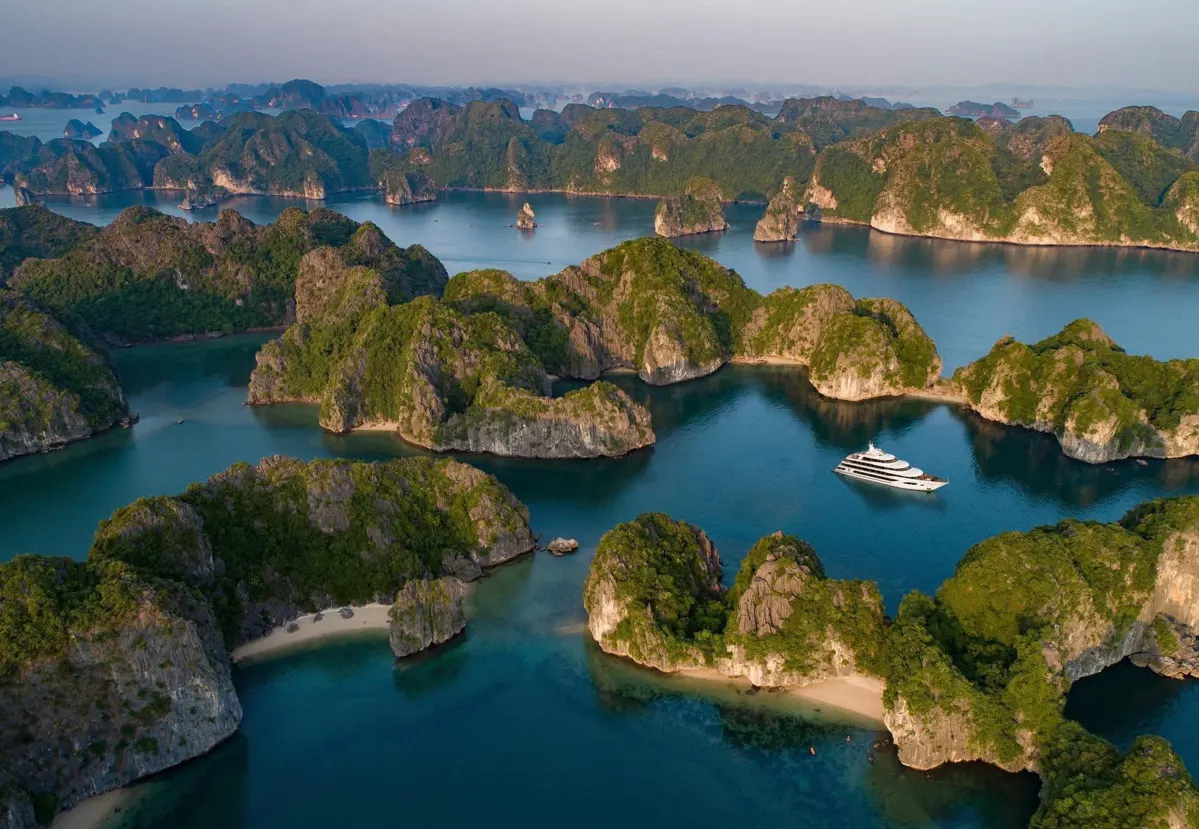
Vietnam officially reopened its borders to international tourism on March 15, 2022, following a closure period of nearly two years. Two months later, specifically on May 15, 2022, the Vietnamese government further eased restrictions by removing pre-entry COVID-19 testing mandates for all arriving travelers, as outlined in Official Dispatch No. 416/CD-TTg. This policy adjustment is anticipated to encourage international visits, particularly as the nation experiences its lowest COVID-19 infection rates in ten months.
Entry Requirements and Visa Options for Vietnam
Travelers considering a visit to Vietnam should understand the various visa regulations, which depend on their nationality and intended length of stay. Vietnamese visit visas are issued for specific durations, requiring foreign nationals to depart by the expiry date. Individuals planning to work in Vietnam must secure a work visa or permit. It is important to verify visa validity and conditions carefully, as overstaying can lead to fines, travel delays, and potential future restrictions on entry. In rare circumstances, Vietnamese authorities might consider extending visit visas, often requiring local agents to act as sponsors and assume legal and financial responsibility.
Vietnam provides visa exemptions for citizens of 24 countries, allowing stays from 14 to 90 days for those holding valid ordinary passports. The following table details these exemptions:
| Area | Country | Maximum Stay |
|---|---|---|
| Asia | Thailand | Less than 30 days |
| Asia | Malaysia | Less than 30 days |
| Asia | Singapore | Less than 30 days |
| Asia | Indonesia | Less than 30 days |
| Asia | Cambodia | Less than 30 days |
| Asia | Laos | Less than 30 days |
| Asia | Philippines | Less than 21 days |
| Asia | Myanmar | Less than 14 days |
| Asia | Brunei | Less than 14 days |
| Asia | South Korea | Less than 45 days |
| Asia | Japan | Less than 45 days |
| Asia | Kyrgyzstan | Less than 30 days |
| Europe | Russia | Less than 45 days |
| Europe | Sweden | Less than 45 days |
| Europe | Denmark | Less than 45 days |
| Europe | Finland | Less than 45 days |
| Europe | Norway | Less than 45 days |
| Europe | United Kingdom | Less than 45 days |
| Europe | France | Less than 45 days |
| Europe | Germany | Less than 45 days |
| Europe | Spain | Less than 45 days |
| Europe | Italy | Less than 45 days |
| Europe | Belarus | Less than 45 days |
| South America | Chile | Less than 90 days |
For nationals of 80 countries, Vietnam offers an electronic visa (eVisa) option. This single-entry visa is valid for 30 days, costs 25 USD, and typically processes within three working days. eVisa holders can enter Vietnam through any of its eight international airports, including Hanoi, Ho Chi Minh City, Danang, and Phu Quoc, as well as 14 land border crossings and 7 seaports.
To apply for Vietnam’s eVisa, prepare the following items:
- A 4x6 passport-style photograph in .jpg format with a white background and no glasses.
- A .jpg image of your passport data page.
- A passport with at least six months of validity remaining from your entry date.
- Your temporary address in Vietnam and planned entry/exit points.
- A debit or credit card for payment.
The application process involves visiting www.immigration.gov.vn, navigating to ‘E-visa Issuance’, and selecting ‘Outside Vietnam foreigners’. Applicants then upload the required images, complete the form, and pay the 25 USD fee. A document code will be provided, which should be saved. Within three working days, applicants should receive an email update; otherwise, they can search for their eVisa using the document code on the same website. It is advisable to download and print two copies of the eVisa for security. Travelers with an eVisa can proceed directly to immigration counters upon arrival, bypassing the Visa On Arrival queues.
For those planning multiple entries or stays exceeding 30 days, a Visa on Arrival is generally recommended. Requirements for this include a 4x6 passport photo with a white background and no glasses, a completed visa application form, a passport or equivalent identification valid for six months beyond the entry date, and a payment of 25 USD to 50 USD for visa fees. Additionally, an Approval Letter from a Vietnamese embassy or consulate is necessary if collecting the visa at the airport. If a Vietnamese embassy or consulate is not accessible, some travel agencies can assist in obtaining this Approval Letter. Upon arrival at the airport, this letter, along with the application form and other documents, should be presented at the Visa On Arrival counter. The visa stamp fee must be paid in USD or Vietnamese Dong at the airport.
Regarding passports, ensure yours remains valid for a minimum of six months from your entry date into Vietnam. Instances of travelers being denied entry or exit due to damaged passports have occurred, so verify its condition before departure. Your passport will be inspected upon arrival to confirm entry eligibility and must remain valid for your entire stay. Being refused entry can result in considerable expense and extended waits at the airport. When checking into accommodations, you will typically need to provide your passport for hotel registration with local police. Always ensure your passport is returned and stored securely, as failure to register can lead to fines.
Health Guidelines and Safety Measures for Visitors
Visitors to Vietnam are encouraged to adopt sensible health precautions throughout their travels. The World Health Organization (WHO) recommends several fundamental practices to safeguard personal well-being and that of companions. These include avoiding travel if experiencing fever and cough. Should symptoms such as fever, cough, and breathing difficulties arise, immediately contact healthcare services and provide details of recent travel history.
Maintaining physical distance from others, particularly those exhibiting sneezes, coughs, or fever, is advised, with a recommendation of one meter or more. Regular hand washing with soap and running water is important; alcohol-based hand sanitizers can also be used frequently. When coughing or sneezing, cover your mouth and nose with a tissue, dispose of it immediately, and then wash your hands. Avoid contact with live animals, and if touching live animals or animal products in markets, wash hands thoroughly with soap and water. Consume only well-cooked food, ensuring that meals, especially animal proteins and dairy products, are prepared hygienically and cooked completely. If choosing to wear a single-use mask, ensure it covers both nose and mouth, refrain from touching the mask, and wash hands after removal.
Vietnam eliminated COVID-19 testing requirements for all international arrivals starting May 15, 2022, as confirmed by Official Dispatch No. 416/CD-TTg, following a notable decline in case numbers. While not mandatory, purchasing medical or travel insurance that covers COVID-19 treatment is highly recommended, with a minimum coverage of 10,000 USD. This type of insurance typically costs around 40 USD. Travelers experiencing symptoms like fever, cough, or breathing difficulties should immediately call Vietnam’s health hotline at 19003228. As of the latest available data, Vietnam has recorded 11,625,195 confirmed infections, 10,640,971 recovered cases, and 43,206 deaths.
Essential Travel Information and Customs Regulations
When preparing for a trip to Vietnam, understanding customs regulations and general travel logistics is key. Travelers must declare items exceeding their duty-free allowance, any banned or restricted goods, items intended for sale, or cash amounts exceeding 5,000 USD (or its equivalent). Both individuals and their luggage may be subject to inspection for declared goods. For travelers looking to bring home unique purchases and souvenirs, local markets offer a wide array of options.
For air travel within Vietnam, passengers are required to wear face masks on flights operated by carriers such as Vietnam Airlines, Vietjet Air, and Bamboo Airways; flight attendants also adhere to this rule. Domestic flight passengers also undergo verbal health assessments and temperature checks. Vietnam's electrical current is 220V/50Hz, utilizing plug types A, C, and F. As the standard voltage in the US is 110 volts, a surge adapter may be necessary for electronic devices. While not compulsory, vaccinations for Typhoid, Hepatitis A and B, and antimalarial tablets are often advised. A Yellow Fever certificate is required if traveling from a high-risk area. It is recommended to consult a medical professional four to eight weeks prior to departure for personalized advice.
Internet and Wi-Fi access are widely available across Vietnam. Approximately 98% of hotels and guesthouses offer free Wi-Fi, with exceptions mainly in very remote areas like national parks or certain islands. Many cafes and restaurants also provide complimentary Wi-Fi, generally offering fast and stable connections. Most travelers also use 4G mobile phone connections. Popular platforms like Google (including Gmail, Google Maps, and YouTube), Facebook, and TikTok are accessible, and Twitter is not blocked. Obtaining a local SIM card is easy and affordable, even for short stays. For about 5 USD, travelers can get a SIM card with 2GB of mobile data valid for 30 days, offering speeds up to 30Mbps. Prices for SIM cards with mobile data range from 5 USD to 14 USD, providing 2GB to 20GB of data. Ensure your phone is unlocked before purchasing a SIM. These are available at airports, mini-marts, from street vendors, and at travel agencies. Major mobile networks include Viettel, Vinaphone, and Mobifone. For those planning longer distances, understanding overnight rail journeys in Vietnam can be a valuable part of travel preparation.
The official currency of Vietnam is the Vietnamese Dong (VND). Withdrawing money from banks or ATMs is generally safe, but it is wise to confirm the amount being dispensed. Exchange rates fluctuate; for reference, 1 USD is approximately VND 24,000-25,000, 1 EUR is around VND 26,000-27,000, 1 AUD is about VND 16,000-17,000, 1 SAR is roughly VND 6,000-7,000, and 1 INR is about VND 280-300 (these are approximate values and should be verified at the time of travel). Credit cards are broadly accepted throughout the country. However, be aware that many establishments, including agents, hotels, and shops, may apply a transaction fee, typically around 3% for processing credit card payments. It is advisable to check with your bank regarding any foreign transaction fees they may impose.
While tipping is not mandatory or consistently anticipated, offering a gratuity is a customary way to express appreciation for good service or food. As a general guide for solo travelers, a tip of 5-7 USD per day for a guide is suggested. For couples, 7-10 USD per couple per day is appropriate. Groups of 3-4 might consider tipping in the range of 10-12 USD per group per day. For groups larger than four, an increase of roughly 10% for each additional person is a reasonable adjustment. In case of emergencies, the police can be reached by dialing 113, the fire department at 114, and an ambulance at 115.
Understanding Vietnam's Climate and Regional Weather
Vietnam's diverse geography results in varied weather conditions, encompassing both tropical and temperate zones. The country generally experiences two monsoon seasons: one from October to March in the northeast, and another from April to October across most other regions, excluding mountainous areas. While the period from March to May often presents the most favorable weather nationwide, there is no single "bad" time to visit Vietnam, as pleasant weather can typically be found in some part of the country year-round.
Northern Vietnam, which includes destinations like Hanoi, Sapa, Ha Giang, Halong, and the Red River Delta, experiences distinct seasons. From December to March, the weather is cool to cold, often misty and cloudy. April to June brings warm to hot temperatures with clear, sunny skies. June to August is characterized by hot, humid conditions and heavy rainfall. September to November sees cooler temperatures, clear skies, and sunshine. The optimal times to visit Hanoi and the Red River Delta (including Halong Bay, Cat Ba Island, and Ninh Binh) are generally April to June or September to December. April typically features hot days, sometimes exceeding 30 degrees Celsius, with clear skies. From September to November, temperatures cool to around 25 degrees Celsius with sunny conditions, ideal for exploration. Visitors in June should anticipate high temperatures and humidity, potentially reaching 40 degrees Celsius, as this marks the peak of the rainy season (June to August). December is cool, misty, and atmospheric, but from late December through March, temperatures can drop surprisingly low, sometimes reaching 10 degrees Celsius, necessitating warmer clothing. For those interested in coastal scenery, exploring Halong Bay's beaches can be a highlight during the warmer months.
Central Vietnam, home to cities such as Hue, Danang, Hoian, Nha Trang, and Phan Thiet, has its own climatic patterns. September to January is typically rainy, cool, and cloudy, with tropical storms frequently impacting the region starting in September. February to August is warm to hot, sunny, and clear. March is an excellent month to visit, when fields, gardens, and streets are adorned with bright flowers and lush greenery. From May to August, temperatures can be quite high, making coastal areas appealing for cooling off. The later months, from September to November, bring substantial rainfall and occasionally minor flooding. Temperatures begin to fall during this period, reaching their lowest point in January before warming up just before the Vietnamese New Year.
Southern Vietnam, encompassing Ho Chi Minh City, the Mekong Delta, and Phu Quoc, maintains consistent temperatures throughout the year. Ho Chi Minh City experiences either hot and dry or hot and rainy conditions, though some refreshingly mild days occur early in the year, and scorching days in mid-year. Temperatures typically hover around 30 degrees Celsius with abundant sunshine. The wet season, from May to November, brings predictable afternoon downpours, usually lasting a few hours. The dry season, from December to April, offers clear skies, hot weather, and plenty of sun.
Key Facts and Figures About Vietnam
Vietnam is situated in Southeast Asia, sharing borders with China, Laos, Cambodia, the Gulf of Tonkin, the Pacific Sea, and the Gulf of Thailand. The country spans over 330,000 square kilometers and boasts more than 3,200 kilometers of coastline. A non-stop flight from Dubai typically takes 7 hours and 15 minutes, while direct flights from Australia are approximately 8 hours. Vietnam operates within the Indochina Time Zone, which is UTC +07:00. The international dialing code for Vietnam is +84.
Hanoi serves as the capital city of the Socialist Republic of Vietnam and is the nation's second-largest city, after Ho Chi Minh City (formerly known as Saigon). As of April 1, 2019, Vietnam's population was recorded at over 96.2 million, positioning it as the 15th most populous country globally and the third most populous in Southeast Asia. The Vietnamese populace comprises 54 distinct ethnic groups coexisting harmoniously. The Kinh (Viet) people constitute 86% of the population, with the remaining 53 ethnic groups accounting for over 10%. The official language is Vietnamese, but English is spoken across the country, facilitating basic communication and greetings for visitors.
Vietnam's extensive and intricate history reflects influences from Chinese, French, Japanese, and American cultures, adding depth to the country's narrative. Millennia of invasions and conflicts have profoundly shaped contemporary Vietnamese culture, making it complex, diverse, and a reflection of its past. Vietnamese culture emphasizes humanity, harmony, family, and community values, expressed through music, art, dance, and literature. While French and American influences are present, national symbols such as dragons, turtles, bamboo, and lotuses are distinctly Vietnamese and frequently seen on buildings and Buddhist temples. Vietnamese society is generally conservative yet tolerant. To avoid causing offense, it is advisable to follow simple cultural norms: shorts and sleeveless tops are acceptable at the beach but not at religious sites, and nudity on beaches is prohibited.
The primary religions in Vietnam are Buddhism (practiced by 14.91% of the population) and Catholicism (7.35%). However, the largest segment of the population adheres to Vietnamese folk traditions or identifies as non-religious. Approximately 7% of the population is Christian, with smaller numbers of Hindu and Muslim adherents. Travel within Vietnam is generally safer than many might anticipate; the government has effectively managed civil unrest, and incidents of violence against tourists are rare. Nevertheless, opportunistic crimes can occur: in Hanoi, Nha Trang, and Ho Chi Minh City, tourists may be targets for pickpockets and purse snatchers operating from motorcycles. The main international and domestic travel hubs include Noi Bai International Airport (Hanoi in the North), Tan Son Nhat International Airport (Ho Chi Minh City in the South), and Danang International Airport (Danang City in the Center). Other international airports are Cat Bi (Hai Phong), Van Don (Quang Ninh), Vinh (Nghe An), Phu Bai (Hue), Cam Ranh (Nha Trang – Khanh Hoa), Can Tho (Can Tho City), and Phu Quoc (Phu Quoc Island). Four airlines operate internal flights in Vietnam, all offering online booking services, providing ample choice and ease of advance booking. Vietnam Airlines is the national carrier, with an extensive domestic and expanding international network. Other prominent airlines include Vietjet Air, Bamboo Airways, and Jetstar Pacific Airlines.
Regional Travel: Entry Rules for Neighboring Countries
For travelers planning to extend their journey beyond Vietnam, understanding the current entry regulations for neighboring countries is important. These policies are subject to change, so always verify the latest information before travel.
Cambodia: As of October 6, 2022, Cambodia no longer requires inbound travelers to complete a health declaration form or provide proof of vaccination, effectively lifting all border controls related to COVID-19. However, temperature screenings continue at all entry points. There is also no requirement for COVID-19 insurance coverage. Visa on Arrival for all travelers to Cambodia has been reinstated, applicable for arrivals by air, land, and sea. Travelers can also apply for a Cambodia e-Visa independently at www.evisa.gov.kh.
Thailand: Effective October 1, 2022, passengers arriving in Thailand are no longer required to present COVID-19 related documents, such as vaccination certificates or test results. COVID-19 insurance coverage is also not mandated.
Laos: Laos officially removed COVID-19 entry restrictions for fully vaccinated tourists starting May 9, 2022. Unvaccinated visitors must present a Rapid Antigen Test result issued within 48 hours of departing their country of origin. Travelers who contract COVID-19 or arrive with the virus are responsible for all treatment costs, which can be incurred at state and private hospitals, or through self-isolation and self-care. Individuals who have recovered from COVID-19 do not need an RT-PCR test but must provide an official medical certificate. All international checkpoints have reopened for entry and exit by both citizens and foreign nationals, with vehicle movement permitted as before the pandemic. Citizens from countries with bilateral or unilateral visa waiver agreements with Laos can now enter without a visa. Others can apply for a visa at a Lao embassy or consulate abroad or through the e-Visa online system. Visa on Arrivals have also been reinstated at specific international checkpoints.
Myanmar: Myanmar is currently open for travel to fully vaccinated visitors who meet the criteria for securing an online e-visa. Regardless of vaccination status, travelers are expected to undergo a COVID-19 Rapid Antigen Diagnostic Test upon arrival at the airport. It is advisable to bring 15,000 MMK (Myanmar Kyat), approximately 7 USD, or be prepared to convert cash at exchange counters to cover this test fee. This is in addition to a test required 48 hours before arrival, the type of which depends on vaccination status. If the airport test result is negative, travelers are free to proceed. Those displaying symptoms or testing positive will be isolated and transferred to a hospital or designated hotel by the Ministry of Health, at their own expense. International travelers must also purchase Myanmar health insurance that includes COVID-19 coverage, with starting prices around 50 USD for 15 days of validity. If an in-country test is positive, this health insurance covers additional hotel quarantine and hospital fees up to a maximum of 4,500 USD, as per health authority requirements. A list of approved hotels for waiting for PCR test results is available, categorized into Category A (5-star, recommended) and Category B (3-star). Due to the ongoing situation in Myanmar, some areas are restricted for tourism or require special permits. It is recommended to visit established tourism centers like Yangon, Mandalay, Bagan, and Inle, and to avoid overland travel where possible by utilizing flights. Cash withdrawals from ATMs in Myanmar are currently unavailable, and international credit cards are not accepted by businesses. Travelers must arrange their trip through a travel agency beforehand and carry sufficient cash to cover all holiday expenses. Note: Information correct as of 15:00, October 31, 2022 (GMT +7, Hanoi Time).
Frequently Asked Questions
What are the current COVID-19 entry requirements for Vietnam?
As of May 15, 2022, Vietnam has removed all pre-entry COVID-19 testing requirements for international arrivals. While no longer mandatory, travelers are encouraged to follow general health precautions like hand washing and social distancing, as recommended by the World Health Organization.
How long can I stay in Vietnam with a visa exemption?
Vietnam offers visa exemptions for citizens of 24 countries, with permitted stays ranging from 14 to 90 days, depending on nationality. For example, citizens from Southeast Asian nations typically receive exemptions for less than 30 days, while some European and Asian countries are granted up to 45 days, and Chile up to 90 days.
What is the process for obtaining an eVisa for Vietnam?
The Vietnamese eVisa is available to nationals of 80 countries, costs 25 USD, and is valid for a single 30-day entry. The application is completed online at www.immigration.gov.vn, requiring passport and photo uploads, and typically processes within three working days. It's advisable to print two copies of the approved eVisa.
Are credit cards widely accepted in Vietnam, and what about cash?
Credit cards are generally accepted across Vietnam, though many establishments may charge a processing fee of approximately 3%. The official currency is the Vietnamese Dong (VND), and it is safe to withdraw cash from ATMs. Travelers must declare cash amounts exceeding 5,000 USD upon entry.
What is the best time of year to visit Vietnam?
While March to May generally offers the most favorable weather conditions across the entire country, Vietnam's diverse climate means there is no truly "bad" time to visit. Different regions experience distinct seasons, allowing for pleasant travel experiences in various parts of the country year-round. For instance, Northern Vietnam is best from April to June or September to December, while Southern Vietnam is pleasant from December to April.








