A seven-day trip to Vietnam allows travelers to experience significant cultural and geographical diversity, spanning from the historical northern cities to the agricultural south. While a week is insufficient to see every aspect of the country, a carefully planned route can provide a fulfilling overview of its most iconic destinations. This itinerary focuses on efficient travel between regions to offer a rich, varied experience without feeling rushed.
Planning Your Week in Vietnam
Understanding key travel logistics is crucial when organizing a concise trip through Vietnam. Considerations such as visa requirements, optimal travel seasons, safety, and financial planning can significantly enhance the experience.
Most international visitors, including those from the United States and Australia, typically require an e-visa, which usually processes within 3 to 5 business days. Citizens from some Asian nations, such as Singapore, Indonesia, and South Korea, may qualify for visa-free entry for shorter durations. Vietnam is widely regarded as a secure and welcoming destination for all travelers, including those traveling alone, though standard precautions for personal belongings are always advisable.
For a comfortable journey across the country, the period from November to April generally offers the most favorable weather conditions. However, preferences can vary by origin and desired activities:
| Traveler Origin | Ideal Period | Focus |
|---|---|---|
| United States | March - April | Pleasant temperatures nationwide |
| United States | October - November | Avoiding peak crowds |
| Australia | June - August | Family-friendly beach stays |
| Australia | November - February | Relaxed escapes |
| Asia | Late February - April | Food, festivals, short getaways |
Vietnam is known for its affordability compared to many Western and East Asian countries. A bowl of pho might cost around $2 USD, a four-star hotel approximately $80 USD per night, and an overnight cruise in Halong Bay can be found for under $200 USD. The official currency is the Vietnamese Dong (VND), with approximately 25,000 VND equating to 1 USD. Travelers will encounter many large denominations, so understanding the exchange rate is helpful. When considering how to manage finances in Hanoi, it is useful to know that many local vendors and taxis prefer cash payments, making it wise to carry smaller bills.
A Detailed Seven-Day Route Across Vietnam
This itinerary is designed to provide a comprehensive experience of Vietnam's north, central, and southern highlights within a single week, balancing cultural exploration with natural beauty.
Day 1: Arrival in Hanoi – The Capital's Character
Upon arrival at Noi Bai International Airport (HAN), the energy of Hanoi becomes immediately apparent. The drive to the city center takes approximately 45 minutes. Taxis are readily available, or ride-hailing services like Grab offer a convenient alternative. Pre-booking an airport transfer can provide a smoother arrival experience, especially after a long flight, by avoiding potential negotiation hassles.
In Hanoi, consider visiting the Hanoi Train Street, though it is best explored with a guide who understands optimal viewing times. Sample egg coffee at Giang Cafe, stroll around Hoan Kiem Lake at sunrise, crossing The Huc Bridge to Ngoc Son Temple, or attend a water puppet show at Thang Long Theatre. The Note Coffee, adorned with thousands of traveler notes, offers a unique atmosphere. For street crossings, walking slowly and steadily, often following a local, is the recommended approach.
| Eatery | Address/Description | Specialty |
|---|---|---|
| Pho 10 Ly Quoc Su | Popular chain | Beef Pho |
| Bun Cha Dac Kim | 1 Hang Manh | Grilled pork with dipping sauce |
| Pho Ga | Hang Hom Street | Hanoi-style Chicken Pho |
| Banh Mi Mama | 54 Ly Quoc Su | Crispy banh mi sandwiches |
| Tom's Bar / Huy Beer Tay | Ta Hien Street | Cocktails / Local Beer |
For accommodation, the Hoan Kiem area is often suggested for first-time visitors seeking a walkable experience close to street food and night markets. Prices generally range from $50-160+ USD per night. Alternatively, Tay Ho (West Lake) offers a more tranquil environment, popular with expatriates and those seeking spacious hotels and lake views, typically priced from $70-180 USD per night. If staying in Tay Ho, ensure easy access to the Old Quarter for sightseeing.
| Hotel | Area | Price (USD/night) | Vibe |
|---|---|---|---|
| Scent Premium Hotel (3★) | Hoan Kiem | $50–70 | Cozy, near Hoan Kiem Lake |
| Hanoi La Siesta Trendy (4★) | Hoan Kiem | $80–110 | Elegant, quiet, near Train Street |
| Apricot Hotel (5★) | Hoan Kiem | $140–180 | Classic luxury, artistic |
| Elegant Suites Westlake (4★) | Tay Ho | $90–120 | Spacious serviced apartments, peaceful |
| InterContinental Hanoi Westlake (5★) | Tay Ho | $160–200 | Resort-like, on the water |
Days 2-3: Cruising Halong Bay and Lan Ha Bay
A cruise through Halong Bay is a highlight of northern Vietnam. The journey from Hanoi has been significantly shortened to 2.5-3 hours thanks to a new expressway, with limousine transfers costing around $20 USD each way. Boarding typically occurs around noon. Cruises like the Mon Cheri Cruise (from $170/person) often explore Lan Ha Bay, a quieter section adjacent to Halong Bay with fewer vessels.
Activities on board commonly include practicing Tai Chi at sunrise, enjoying cocktails on the sundeck, kayaking through calm waters beneath limestone karsts, participating in spring roll making classes, and squid fishing after a gourmet dinner. For those interested in exploring the bay's coastal areas, there are options to visit various points of interest. Travelers should note that plastic bags are generally not permitted on board, so sustainable packing is encouraged. Booking directly through reputable local agencies can often secure better rates.
| Cruise | Best For | Atmosphere |
|---|---|---|
| Essence Grand (Grand Pioneers) | Couples, first-time luxury travelers | Modern, full-service |
| Catherine Cruise | Stylish honeymooners | Chic, trendy |
| Peony Cruise | Couples, mid-range luxury | Calm, elegant |
| Sena Cruises | Young travelers | Boutique, value-focused |
| Swan Cruises (Bai Tu Long) | Nature lovers, repeat visitors | Rustic, authentic, less crowded |
If time permits, a three-day, two-night cruise is recommended to venture deeper into the bay's less-visited areas, offering a more extensive and peaceful experience, particularly appealing for those with longer holidays or families seeking kid-friendly activities.
Day 4: Journey to Da Nang – Coastal City Exploration
Travel to Da Nang by air from Hanoi takes approximately 1 hour and 20 minutes, with fares typically ranging from $50-100 USD one-way. Vietnam Airlines and VietJet Air frequently operate this route. Da Nang offers a mix of urban attractions and natural landscapes.
A visit to Ba Na Hills is a popular choice, featuring one of the world's longest non-stop cable car rides. At the summit, attractions include the Golden Bridge, the French Village with its European-inspired architecture, and Fantasy Park, an indoor amusement area. Weather conditions on Ba Na Hills can change rapidly, so bringing a light jacket is advisable. Alternatively, an exploration of Da Nang by vintage US Army Jeep can provide a scenic tour, including stops at the Marble Mountains, the Hai Van Pass for coastal views, the Son Tra Peninsula to potentially spot red-shanked douc langurs, and Linh Ung Pagoda, home to a 67-meter Lady Buddha statue.
| Hotel | Price (USD/night) | Vibe |
|---|---|---|
| Monarque Hotel Danang | $50–70 | Elegant, boutique, near My Khe Beach |
| Brilliant Hotel Da Nang | $60–90 | Modern, central, near Han Market |
| InterContinental Danang Sun Peninsula Resort | $300+ | Ultra-luxury, secluded, oceanfront |
| Sel de Mer Hotel & Suites | $90–140 | Chic, sea-facing, infinity pool |
My Khe Beach is recommended for those who enjoy coastal settings and easy access to both the beach and city. The City Center (Hai Chau District) suits culture enthusiasts and foodies, while the Son Tra Peninsula offers a peaceful, secluded environment. Da Nang is recognized for its diverse culinary scene.
| Dish | Recommended Spot | Description |
|---|---|---|
| Mi Quang | Mi Quang Ba Mua | Turmeric noodles with rich broth and various toppings |
| Bun Cha Ca | Bun Cha Ca Ba Lu | Grilled fishcake noodles with fragrant broth |
| Banh Xeo | Banh Xeo Ba Duong | Crispy pancakes served with herbs and peanut sauce |
Day 5: Hoi An's Ancient Charm
The journey from Da Nang to Hoi An is a scenic 45 to 60-minute drive. A private car, typically costing $25-35 USD one way, is recommended for comfort, especially when traveling with luggage. Hoi An is celebrated for its preserved Ancient Town, particularly enchanting after 5 PM when lanterns illuminate the streets. Access to heritage houses, temples, and museums within the Old Town requires a ticket, approximately $5 USD.
Key activities include having custom clothing made at tailors like Bebe Tailor or Yaly Couture, exploring the Hoi An Night Market on Nguyen Hoang Street, experiencing a basket boat ride in Cam Thanh Village's coconut forest, or participating in a lantern-making workshop. The Lantern Festival, held on the 14th of every lunar month, offers a unique experience with candle-lit boats and streets. When looking for unique purchases and traditional crafts, Hoi An offers many options.
| Dish | Recommended Spot | Address |
|---|---|---|
| Cao Lau | Quan Cao Lau Thanh | 26 Thai Phien Street, Minh An Ward |
| White Rose Dumplings | White Rose Restaurant | 533 Hai Ba Trung |
| Banh Mi Hoi An | Banh Mi Phuong | Phan Chu Trinh Street |
| Mi Quang | Mi Quang Ong Hai | 6A Truong Minh Luong |
| Com Ga | Com Ga Ba Buoi | 22 Phan Chu Trinh |
| Banh Xeo | Ba Le Well Restaurant | Tran Hung Dao Street, Minh An Ward |
| Mot Herbal Drink | Mot Hoi An | 150 Tran Phu |
Staying near Hoi An Ancient Town or in Cam Chau provides easy access to cultural sites and eateries. For beach enthusiasts, An Bang or Cua Dai Beach offer a relaxed atmosphere. Tan An provides a quieter, residential feel for longer stays. Hotel rates typically range from $30-60 USD for boutique three-stars, $70-120 USD for mid-range, and $150-300+ USD for upscale resorts.
| Hotel | Area | Price (USD/night) | Vibe |
|---|---|---|---|
| Hotel Royal Hoi An (5★) | Cam Chau | $176–290 | Sophisticated riverside charm |
| Anantara Hoi An Resort (5★) | Cam Chau | $235–438 | Elegant colonial retreat |
| Bel Marina Hoi An Resort (4★) | Riverside | $80–130 | Comfortable, central, near night market |
| Aira Boutique Hoi An Hotel & Villa (4★) | An Bang Beach | $80–110 | Stylish coastal hideaway |
Day 6: Ho Chi Minh City – Southern Energy
A flight from Da Nang to Ho Chi Minh City takes about 1 hour and 30 minutes, with one-way fares ranging from $35-95 USD. Vietnam Airlines and VietJet Air are common carriers for this busy domestic route. Ho Chi Minh City, formerly Saigon, is a dynamic metropolis with significant historical landmarks.
Key attractions in District 1 include the Notre Dame Cathedral and Central Post Office, showcasing French colonial architecture (note: the cathedral is currently under renovation). The Reunification Palace offers insight into South Vietnam's history, and the War Remnants Museum provides a powerful perspective on the country's past. Ben Thanh Market is ideal for souvenirs and street food. A trip to the Cu Chi Tunnels, a network used during the Vietnam War, is highly recommended for history enthusiasts. Consider a luxury dinner cruise on the Saigon River for an evening experience, or explore Bui Vien Street for its lively atmosphere.
| Dish | Recommended Spot | Address |
|---|---|---|
| Banh Mi | Banh Mi Huynh Hoa | 26 Le Thi Rieng Street, District 1 |
| Pho | Pho Le on Nguyen Trai Street | 415 Nguyen Trai, District 5 |
| Com Tam (Broken Rice) | Com Tam Sa Bi Chuong | 179 Tran Binh Trong, District 5 |
| Bun Thit Nuong (Grilled Pork with Noodles) | Bun Thit Nuong Cha Gio | 1 Nguyen Trung Truc, District 1 |
District 1 is suitable for first-time visitors who prefer to be near major attractions. District 3 offers a more relaxed, authentic experience with leafy streets and cafes. District 5 (Chinatown) is a cultural hub, appealing to those seeking traditional temples and unique street food. When planning your trip, understanding banking services in Ho Chi Minh City can be helpful for managing your expenses.
| Hotel | Area | Price (USD/night) |
|---|---|---|
| The Myst Dong Khoi | District 1 | $120-160 |
| Liberty Central Saigon Citypoint | District 1 | $80-110 |
| La Vela Saigon Hotel | District 3 | $90-130 |
| Novotel Living Saigon South | District 3 | $80-110 |
| Windsor Plaza Hotel | District 5 | $80-110 |
| Sunrise Central Hotel | District 5 | $50-70 |
Day 7: Mekong Delta – Rural Serenity
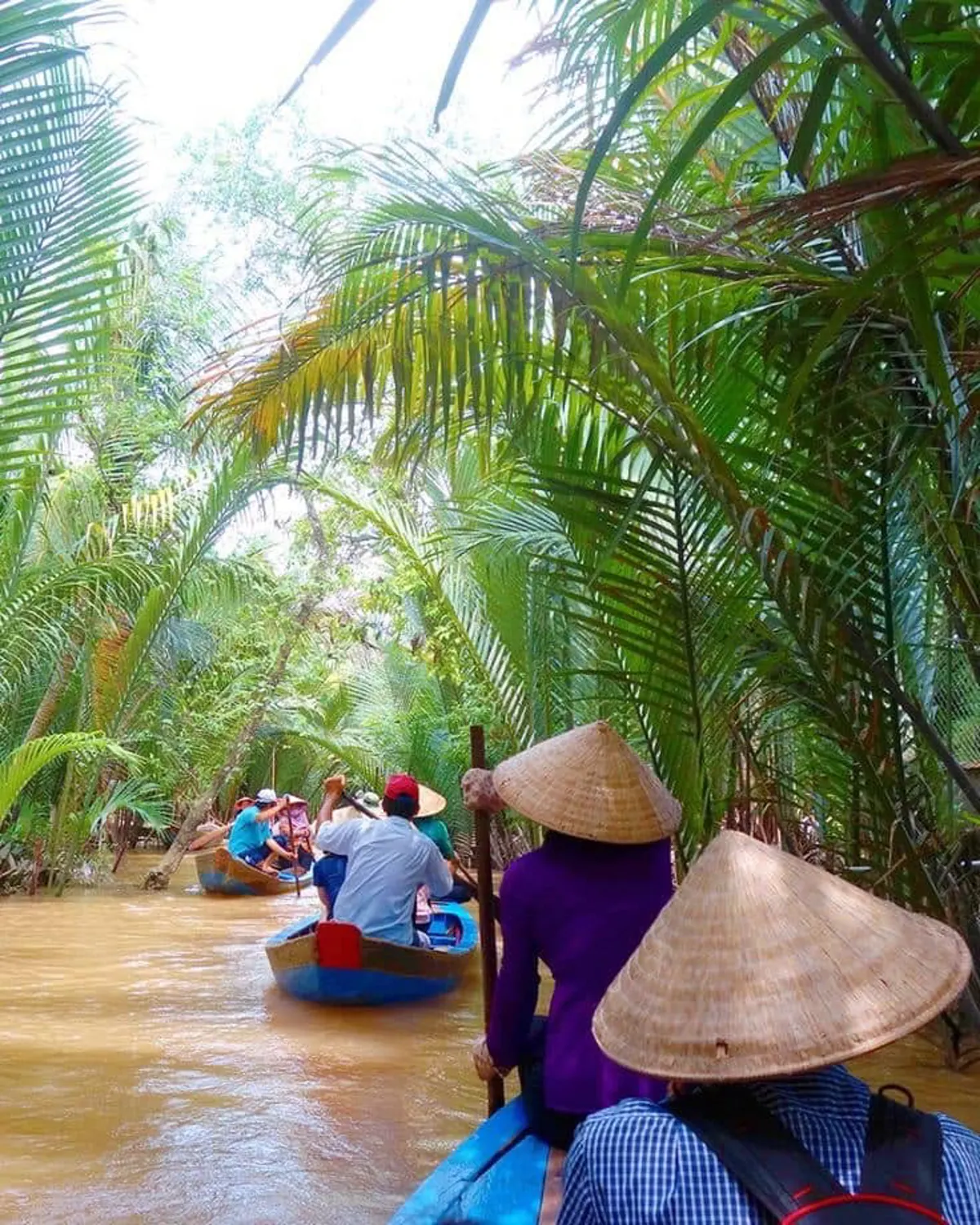
Concluding the week with a visit to the Mekong Delta offers a change of pace, focusing on nature and local life. Ben Tre is often favored for its peaceful atmosphere and authentic experiences. Activities typically include rowing a sampan through shaded palm canals, visiting coconut candy and rice paper workshops, taking a tuk-tuk or bicycle ride through villages, strolling through fruit orchards to sample tropical fruits, and listening to traditional Southern Vietnamese music (Don Ca Tai Tu). Remember to bring sunglasses and mosquito repellent, as most of the day is spent outdoors.
For overnight stays, the Ben Phu district in Ben Tre, along the Ham Luong River, provides a tranquil setting amidst coconut groves and small farms, while remaining close to Ben Tre City center.
| Hotel | Area | Price (USD/night) |
|---|---|---|
| Diamond Stars Ben Tre Hotel | Ben Phu | ~$60-80 |
| Bamboo Riverside Boutique Hotel | Ben Phu | ~$35-45 |
Essential Packing and Budgeting for Your Vietnam Trip
Preparing adequately for a week in Vietnam involves packing light and understanding potential costs. Lightweight, moisture-wicking clothing like cotton shirts, linen pants, and midi dresses are suitable. Include items that cover shoulders and knees for visits to religious sites. Comfortable sneakers or sandals are essential for walking, with flip-flops useful for beach areas. Sun protection, including reef-safe sunscreen, sunglasses, and a hat, is important due to intense sun, especially in central and southern regions. Mosquito repellent is advisable for rural areas like the Mekong Delta.
A Viettel SIM card, available at the airport, is recommended for connectivity. While Wi-Fi is widely available, local SIMs are affordable and reliable for maps and ride-hailing apps. Carrying small denominations of Vietnamese Dong (10,000-100,000 VND) is practical, as many street vendors and local taxis operate on a cash-only basis.
An estimated budget for a seven-day trip, excluding international flights, typically ranges from $1,066 to $1,610 USD per person, based on mid-range accommodations and activities.
| Category | Estimated Cost (USD) | Notes |
|---|---|---|
| Accommodation (6 nights) | $400 - $600 | 4-star to boutique hotels, centrally located |
| Domestic Transport | $150 - $200 | 1-2 domestic flights & airport shuttles |
| Food & Drinks | $150 - $200 | Street food and some sit-down meals |
| Sightseeing & Tours | $300 - $500 | Halong Bay cruise, Hoi An workshop, Cu Chi Tunnels |
| Local Transport | $30 - $50 | Taxis, Grab, bicycles, short transfers |
| SIM Card & Connectivity | $6 - $10 | Viettel recommended, airport purchase |
| Tips & Miscellaneous | $30 - $50 | Tipping guides, souvenirs, extra coffee |
| Total Estimated Cost (per person) | $1,066 - $1,610 | Excludes international flights |
Frequently Asked Questions
Do people speak English in Vietnam?
In major cities and tourist zones, English is commonly spoken, particularly by hotel staff, tour guides, and younger residents. In more rural areas, English proficiency may be lower, but communication through gestures and a friendly demeanor is often effective.
Is it easy to get around Vietnam?
Yes, travel within Vietnam is generally straightforward. Domestic flights connect major cities efficiently, and sleeper trains offer a scenic alternative for longer distances. Ride-hailing apps like Grab simplify local transportation. In places like Hoi An, renting a bicycle provides a pleasant way to explore.
Is street food safe to eat?
Street food in Vietnam is typically safe, especially from busy stalls with high turnover, indicating fresh ingredients. Popular dishes like bun cha, pho, banh mi, and fresh spring rolls are widely enjoyed. For added comfort, consider joining a guided street food tour early in your trip.
What is the tipping culture like?
Tipping is not obligatory in Vietnam but is appreciated for good service. Common tipping guidelines include 5-10% at restaurants, $5-10 USD per day for tour guides, and $2-5 USD per day for drivers.
Is Wi-Fi and SIM card access good in Vietnam?
Yes, both Wi-Fi and SIM card access are excellent and affordable. A local SIM card, such as Viettel, can be purchased at the airport for approximately $8-10 USD, providing data for 7-15 days. Wi-Fi is widely available in hotels, cafes, and even on some trains.
Do I need to worry about scams?
As with any popular travel destination, minor scams, often involving overcharging, can occur. To minimize risks, book services through trusted platforms, avoid unofficial motorbike taxis, and always confirm prices before agreeing to services.