
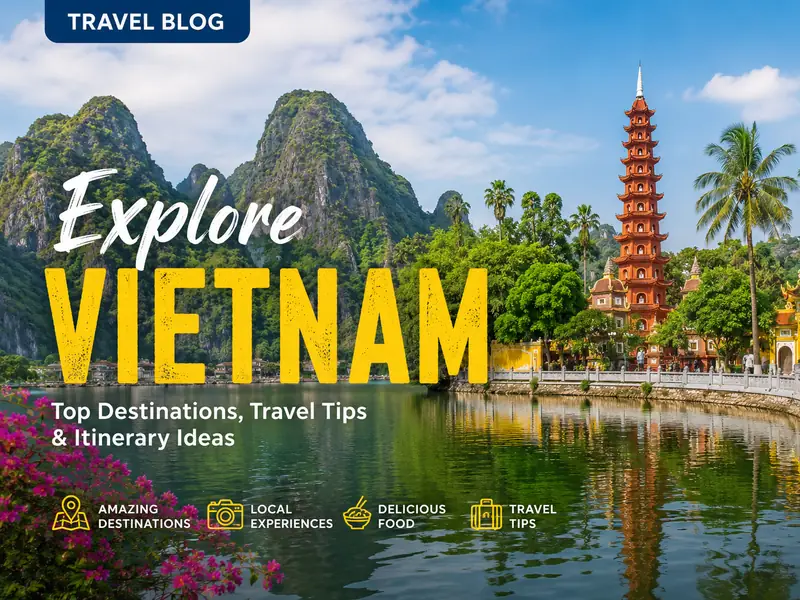
A nine-day trip through Vietnam offers a focused opportunity to experience the country's diverse landscapes and rich cultural heritage, stretching from its southern metropolises to the iconic northern bays. This itinerary is structured to provide a comprehensive overview, combining historical sites, local interactions, and natural beauty across Ho Chi Minh City, the Mekong Delta, Hoi An, and Hanoi, culminating in a cruise through Halong Bay. Each day presents a blend of organized activities and suggestions for personal exploration, allowing travelers to engage with Vietnamese life and scenery.
Planning a 9-Day Journey Through Vietnam
Vietnam presents a captivating blend of tradition and modernity, with distinct regional characteristics. A nine-day schedule allows for significant exposure to these differences, moving efficiently between key destinations. This travel plan begins in the south, progresses to the central coast, and concludes in the north, offering a logical flow that minimizes backtracking and maximizes sightseeing opportunities. Careful consideration of internal flights and transfers is essential to make the most of the time available.
The suggested route balances guided excursions with moments for independent discovery, ensuring both educational insights and personal enjoyment. From the historical narratives of Ho Chi Minh City to the tranquil waterways of the Mekong Delta, the ancient charm of Hoi An, and the cultural depth of Hanoi before the grandeur of Halong Bay, this itinerary is designed to showcase Vietnam's highlights within a compact timeframe.
Southern Vietnam: Ho Chi Minh City and Mekong Delta
Day 1: Arrival and Exploration in Ho Chi Minh City
Upon arrival in Ho Chi Minh City, often still referred to as Saigon by locals, visitors are greeted by a city that harmoniously blends historical significance with contemporary energy. After settling into accommodation, travelers have the option to rest or immediately begin exploring. Key historical landmarks include the Reunification Palace, a pivotal site in modern Vietnamese history, and the War Remnants Museum, which offers a poignant look at past conflicts. Architectural enthusiasts can admire the French colonial influences evident in structures like Notre Dame Cathedral and the Saigon Central Post Office, both popular spots for photography.
As evening approaches, a dinner cruise on the Saigon River provides a relaxing way to see the city's illuminated skyline. These cruises typically depart from Nha Rong Port (Saigon Port) and offer a buffet meal alongside river views, creating a memorable introduction to the city's evening atmosphere.
Day 2: Cu Chi Tunnels and City Insights
The second day begins with an excursion to the Cu Chi Tunnels, a significant historical complex located approximately 55 kilometers from Ho Chi Minh City. Visitors typically travel by speedboat for this half-day tour, which includes watching a short introductory video explaining the tunnel system's construction and use during the Vietnam War. The complex itself spans 120 kilometers underground, featuring narrow passageways, command centers, storage areas, kitchens, and even hospitals. Exploring sections of these tunnels offers a direct perspective on the subterranean life of Vietnamese soldiers.
In the afternoon, a city tour by vintage Vespa offers a different perspective of Ho Chi Minh City. Starting from Tan Cang pier, this tour often includes stops at the Ho Thi Ky flower market, the modern Bitexco Tower, the Sai Gon Opera House, and the historic China Town district. As night falls, the city's street food scene comes alive, with numerous eateries offering local specialties such such as Com Tam (broken rice with grilled pork), Hu Tieu (pork rice noodles), and Saigon Bami. For those seeking evening entertainment, Bui Vien Street is known for its lively atmosphere, often compared to other prominent nightlife districts in Asia.
Day 3: Mekong Delta Journey and Flight to Da Nang
Day three involves a day trip to the Mekong Delta, specifically the Cai Be region, and a visit to the Cao Dai Temple, with a transfer time of about two hours from Ho Chi Minh City. In Cai Be, a bamboo boat ride allows for exploration of the Cai Be Catholic Church and the floating markets, offering a glimpse into local riverine life and commerce. Visits to orchid gardens may include opportunities to listen to 'Tai Tu music,' a traditional South Vietnamese folk art, while sampling fresh local fruits.
The Cao Dai Temple, situated in Tay Ninh, represents Cao Dai, a syncretic Vietnamese religion that incorporates elements from Buddhism, Taoism, Confucianism, and Catholicism. The temple's architecture is notable for its blend of Eastern and Western styles. Following these cultural experiences, the journey continues to Tan Phong Island for lunch at a local restaurant. Visitors can then cycle around the island, observing traditional handicraft workshops that produce items like handbags and rice papers, before taking a ferry across the Tien River with local residents. In the late afternoon, the group returns to Ho Chi Minh City to check out, transfer to Tan Son Nhat airport, and fly to Da Nang, then proceed to Hoi An for an evening of rest.
Central Vietnam: Hoi An's Ancient Charm
Day 4: Ancient Hoi An Exploration
Hoi An, a UNESCO World Heritage site, is a highlight of any Vietnam itinerary. Day four begins with an opportunity to enjoy the town's fresh morning air and cooler weather, followed by a traditional Hoi An breakfast. Local specialties include Banh Mi Hoian, Cao Lau noodles, Banh Bao/Banh Vac (pork/shrimp dumplings), Xoi Xa Xiu (sticky rice with sweet pork), and Quang Noodles. After breakfast, a walk through the ancient streets reveals structures dating back a thousand years, such as Phung Hung House, the Cantonese Assembly Hall, and the Temple of the Tran family.
In the afternoon, a street food tour provides a culinary exploration. This typically involves tasting unique dumpling dishes at historic eateries, sampling Bun Bo (beef rice noodles) from local businesses in small alleys, and relaxing with coffee in Tra Que vegetable village, where farmers cultivate over 20 different herbs and vegetables. The tour might also introduce dishes like Banh Khot (a round pancake with rice flour, turmeric, coconut milk, and quail egg) or Balut. The day often concludes with a river dinner, enjoying local beer in the 'Nhau' style.
Day 5: Hoi An Vespa Tour and Relaxation
The fifth day features a Vespa tour of Hoi An's surrounding rural areas. Participants meet at a designated point and ride through scenic rural roads, taking in views of rice fields and farms. The tour may include visits to an Ancestral House and a traditional boat builders' yard, offering insights into local crafts and heritage. Along the route, there might be opportunities to observe or learn about mat weaving, farming practices, or the preparation of rice crackers and noodles. The journey continues towards the coast, stopping at a small café village to sample organic drip coffee and learn about coffee roasting.
A stop at the top of Cua Dai Bridge offers expansive views of Hoi An and its surroundings. Around midday, the tour typically arrives at water coconut palm-fringed trails for a peaceful lunch. The afternoon allows for relaxation, with participants returning to their accommodation around 1 pm to rest and recharge after the morning's activities.
Northern Vietnam: Hanoi and Halong Bay
Day 6: Flight to Hanoi and Old Quarter Discovery
Day six involves checking out of Hoi An and taking an early flight to Hanoi, Vietnam's historic capital. The afternoon is dedicated to a city tour, exploring several notable attractions. These include the Long Bien Bridge, the Hanoi Opera House, Hoan Kiem Lake, St. Joseph's Cathedral, Hoa Lo Prison, West Lake, Huu Tiep Lake, and the B52 wreckage site. A quintessential Hanoi experience is trying Egg Coffee, a unique Vietnamese specialty with French colonial origins, often enjoyed at establishments like Giang coffee shop. Dinner is typically enjoyed in the Hanoi Old Quarter, where a wide array of cuisines is available, such as Com Binh Dan (rice dishes with various accompaniments), My Van Than (grilled pork, shrimp, veggies, and noodles), and hotpot.
For those seeking evening entertainment, Ta Hien Street in the Old Quarter is comparable to Bui Vien in Ho Chi Minh City, offering a lively atmosphere with bars and clubs where visitors can enjoy music and drinks.
Day 7 & 8: Halong Bay Overnight Cruise
The seventh day begins with a leisurely Hanoi morning, perhaps enjoying the city's unique blend of traditional and modern vibes. A Hanoi breakfast might include Pho, Banh Mi, Bun Rieu (crab noodle soup), or Banh Cuon (rice rolls with pork and mushrooms). Observing Hanoians commuting by scooter and street vendors conducting their daily business provides a glimpse into local life. Afterward, travelers return to their Hanoi accommodation to meet a driver for the transfer to Halong, a journey of approximately 2.5 hours to one of Vietnam's World Heritage sites.
Upon arrival in Halong, guests check in to their chosen cruise ship around noon and enjoy a seafood lunch while sailing through the bay. Each cruise typically has a distinct itinerary, exploring Halong Bay, Lan Ha Bay, or Bai Tu Long Bay. Common activities include kayaking, swimming, discovering caves, sun-bathing, or participating in a sunset party. The evening features a buffet or set menu dinner, followed by onboard entertainment such as squid fishing, watching movies, listening to music, or socializing at the cruise bar. The second day of the cruise (Day 8) often starts with a Tai-chi session on deck, followed by a buffet breakfast as the ship navigates past limestone formations. After disembarking at the port, a luxury van transfers guests back to Hanoi. The evening allows for rest or further exploration of Hanoi.
For those interested in extending their coastal experience, exploring Halong Bay's best beaches can offer additional opportunities for relaxation.
Day 9: Departing from Hanoi
The final day in Vietnam offers a free morning in Hanoi before check-out around noon. This time can be utilized for last-minute souvenir shopping for family and friends. It's also an opportunity to try any Vietnamese dishes that have not yet been experienced during the trip. After preparing luggage and settling any outstanding hotel bills, travelers transfer to the airport with their driver, marking the conclusion of their nine-day journey through Vietnam.
For travelers looking to purchase essential souvenirs and unique purchases, Hanoi offers a wide array of options, particularly within the Old Quarter.
Essential Tips for Your Vietnam Trip
When planning a journey across Vietnam, several practical considerations can enhance the experience. While this itinerary provides a structured path, flexibility can allow for deeper engagement with local culture. Regarding financial matters, understanding banking services in Hanoi and banking services in Ho Chi Minh City is useful for international visitors.
Consider packing light, breathable clothing suitable for a tropical climate, along with comfortable walking shoes. It's also advisable to carry a universal adapter for electronics and a portable power bank. While many places accept credit cards, having local currency (Vietnamese Dong) for smaller purchases, street food, and markets is recommended. Always verify opening hours and any reservation requirements for attractions, especially during peak travel seasons.
| City/Region | Key Activities | Cultural Highlights | Cuisine to Try |
|---|---|---|---|
| Ho Chi Minh City | Historical site visits (Reunification Palace, War Remnants Museum), Vespa city tours, River dinner cruises | French colonial architecture, wartime history | Com Tam, Hu Tieu, Saigon Bami, Egg Coffee |
| Mekong Delta | Bamboo boat rides, Floating markets, Cycling on Tan Phong Island | Traditional folk music (Tai Tu), Cao Dai religion, Local handicraft workshops | Fresh fruits, Local island cuisine |
| Hoi An | Ancient town walks, Vespa tours of rural areas, Boat builders' yards | UNESCO World Heritage sites, Traditional mat weaving, Coffee roasting | Banh Mi Hoian, Cao Lau, Banh Khot, River dinner |
| Hanoi | Old Quarter exploration, City tours (Hoan Kiem Lake, St. Joseph's Cathedral), Nightlife on Ta Hien Street | Historical landmarks, French colonial influence, Traditional street food culture | Pho, Banh Mi, Bun Rieu, Banh Cuon, Egg Coffee |
| Halong Bay | Overnight cruise, Kayaking, Cave exploration, Tai-chi sessions | Karst landscape, UNESCO World Heritage site | Fresh seafood onboard |
Frequently Asked Questions
What is the best time of year to visit Vietnam for this itinerary?
Vietnam's climate varies significantly from north to south. Generally, the spring (February to April) and autumn (August to October) months offer pleasant weather across most regions, making them ideal for a comprehensive trip like this. The south experiences a dry season from December to April, while the north can be cooler during winter months.
Are internal flights included in typical 9-day Vietnam itineraries?
Yes, for an itinerary covering both the north and south of Vietnam within nine days, internal flights are almost always necessary to save travel time. The route typically includes flights between Ho Chi Minh City and Da Nang, and then between Da Nang and Hanoi.
What currency is used in Vietnam, and should I carry cash?
The official currency of Vietnam is the Vietnamese Dong (VND). While major hotels and some larger establishments in cities accept credit cards, it is highly recommended to carry cash for smaller purchases, street food vendors, local markets, and transportation like taxis or cyclos. ATMs are widely available in urban areas.
Is it safe to travel independently in Vietnam?
Vietnam is generally considered a safe country for travelers. However, like any destination, it's advisable to take standard precautions such as being aware of your surroundings, safeguarding your belongings, and using reputable transportation services. Petty theft can occur, especially in crowded tourist areas.
What kind of transportation is used for city tours and transfers?
For city tours, a mix of transportation is common, including walking tours in ancient districts, Vespa or motorbike tours for a more immersive experience, and private cars or vans for longer transfers between cities or to attractions like the Cu Chi Tunnels and Halong Bay. Public transportation options are also available in major cities.








