
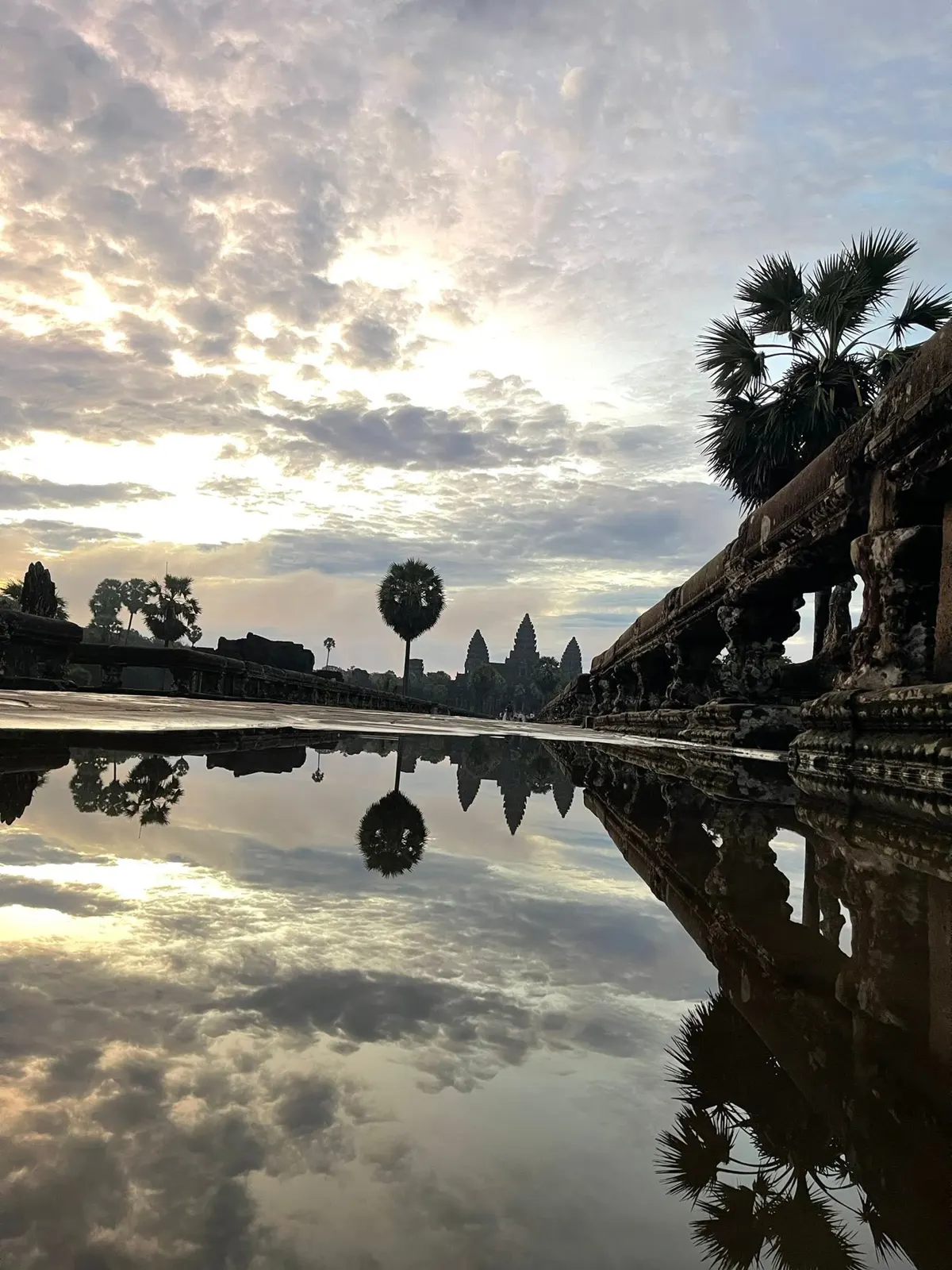
Cambodia's rich past is deeply intertwined with its religious heritage, primarily Buddhism, yet also showing significant historical Hindu influences. This complex history is visibly expressed in the nation's architectural wonders, particularly its numerous ancient temples. These structures offer a tangible connection to the spiritual and cultural evolution of the Khmer people, showcasing centuries of devotion and artistic achievement.
These historic sites not only stand as testaments to past empires but also continue to play a role in contemporary Cambodian life. Visitors can explore a diverse range of temples, from monumental complexes to more secluded sanctuaries, each telling a unique story of religious synthesis and architectural innovation.
The Historical Context of Cambodian Religious Architecture
During the 12th century, a period marked by the construction of iconic structures like Angkor Wat, Cambodia experienced considerable religious shifts and occasional conflicts between Buddhist and Hindu communities. Historical records indicate that rulers, such as King Jayavarman VII, sought to establish harmony by commissioning grand building projects. These initiatives, including the development of Angkor Thom, were designed to incorporate elements from both faiths, aiming to foster coexistence and unity within the kingdom.
The architectural and artistic styles found in Cambodian temples frequently exhibit a synthesis of Hindu and Buddhist motifs. This integration is a defining characteristic of Khmer religious sites, showcasing how diverse beliefs were historically accommodated and celebrated. Even today, while Theravada Buddhism is the predominant religion, certain Hindu customs persist in Khmer cultural practices, such as wedding and funeral ceremonies, reflecting this enduring historical blend that is visibly etched into the stone of these ancient structures.
Prominent Ancient Temples Across Cambodia
Cambodia is home to an array of ancient temples, each possessing distinct architectural features and historical narratives. These sites provide profound insights into the Khmer Empire's artistic achievements and spiritual devotion. From the expansive complexes near Siem Reap to more secluded structures, these temples collectively form a significant part of the nation's cultural identity and attract visitors from around the globe.
Here are some of the most notable ancient temples to consider visiting:
- Angkor Wat: Constructed in the 12th century under King Suryavarman II, Angkor Wat stands as one of Cambodia's most renowned and oldest temple complexes. Located near Siem Reap, it is among the world's largest religious monuments. The temple's grandeur is evident in its scale, detailed architectural design, and elaborate wall carvings that depict tales of creation and historical battles. Its structure comprises three distinct tiers, accessible by numerous steps, offering expansive views from the upper levels. Many visitors choose to experience Angkor Wat during either sunrise or sunset, as the changing light casts a captivating glow over the ancient stones. Its historical significance as a place of worship for millennia offers a reflective experience for those who visit.
- Banteay Srei: Situated approximately 20 kilometers from Angkor Thom, Banteay Srei is a Hindu temple often regarded as a particularly impressive historical site. Known as ‘the Woman’s Citadel,’ this sanctuary is smaller than Angkor Wat but is highly regarded for its detailed carvings and unique decorative elements, primarily crafted from red sandstone. Although it was once obscured by jungle growth, the temple was rediscovered in 1914. Its architecture and carvings draw inspiration from the Khmer era, illustrating legends associated with Krishna, Shiva, and Vishnu, and featuring intricate depictions of goddesses, Shiva, and Vishnu.
- Neak Pean: Erected in the 12th century during the reign of King Jayavarman VII, Neak Pean is distinctive for its placement within the center of a reservoir, about 10 kilometers from the Angkor Wat temple. This unique island temple was originally conceived for healing purposes, based on the Hindu concept of Balan, with the belief that its waters possessed curative properties capable of dispelling illness-causing spirits. Its design, with a central pond surrounded by four smaller ponds, reflects ancient medical practices and symbolic cosmology.
- Banteay Kdei: This Buddhist temple is located within the Angkor Archaeological Park and was also built by King Jayavarman VII in the 12th century. Banteay Kdei is often recommended for those seeking a more tranquil experience, as it typically sees fewer visitors compared to its larger counterparts. Its partially ruined state, with trees and plants growing amidst the structures, contributes to a serene atmosphere, making it a suitable location for observing the sunset away from larger crowds. The charm of its weathered stone and natural surroundings offers a peaceful contrast.
- Ta Prohm: Originally named Raja Vihara, Ta Prohm is distinct from Angkor Wat in its natural integration. Following the decline of the Khmer society, the temple was left to the elements, allowing the surrounding jungle to reclaim much of its structure. Today, it is widely recognized as the "Jungle Temple," offering a striking visual of ancient architecture intertwined with nature. Massive tree roots embrace the stone walls, creating a memorable scene that highlights the power of nature over human constructions.
- Bayon: Positioned at the core of Angkor Thom, the design of Bayon Temple was intended to symbolize Mount Meru, a central feature in both Buddhist and Hindu cosmology. This temple is celebrated for its architectural ingenuity and artistic expression, most notably its numerous stone faces carved into its towers, which have earned it the moniker "temple of faces." The carvings and artwork within Bayon present a notable fusion of Hindu and Buddhist influences, reflecting the historical religious landscape of Cambodia and King Jayavarman VII's vision of religious harmony.
- Banteay Samre: Constructed in the 12th century during the reigns of Suryavarman II and Yashovarman II, Banteay Samre is unique among many Khmer temples as it was not commissioned by a king. The temple has undergone several modifications and restorations over its history, which now allow visitors to observe the representation of both Buddhist and Hindu influences within its designs and ornamentation. Its well-preserved state and intricate details make it a compelling site for those interested in the evolution of Khmer art and religion.
- Wat Phnom: Situated atop the only elevated point in Phnom Penh, Wat Phnom is considered one of the oldest temples in the city. Local lore suggests that a woman named Penh discovered four Buddha statues inside a floating tree trunk in the river. These statues were subsequently placed on the hill, which eventually became known as Phnom Duon Penh. This temple holds considerable cultural importance for Cambodians, serving as a site for prayers and wishes, and is a central location for Khmer New Year festivities. Exploring Cambodian and international cuisine in Phnom Penh can complement a visit to this historic site.
- Prasart Phnom Ngok: For those interested in exploring sites beyond the main tourist routes, Prasart Phnom Ngok, a Hindu cave temple, offers an alternative experience. Located approximately 8 kilometers from Kampot, the journey to this site provides scenic views of the countryside. The temple, dedicated to Shiva and dating back to the 7th century, is considered Cambodia's oldest and is remarkably well-preserved within its cave setting, offering a unique glimpse into early Khmer religious practices.
- Preah Khan: This ancient Hindu temple, built during the Khmer era in the 11th and 12th centuries, was a significant spiritual center for the Khmer Empire. Situated a few kilometers from the Thai border, Preah Khan has been maintained in good condition, allowing visitors to appreciate its historical architecture and intricate carvings. It served as a major religious and administrative complex, reflecting the power and artistry of its time.
| Temple Name | Location (General) | Estimated Construction Era | Primary Religious Influence | Notable Features |
|---|---|---|---|---|
| Angkor Wat | Siem Reap | 12th Century | Hindu (originally), later Buddhist | Largest religious monument, intricate carvings, three tiers, sunrise/sunset views. |
| Banteay Srei | Near Angkor Thom (Siem Reap) | 10th Century | Hindu | Known as 'Woman’s Citadel', detailed red sandstone carvings, smaller scale. |
| Neak Pean | Near Angkor Wat (Siem Reap) | 12th Century | Buddhist (healing temple) | Island temple in a reservoir, designed for healing, unique water pools. |
| Banteay Kdei | Angkor Archaeological Park (Siem Reap) | 12th Century | Buddhist | Less crowded, overgrown structures, peaceful atmosphere, good for sunset. |
| Ta Prohm | Angkor Archaeological Park (Siem Reap) | 12th Century | Buddhist | 'Jungle Temple', integrated with massive tree roots, striking natural fusion. |
| Bayon | Angkor Thom (Siem Reap) | Late 12th/Early 13th Century | Buddhist (with Hindu elements) | 'Temple of faces', numerous carved stone faces, symbolic center of universe. |
| Banteay Samre | Angkor Archaeological Park (Siem Reap) | 12th Century | Hindu (with Buddhist elements) | Not built by a king, well-preserved, blend of Hindu and Buddhist designs. |
| Wat Phnom | Phnom Penh | 14th Century | Buddhist | Oldest temple in Phnom Penh, on the city's only hill, significant for local worship and New Year. |
| Prasart Phnom Ngok | Near Kampot | 7th Century | Hindu | Oldest temple in Cambodia, preserved within a cave, dedicated to Shiva, scenic drive. |
| Preah Khan | Near Thai border | 11th/12th Centuries | Hindu | Significant spiritual center, well-maintained, reflects Khmer Empire's power. |
Planning Your Visit to Cambodia's Historic Temples
When planning a trip to Cambodia to explore its ancient temples, several practical considerations can enhance the experience. The majority of the most famous temples, including Angkor Wat, Banteay Srei, and Ta Prohm, are located within or near the Angkor Archaeological Park in Siem Reap. Access to this extensive park typically requires a pass, which can be purchased for various durations. It is advisable to verify current ticket information and operating hours, as these details are subject to change.
For optimal viewing, particularly at popular sites like Angkor Wat, arriving early for sunrise or staying for sunset is often recommended, though these times can also be the busiest. Respectful attire, covering shoulders and knees, is expected at all religious sites. Beyond Siem Reap, other significant temples like Wat Phnom in Phnom Penh and Prasart Phnom Ngok near Kampot offer different historical and regional perspectives, suggesting that a comprehensive exploration might involve travel to various parts of the country.
The Enduring Cultural Significance of Cambodian Temples
The ancient temples of Cambodia are more than just historical ruins; they are living monuments that continue to shape the cultural and spiritual identity of the nation. Their architectural grandeur and intricate artwork serve as a chronicle of the Khmer Empire's rise and fall, its religious transformations, and its artistic legacy. The blend of Hindu and Buddhist iconography within these structures symbolizes a historical period of religious tolerance and synthesis that is unique to Cambodia.
These sites also play a vital role in contemporary Cambodian society. Many temples, like Wat Phnom, remain active places of worship, pilgrimage, and celebration, particularly during national holidays such as the Khmer New Year. Visiting these temples provides an opportunity to connect with the profound spiritual traditions and enduring cultural heritage of the Cambodian people, offering a deeper understanding of their history and present-day customs.
Frequently Asked Questions
What is the most famous temple in Cambodia?
Angkor Wat is widely recognized as Cambodia's most famous temple. Its immense scale, intricate carvings, and historical significance make it a primary destination for visitors.
What religions are represented in Cambodian temples?
Cambodian temples primarily showcase influences from both Hinduism and Buddhism. Many structures, particularly those from the Khmer Empire era, feature a blend of iconography and architectural styles from both faiths, reflecting the nation's complex religious history.
Are all major temples located near Siem Reap?
While a significant concentration of major ancient temples, including Angkor Wat and many others within the Angkor Archaeological Park, are located near Siem Reap, other important temples exist elsewhere. For example, Wat Phnom is situated in Phnom Penh, and Prasart Phnom Ngok is found near Kampot, offering diverse experiences across the country.
What makes Ta Prohm unique among Cambodian temples?
Ta Prohm is distinguished by its remarkable integration with the natural environment. After its abandonment, the surrounding jungle reclaimed parts of the temple, with massive tree roots growing over and through its stone structures, creating a distinctive and memorable visual.
Which temple is considered the oldest in Cambodia?
Prasart Phnom Ngok, a Hindu cave temple located near Kampot, is considered the oldest temple in Cambodia, dating back to the 7th century. It offers a unique glimpse into early Khmer religious architecture and is preserved within a natural cave setting.








