
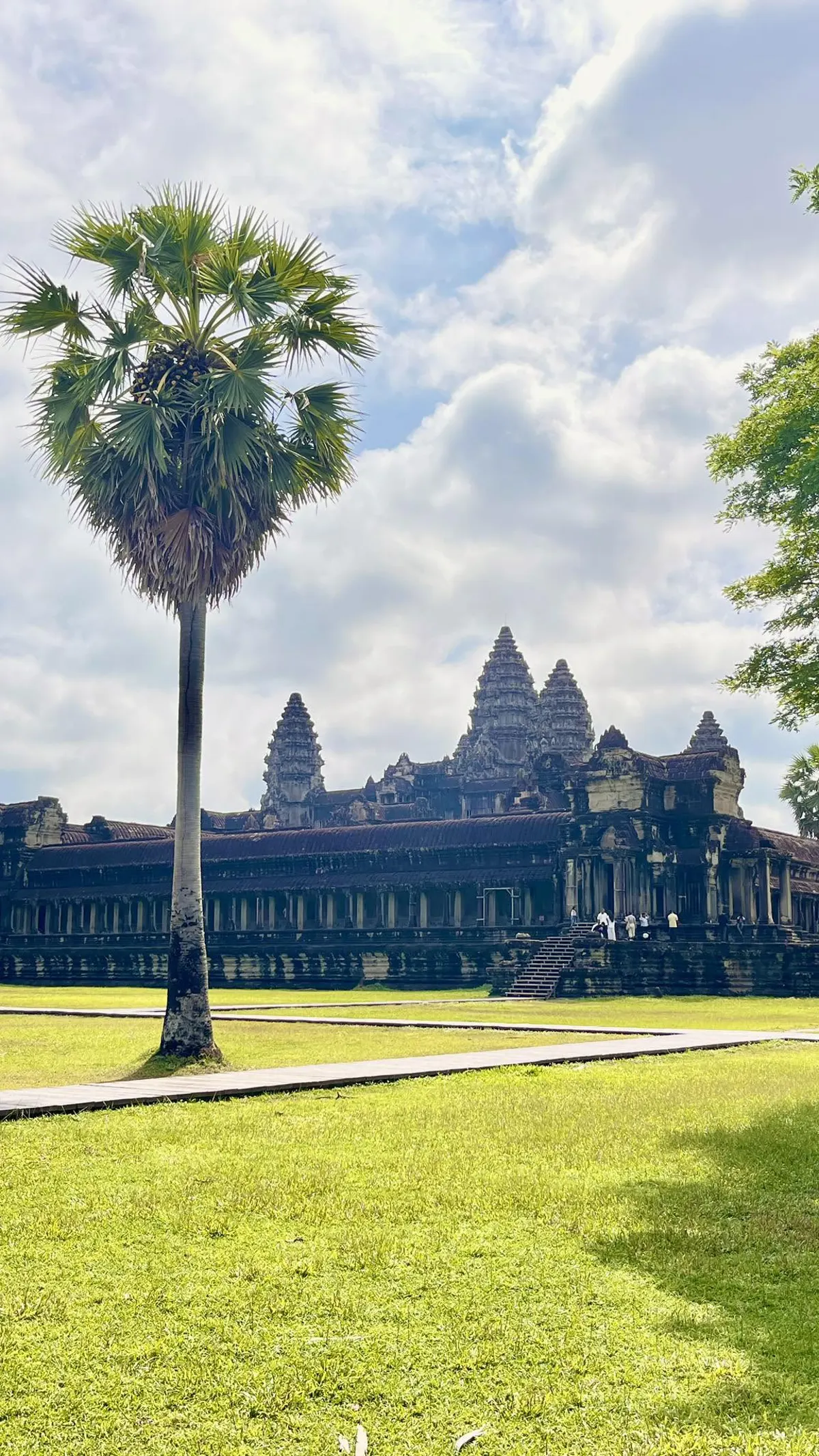
Angkor Wat, located in Cambodia, stands as the world's largest ancient religious structure. Originally constructed as a Hindu monument, it later transformed into a Theravada Buddhist temple, reflecting centuries of spiritual evolution. This monumental complex is recognized as a UNESCO World Heritage site, drawing visitors from across the globe to witness its architectural grandeur.
The Historical Foundations of Angkor Wat
This grand temple complex was commissioned by Khmer King Suryavarman II in the early 12th century. Its initial purpose was to serve as a representation of state architectural excellence and ultimately as the king's final resting place. The construction marked a significant achievement for the Khmer Empire, showcasing their engineering and artistic prowess.
The enduring importance of this site for Cambodia is evident in its national symbolism; images of Angkor Wat are featured prominently on the country's flag and various currency denominations. This widespread representation underscores its role as a key identifier of Cambodian heritage and national pride. The transition from a Hindu dedication to a Buddhist one over time illustrates the changing religious landscape of the region. For those planning a broader trip to the region, a guide to Siem Reap and Angkor temples can offer further insights into combining your visit with other attractions.
Architectural Splendor and Symbolic Design
Angkor Wat exemplifies classical Khmer architecture, drawing inspiration from the Dravidian style found in South India. Its design is rich with symbolic meaning, particularly in its layout and structural elements. The central tower, for instance, is understood to represent Mount Meru, a mythical mountain considered the center of the universe in Hindu and Buddhist cosmology. The four surrounding towers symbolize the rising peaks of this sacred mountain.
The construction primarily utilized sandstone blocks, a distinctive choice for the era, rather than the more common brick. This material allowed for the intricate carvings and detailed bas-reliefs that adorn the temple walls. The overall design exhibits remarkable symmetry and proportion, with spacious central areas, covered walkways, supporting columns, courtyards, and terraces all contributing to a balanced and harmonious composition. Elements such as lotus bud-shaped towers and axial galleries further enhance its aesthetic appeal, creating a sense of order and spiritual significance. The coherent design of Angkor Wat is often compared to ancient Greek and Roman architectural achievements for its clarity and structural integrity.
Planning Your Exploration of Angkor Wat
Visiting Angkor Wat requires thoughtful planning to fully appreciate its scale and historical depth. The temple is situated near Siem Reap, which serves as the primary gateway for travelers to the broader Angkor Archaeological Park. While the source material does not provide specific operational details like opening hours or ticket prices, visitors typically find that exploring the main temple alone can take several hours, and many choose to spend an entire day within the complex to absorb its many facets.
To enhance your experience, consider the time of day for your visit. Many travelers opt for early morning excursions to witness the sunrise over the temple's iconic silhouette, a truly memorable sight. Exploring the temple grounds involves considerable walking, so comfortable footwear is advisable. For those interested in a more active approach, bicycle tours of Angkor offer a unique perspective on the ancient structures at dawn. Remember to check current entry requirements and local guidelines before your trip, as these details can change.
Beyond the Main Temple: The Wider Angkor Complex
While Angkor Wat is undoubtedly the most famous structure, it is just one part of the extensive Angkor Archaeological Park, which encompasses numerous other temples and ancient ruins. The entire park is a testament to the Khmer Empire's vast influence and architectural ambition. Nearby sites like Angkor Thom, with its Bayon temple featuring countless smiling faces, and Ta Prohm, famously intertwined with jungle trees, offer different architectural styles and historical narratives.
Exploring the wider complex provides a deeper understanding of the region's historical and religious landscape. Many visitors choose to dedicate multiple days to explore the various temples, often hiring local guides to provide context and insight into the intricate carvings and historical events depicted. For a comprehensive experience of the area, consider a structured itinerary that covers the main highlights and some less frequented spots. For instance, an 8-day Cambodian adventure combining the historical wonders of Siem Reap with other natural attractions can offer a balanced itinerary. To fully appreciate the historical context and surrounding attractions, consider consulting a guide to Angkor's ancient temples and cultural experiences.
Cultural Narratives and Enduring Legacy
The cultural narratives surrounding Angkor Wat extend beyond its documented history. Local traditions include mystical accounts, such as the belief that the temple was constructed in a single night by a celestial architect. These stories contribute to the site's mystique and highlight the profound reverence it has held for centuries. The temple's decorative elements, including statues of deities, celestial beings, and various religious motifs, reflect the spiritual beliefs prevalent during its construction and subsequent transformations.
Even today, the architectural integrity and artistic detail of Angkor Wat remain remarkably well-preserved. This enduring condition allows visitors from around the world to appreciate the craftsmanship and vision of its original builders. The monument serves not only as a historical landmark but also as a living symbol of Cambodian identity and a significant center for Theravada Buddhist practice. Understanding Cambodia's weather patterns can help in planning a comfortable visit to this revered site. For travelers seeking a more extensive exploration of Cambodia's heritage, consider an 8-day journey through Cambodia's cultural heartbeat, which includes Angkor and other significant cities.
Architectural Features of Angkor Wat
| Architectural Feature | Description and Symbolism | Material and Construction |
|---|---|---|
| Central Tower | Represents Mount Meru, the cosmic center in Hindu and Buddhist beliefs. | Sandstone blocks, precisely cut and fitted. |
| Five Towers | Depict the rising peaks of Mount Meru, surrounding the central summit. | Sandstone construction, forming a cohesive mountain-like cluster. |
| Galleries and Courtyards | Spacious areas, verandahs, and axial galleries create symmetry and flow. | Extensive use of sandstone for walls, columns, and roofing. |
| Bas-Reliefs | Detailed carvings depicting mythological narratives, historical events, and celestial beings. | Carved directly into sandstone walls, showcasing artistic skill. |
| Overall Layout | A prototype of the universe, exhibiting a model of the planetary world. | Symmetrical construction with fine balance and proportion. |
Frequently Asked Questions
What is the primary significance of Angkor Wat?
Angkor Wat holds immense significance as the largest religious monument globally and a symbol of Cambodian national identity. It was originally built as a Hindu temple and mausoleum for King Suryavarman II, later transitioning to a Theravada Buddhist site, reflecting the rich spiritual history of the region.
Who built Angkor Wat and when?
Angkor Wat was constructed in the early 12th century under the patronage of Khmer King Suryavarman II. It served as a grand architectural statement of his reign and his eventual burial place.
What architectural style does Angkor Wat represent?
The temple complex is a prime example of classical Khmer architecture, which itself drew inspiration from Dravidian architectural styles. It is characterized by its precise symmetry, intricate bas-reliefs, and the symbolic representation of the cosmos.
Is Angkor Wat a UNESCO World Heritage site?
Yes, Angkor Wat is recognized as a UNESCO World Heritage site. This designation acknowledges its outstanding universal value, its historical importance, and its architectural and artistic achievements.
What are the main symbolic features of Angkor Wat's design?
The central tower of Angkor Wat symbolizes Mount Meru, the mythical center of the universe in Hindu and Buddhist cosmology. The five towers collectively represent the peaks of this mountain, while the surrounding moats and walls depict oceans and mountain ranges, creating a microcosm of the universe.








