
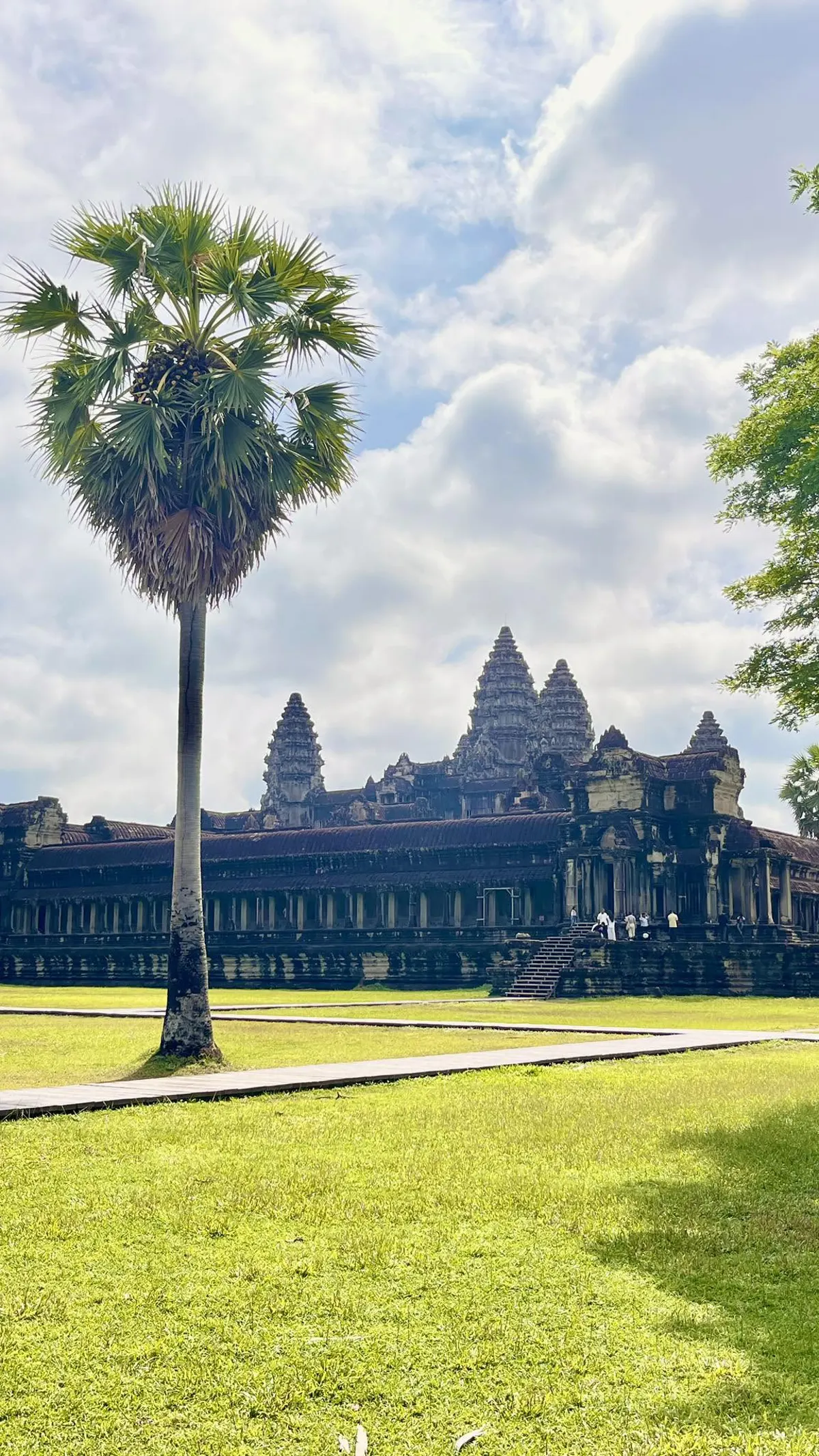
Planning a trip to Cambodia involves understanding local customs, currency, and transportation. This guide offers practical advice for visitors, ensuring a smoother experience in a country celebrated for its historical sites and cultural heritage. Preparing in advance with key information can help travelers make the most of their time.
Understanding Cambodia's Climate and Best Travel Times
Cambodia experiences distinct weather patterns throughout the year, influencing the ideal times for a visit. The period from November through February is generally considered pleasant, characterized by dry conditions and moderate temperatures. During these months, the climate is less humid and not excessively hot, making it comfortable for exploring.
April stands out as the warmest month, with daytime temperatures potentially reaching around 40°C. While hot, April typically remains dry. The rainy season commences in June and extends until November, bringing increased precipitation. Despite the rainfall, temperatures during this period often remain high. The shift back to drier, cooler weather begins again in November.
Respecting Local Culture: Customs and Attire
When visiting Cambodia, particularly its numerous temples and religious sites, it is important to observe local customs regarding dress. Garments that are overly brief, transparent, or revealing are generally considered inappropriate and disrespectful in these sacred locations.
Travelers are advised to select clothing that covers shoulders and knees when entering temples. This small consideration demonstrates respect for Cambodian traditions and the significance of these cultural landmarks.
Managing Finances: Currency and Exchange in Cambodia
The official currency of Cambodia is the Riel (KHR). Available denominations for Riel notes include 50, 100, 500, 1000, 2000, 5000, 10,000, 20,000, 50,000, and 100,000 riels.
The United States Dollar (USD) also functions widely as a second currency and is accepted almost universally across the country. Cambodia has a high level of dollarization, meaning visitors often do not need to convert their currency to Riel upon arrival. For transactions, the commonly accepted exchange rate is USD1.00 for KHR4,000. Since American coins are not used in Cambodia, change for USD purchases will typically be provided in Riel. For example, 1,000 Riel is equivalent to 25 US cents. Money exchange services are available at banks throughout Cambodia. Be aware that exchanging even a modest sum of US dollars can result in a substantial quantity of Riel notes. For those managing finances across the region, understanding local banking practices is useful, similar to how one might consider banking services in Hanoi.
Entry Requirements: Passports and Cambodian Visas
To enter Cambodia, all travelers must possess a passport with at least six months of validity remaining from their date of entry.
Most international visitors require a visa to enter Cambodia, with exceptions for citizens of Indonesia, Malaysia, Singapore, Philippines, Laos, Thailand, and Vietnam. Certain nationalities are required to secure their visa in advance from a Royal Embassy of the Kingdom of Cambodia in their home country. These include citizens of Afghanistan, Algeria, Saudi Arabia, Bangladesh, Iran, Iraq, Pakistan, Sri Lanka, Sudan, and Nigeria.
Visas can be obtained through Cambodian embassies or consulates abroad. Alternatively, "visa on arrival" services are available at Cambodia's international airports, at all six international land border crossings with Thailand, at some international land border crossings with Vietnam, and at the primary border crossing with Laos. Visa payments at these entry points must be made in US dollars only. Specific land crossings from Thailand where visas are issued include Poipet and Cham Yeam (Koh Kong province). However, travelers entering from Vietnam via Bavet (Moc Bai in Vietnam) or Ka-Om Samnor (Chau Doc in Vietnam) must have already secured their visas through a Cambodian Embassy or Consulate prior to their arrival. An online E-visa application system is also available for tourists.
Visa Types and Extensions
Tourist visas are valid for a single stay of up to 30 days. Visas acquired in advance typically expire 90 days after their issue date. In Phnom Penh, or through various agencies, tourist visas can be extended once for an additional 30 days at a cost of USD15.
For individuals planning longer stays or multiple entries, a Business Visa (E-visa or standard) may be more suitable. Business visas can be extended indefinitely, offering multiple entry status once extended. Approximate costs for extensions are USD145 for six months and USD290 for twelve months. Holding a long-term Business Visa facilitates convenient travel into and out of the country. E-Visas are specifically valid for entry by air or at three designated land border crossings: Bavet (on the Ho Chi Minh City-Phnom Penh route), Koh Kong (bordering eastern Thailand), and Poipet (on the Bangkok-Siem Reap route). Exit from Cambodia with an e-visa is permitted at any border crossing.
When applying for a visa, applicants generally need one or two passport-sized photographs (depending on the application location), a passport valid for at least six months with at least one blank visa page, photocopies of the passport (required by some embassies/conulates), and clean US dollar bills for the fee. Paying in local currency may incur a significantly higher charge. If a passport photo is unavailable for a visa on arrival, the one in the passport can be scanned for an additional fee of USD2.5.
Summary of Visa Options
| Visa Type | Validity (Stay) | Validity (Issue) | Extension Options | Extension Cost (Approx.) | Entry Points (E-visa) |
|---|---|---|---|---|---|
| Tourist Visa | Up to 30 days | 90 days after issue | One additional 30-day extension | USD15 | Air, Bavet, Koh Kong, Poipet (E-visa) |
| Business Visa | Over 2 months (multiple entries possible with extension) | Not specified (can be extended indefinitely) | Indefinitely (multiple entries with extension) | USD145 (6 months), USD290 (12 months) | Air, Bavet, Koh Kong, Poipet (E-visa) |
Getting Around: Transportation Across Cambodia
Local transportation within Cambodia is generally affordable, often costing only a few dollars per journey. Common modes of transport include buses, motorbikes (motos), tuk-tuks, cyclos, and taxis.
The country's road network has seen considerable improvements, now surpassing inland waterways as the primary method of travel. These enhancements have made inter-city travel much more accessible. Buses are currently considered the most practical way to travel between major cities and towns, offering reasonable fares. Local bus services also operate in areas surrounding Phnom Penh. While minibuses are a cheap option frequently used by residents, they can often be crowded and less comfortable for longer trips.
The railway system holds a lesser role in national transportation. The Cambodian government owns and operates the rail lines. One route connects Phnom Penh with the Thai border, serving western provinces like Battambang, Pursat, and Poipet. Another line links Phnom Penh with Kampot and Sihanoukville. For those interested in regional rail travel, understanding options like overnight rail journeys in Vietnam can provide a broader perspective on Southeast Asian train services.
Sihanoukville, situated on the Gulf of Thailand, is Cambodia's sole deep-water seaport, capable of accommodating large ocean-going vessels. A four-lane highway connects Sihanoukville to Phnom Penh.
Cambodia has three main airports: Phnom Penh International Airport, Siem Reap International Airport, and Sihanoukville International Airport. These serve as central points for domestic, regional, and international flights. Smaller regional airports also provide access to more remote parts of the country.
Renting a self-drive car in Cambodia is notably challenging, and even if possible, navigating local traffic and conditions can be complex. Cycling and renting a motorbike are popular alternatives for exploring, particularly within towns and cities. Cycling offers an inviting way to experience the local surroundings. Within urban centers like Phnom Penh, tuk-tuks and moto-taxis are the most common choices for short distances. Cyclos are also available in Phnom Penh. It is always advisable to agree on the fare before starting any journey with these local transport options.
Essential Travel Considerations for Cambodia
Planning travel during public holidays, especially the Khmer New Year, requires extra foresight. During the New Year period, many residents return to their hometowns, leading to high demand for all available transport leaving major cities. Phnom Penh, in particular, can become exceptionally quiet, with a scarcity of moto-taxis and tuk-tuks. The few remaining drivers may significantly increase their fares due to demand. Travelers should account for these potential disruptions and plan their itineraries accordingly during peak holiday seasons. Engaging with the local culture extends beyond practicalities; exploring the culinary offerings, for instance, provides a deeper connection to the destination. Visitors might find a dining guide to Phnom Penh helpful for understanding the local food scene.
Frequently Asked Questions
What is the best time of year to visit Cambodia?
The most comfortable period to visit Cambodia is generally from November to February. During these months, the weather is typically dry, and temperatures are moderate, making it suitable for sightseeing and outdoor activities.
Do I need a visa to enter Cambodia?
Most international visitors require a visa for Cambodia. However, citizens of Indonesia, Malaysia, Singapore, Philippines, Laos, Thailand, and Vietnam are exempt. Visas can be obtained in advance from an embassy or consulate, upon arrival at international airports and select land borders, or through the online E-visa system.
What currency should I use in Cambodia?
While the official currency is the Cambodian Riel (KHR), the US Dollar (USD) is widely accepted and used throughout the country. It is common to pay in USD and receive change in Riel. The accepted exchange rate is typically USD1.00 to KHR4,000.
What kind of clothing should I pack for temple visits?
When visiting temples and religious sites in Cambodia, it is important to dress respectfully. This means wearing clothing that covers your shoulders and knees. Transparent or overly revealing garments are considered inappropriate.
Is it easy to get around Cambodia?
Yes, getting around Cambodia has become easier due to improvements in the road network. Buses are a convenient and affordable option for inter-city travel. Within towns and cities, tuk-tuks, moto-taxis, and cyclos are readily available. It is recommended to agree on fares before beginning your journey.








