
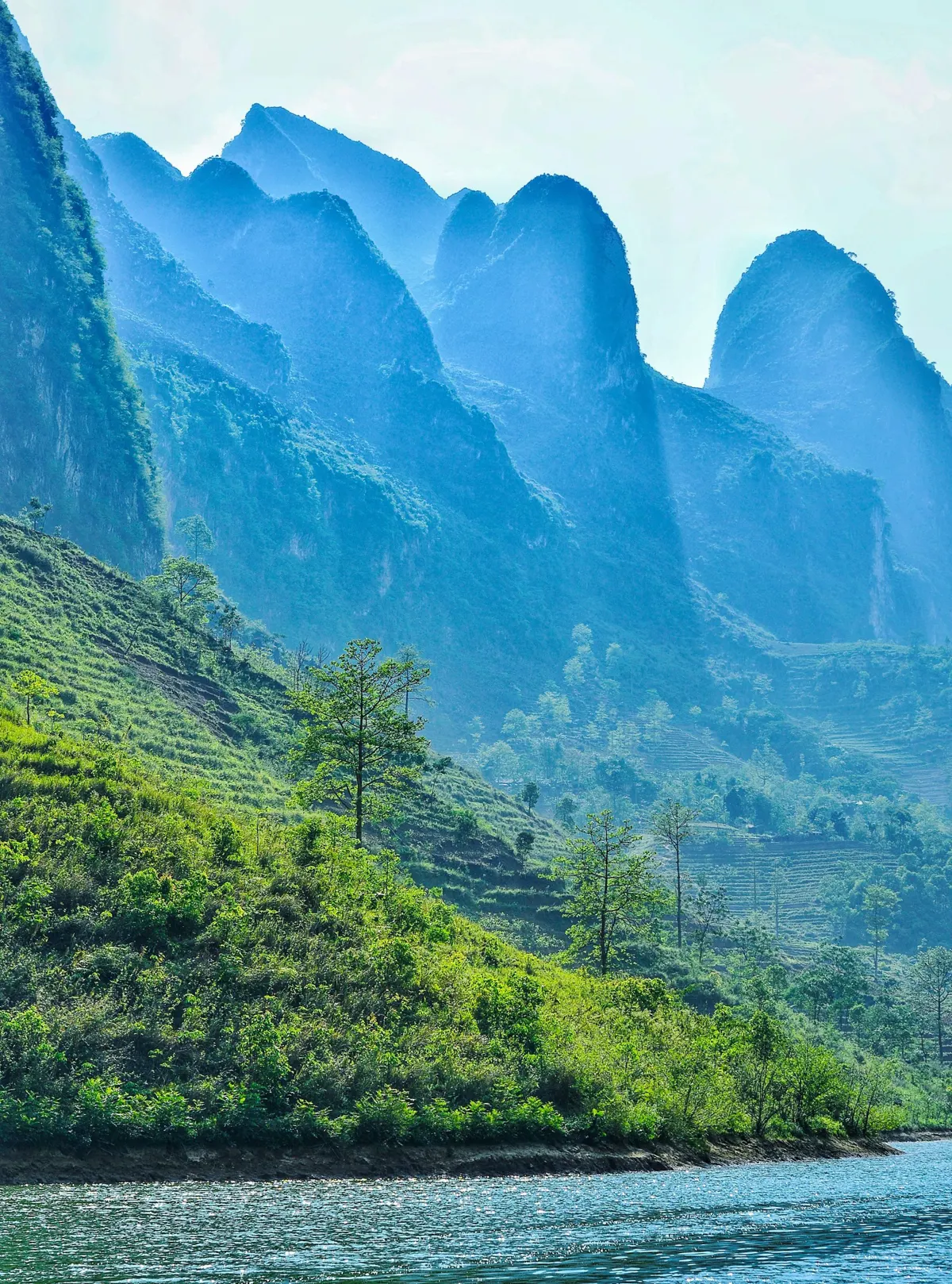
The mountainous province of Ha Giang in northern Vietnam consistently receives high recommendations for visits during the autumn months of September, October, and November. This period is widely considered optimal due to a combination of favorable weather, the visual spectacle of the rice harvest, and the blooming of buckwheat flowers. Travelers planning an excursion to this remote region will find these months offer comfortable conditions for exploring its dramatic landscapes.
Why Autumn is Optimal for Ha Giang
The transition from summer to autumn in Ha Giang brings about a remarkable transformation of the environment. During September, October, and November, the area showcases golden rice paddies, fields of buckwheat blossoms, expansive clear skies, and moderate temperatures. These conditions facilitate multi-day explorations, making them pleasant rather than challenging due to extreme heat or cold.
The convergence of excellent climatic conditions, the visual appeal of the harvest season, local cultural celebrations, and the year's most striking scenery contributes to high demand for lodging and tours. Consequently, travel providers often advise securing reservations several months ahead of time to ensure availability during this popular period.
September in Ha Giang: The Start of Harvest Season
September signals the commencement of Ha Giang's most visually impressive season. This month represents the shift from the summer monsoon period to the drier autumn, leading to significant environmental changes that foster excellent conditions for navigating the mountainous terrain.
Climatic conditions in Ha Giang improve considerably during September. The conclusion of the monsoon season means a notable decrease in precipitation. While some rain showers might still occur early in the month, they become less frequent as September progresses. By the middle of the month, visitors can generally expect favorable weather for their plans. The skies typically become clearer, and atmospheric transparency improves significantly compared to the often hazy summer months. This enhanced visibility provides sharp, vivid conditions, highly valued by photographers capturing Ha Giang's renowned landscapes.
September brings a significant alteration to Ha Giang's scenery as the rice harvest commences. Fields that were green earlier in the year, planted in May and June, mature and turn a rich golden hue as they near readiness for collection. The sight of these radiant terraces descending the mountain slopes is a powerful draw, inspiring many to visit Ha Giang during the autumn. Throughout September, local ethnic minority farmers can be observed tending to these steep, terraced fields, harvesting rice manually using traditional techniques. Observing these agricultural practices offers a deeper cultural understanding beyond merely viewing the scenery. The harvest marks the culmination of a year's effort, and local communities often observe this important time with various celebrations.
September temperatures in Ha Giang are generally agreeable for outdoor pursuits. Daytime readings at lower elevations usually fall between 22 and 28 degrees Celsius, with higher areas experiencing cooler, pleasant conditions. These mild temperatures help visitors remain comfortable, avoiding excessive heat during midday activities or chill during early morning excursions. This temperature stability in September allows for a greater focus on the travel experience itself, rather than contending with physical discomfort from climatic extremes. Extended periods of exploration are possible without the fatigue that might arise from summer heat or winter cold experienced at other times of the year.
October in Ha Giang: Peak Buckwheat Blooms and Clear Skies
Many consider October the premier month for a Ha Giang visit, attributed to an optimal convergence of conditions throughout these four weeks.
October in Ha Giang typically presents highly stable and favorable weather. Rainfall is infrequent, with certain years experiencing no recorded precipitation for the entire month. This consistency enables travelers to plan confidently, often without needing to factor in extra days for weather delays. Clear skies are common in October. The synergy of dry air, mild temperatures, and clean atmosphere results in exceptional visibility. From elevated vantage points, distant mountain ranges are often visible with striking clarity.
The buckwheat flower season reaches its zenith in Ha Giang during October. Extensive fields, planted in August and September, burst into shades of pink and white, forming some of the area's most recognizable landscapes. These blossoms are especially plentiful near Dong Van, Lung Cu, and in the valleys situated between Yen Minh and Dong Van. The visual interplay of the pink buckwheat, the gray limestone formations, and the vivid blue sky often creates a surreal impression. Many photographers plan their visits specifically to capture Ha Giang's October buckwheat display, and images from this period frequently appear on social media platforms.
October is a culturally active month in Ha Giang, with various ethnic minority festivals providing chances to observe traditional observances. Harvest celebrations, wedding season events, and regular market days draw communities together during this lively time. The Sunday markets in Dong Van and Meo Vac are particularly animated in October, as farmers arrive to sell their produce and acquire goods following the harvest. These markets serve as a window into ethnic minority culture, displaying traditional attire, long-standing trading customs, and social exchanges that have largely endured through time.
November in Ha Giang: Transition and Quieter Exploration
November continues the autumn period in Ha Giang, presenting unique qualities that may suit different visitor priorities. The initial part of November in Ha Giang maintains the favorable conditions seen in October. The weather generally remains dry and agreeable, and buckwheat flowers, though past their absolute peak, are still visible. The soft, golden light characteristic of late autumn provides excellent conditions for both sightseeing and photography. Temperatures in Ha Giang begin to decrease noticeably during November, especially during early mornings and late evenings. While the chill is not extreme, it indicates the approach of winter. Travelers should include slightly warmer clothing compared to what is needed in September or October, though daytime conditions are usually still quite pleasant.
Toward the end of November, Ha Giang typically offers a more tranquil experience. The number of visitors tends to decrease throughout the month as many travelers direct their attention to southern Vietnam or other destinations. By late November, the region often becomes quieter, resembling conditions found during the shoulder season. This decrease in tourism translates to simpler accommodation arrangements, fewer people at popular sites, and opportunities for more personal interactions. Individuals who value peace and genuine local engagement over absolutely perfect weather often prefer visiting Ha Giang in late November. The compromise of slightly cooler conditions for a considerably smaller crowd appeals to those desiring a more profound connection with the area, rather than solely seeking ideal photographic opportunities.
Ha Giang's scenery evolves during November as the harvest concludes and the landscape begins its winter dormancy. Rice terraces appear bare after the crops have been gathered, and buckwheat fields fade to brown once their blooming period is over. The golden and pink hues prominent in September and October transition to more muted, earthy shades. Despite these seasonal shifts in color, the intrinsic grandeur of the mountains ensures Ha Giang remains visually impressive in November. The striking limestone formations, profound valleys, and traditional settlements continue to offer memorable views even after the autumn's most vibrant period has passed.
Essential Planning for an Autumn Ha Giang Trip
A successful trip to Ha Giang during the popular September to November period necessitates careful preparation, which might not be as critical for summer visits. Regarding booking schedules for autumn trips, securing arrangements three to four months ahead for October, the busiest month, is advisable. Reputable tour providers often see their October itineraries fully booked rapidly, sometimes as early as July. For lodging, it is recommended to reserve six to eight weeks before your arrival, with even earlier booking suggested for weekend stays when demand is highest. While September and November offer a bit more flexibility, delaying reservations until the last minute is still not recommended. Planning four to six weeks in advance generally secures availability and allows for preferred choices rather than limited options.
The period from September to November in Ha Giang presents challenges for securing lodging, as demand frequently surpasses the limited availability in the region's smaller mountain communities. The finite number of quality guesthouses often reaches full capacity, particularly on weekends and during peak travel times. Visitors arriving without prior reservations may encounter difficulty finding available rooms. Therefore, making accommodation bookings in advance is crucial, not merely optional, for a Ha Giang trip during these months. Tour companies often have established connections with guesthouses, enabling them to secure rooms that might be unavailable to independent travelers, thus highlighting the benefit of guided tours during busy periods.
Selecting appropriate clothing for Ha Giang from September to November involves acknowledging the daily temperature fluctuations. A system of layered clothing is most effective, enabling adjustments for varying conditions, from cool mornings to warmer afternoons and back to chilly evenings. September typically calls for lighter layers compared to November, when morning temperatures decrease more significantly. A fleece or a lightweight jacket is usually sufficient for early September mornings. By November, particularly at higher altitudes, warmer insulation becomes more beneficial as temperatures move closer to winter levels.
Maximizing Your Autumn Ha Giang Experience
The clear skies and soft, golden illumination prevalent in Ha Giang from September to November offer prime conditions for photography, though strategic timing can enhance outcomes. The light shortly after sunrise, especially during the first hour, bathes the landscapes in warm hues, ideal for capturing the terraced fields. The "golden hour" in the late afternoon provides comparable quality, albeit with distinct directional attributes. It is advisable to arrange your daily itinerary to reach significant viewpoints during these optimal lighting periods. While midday light can often be harsh in other locations, it can be quite effective in Ha Giang's mountains, where altitude and atmospheric elements naturally temper its intensity. Nevertheless, the most compelling photographs are generally achieved during the morning and late afternoon.
The autumn months in Ha Giang, from September to November, align with important agricultural and cultural events for the local ethnic minority groups. The rice harvest, for instance, marks the culmination of a full year's farming efforts. When observing or documenting these activities, it is important to remember that individuals are engaged in significant work, not staging performances for visitors. Always seek consent before taking photographs of people, particularly within their private residences or during traditional ceremonies. Consider purchasing goods from market stallholders you photograph. Refrain from interrupting harvest activities for the sake of a picture. Such respectful conduct fosters positive exchanges, enhancing your visit while honoring the local communities.
Although the weather in Ha Giang from September to November is typically consistent and foreseeable, occasional deviations can happen. Incorporating a flexible day into longer itineraries offers a contingency should unexpected weather arise or if you wish to prolong your stay in a specific area. This adaptability helps alleviate pressure and enables a more thorough enjoyment of the trip, rather than strict adherence to a schedule irrespective of conditions. Allocating an additional day can be beneficial, providing chances to experience Ha Giang optimally instead of rushing through circumstances. For a comprehensive exploration of the region's diverse offerings, consider a Northern Vietnam highlands adventure. For a more focused exploration of the Ha Giang region itself, a Ha Giang jeep expedition offers an alternative way to navigate the dramatic terrain and discover its unique features.
Autumn in Ha Giang: A Seasonal Comparison
| Month | Key Scenery | Weather Characteristics | Crowds | Activities/Focus |
|---|---|---|---|---|
| September | Golden rice terraces (harvest begins), green landscapes | Transition from monsoon to dry, decreasing rain, clear skies emerge, comfortable temperatures (22-28°C) | Moderate, increasing towards month-end | Rice harvest observation, early autumn exploration, comfortable outdoor activities |
| October | Peak buckwheat flowers (pink/white), golden rice terraces, clear skies | Extremely dry, minimal rain, stable and ideal temperatures, excellent visibility | Highest demand, peak tourist numbers | Buckwheat flower viewing, cultural festivals, Sunday markets (Dong Van, Meo Vac), photography |
| November | Transitioning landscapes (post-harvest, fading buckwheat), earthy tones | Dry and pleasant early in month, temperatures gradually drop, cooler mornings/evenings | Declining crowds, quieter towards month-end | Late autumn exploration, solitude, authentic interactions, photography (different light) |
This reliability proves particularly valuable for travelers with limited vacation time who cannot reschedule if conditions disappoint. For those considering broader travel in the country, understanding Vietnam's weather in January might offer useful comparative context. The inherent mountain beauty ensures Ha Giang remains visually impressive in November despite seasonal color changes. For a broader overview of destinations in the country, explore Northern Vietnam travel.
Frequently Asked Questions
Is September a good time to visit Ha Giang?
Yes, September is considered an excellent time to visit Ha Giang. It marks the beginning of the autumn dry season, with significantly reduced rainfall and increasingly clear skies. The rice harvest commences, transforming the terraces into golden hues, and temperatures are comfortably mild for outdoor activities.
What are the main attractions in Ha Giang during October?
October is often highlighted as the best month to visit Ha Giang. The primary attractions include the spectacular peak bloom of buckwheat flowers, which create vast pink and white fields, particularly around Dong Van and Lung Cu. The weather is exceptionally stable with clear skies, and various ethnic minority festivals and lively Sunday markets enhance the cultural experience.
How do crowds differ in November compared to earlier autumn months?
Tourist numbers in Ha Giang tend to decrease throughout November. While early November still enjoys favorable conditions, by late November, the region becomes noticeably quieter. This offers a more tranquil experience with fewer crowds at attractions and easier accommodation booking, appealing to those who prioritize solitude and local interaction.
What should I pack for a Ha Giang trip in late autumn?
For a Ha Giang trip in late autumn (November), layered clothing is highly recommended. While midday temperatures can be pleasant, mornings and evenings become significantly cooler, especially at higher elevations. Include warmer insulation such as a fleece or light jacket, and consider a heavier jacket for early mornings and late evenings as temperatures approach winter levels.








