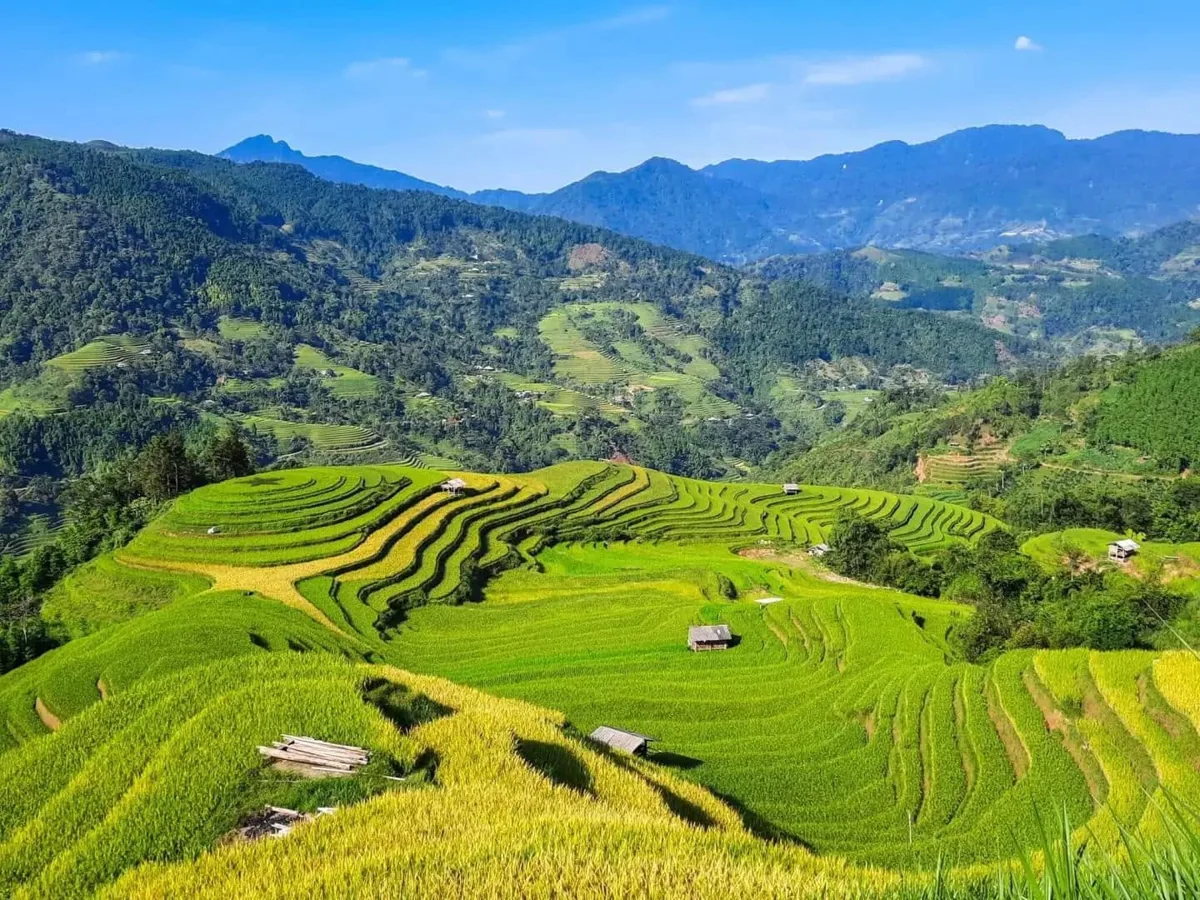
Vietnam's agricultural heartland offers a spectacular sight each year as its rice fields ripen to a brilliant golden hue. This transformation typically occurs from the latter half of September through the first half of October, presenting a brief window to observe the harvest season. Travelers seeking this unique scenery can find it across various regions, from the lowlands to the terraced mountainsides, with particularly notable areas including Tam Coc, Bac Son Valley, Sapa, and the more remote locales of Hoang Su Phi, Mu Cang Chai, and Y Ty.
Understanding Vietnam's Rice Harvest Spectacle
Rice holds profound cultural significance in Vietnam, serving as a staple food for centuries. This agricultural practice has shaped much of the country's landscape, creating extensive paddy fields that stretch across flat plains and ascend mountainous terrain through intricate terracing. The annual shift in seasons brings a striking visual change, marking the beginning of a popular travel period for those wishing to appreciate these agricultural wonders.
The optimal period for witnessing the fields in their radiant golden state spans approximately one month, generally commencing in mid-September and concluding by mid-October. During this time, the rice stalks transition from a verdant green to a rich greenish-yellow before reaching their full golden brilliance, creating a truly remarkable landscape. The beauty of these fields is not just in their color but also in the way they reflect the agricultural heritage and the diligent work of local communities.
Prime Locations for Golden Rice Field Views
Tam Coc, Ninh Binh
Situated approximately 100 kilometers south of Hanoi, Tam Coc in Ninh Binh province is readily accessible for a day trip from the capital. This area is often likened to a land of distinctive geological formations and local folklore, reminiscent of certain coastal wonders, yet here, visitors navigate small paddle boats directly through submerged rice paddies.
For those preferring terrestrial exploration, cycling offers another excellent method to experience the surroundings, potentially yielding even more impressive vistas. Beyond the natural beauty, this region provides opportunities to observe the daily rhythms of rural existence. Towards the end of September, the fields present a blend of green and golden tones, complementing the imposing limestone karsts and tranquil villages.
Bac Son Valley, Lang Son
Bac Son Valley lies within the rural district of Bac Son, part of Lang Son province in Vietnam's northeastern sector, located about 250 kilometers from Hanoi. Towering mountains encircle the valley, providing opportunities for elevated hikes that reveal expansive outlooks. This region supports six distinct ethnic communities, including the Tay, Kinh, Dao, Nung, and H'Mong populations.
The valley's flat topography, favorable climate, and fertile earth make it an ideal environment for cultivating rice and other agricultural products. To fully appreciate Bac Son's visual appeal, ascending one of the surrounding peaks is recommended, granting a broad perspective of the landscape. The charm of Bac Son Valley originates from the interplay of its productive rice fields and the gracefully flowing rivers.
Sapa, Lao Cai
Vietnam's northern highlands are renowned for their captivating scenery. Here, rice terraces, often centuries or even millennia old, have been sculpted into mountainous slopes by various ethnic minority groups for cultivation. These curving, human-made formations integrate harmoniously with the natural contours of the land, forming mesmerizing patterns across the hills and valleys.
These areas are particularly suitable for hiking and photography enthusiasts. In addition to the distinctive rice terraces, the highland region offers a chance to engage with diverse ethnic customs and traditions. Sapa, a town nestled in northwest Vietnam near the Chinese border, is notable for its natural beauty and cultural heritage. It serves as home to several tribal groups, such as the Black Hmong, Red Dao, Pho Lu, and Giay, who maintain the terraced rice fields. The terrain around Sapa features elevations and depressions that give way to extensive rice terraces. Cultivating these fields has been a central part of life for the hill tribe inhabitants for generations.
The terraced fields, which are among the most frequently visited sites, can be found within the Muong Hoa Valley, situated between Sapa town and Mount Fansipan. These terraces are thought to have been established primarily around the 15th century. Visitors often find the scenery overwhelmingly inspiring. Trekking tours in Sapa lead to traditional villages situated amidst these magnificent green rice terraces, offering insights into the lives of the region's ethnic communities alongside sweeping mountain panoramas.
Hoang Su Phi, Mu Cang Chai, and Y Ty
While Sapa offers renowned views, its popularity can sometimes mean encountering numerous local vendors. For those seeking a more secluded experience of Vietnam’s authentic northern character, where natural environments and local practices remain largely untouched, exploring less frequented areas is advisable.
In Vietnam's far northern reaches, places like Ha Giang, Mu Cang Chai, and Y Ty, historically among the nation's less prosperous regions, have long drawn attention for their striking terraced fields. The cultivation season here also spans from September to October. During this period, the landscape transforms into a display of golden paddy fields that extend across the entire area. The ancestors of the indigenous hill tribes constructed these terraces many centuries ago. This rugged beauty and well-preserved tribal heritage provide a genuine impression of Vietnam.
Planning Your Trip to See the Golden Fields
The short duration of the golden rice season makes timing critical for visitors. Aiming for late September to early October offers the best chance to witness the fields at their peak ripeness. Consider booking accommodations and transport in advance, especially for popular areas like Sapa, as this period often marks the beginning of the peak travel season. Availability can become limited quickly.
Exploring these agricultural landscapes often involves trekking or cycling, so bringing appropriate footwear, sun protection, and a camera is highly recommended. For remote locations like Hoang Su Phi or Y Ty, arranging local guides can significantly enhance the experience and help ensure respectful interaction with local communities. Additionally, in more popular areas like Sapa, visitors might encounter numerous local vendors attempting to sell souvenirs.
- Travel during late September to early October for optimal viewing.
- Pack suitable gear for outdoor activities, including comfortable shoes and sun protection.
- Consider guided tours for remote regions to enrich your experience.
- Always respect local customs and agricultural practices when visiting.
Regional Highlights and Experiences
Each region offers a distinct experience of Vietnam's rice landscapes. Tam Coc provides a serene boat journey through karsts and paddies, ideal for those seeking gentle exploration and rural observation. Bac Son Valley appeals to hikers with its panoramic mountain views, showcasing the agricultural heartland from above. Sapa is a destination for trekkers eager to explore ancient terraces and engage with diverse ethnic cultures, despite its more developed tourism infrastructure.
For travelers desiring a more authentic and less commercialized encounter, the remote territories of Hoang Su Phi, Mu Cang Chai, and Y Ty present a compelling alternative. These areas are characterized by their untouched beauty and deeply preserved tribal traditions, offering a profound glimpse into traditional Vietnamese life amidst dramatic terraced landscapes.
| Location | Primary Activity | Accessibility from Hanoi | Cultural Interaction |
|---|---|---|---|
| Tam Coc (Ninh Binh) | Boat rides, Cycling | Easy day trip (100km) | Rural village observation |
| Bac Son Valley (Lang Son) | Mountain hiking, Panoramic views | Moderate (250km) | Interaction with 6 ethnic groups |
| Sapa (Lao Cai) | Trekking, Hill tribe visits | Overnight train/bus | Black Hmong, Red Dao, Pho Lu, Giay cultures |
| Hoang Su Phi / Mu Cang Chai / Y Ty (Ha Giang) | Remote trekking, Photography | Challenging (further north) | Pristine tribal culture |
Frequently Asked Questions
When is the best time to see golden rice fields in Vietnam?
The ideal period to observe Vietnam's golden rice fields is typically from the latter half of September to the first half of October. This short window marks the peak of the harvest season when the paddies display their most brilliant golden hues.
Can I visit these locations on a day trip from Hanoi?
Tam Coc in Ninh Binh is conveniently situated for a day trip from Hanoi, being about 100 kilometers away. However, other locations like Bac Son Valley, Sapa, or the more remote regions of Ha Giang generally require longer stays due to their greater distances from the capital.
What activities can I do in the rice field regions?
Activities vary by location but commonly include boat trips through paddies (Tam Coc), cycling around rural areas, trekking through terraced fields (Sapa, Hoang Su Phi), and hiking mountains for panoramic views (Bac Son Valley). Opportunities for cultural engagement with local ethnic communities are also prevalent.
Are there any challenges when visiting popular rice field destinations?
In more popular areas like Sapa, visitors might encounter numerous local vendors attempting to sell souvenirs. For a quieter experience, less-visited areas such as Hoang Su Phi, Mu Cang Chai, or Y Ty are suggested, where local customs and natural settings are often better preserved.