
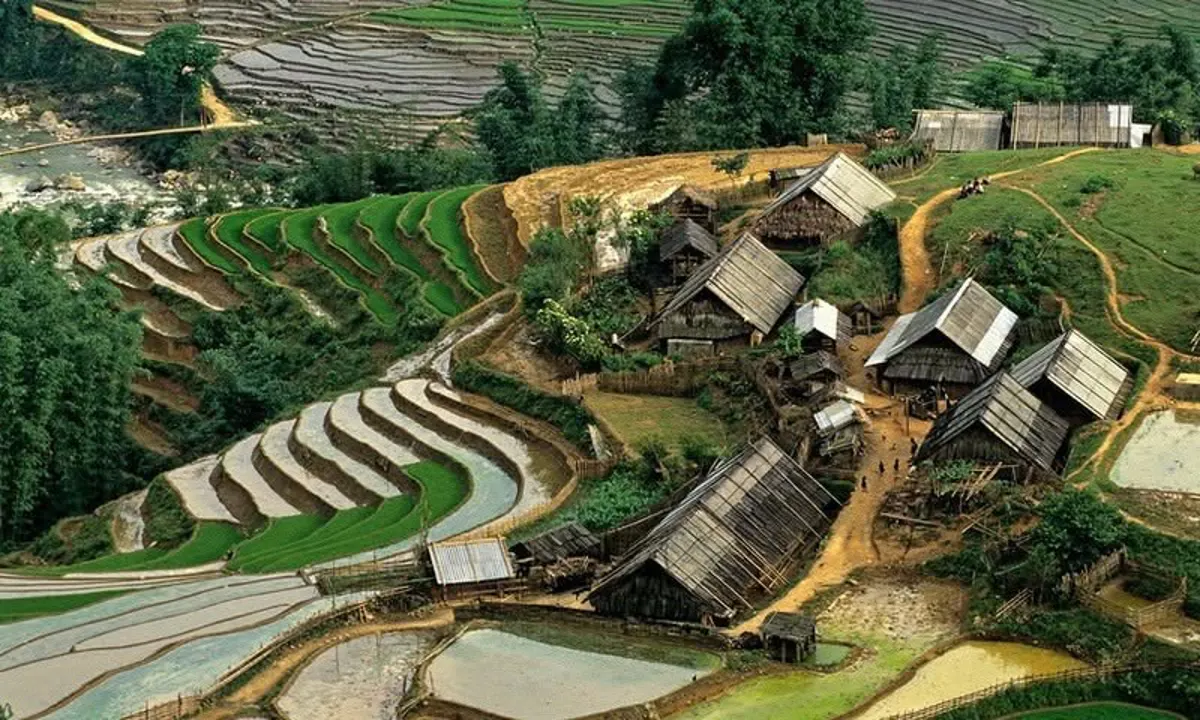
Yoga in Sapa brings yoga practice into a cool, highland environment above northern Vietnam's valleys. Visitors choose Sapa for quiet practice framed by rice terraces, mountain ridgelines and small villages, and for retreat programs offered by a few specialist centres.
What "Yoga in Sapa" refers to and local background
When people talk about yoga in Sapa they mean practicing stretching, breathwork and meditation in an upland environment centred around the town of Sapa, in LE0o Cai province. The area has grown as a travel destination in recent years, attracting domestic and international visitors to its cooler climate, terraced fields and mountain scenery.
Beyond the natural setting, Sapa is home to several ethnic minority communities. The region includes groups such as Hmong, Dao, Tay, Giay, MB4ong, Thai, Hoa and Xa Pho; Hmong are reported to make up a large share of the local population. Travelers attending a yoga retreat should expect to meet villagers who maintain strong local traditions and dress styles.
Key features and highlights of Sapa yoga retreats
Retreats in Sapa generally combine daily yoga classes with time outdoors and optional complementary therapies. Several venues offer tailored multi-day or week-long programs that can include practices such as asana, pranayama, meditation and gentle movement forms like Tai Chi. These programs often emphasise rest and reconnection rather than intensive teacher training.
Two well-known options in the area are Sapa Clay House and retreats organised by The Sacred Healing Center. Sapa Clay House markets itself as a mountain retreat with architecture inspired by local house styles and offers seasonal cottages, private wooden tubs and locally sourced meals. The Sacred Healing Center runs organised retreats with set package options and named prices for different room types.
- Daily yoga and breathwork sessions suitable for mixed-level groups.
- Scenic venues that provide mountain or valley views for outdoor practice.
- Packages that may combine yoga with massage, herbal baths or meditation.
Practical tips for planning yoga in Sapa
Arranging a yoga retreat in Sapa benefits from early planning in peak tourist months, and you should check what each centre includes in its package. Some retreats offer full-board stays and organised outdoor excursions; others operate more like drop-in class schedules for local studios. When pricing or schedules are not publicly listed, most visitors contact centres directly to confirm availability and inclusions.
Weather in the highlands can change quickly, so pack layers suitable for cool mornings and damp conditions. If you plan to combine practice with travel elsewhere in Vietnam, review regional transfer options and timings to avoid rushed connections; for advice on routes from Sapa to other northern destinations see routes to Ninh Binh and for island-bound plans see getting to Cat Ba Island.
- Bring a light waterproof layer and a warmer top for early-morning sessions.
- Confirm whether mats, props and towels are provided or if you should bring your own.
- Book transfers and accommodation in advance during holiday weekends.
- Ask exactly which therapies and meals are included before paying a deposit.
Cultural context: local communities and etiquette
Yoga visitors should be aware that Sapa is not only a tourist town but also the homeland of multiple ethnic minority groups. Respect for local customs, clothing and personal space is important when visiting villages or markets. Many visitors report that simple gestures like asking permission before taking photos and learning a few polite phrases are appreciated.
Markets and small shops are common meeting points between tourists and locals. If you plan to shop, learning basic bargaining strategies can be useful; for practical tips on negotiating prices in Vietnam consult advice on how to bargain. When staying with a homestay or participating in village-based activities, expect fewer modern conveniences than in larger towns.
- Always ask before photographing people, especially inside private spaces or homestays.
- Be mindful of modest dress when visiting villages and religious sites.
- Consider small gifts or token payments when participating in community-led experiences.
Who benefits most from a Sapa yoga retreat?
Sapa yoga breaks suit people seeking a slower pace, cooler climate and nature-framed practice. They are often chosen by those who want a restorative retreat combining breathwork, gentle movement and scenic walks rather than intensive teacher training. Hikers and those who enjoy outdoor time can pair short treks with daily classes.
Retreats tend to attract mixed groups: solo travellers after quiet time, couples looking for a shared wellness experience, and small groups of friends. If you require specialised medical supervision or advanced asana coaching, check with the centre beforehand—many programmes are designed for general wellbeing rather than clinical therapy or advanced instruction.
- Good for restorative and beginner-to-intermediate practice.
- Suitable for travellers who like combining short hikes with sessions.
- Less appropriate for those needing intensive clinical rehabilitation or advanced teacher certification unless explicitly advertised.
Comparisons, alternatives and what to expect
When choosing between centre-organised retreats and self-directed practice, consider the level of structure you want. Organised retreats typically bundle accommodation, meals and scheduled classes which reduces planning time. Self-guided stays—using local guesthouses or homestays—can be cheaper and allow more flexible itineraries but require arranging classes or finding instructors independently.
A few established venues in Sapa provide multi-day or customised packages, while other options include drop-in studio classes in town or private sessions arranged through guesthouses. Compare inclusions carefully: some packages list massages, herbal baths or farm-to-table meals as part of the price, while others charge these as extras.
| Feature | Sapa Clay House | The Sacred Healing Center |
|---|---|---|
| Location | Lao Chai village, Sapa district | Runs organised retreats in the Sapa area (visitor-booked events) |
| Accommodation style | Seasonal houses, private bamboo huts with wooden tubs | Options range from backpacker-style rooms to mountain-view bungalows |
| Typical retreat inclusions | Yoga/meditation, organic meals, optional massages and herbal baths | Daily pranayama and asana classes, local meals; additional workshops |
| Price examples | Packages vary by length and level; contact the venue for current rates | Two published options: US$799 (basic room) and US$1,199 (bungalow); member and student discounts may apply |
| Contact details | Phone numbers are listed by the retreat for reservations | Bookings accepted via the centre's booking email |
Frequently Asked Questions
Is Sapa suitable for beginners in yoga?
Yes. Many retreats in Sapa run classes for mixed ability groups and include gentle sessions suitable for beginners. Check the programme description to confirm class level before booking.
What time of year is best for practicing yoga outdoors in Sapa?
The highlands experience variable conditions: mornings can be cool and misty, while clear days are common between seasons. Visitors typically choose shoulder seasons to avoid the heaviest tourist peaks, but always prepare for quick weather shifts with layered clothing.
Do retreat packages usually include meals and transport?
Some programmes are full-board and include meals and airport or station transfers, while others list only accommodation and classes. Confirm inclusions and any extra costs with the retreat before committing.
Can I combine a yoga retreat with trekking or village visits?
Many visitors combine yoga sessions with short treks, homestays or cultural visits to nearby villages. If you plan village visits, be respectful of local customs and seek permission before entering private spaces.
How should I choose between an organised retreat and self-guided practice?
Choose an organised retreat if you prefer structured daily programming, included meals and on-site amenities. Opt for self-guided practice if you want a looser schedule, lower cost and the flexibility to arrange classes as you go.








